

Going to college can be one of the most exciting times in a young adult’s life. While there are a lot of useful college hacks after you arrive on campus, the key to a smooth transition starts long before move-in day. From learning time management skills to networking with peers or managing your budget, check out these helpful tips for new college students!
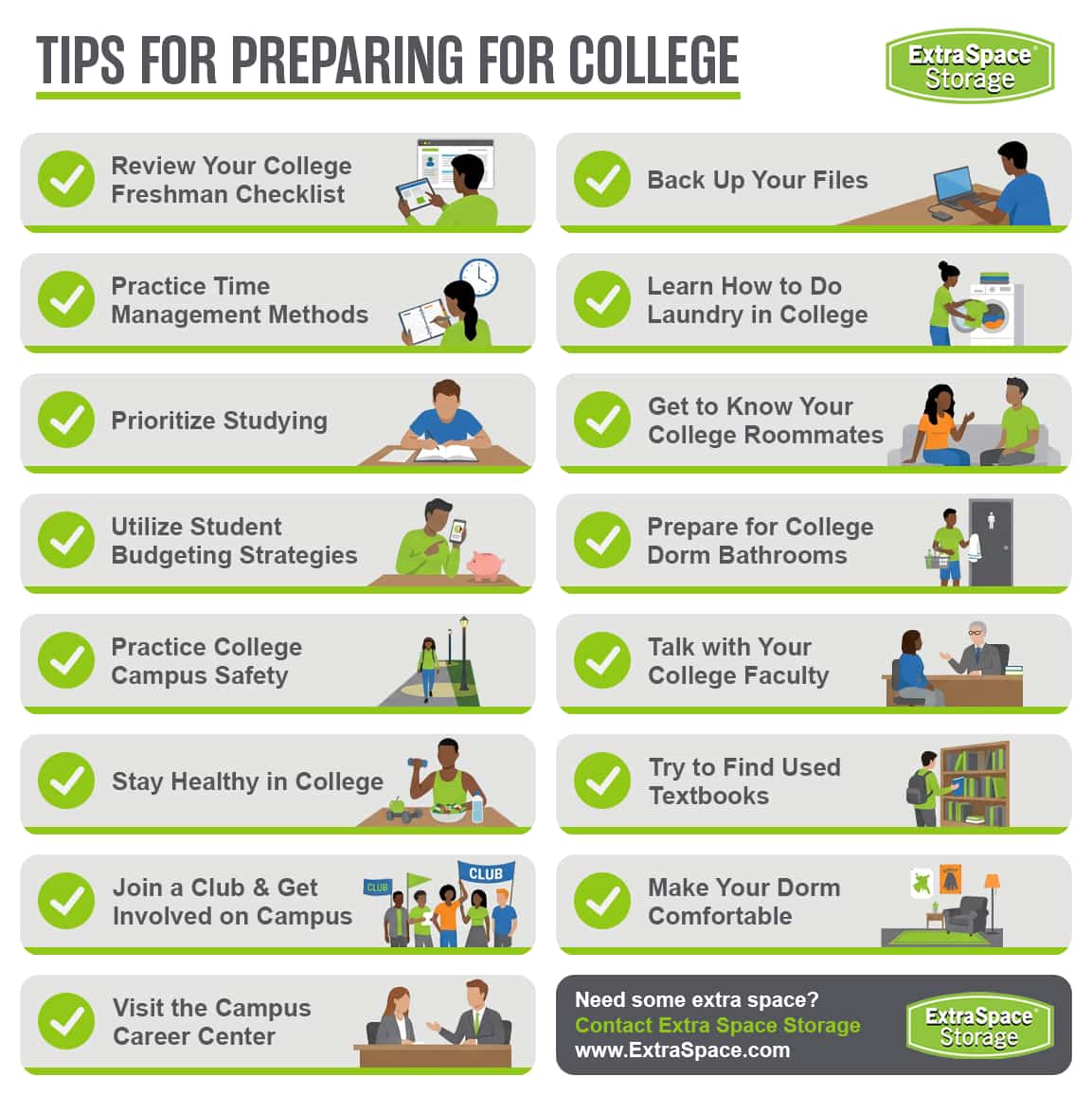
Review Your College Freshman Checklist
To get ahead of the curve of a large life transition like going to college, take some time in the summer before school starts to prepare the following:
- Finalize Financial Aid: Confirm that all your grants, loans, and scholarships have been disbursed, and double-check your student portal for any “outstanding actions” or unsigned promissory notes.
- Attend College Orientation: Take advantage of campus tours to scout residence halls and key facilities, and ask your student guide about policies, dining, and safety. Since tours are student-led, it’s the perfect time to snag “insider tips” on the best study spots and local eats.
- Curate Your Packing List: Create a college packing list of what can stay at your parents’ house, what needs to be in the dorm with you, and what can go to nearby storage for quick access.
- Coordinate with Roommates: Reach out to your future roommate or roommates if you get a name beforehand to get acquainted and decide who will bring the “big” shared items, or coordinate which items you’d like to purchase together once you’re there.
Practice Time Management Methods
Freshman year of college is when many young adults first experience the freedom of making their own schedules. While unstructured free time may seem awesome, it’s important to establish routines early on to build healthy habits. Having a planner, desk calendar, or digital management tools like Google Calendar can help you make the most of your day by blocking classes, planning your social schedule, or building in wellness activities. There’s also a wide range of free time management tools for students to help them stay on track.
Prioritize Studying
Find study methods that work for you. While pulling an all-nighter can happen, it’s better to prepare in advance to mitigate stress and achieve maximum results. Whether it’s color-coding your notes, making flashcards, or using the Pomodoro method, experiment with different studying techniques to see what works best for you. Consider joining or forming a study group, as research shows that working with classmates can help students feel more comfortable asking questions.
Utilize Student Budgeting Strategies
Between meals, weekend nights out, and general college expenses, learning how to manage finances in college can be a challenge at first. Here are a few basic money management tips for students:
- Use budgeting apps like Monarch, Rocket Money, Quicken, and more to see where you’re spending most of your money and how to save.
- Make the most of student discounts on software, digital shopping, dining, transportation, and local businesses near campus by keeping your student ID with you.
- Create a buffer budget by setting aside a small portion of any income—even just $10 or $20 a week—into a separate savings account to prepare for unexpected costs.
- Only use a credit card for small, fixed expenses, and pay the balance in full each month to start building credit as a college student without falling into high-interest debt.
Practice College Campus Safety
Late nights are common for college students, so you’ll want to know how to stay safe on campus while walking back to your dorm or car—stay aware of your surroundings, call someone to chat with during your walk home, and save the campus security number in your phone. Many universities have emergency phones placed throughout campus that connect you with a security officer right away. You can also stay safe at college by downloading apps like Noonlight, Circulo, or bSafe, which use mobile device tracking, emergency contact lists, audio and video recordings, and other security features to help protect your personal safety.
Stay Healthy in College
Academic stress on students makes staying healthy in college important. Get eight hours of sleep each night, take time for yourself, drink plenty of water, take vitamins, and eat a balanced diet. Use the on-campus fitness center to relieve stress or take a brain break. If you get sick, most universities have student health and wellness centers with medical professionals on-site who can provide flu shots, cold medicine, and basic first-aid care. They may also offer free or discounted counseling services to those who need someone to talk to. These healthcare professionals can also help you connect with long-term care providers in your insurance network. Other simple stress-reduction routines and mental health tips for college students include meditating, tackling larger projects in smaller daily chunks, getting regular exercise, and limiting caffeine intake.
Join a Club & Get Involved on Campus
College campuses are full of clubs, athletic teams, Greek organizations like fraternities and sororities, and other opportunities to meet new people. Not only is joining clubs in college great for diversifying your hobbies, but they’re also a fantastic way to make new friends in college and ultimately expand your network. Whether you want to play on an intramural team, audition for the university choir, write for the school newspaper, or be a member of a political action committee, there’s something to do on campus for everyone. Interested in something that isn’t offered at your school? Consider gathering a group of likeminded people and starting your own club or organization!
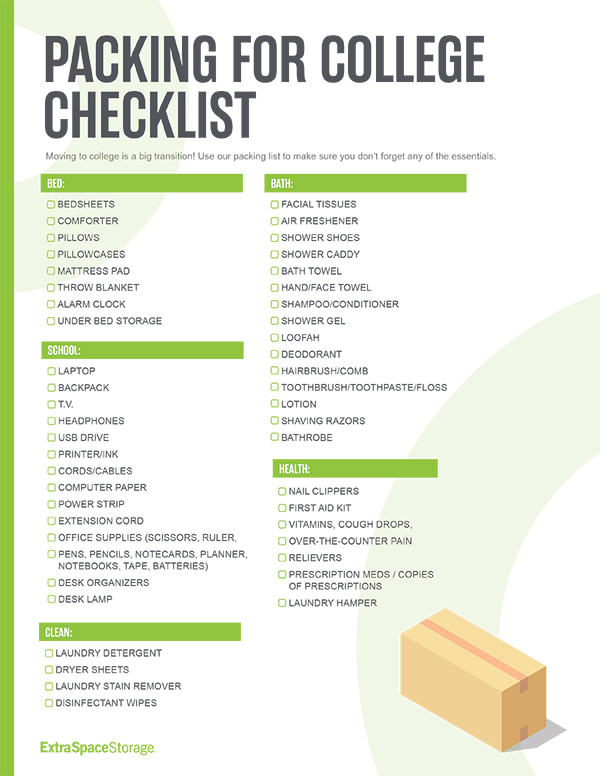
Download Our Packing for College Checklist Today!
Looking for an easy way to simplify your life? Download our Packing for College Checklist now to help you keep things in perfect order!
Visit the Campus Career Center
If you’re curious about post-collegiate job prospects or how to get involved in your desired career field, stop by the career center on your college campus. Career centers are invaluable resources that can guide students toward ideal career paths. The counselors who work here help students find internships, create resumes, and teach how to network—all of which can go a long way after college.
Back Up Your Files
Save yourself major stress by frequently backing up your laptop or tablet files to the cloud, an external hard drive, or a USB drive. You can store all your assignments, papers, and notes, freeing up space on your computer and safeguarding against computer crashes. For a more cost-effective option, options like Google Drive let you save up to 15GB of documents, videos, PDFs, and other files for free.
Learn How to Do Laundry in College
College is all about developing independence, and doing your own laundry regularly is part of that! Your parents will appreciate it if you come home on breaks without a mound of dirty clothes. Most university dorms will have washers and dryers available for resident use. This service can be included in your tuition, but some colleges may require you to pay for it. In this case, it can be helpful to have quarters or a credit card on hand to reload a laundry card.
Get to Know Your College Roommates
Many colleges require freshman-year students to live on campus in residence halls, which means you may have a roommate during your first year. Sharing your space with someone can be a huge adjustment, but there are ways to make it easier for both of you. You’ll want to set boundaries for chores and schedules and ensure mutual respect for the space. This is a great way to connect with someone experiencing the same thing as you, so take time to get to know them!
Prepare for College Dorm Bathrooms
Master your college dorm shower routine by keeping all of your toiletries and shower necessities together in a portable caddy. Keep in mind that residence hall showers are used by many people, and even though they’re cleaned regularly, they can still harbor germs and bacteria. Wearing shower shoes or flip-flops every time you shower can help keep your feet protected! It’s also a good idea to switch out your towel for a fresh one at least once a week and wash it regularly to avoid bacterial build-up.
[nearby_stores map=’0′]Talk with Your College Faculty
It’s natural to feel a bit intimidated by professors and advisors when you first arrive on campus, but it’s important to remember they’re there to help you on your academic journey. Network with your professors by making a point to visit office hours to ask questions—this not only clarifies complex material but can also positively impact your final grade and approach to coursework.
Try to Find Used Textbooks
Shopping at the campus bookstore can be incredibly expensive, as the average cost of new college textbooks is around $170. While you may be able to rent from the bookstore instead of buying, it can still be pricey. Before you buy any books, check out the syllabus from each course to see which textbooks are required—some could be optional, which can save you money. When it comes time to get secondhand textbooks, check out websites like Half Price Books, Amazon, ThriftBooks, or Chegg to see if you can purchase a used or digital version for a lower price. Your campus may also have an online group where you can swap books with other students. When the semester’s over, resell your textbooks at the university bookstore or online to get some of that money back.
Make Your Dorm Comfortable
Life in a dorm can be chaotic, but you can make it into a space that helps you decompress after a long day. Keep stress levels low by regularly decluttering your dorm room and focusing on turning your bed into a cozy haven. Keep your desk clean and free of distractions to help with studying or create a space to work on hobbies. Don’t be afraid to add your own personal touches, too. Decorate your dorm room with functional decor and fun lighting. To ensure you get a good night’s rest, building a wind-down routine—like swapping evening caffeine for tea and putting your phone away an hour before lights out—will help you detach from the day’s frantic pace. Since dorm mattresses are notoriously stiff, invest in a high-quality mattress pad, soft sheets, and a plush comforter to support quality rest. By intentionally curating a space that feels like home, you’ll find it much easier to recharge for the challenges ahead.
***
Starting college soon? Extra Space Storage offers the “There’s Space for Everyone” Scholarship” to help cover college expenses. Register for our newsletter to be notified when the scholarship opens. Sign up now! Once you’ve finished freshman year, rent college stummer storage at an Extra Space Storage facility near your campus.