
Have you noticed your things clustering together throughout your home, no matter how hard you try to keep it organized? Decluttering and organizing your home can give you a sense of accomplishment and make your space more inviting. Whether you’re spring cleaning, decluttering at the start of the year, making space for a new baby, or decluttering to downsize, a well-thought-out plan can help you refresh your space. If you’re wondering how to declutter your home but don’t know where to start, add these four simple steps to your home declutter to find a cleaning solution that’s manageable for you!
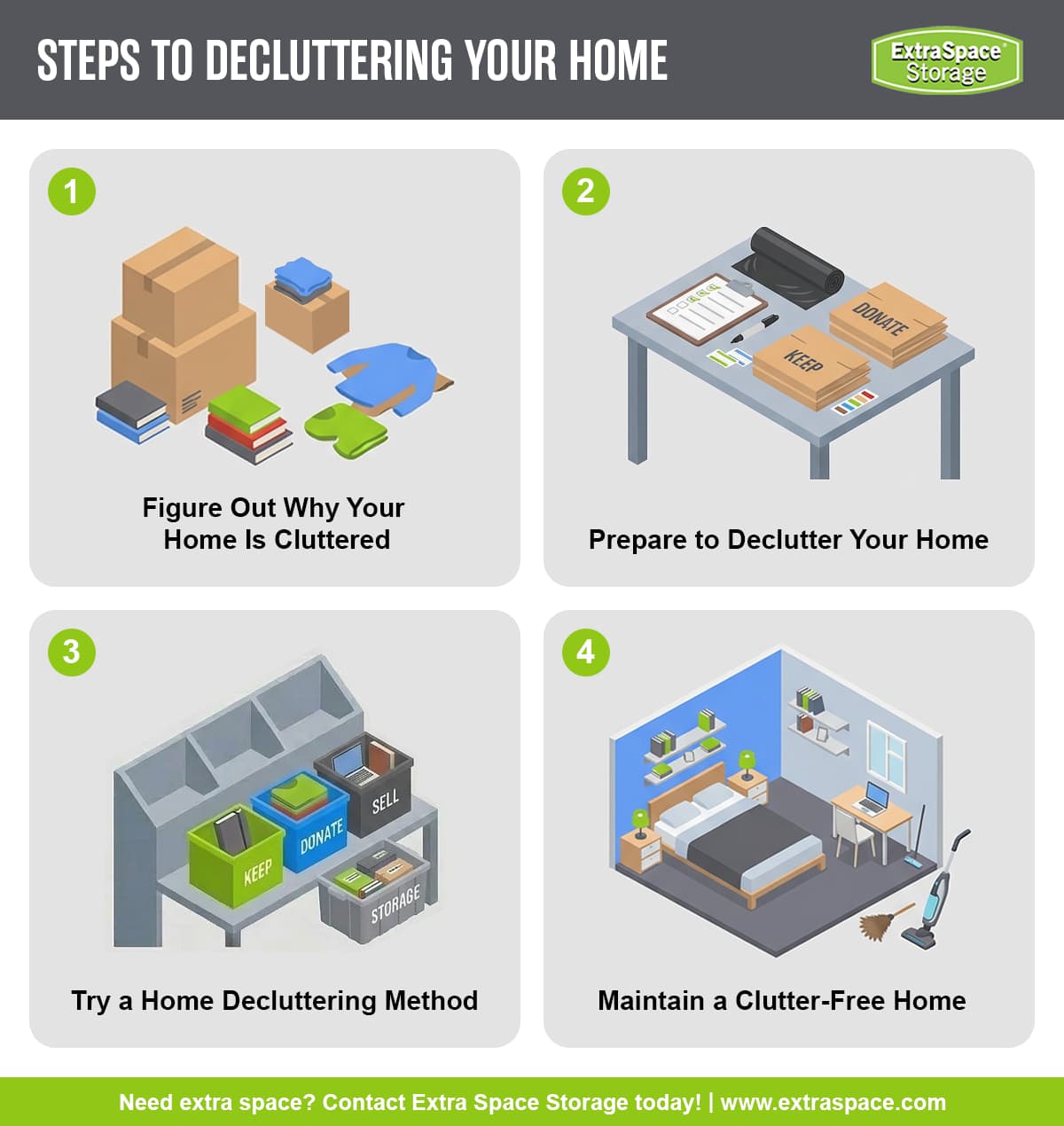
Step 1: Figure Out Why Your Home Is Cluttered
Before you can effectively declutter, it helps to understand why clutter builds up in the first place.
- Living in a small space is a common culprit, since limited storage can make things harder to manage from the start.
- Overaccumulation and emotional attachment don’t help either, since “just in case” items have a way of sticking around long past their usefulness.
- Clutter also tends to pile up when there’s no consistent organization system in place, especially in easy-to-overlook areas like pantries, mudrooms, and closets.
Figuring out which of these applies most to your situation will help you choose the best decluttering methods for your home.
Step 2: Prepare to Declutter Your Home
Now that you’re aware of the issues that are causing clutter, it’ll be easier to figure out the best decluttering tips for your needs. But before you dive into organization and decluttering methods, take a moment to go through your belongings and create a plan to help you tackle this home decluttering project!
Accept That You’ll Have to Let Go
Organizing a home often involves getting rid of things, which can be tough for many people. Not everything has to go, but it does help to be honest about which items you actually use and need. The sunk cost fallacy—the urge to hold onto something simply because it cost a lot, even if it’s no longer beneficial to you—is a common roadblock worth recognizing before deciding what stays and what goes. Do you have broken items sitting around that haven’t been fixed? Chances are you won’t repair them, so it’s better to let them go. Are there sentimental objects you’re struggling to part with? Keep a few favorites and pass the rest on to someone else, or tuck them into a keepsake box that you can revisit when you’re ready.
Gather Your Decluttering Supplies
Collect everything you’ll need so you can declutter efficiently without interruptions. Having supplies ready helps you stay focused and make quicker decisions as you sort. Consider including:
- Trash bags for discarded items
- Recycling bins for paper, plastic, or glass
- Donation boxes or bags
- A separate bin for items to sell
- Storage containers or baskets for items you’re keeping
- Drawer dividers or shelf organizers
- Labels & marker or a label maker
- Basic household cleaning supplies for tackling dust & grime
Make a Plan & Get It on the Calendar
It’s easy to delay a home declutter project when you’re busy, which is why it’s a good idea to schedule time for cleaning and organizing in advance so you won’t have an excuse to put it off. Creating a timeline for your project can help you declutter over the span of a day, weekend, week, or month. If you go in with a plan and commit time to purge, organize, and clean, you can make incredible progress on your decluttering checklist. Have a weekend available? Consider decluttering your garage to give yourself more room to park your car—or finally tackle organizing the junk room where clutter just seems to keep accumulating.
Practice Time Management
One of the hardest parts of decluttering is that it can feel like a big task. But you don’t have to spend a whole weekend—or even a whole day—organizing your home. Set a timer and spend just 15 minutes a day making gradual but significant progress on smaller organizing tasks like kitchen cabinets, closets, or desk drawers. Don’t have 15 minutes to spare? Try these five-minute decluttering projects.
Step 3: Try a Home Decluttering Method
If you don’t already have a go-to home organization system that you use to tidy up at home, use one of these decluttering methods to help you tackle messy spaces efficiently and maintain a clean home going forward.
“One Less” Rule
The “One Less” rule is a decluttering strategy that helps you get rid of one item every single day for a period of time. Tailor this strategy to your goals by getting rid of one item, one full box, or one full bag each day to start clearing clutter from your home. This decluttering method is great for building decluttering into your daily routine.
30-Day Minimalism Game
The 30-Day Minimalism Game turns the decluttering process into a game. Start this challenge at the beginning of the month, so the number of things you declutter each day corresponds to the date. You’ll get rid of one item on the first day, two items on the second day, three on the third, and so on. This game often works best when you challenge a friend or family member to see who can keep getting rid of clutter the longest.
12-12-12 Challenge
With the 12-12-12 Challenge, you go into a cluttered room and find 12 items to throw away, 12 items you can donate, and 12 items that need to be returned to their designated place. This is a great decluttering method for people who struggle tackling big cleaning projects all at once, as the 12-12-12 system allows you to declutter bit by bit, room by room.
Four-Box Method
The Four-Box Method lets you sort items into four separate boxes: One for things to throw away, one for things to donate or sell, one for things to put into storage, and one for things to keep. This home organization method is good for anyone who needs a clear separation of clutter to see what’s not in the right place, what’s worth keeping, and what should be donated or thrown away.
Box & Banish
Box & Banish is a two-step process that starts with you putting everything in boxes and moving them out of your living space, then going through one box at a time to evaluate clutter. One aspect of the idea is if you didn’t miss it or need it while boxed, that item is something you can declutter from your home. Plus, if the visual results of seeing a clean, clutter-free living space will help motivate you to get rid of items you don’t need, then this system is for you!
KonMari Method
The KonMari Method is a decluttering strategy developed by professional organizer Marie Kondo, a Japanese organization consultant who is the author of The Life-Changing Magic of Tidying Up: The Japanese Art of Decluttering and Organizing and the star of the popular Tidying Up with Marie Kondo on Netflix. To help you clear clutter in your home, the KonMari method has you imagine your ideal lifestyle and ask yourself if items “spark joy.” This decluttering method is perfect for people who prefer to declutter by category rather than location.
Reverse Clothes-Hanger Trick
Oprah Winfrey popularized the Reverse Clothes-Hanger Trick, a decluttering strategy for clothing. This method has you turn all the hangers in your closet in the reverse direction for six months. Each time you wear an item of clothing, return it to your closet with the hanger facing the normal direction. After a while, you’ll see which pieces you wear frequently and which ones you don’t. This decluttering system is great for anyone who needs to pare down a wardrobe or organize a closet.
Packing Party
A packing party is a useful decluttering style for anyone looking to live a simpler, more minimalistic lifestyle or for people who are actually moving. It is a decluttering method that involves packing up all of your possessions as if you’re moving. As you go about your daily routine, you can gradually unpack items as you use them. By the end of the month or season, you can donate or sell what’s left in the boxes.
Step 4: Maintain a Clutter-Free Home
After you’ve gone through the decluttering process, it’s best to tidy up on a regular basis so your home doesn’t get cluttered again. Below are some decluttering tips that can help you maintain a clean, organized living space long-term!
Put Items into Storage
With a self storage unit or home storage room, you can keep seasonal items like holiday decorations, winter or summer clothes, and lawn equipment out of the way when you don’t need them. You can even store boxes of clutter that you need to go through one by one (like when you’re using the Box & Banish method), so they don’t take up space in your home. Just make sure to pack and organize your unit efficiently from the start—otherwise you may find yourself needing to declutter your storage space too.
Embrace a Minimalist Lifestyle
A great way to downsize your belongings long term is to live a minimalist lifestyle. Try to keep surfaces clear and don’t leave items on surfaces that aren’t used on a daily basis. You can also simplify your furniture and decor by removing unused or oversized pieces, or temporarily removing items from their spaces to see if you really need them. Minimalist home design encourages you to avoid excess possessions in favor of a clutter-free living space so you can focus more on gaining experiences, building personal relationships, and reducing stress in your life. Investing in quality items, instead of overbuying on fast-fashion and other cheaply-made goods, can help you embrace minimalist decluttering.
Practice Daily Maintenance
Building a few simple habits can go a long way in keeping clutter from piling up again. Quick daily resets are easy systems to put in place—spending just five to 15 minutes each evening returning things to their proper places makes a real difference over time. It also helps to use trays to create designated drop zones for commonly used items like keys, wallets, and charging cords, or a wall organizer for collecting mail, bills, and school papers. Following the “One Touch” rule is another good way to stop clutter before it starts, and a donation box tucked in a closet or storage area makes it easy to gradually offload unneeded items as you come across them. Finally, don’t overlook your digital spaces! Periodically clearing out old emails, photos, and unused apps can help reduce mental clutter and keep you feeling more organized.
Create Routines
Maintaining the progress you made will require you to assess what you have from time to time. Whether this is once a month or once a year, make sure you’re evaluating clothing, accessories, books, furniture, home decor, and food in your pantry or freezer. Going through your items regularly and checking if electronics still work can also help to declutter your home. After evaluating items, you can donate or sell any unused household goods, clothing, or shoes.
Designate a Place for Everything
One of the best home decluttering tips you can follow is to make sure every item you own has a place in your home. Designating where things go can help you avoid dumping items on common problem surfaces like tables, counters, and other areas where clutter tends to accumulate. And if everything has a home, you can streamline the process of regularly tidying up. Plus, it can help you think twice about buying new items if you know you don’t have enough space for them! Investing in smart storage solutions like hooks for coats and bags, bins for toy storage, and drawer dividers for smaller items can help give everything a place in your home.
Get Your Roommates or Family Involved
Maintaining an organized home is difficult if those living with you aren’t on board. Whether you need help organizing the kitchen or keeping the living room clutter-free, as part of your efforts to declutter your home, get everyone who lives in your home to participate. You can even get decluttering help from your kids! This could be as simple as creating a household cleaning schedule or assigning chores to each member of the household so your home stays organized over time.
Try the 30-Day Rule
When you see something you’d like to buy, wait 30 days. This preventative decluttering strategy helps you resist the urge to impulse buy. If you see something you really want, take some time to think about how it will serve you and your home. Do you have something like the item already? Will you use it just once or twice? If so, skip the purchase to save money and keep your space free of clutter!
Stick to the “One In, One Out” Rule
To keep your items from piling up, the “One In, One Out” rule allows you to buy something you need in exchange for donating an item you already own. For example, when a new shirt goes into your closet, an old one should come out. This decluttering strategy puts a limit on the number of your possessions and helps ensure you don’t accumulate more than you remove.
***
Need a secure place to store items while you’re decluttering? Extra Space Storage has convenient storage facilities located throughout the nation. Find a storage unit near you!