Podcast
Extra Space Storage's Q1 2026 Earnings Report with CEO Joe Margolis
What does it mean to be the best in the industry, not the biggest? McKall Morris sits down with CEO Joe Margolis, who has been with Extra Space Storage since the company had just 12 stores, to find out. From Q1 2026 earnings to lessons from a $15 billion merger, Margolis makes the case that long-term value, strong culture, and doing the right thing always win.
Season 1, Episode 4
In episode four of the Inside Extra Space Storage podcast, McKall Morris talks with Joe Margolis, Chief Executive Officer of Extra Space Storage, to break down Q1 2026 results and what they signal about the state of the self storage industry.
Margolis walks through Extra Space's Q1 outperformance, explains why the company held guidance steady despite beating Wall Street consensus, and shares how strong culture and values define what it means to be the best—not the biggest—operator in self storage.
Transcript & Chapters
00:00 — About Inside Extra Space Storage Podcast
McKall: Welcome to Inside Extra Space Storage, a podcast where we bring on our leaders and we talk about leadership and business and self storage. And we now have the leader—our CEO—on with us. So thank you for joining us, Joe.
Margolis: My pleasure. Glad to be here.
00:56 — Meet Joe Margolis, CEO of Extra Space Storage
McKall: Joe has been CEO of Extra Space for around ten years now. So the entire time I've been here, you're my only CEO. But you've been working with Extra Space since 1998, is that correct?
Margolis: Yeah. In all different roles. But since 1998, when we had 12 stores.
McKall: Wow. Yeah, that's a lot of growth that you've seen over that time.
01:18 — The State of the Self Storage Industry
McKall: We are just coming out of our Q1 2026 earnings. So we're going to start by talking a little bit about the industry, the state of the industry, and our earnings. For anyone joining us after and listening after, this is as of Q1 2026. To start, how would you describe the state of the self storage industry right now?
Margolis: We're in the recovery period. If you go back a few years, storage was a winner and outperformed during COVID. We had kind of an unprecedented growth at the stores—revenue growth, NOI growth, unprecedented FFO growth—that attracted a lot of capital to the sector, a lot of development. And then we've had three years where we've been on more of a down cycle.
Margolis: Down cycle for self storage is flattish to slightly positive. And that's one of the tremendous things about our property type. There are a lot of office owners or mall owners or hotel owners that would love it if their worst years were flat.
McKall: Yeah, we're looking at our down cycle and being like, our dreams would be the downside.
Margolis: Exactly. But we're clearly in the recovery stage of the cycle. We've had positive new rates to new customers for about 11 months now. We've had a couple of quarters now of positive revenue growth. So we're feeling better about things.
02:44 — Q1 2026 Earnings Highlights
McKall: Coming out of our earnings, what's your one-minute highlight? What are the headlines that you wanted people to take away from our earnings report?
Margolis: We led the industry in revenue growth. We had very solid expense management. We beat our expectations and Wall Street consensus on every metric. So it was really a home run of a quarter. Very, very good.
03:11 — Why Extra Space Storage Held Guidance Steady
McKall: It's nice to have a good quarter. Looking a little more in depth, are there any questions that have been surprising you from analysts or Wall Street after this earnings report? Anything you're like, "They should be asking about this?" Or anything where you're like, "They're asking about this, but we should be looking over here?"
Margolis: The most common question we get is "Given your outperformance in the first quarter, why didn't you raise guidance?" And the answer is twofold. One is we're not into the leasing season yet. We all know the importance of May through July for our full-year results, and it seems a little premature to raise guidance before we get there. The second is we do have some macro risks that we didn't count on at the beginning of the year when we set guidance. We didn't predict a war, four or five or six dollar gas prices depending where you are in the country, inflation, low consumer confidence.
Margolis: And hopefully, for a lot of reasons, all of that ends soon. But that is a risk to our future performance.
04:15 — How Macro Risks Are Affecting Customer Behavior
McKall: How are we looking at those macro risks?
Margolis: It's kind of interesting. I would have guessed that we would have seen all of that flow through into customer behavior. And we really haven't so far. Bad debt is actually down at 1.5%, down from 1.7% at the end of the year. Customers are accepting rate increases at the same rate that they have historically—at historically low levels. So we haven't seen customers pull back yet.
McKall: So customer strength is, if anything, a little better?
Margolis: A little. Oddly, right. But we'll see how long these inflationary pressures go on until the consumer decides "I can't afford a storage unit," or "I can't afford that size of a storage unit," or whatever.
05:09 — Building Guidance from the Ground Up
McKall: It's interesting that investors had questions about our guidance. We had our guidance higher than our peer average. How did you feel confident at the beginning of the year that we could hit above-peer-average guidance?
Margolis: We have a very in-depth and sophisticated process to create our guidance—from the stores up through the group, the pricing group, the data science group, and the operations team. Lots and lots of input. And I have tremendous confidence in the team and their expertise and their ability to produce accurate numbers. So I rely on them, and I'm very comfortable doing so.
05:53 — Extra Space Storage’s Culture of Innovation & Technology
McKall: We do have a ton of data at our company that we use. How do you look at the Extra Space culture around data and around our technology?
Margolis: We were an industry leader in leaning into technology, for a number of reasons. We were with Google when they just started, doing beta testing with them. And that's why we're on one of their advisory committees. I think we're the smallest company to have that kind of close relationship with them. It's always been very important to us.
Margolis: We've made the appropriate investments and tried to be innovative and lean in and try new things, and it's created a competitive advantage for us.
06:51 — What Accretive Growth Really Means
McKall: We love to talk about innovation here as one of our values and a key part of our culture. But if I can pivot a little bit to our growth strategy, whenever you talk about growth, you like to use the word accretive. Can you tell me what accretive growth means to you and how you look at our growth strategy?
Margolis: Our job is simple, and it's to make money for our shareholders. It's not to be big. It's not to do exciting deals. It's not to do activities that don't create long-term value. So we want to grow this company. Scale is important and an advantage in the self storage industry, but we're not just going to be the high bidder and go out and buy things, because then we're going to destroy our shareholders' value, not increase it.
Margolis: Accretion is the word used in this industry to represent creating value for shareholders.
McKall: As the comms person, we get into the little word things where it's like, "I know Joe always wants to say accretive growth, not just growth. And I also love to say we're the largest in the industry." And you're always like, "Not the largest—the best." The goal is never the biggest for you. It's always to be the best operator.
Margolis: I remember when we had that celebration after we merged with Life Storage and your team made those T-shirts for our food truck celebration that said "World's Largest Self Storage Company." And I told you to box them up and send them to South America with the New York Giants Super Bowl T-shirts.
McKall: Little did you know, what I originally pitched was "Universe's Largest." So, the difference between the PR person and the CEO.
Margolis: We still have those T-shirts around somewhere. But being the biggest is not as important as being the best. And being the best means creating the most value for our shareholders, being a great place to work for our employees, and being sustainable.
08:52 — What Makes Extra Space Storage a Great Employer
McKall: What do you think makes Extra Space a great employer? What's our secret sauce for hiring and retaining great employees?
Margolis: I think we all care for each other, and we all treat each other the way we would want to be treated. And that has to be the same whether you're an assistant store manager who's been here three months or a senior VP who's been here 20 years. You deserve the same amount of respect. You deserve to be treated properly. You deserve a voice at the table. You deserve a career path. You deserve honest communication. You're part of the team. And if we can all treat each other that way, then people will enjoy coming to work and get something out of it and give more into it. And I think as we've gotten bigger and bigger and bigger, we—all of us, not just me—have done a good job with that.
McKall: When I think of that idea of bringing your voice to the table—we have opportunities where you and other leaders are out meeting with store employees. We have a super open door policy here at the office. I've seen analysts who are maybe a couple of months in just walk into your office to have a conversation in a way that you just embrace, like "Yeah, this is the kind of culture we have, where every voice matters and every person can bring up an idea." It's cool to see that it's not just something we say; it's also in practice.
McKall: Which takes me to a personal question: I also know that you answer your emails incredibly quickly—emails from all kinds of employees on all kinds of things. What is your email inbox strategy? How are you responding to all these employees so quickly?
Margolis: Clear it out. Don't think about it. Just don't let the backlog build up. Keep it moving.
Margolis: I do some things well. One thing I do well is take in and process information very quickly. So I don't have to think about things a lot. I can just move on to the next one.
McKall: For people who don't know, Joe's background was as a lawyer. And with that, you are extremely quick at reading and giving feedback. If you didn't want to have your business career, I think you could have made a great copy editor because I will occasionally get things back from you and think, how did he see that comma? Very, very quick with the reading and the writing.
Margolis: I don't know if this is a compliment or not.
McKall: No, no, it is. But it is interesting to see because we have grown so much in the last ten years especially. When I started, we were what? Under 4,000 employees? Now we're over 8,000. That is a lot of growth.
11:27 — How Extra Space Storage Maintains Culture at Scale
McKall: To be able to maintain an open door policy with employees, but also maintain this culture, how do you think about that?
Margolis: I think it's two things, really. One is to talk about it—like we're doing right now. And to make sure when we hire people, we hire people who exhibit the values that we cherish. Talk about them in meetings. I've been in plenty of meetings where we made a decision and someone will say, "Is this decision consistent with our values?" And that's important to do. We always have to keep them front of mind.
Margolis: And secondly, everyone in the company has to be the guardians of our values. What that means is one, they have to live our values, but two, they have to be willing to raise their hand and say, "What I just saw, or what that person just said, or this thing we're about to do is not consistent with our values. Let's think about it again." Because I can't be the keeper of the values. Everyone has to be. And if everyone takes on that burden or that mantle, then we have a shot of, as we become bigger and bigger, not becoming the big bureaucratic machine where people are cogs. That would break my heart. We can't do that.
13:05 — Advice for New Managers
McKall: We've obviously had a lot of growth, which has created a lot of opportunities for people in this company to grow and take on new roles. And I think that's going to continue. What advice do you give to new managers—someone taking on maybe managing a new project for the first time or managing people for the first time?
Margolis: You need to work hard and be excellent at your job. You need to constantly ask questions. Don't be afraid to say, "I don't know this, can you teach me?" or "I know I've asked this before, but I still don't quite get it." No shame in any of that. Admit your mistakes. Say, "I think I did this wrong. I made a mistake. Teach me how to do better." Keep learning. Reach out to people. Ask questions.
Margolis: One thing I love about Extra Space is that people can get a phone call from someone they've never met before in the organization who says, "Hey, I think maybe you could help me. Would you answer this question?" And people will help each other.
McKall: Yeah, it's a super collaborative environment. We really do have good intent for each other. And we all treat each inquiry as if it comes with good intent. That level of trust makes it so easy to operate.
Margolis: Even when I over-mark up your documents.
McKall: I know, and I know your intent is that every comma is perfect. And I do need them to be perfect. Thank you.
14:29 — Where Margolis' Drive Comes From
McKall: You are always talking about the company improving and doing better, and you have this very strong drive toward improvement. Where does that come from? Personally.
Margolis: I don't know. It's inherent, I think. I've always had it. I'm a very competitive person. I like to win, and I want the company to win. I just have this drive.
14:59 — Football, Team Sports, & Business Lessons
McKall: Part of your background that occasionally has come up is that you played college football. Do you think that playing a team sport at a high level was part of setting you up? Is there anything you learned from that that you've brought into your work, even to this day?
Margolis: I think any team sport is a great training ground for collaborative work like we do. I think football in particular is the ultimate team sport because most of the people on the field are invisible. They're not the quarterback. And the amount of practice and work time compared to the amount of time you actually play the game is so disproportionate. You have to put in hours and hours and hours of work for every minute you get to play. And I think that's good training for business and for a career.
McKall: I would say basketball is the best team sport, but we can move on.
16:09 — What Margolis Is Proud of Outside of Work
McKall: What is something that you're really proud of outside of work? Something you've accomplished or that you look at and think, I'm so proud of that? Because I know there are so many things here that you're proud of—our team, the merger, our growth. But something outside of work.
Margolis: I have three children and I'm really proud of the adults they've become. They're just good, moral, hardworking, loving people. And it's largely because of my wife, but I'm very proud of them.
McKall: You are a pretty private person at work, but whenever you speak of your children, it's so clear that you're very, very proud of them. Thank you for sharing that.
16:53 — This or That Speed Round
McKall: We're doing a speed round of This or That. I'll say two things and you tell me which one you choose. Rapid fire. Don't think about it too hard.
McKall: Star Wars or Star Trek?
Margolis: Neither. I'm more of a history nerd than a sci-fi person.
McKall: Coke or Pepsi?
Margolis: Neither. I don't drink soda.
McKall: Dogs or cats?
Margolis: Dogs.
McKall: Sunrise or sunset?
Margolis: Sunrise.
McKall: Dining out or dining in?
Margolis: Dining out.
McKall: Baseball or basketball? You can't choose football.
Margolis: Basketball.
McKall: Hike in the mountains or walk on the beach?
Margolis: That's harder. I'll go walk on the beach because I get to do it less than hike in the mountains.
McKall: We do live in the mountains. Drive-up unit or climate-controlled second-floor unit?
Margolis: Drive-up.
McKall: The Star Trek / Star Wars no-answer is shocking to me as a Star Wars fan.
Margolis: I'm more of a history nerd than a sci-fi person.
18:16 — Book Recommendation: The Wager
McKall: I have seen you, when people ask what business book they should read, always recommend a history book instead. Have you read anything lately that you'd recommend?
Margolis: I read The Wager. It's a story of an 18th-century exploratory trip on a boat that goes horribly, horribly wrong and how they survive.
McKall: I'll put it out there as the history book recommendation for this quarter, at least.
18:58 — Negotiation Advice from a Former CIO
McKall: Before you were the CEO, you were the Chief Investment Officer here for a couple of years, which means you were involved in a lot of our negotiations. What advice do you have for someone who's in a negotiation? How do you handle one?
Margolis: The most important thing—and this is going to be a little counter to the competitiveness and desire to win—is that you want to win, but you want the other side to feel they won too. You need to sit down, and the first thing you have to figure out in any negotiation is what's important to the other side. And that way you can make the trade-offs and create a deal where the counterparty also won and also got something out of it.
Margolis: That's how you get a good reputation in the industry, get repeat deals, get referrals. To be a tough, hard negotiator—be pleasant, be fair, stick to your word, and try to come out with a win-win solution.
McKall: I think that is our reputation in the industry.
Margolis: And it's consistent with our values and how we treat people.
20:25 — What Extra Space Looks for in Leaders
McKall: You're on the executive team and involved in some of our promotions of leaders. What do you look for when you're looking at someone to become a leader at Extra Space? What kind of traits, what kind of characteristics?
Margolis: To be promoted, you need to be excellent at your current job. We're not going to take a mediocre performer and move them up. You need to have exhibited the ability to work as a team, to overcome difficulties, to deal with tough situations. You need to be a good manager of people, which means hiring well, treating your people well, and sometimes dealing with poor performers—either coaching them up, finding them a better place, or helping them out in a gentle way. And I think just fitting in with our culture and people and values is also important.
McKall: I feel like it's important for leaders to be good in good times and in hard times.
Margolis: Yeah, that's a really good point.
McKall: I was pretty early in my time here when the pandemic hit. And I think of the leaders I got to work with then on the different committees trying to find solutions, and watching how they reacted. Very open to collaboration, but also willing to draw some lines and make some hard decisions. It was an interesting case study in that kind of leadership.
Margolis: Learned a lot through the pandemic. It was a tough time.
22:18 — Leadership Lessons from the Pandemic
McKall: What is a big leadership lesson from that time for you?
Margolis: I think the pandemic taught me a lot about leadership. One thing that I think and hope made me a better leader is—things were happening so fast. A state would issue some new rule at noon on a Tuesday and we had to respond immediately. And I realized that I couldn't keep all the decisions in my office. I needed to push decision-making down as far as possible in the organization. Otherwise we couldn't react fast enough.
Margolis: And that was a little bit against my personality. I'm a bit of a control freak. But people made great decisions. And sometimes they didn't, and the world didn't fall apart. It was a really good lesson about empowering people.
McKall: It definitely would have been way too much to have one person trying to make every call. There were so many city guidelines popping up, really interesting employee situations. And empowering different leaders to make decisions and seeing how it turned out, it's such an interesting business case study.
23:23 — Key Takeaways from the Life Storage Merger
McKall: The other business case study we talk a lot about is the Life Storage merger. What's a big takeaway from that for you? Something you learned about leadership or about business from that merger?
Margolis: I learned a lot of technical and specific things about doing a $15 billion merger. If we ever do another one, we'll have those lessons.
McKall: Two publicly traded companies—that was technically really interesting.
Margolis: In 135 days, which is the other thing.
McKall: Crazy when you put it in days.
Margolis: So one story from that that I think is really telling about our company—and has been beneficial to us—is that less than two weeks before we were getting ready to close, their CFO died doing a triathlon. Young family guy, couple of kids, super person. And the first call we made was to their CEO and said, "Whatever severance he was going to get if he had been alive when this ended, we want to find some way to give that to his family." And we didn't need to do that.
McKall: It would have been outside of the contract.
Margolis: We didn't need to spend that extra money, but we thought it was the right thing to do. That story has gotten out in the industry, and the value to us of people saying, "When you deal with Extra Space, they're going to do the right thing" has been very valuable. You don't do things like that because you expect some benefit. You do it because it's the right thing to do. But it's nice to see that it comes around.
McKall: It's one of those things where we talk about our values a lot, and then in a moment of crunch time—big deal, a lot going on—do we really live them? And I think that's one of those great examples of, without a question, everyone being like, "Yeah, that's our values. That's how we live." And it only reinforces what we've been saying this whole time about Extra Space and the type of partner and collaborator we are. But thank you for sharing that story. I don't think we've ever actually said it anywhere on record.
Margolis: There's enough time now.
McKall: Harper shared her story during the Life Storage merger, telling you and Gwyn that she had been diagnosed with breast cancer the same week she learned about the merger. And she told that story from her perspective as another moment where the merger really pushed us all to the test. How much do we really live our people-first values? And in her opinion, that's when you bought her loyalty forever. The merger was an interesting time where it pushed us all to the test. And I'm proud of how we came through.
Margolis: It was nice for Harper to share that.
McKall: Well, I think that's our time. Obviously I could keep pestering you with questions, but you have a lot of other things to do, like run the whole company. I so appreciate your time.
Margolis: Thank you. Appreciate it. It's good talking to you.
McKall: And thank you to anyone who joined and listened or watched with us. If you like this conversation, we have more episodes out and more coming. Subscribe and keep listening.
About the Host and Guest
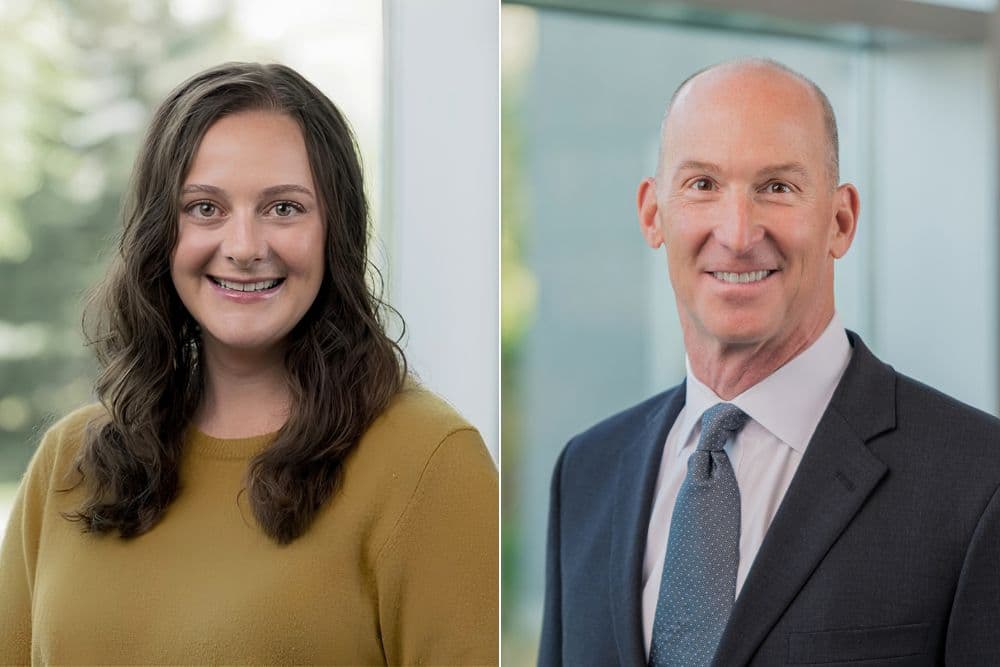
Joseph D. Margolis, Chief Executive Officer
Joe Margolis has served as Chief Executive Officer since January 1, 2017. Previously, he served as Executive Vice President and Chief Investment Officer at Extra Space Storage. Margolis was also Senior Managing Director and Partner at Penzance Properties from 2011 to July 2015. Prior to these roles, he was a co-founding partner of Arsenal Real Estate Funds, held senior positions at Prudential Real Estate Investors and The Prudential Insurance Company of America, and was a real estate associate at the law firm of Nutter, McClennen & Fish. Margolis is a graduate of Harvard College and Columbia University School of Law.
McKall Morris, Director of Corporate Communications
McKall Morris is the Corporate Communications Director at Extra Space Storage. She joined the company in March 2019 after several years in the airline industry. Since joining Extra Space, Morris has played a key role in advancing internal and external communications initiatives, helping shape how the company is represented across all channels. She holds a Bachelor's degree in Communications from Brigham Young University and an MBA from the University of Utah.
Read more about CEO Joe Margolis, his recognition as CEO of the Year Honoree, and his professional advice on Leading Voices in Real Estate. To learn more about Extra Space Storage, visit our investor site, or explore the next step in your career by viewing current job openings. This transcript was auto-generated and edited, including paraphrasing for readability. For the full conversation and exact quotes, listen to the complete episode on YouTube, Apple, or Spotify.