Podcast
How Extra Space Storage Builds Teams with Paty Portilla
How does Extra Space Storage create and maintain cohesive district manager teams across a fast-growing organization spread across the U.S.? McKall Morris sits down with Paty Portilla, DVP for Northern California and Hawaii, to talk about how the company matches store employees to the right store, why coachability matters when building teams, and what it looks like to lead with vulnerability.
Season 1, Episode 7
In episode seven of the Inside Extra Space Storage podcast, McKall Morris talks with Paty Portilla, DVP for Northern California and Hawaii, about her unexpected path from 15 years in quick service restaurants to becoming a leader at Extra Space Storage.
Discover how Paty thinks about matching store employees to the right store, why coachability matters when building a district manager team, and what it looks like to lead with vulnerability in a fast-growing organization.
Transcript & Chapters
00:00 — About Inside Extra Space Storage Podcast
Portilla: In the beginning, you don't know what you don't know. And in this role, I've been given the grace to learn and to make my own mistakes. And I think what I look for now and what we've consistently hired for is coachability.
Morris: On Inside Extra Space Storage, we sit down with the experts building, operating, and scaling Extra Space Storage to not only be the world's largest self storage operator, but one of the most trusted names in the industry. If you care about where Extra Space and the self storage industry is headed, you're in the right place. Welcome to the show Inside Extra Space Storage, where we bring some of our excellent leaders on to the mic and hear their advice, hear their career journeys, and a little bit about them. We're so lucky today to have Paty. Paty is a DVP for us in California. How would you describe your reach in Northern California?
Portilla: Yeah, Northern California and Hawaii.
Morris: I was like, "I know I'm missing something there." Oh, yeah, you've got the island. That's an added benefit. Paty's been with Extra Space—is it nearly 11 years?
Portilla: In July.
Morris: And you've been a DVP for us for—
Portilla: Four and a half years.
Morris: Perfect. So one of our really experienced leaders. It's funny, I remember my first memories of working with you. I had just joined the company. We were on a committee together. And when you just join a company, you're like, "This person has clearly always been here, like a rock, a foundation." And then I looked up and realized you were kind of newer to being a leader in the organization at that time. But in my mind, you had always been Extra Space forever.
Portilla: Oh, that's so funny.
01:33 — From Starbucks & Chipotle to Self Storage
Morris: Where were you before you came to Extra Space? How did you get here? I love an Extra Space origin story.
Portilla: Thank you for the lovely intro. How did I come to Extra Space? I fell into storage by mistake. I would say—
Morris: Very few people were dreaming of this since childhood, so I think that is most of our story.
Portilla: My career started in quick service restaurants. I did 15 years in quick service restaurants through college and grad school. My journey started with Starbucks—I did five years there. I was at Jamba Juice for five years, and then I spent five years at Chipotle Mexican Grill. And that's really where I learned multi-unit leadership. Then one day I looked up and my daughter was ten, and I didn't remember the last four years of her life very clearly because I was always in the restaurants.
Morris: Those are 365-day operations—not day-off type things.
Portilla: Absolutely. I reached out to somebody I had worked with prior at Starbucks who was at a storage competitor and asked, by any chance, are you hiring? They'd previously attempted to recruit me, and I didn't even know what storage was when they tried to recruit me. I was new at Chipotle and I was like, "Are you kidding me? I work for this amazing company, I'm not leaving." But luckily, when I reached out, they were hiring and they were hiring in my market. So I joined the company as a DM and I did that for 19 months and quickly realized that I'd made a mistake. I hadn't done any research into the company. I followed a leader there, and I was fortunate that they gave me the opportunity, but it definitely was not for me.
03:14 — Why Portilla Almost Left the Industry
Portilla: You have those moments in your career where you're like, "Is it the industry or is it the culture?" I just knew that I'd come from these big people-culture companies, and I did not fit in at that storage competitor. And I don't know what they're like today, obviously, but at that time, for me, it was a no.
Portilla: I was working harder than I worked in the restaurants, and I thought, "How did I get worse? My work-life balance had gone backwards." We had some peers who had come over to Extra Space and been recruited here, and they reached out and said, "You've got to come try this." And I said, "Absolutely not."
Morris: You're like, "It's the industry—I'm over all of it."
Portilla: Yeah. I was like, "I hate storage, I can't." And they said, "No, no, no—you don't hate storage, you just hate the culture there. We've seen both sides now." And they graciously extended a hand. I interviewed here and pretty quickly realized, "Oh, this is probably closer to where I want to be on a personal level." That was ten and a half years ago and I haven't looked back. It's been amazing. I always tell people you're gonna drag me away from my desk—I don't really ever want to do anything else. It's funny, I don't think of it as storage. I think of it as people. And that's how I ended up here.
04:37 — Learning to Let Her Guard Down in the First Six Months
Morris: It is a people-first culture in a lot of ways, and self storage doesn't have to be—we've chosen it to be. I think that's kind of special. Other than the people piece, what else was it about Extra Space that caught your eye or made you realize, oh, this is different?
Portilla: It's funny, because that small time I did at the competitor did a lot more damage than I anticipated. The first six months that I was here, I wasn't a good culture fit, probably. I was back on my heels and I was very defensive, and I came from a place of "I have to prove I know everything."
Portilla: You just go into job protection mode.
Morris: You're coming in a little scared.
Portilla: Absolutely. And I think it took me six months to buy into the culture because I was so concerned that if I said "I don't know how to do that" or "I don't know what you're talking about," it would be held against me. And so in hindsight, I really look back at that time as kind of a waste of time on my part. Then once I let my guard down and realized every person I met genuinely wanted to help—and if they didn't know how to help me, they got me to the right person—it was just like, "Well, no duh." I realized I was the one that wasn't acclimating as quickly. And that was really what made me realize I made the right choice—the teamwork here. The lack of being scared. I would say—
Morris: Yeah, there's a lot of space here to feel like we really give each other permission to try things and learn things and make mistakes. That was something when I joined—I did something goofy that everyone could see, and it was just, "Noted, move on." There's that ability to let people try things, which is really interesting.
Portilla: I have six DMs on my team that are two years or less in the role. I spend a lot of time talking to them about, "I can't wait till you make the first mistake and realize that we're going to help you, as long as we know about it." And every single one of them, the first time they make a mistake, they do go into that "Oh no, I really messed this up, what's going to happen?" And then we get to show them, "See? Nothing. We're just going to learn from it. This is what you could have done." And they think it's funny that I look forward to when they're going to make their first mistake so that they can learn quickly. That we're that culture that shows you the right way and we move on. This isn't going to define you for the rest of your career.
Portilla: What helped me here was that I had spent 19 months living in fear of losing my job every day, and I knew I never wanted to have that feeling again. So it's amazing to be a part of creating that culture and that space for my team now.
07:35 — Path From District Manager to Division Vice President
Morris: You came in as a DM, now you're DVP. A district manager, for our audience—how many stores does a DM typically have in their area?
Portilla: When I was a DM, I had 18, and then at one point I had 22. In my stores, on average they have 16.
Morris: So a district manager is over about 16 stores and the employees there, and then you as a DVP, all the district managers report up to you. How many DMs do you have currently?
Portilla: We have 11 in my division, and six on the newer side.
Morris: That's incredible—you guys have been seeing a lot of growth.
Portilla: We have. We're at about 170 stores in my division now with 11 district managers. We're really fortunate that we get to manage some of the highest rent per square foot in the company. So intentionally we try to keep my team's store count down because of the revenue that they manage.
Morris: Some of those big San Francisco stores are really interesting properties. Why is it such an interesting market?
Portilla: Even my Oakland East Bay market are very operationally challenging, high-revenue properties. So we really try to balance the workload for those DMs because they see more employees and more transactions.
09:01— What Portilla Actually Looks for When Hiring District Managers
Morris: When you're thinking about your teams, especially your DMs, what are you looking for when you're hiring and training a district manager? What are the traits that make someone successful on your team?
Portilla: My perspective has changed in the four and a half years that I've been in the role. In the beginning, you don't know what you don't know. And in this role, I've been given the grace to learn and to make my own mistakes. What I look for now—and what we've consistently hired for—is coachability.
Portilla: It sounds really basic, but it's not. I prefer coachability over tenure a lot of the time. I want somebody who has a growth mindset. I want somebody who's a strong communicator, not just to their team but to me and to the divisional team. That openness is what I'm looking for. I can hire anyone who knows exactly what they're doing at all times—that's not going to help me grow, it's not going to help our team grow, it's not going to help our store employees grow. I want somebody who's wanting to learn and wanting to pass on that knowledge. We always say it's great if you've got the secret sauce, but if you don't want to share it, you can't be on our team—because we all have to win.
Portilla: We win as a team. I lead from a place of vulnerability, and candidates have to be able to respect that. Some people need leaders who are very strong and answers-oriented, very directive. That's not me. I'm upfront about my style, "Hey, I want to make mistakes. I want you to help me. I want to help you."
Morris: A collaborative environment.
Portilla: Absolutely. Coachability and vulnerability are critical to me as a leader.
11:03 — How Portilla Leverages Each DM's Individual Strengths
Morris: That makes a ton of sense, and it sets up for the ability to change and grow. Our industry is growing so much, things are changing so much with technology. Four years ago, when you were promoted to DVP, we had what, 2,000 stores? Now we're over 4,000 and aiming for that 5,000-store mark someday soon. That alone is a lot of change. How does your team approach the growth, and how do you see that mindset work well for your leaders?
Portilla: How they approach it is they each have their own style. But one of my most important roles, I think, is understanding each of their strengths. I try to reach out to someone on my team who I think is going to be excited and passionate about whatever change is coming on board. I try to leverage them to lead that initiative in the background organically. I have an expert on opening stores in my division, and when I get a question, I'm more than likely to say, "Hey, go to Jenny—she's opened a ton of stores." or "Hey, go to George—he knows how to transition stores." Every one of them has something they're passionate about. I have to know what that is and then tee them up to shine. Give them the spotlight, give them their moment in the sun, and then they help their teammates.
Portilla: That really just helps us grow as a team, and it creates a safe space peer-to-peer for them to ask questions of one another. They have to have a safe space. They don't want to come to me with every question, I get that. They want to be impressive, I respect that. So giving them a partnership within the team helps them understand "I can ask whatever question I want, and no one's going to judge me here."
13:05 — How to Keep a Geographically Spread Team Connected
Morris: That's such an important thing to build because your DMs can be pretty spread out—they could really be operating in their own silos. But you're focused a lot on having a team that actually is a team, playing to each other's strengths and relying on each other. Self storage can be disconnected if we don't try really hard at that.
Portilla: One hundred percent.
Portilla: One of the challenges in my division is that most of the DMs do not live near the divisional office. They're commuting about an hour or up to two hours in, or they have to fly in.
Morris: Hawaii—you're not making that drive.
Portilla: I only have two DMs that consistently work in my office. So we've very intentionally created a cadence—every six weeks, we want to see you come into the office—you pick the Monday, but we want you here. We do things virtually to try to stay connected. We do a question of the week, as silly as that sounds, but it gets the whole team chatting on Monday morning. We try to share best practices virtually. It's something we're improving on—we haven't mastered it for sure. But what's been really great is that in the last year, some of the new team members have come in with great suggestions on how to connect. And so there's a lot of thought that goes into how we've tried to bring the team together.
14:31 — Why Store Teams Should Reflect Their Communities
Morris: Speaking of building teams and how you put them together—our store teams are the face of our company to customers. And figuring out how you build a great store team is really interesting, especially in your market, where you have such a wide range of properties and types of needs. How does your team think about placing store employees in different properties?
Portilla: This is one of my favorite things to talk about and to do. The strategy behind how we staff the stores—we have an extremely diverse market, from Hawaii to Reno to the Peninsula to Oakland. One of the things that's really important to me as a leader, and that I try to instill in my team, is that our store teams have to reflect the community that they work in. We're going to get a lot more value in the customer experience if you show up to a store and the people look like the people who live in that community. That is really challenging in markets like San Francisco, because most people can't afford to live in these high-rent markets. The team of DMs we've put together have been amazing at sourcing local talent, and part of the reason is because they are local talent.
Portilla: This is the first time in our division that everybody lives in and grew up in the community they manage, which is remarkable, except for Hawaii, which is extremely challenging. We talk a lot about who's the right person for this property. How do they bring a skillset that is needed for that property? We do a talent review once a year to make sure, through conversation, that we have the right people in the right places. I'm really fortunate to work with a team of DMs who understand who the customer base is and say, "This is the right person for this property because they went to elementary school here."
Morris: They're connected to the community. The place has meaning to them. You're going to take care of a property differently when it's part of your home.
Portilla: Absolutely. And speaking the language of the community is important, and I don't just mean literally, like, "Do they speak Spanish or Tagalog?" I mean, "Do they understand the community and what's happening?" And that's been critical.
16:50 — Oakland Store Manager Who Represents Everything Right
Portilla: A great example—we were just in the store last week, arguably our most challenging property, in Oakland. And our store manager there, Danni, is phenomenal. She lives six minutes from the property. But that's not even the value that she brings. The value she brings is that she understands the customer base. She understands how to speak to them with respect. She understands what they're struggling with. She's dealing with a ton of adversity at that location, and her passion for making a difference is amazing. We spent a couple of hours with her last week, and I walked away so energized from her and just envious of her need to represent the company well, to represent her store well, her community well. And this is a person who has multiple jobs. We really hit the lottery. I looked at the DM and said, "We got this one right. We have to protect this here." Those are the store managers that you walk away from going, "Man, we did something really well here, and the customers are reaping the benefits of that." That's really what our job is ultimately—putting people in the right place and helping them to a better tomorrow. And that's what we're doing with Danni.
Morris: To be there and to have someone who's really nailing it—it's awesome to see our team members really thrive. I had a similar experience touring properties in San Bernardino. We had a property that was really challenging, and the best store manager was there, and she was just so dedicated to helping people. You could feel like her whole mission in life is to help. That's an awesome person to have representing Extra Space in every way, shape, and form. And as a leader, when you've built the team that is able to hire, train, and retain that person—
Portilla: Absolutely, it's contagious. It's the epitome of our values. We get really lucky sometimes. We find people who have the right skillset, and then they bring all the traits we're looking for as well, and they organically live our values. It's just such a great feeling when we find them.
19:33 — Portilla on Family, Values, & Balance
Morris: Tell me a little bit more about you personally. Now that we've heard about you as a leader and how you got to Extra Space, what are some of the things that make you you, and that you feel like you bring to this organization?
Portilla: When people ask me that—what makes you you—I think it's my family. My family makes me me. I come from a really close family. I was really lucky to be raised by great parents with a strong work ethic who had very high expectations of me and were supportive. I always like to say I was raised by a girl dad. He was very empowering, which is surprising considering the timeframe he was born in, the country he came from, the mindset he was raised in. That feeling of having a dad who said, "Whatever you want to do, you can do." and "We're going to do it together. Let's figure that out together," is something I've always carried with me. And I was really lucky to have a daughter as well. I came from this really great background of family first, one generation better than the next. We've taken that responsibility very seriously in my family, and I'm really proud of that.
Portilla: In my family, I have an adult child now, which is fascinating. For anybody who has an adult child—it's equally weird and fascinating. She graduated from college last year, moved right back down to Southern California. Couldn't wait to get back there. She's doing really well.
Morris: So exciting, congratulations!
Portilla: Thank you. My wife and I are celebrating our 11-year anniversary this Friday, as a matter of fact.
Morris: Congratulations on that, too!
Portilla: We've been together 19 years. My daughter likes to say, "We adopted you when I was four," as she tells it. For fun, we travel a lot—we try to do big international trips every other year, and travel locally a lot. I'm a firm believer in doing things that make you happy. Self-care is ultimately the most important thing. It's not selfish—I think it's a true human need. Finding that balance in this role and throughout my life as a workaholic has been hard. So I spend a lot of time doing things that I really enjoy. I love to cook, I love to barbecue, we love to host. There's always someone staying at our house. We do a lot of camping. We have a little trailer. I have three dogs that run my life. We've never been empty nesters because the kid left and the three dogs stayed.
Morris: Moved right into the room!
Portilla: Somehow the dogs are more expensive than the kid has ever been. I don't know how that worked out. One of the things I always like to say in regards to our family structure—the three of us—is, "Sometimes you, sometimes me, but always us." Everyone has to have their moment and we all have to show up for each other. We take turns with the spotlight—what's important right now, what are we all focusing on as a family? But it's always about the family.
22:52 — Why Portilla's Personal Values Align with Extra Space
Morris: Everything you just explained about your life philosophy is right in alignment with your leadership philosophy. You talked about the prioritization of family being the reason you moved into self storage, the high expectations you were raised with that you also carry on, and the prioritizing of balance and collaboration. That's one of the things I've always admired about you—you're a very authentic leader. Whenever we've worked together on something, you're never going to say something that isn't in alignment with our company values because those are in alignment with your personal values. And I've always really respected that.
Portilla: Thank you. That's one of the things I talk about when I interview people for the team, and one of my favorite things to talk about—the reason it's not hard for me to be here is because my personal values do align with this. I grew up playing sports. Teams are very important to me. It feels like coming home here. I don't have to pretend to be someone I'm not. I've always been given the space here to share my opinions, to share my concerns, to try and make things better, to also step back and give things a moment before I vocalize. That grace I've been given is just in line with who I'm expected to be with my family and with my friends.
Portilla: I never have to be two people. And I've certainly worked for companies where I've had to be two people, and that's never any fun.
24:22 — Mentors Who Shaped Portilla's Leadership
Morris: It's so nice when it all comes into alignment. When I think about being given space to raise my own opinions and think about things, I think a lot about the mentors here who built that for me—built that culture. Do you have any mentors, or any stories you want to shout out about anyone here who's helped you and pointed you in that direction?
Portilla: This was the first company I worked with that had an official mentorship structure. And so I was really fortunate early on to get Karen Pierce as my mentor when I did the LDP program.
Morris: Karen is a DVP in Chicago. She's been with the company—I think we celebrated her 25th anniversary a few years ago. One of our most tenured, just great employees.
Portilla: She's just amazing. The time I spent with her early on has been so impactful throughout my time here. I probably spent time with her close to seven or eight years ago, and I got to spend time with her team in Chicago—that was part of the mentorship. The thing I've always admired so much about Karen, and been so envious of, is her ability to build a team that deeply cares for one another. That's what I've been chasing—her magic around that. I remember sitting at a dinner with her team. She's hosting me and is thoughtful enough to invite her entire division team and takes us out to a restaurant in Chicago. Her field service manager, Todd, looks across the table at one of the DMs and says, "Hey, did that store get their tenth Google review? I've been rooting for them." And I thought how amazing it is that this person, who is a partner to operations, cares so deeply—
Morris: —about the success of this one store and this one store team member who is probably really pushing for their goal.
Portilla: It was such an impressive moment. That is how you build leadership. That's how you build accountability on such a natural level. He's rooting for people. He's rooting for a store manager. He's rooting for that DM. And that's not his job.
Morris: But he cares.
Portilla: Yeah. The biggest lesson I learned coming out of that mentorship is that it's not about job title. We are all here to help each other get better, and Karen made such a deep impact on me. I also had Alex Engel as a mentor, and my goodness, what a wealth of knowledge.
Morris: Alex Engel was SVP of the East Coast. He's retiring this year. With the company over 25 years and really foundational to a lot of our growth as an operations leader.
Portilla: He was so generous with his time. I use this word a lot, but he was so gracious. We've all worked with people who are in a position of power who lord knowledge over you—who almost weaponize knowledge. I didn't expect that from him because I'd been here long enough to know that's not how it worked. But just to see how he operated so naturally, from a place of giving, instantly making room for my questions. He took the mentorship so seriously, as did Karen. That has carried with me the entire time. And it's something I've tried to extend to everybody that I've had the opportunity to mentor or to lead.
28:17 — It's Always a Team Win
Portilla: It's always a team win. That's how it feels here.
Morris: It's so much more fun when it's a team. I think of some of the projects we've worked together on, and it's been fun to work with you because it's always so collaborative and it is about the team win. And I feel like that's always a piece of when people ask me about my job, ask me about working in self storage—they're not expecting me to say I have a lot of fun. But it's really fun.
Portilla: That always confuses people, right? Because I say that to people all the time, especially when you're talking to somebody from outside the industry. Like, "What do you love most about your job?" "It's fun." There are hard days, don't get me wrong. There are days where you're like, "What is happening? I've put out seven fires." But every other day makes it worth it.
Morris: And the people make it worth it.
Portilla: Bringing resolution to folks who need it is just so invigorating. I always say why I love my job is fun. The people make it fun for me.
Morris: Well, thank you so much for joining us and having this conversation with me. I really appreciate your time. I know you're here in Salt Lake for training with some new DMs, which is really exciting. So I really appreciate you giving us some time to talk.
Portilla: Thank you. This has been great, I appreciate it.
Morris: Thank you so much. And if you enjoyed this conversation, please subscribe or follow along for more conversations with leaders. Find some of our back conversations—it's been a great time sitting down with leaders like Paty and getting to hear about them. Thanks for listening to Inside Extra Space Storage. Each episode features conversations with leaders and teams behind one of the most recognizable names in the self storage industry. To connect with today's guest, reach out to them directly on LinkedIn, and don't forget to follow the show for more insights inside the industry. Until next time, have a great day and an even better tomorrow!
About the Host and Guest
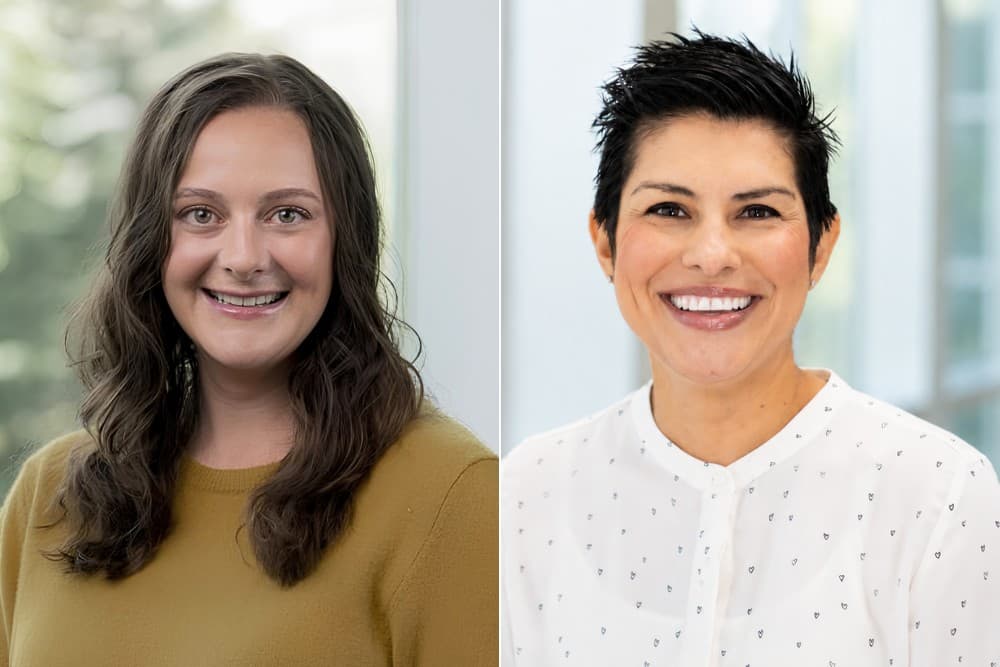
Paty Portilla, Division Vice President, Northern California & Hawaii
Paty Portilla is the Division Vice President for Northern California and Hawaii at Extra Space Storage, where she oversees more than 170 stores and 11 district managers across some of the company's highest rent-per-square-foot markets. She joined Extra Space in 2015 as a District Manager after many years in multi-unit leadership at Starbucks, Jamba Juice, and Chipotle Mexican Grill, and was promoted to DVP in 2021. Prior to her promotion, she served as an inaugural leader of Extra Space's Inclusion Committee, helping launch various Employee Resource Groups. Portilla holds a degree from the University of California, Riverside, and is based in the San Francisco Bay Area.
McKall Morris, Director of Corporate Communications
McKall Morris is the Corporate Communications Director at Extra Space Storage. She joined the company in March 2019 after several years in the airline industry. Since joining Extra Space, Morris has played a key role in advancing internal and external communications initiatives, helping shape how the company is represented across all channels. She holds a Bachelor's degree in Communications from Brigham Young University and an MBA from the University of Utah.
To learn more about Extra Space Storage, visit our investor site, or explore the next step in your career by viewing current job openings. This transcript was auto-generated and edited, including paraphrasing for readability. For the full conversation and exact quotes, listen to the complete episode on YouTube, Apple, or Spotify.