Podcast
Gwyn McNeal on What It Took for Extra Space Storage to Close a $15B Merger
What legal lessons stick with you after 21 years at one of the largest self storage companies in the world? Chief Legal Officer Gwyn McNeal reflects on her career path and everything she learned while leading the complex $15 billion Life Storage merger.
Season 1, Episode 3
What legal lessons stick with you after 21 years at a company that never stopped growing? In episode three of the Inside Extra Space Storage podcast, McKall Morris and Gwyn McNeal, Chief Legal Officer at Extra Space Storage, have a conversation about her remarkable journey with the company. From working as outside counsel on their IPO to leading the complex $15 billion Life Storage merger in 2023, McNeal offers rare insights into building one of the largest self storage companies in the world.
Transcript & Chapters
00:00 — About Inside Extra Space Storage Podcast
McNeal: I think life just tends to punch all of us in the mouth at some point, and it's really up to us to figure out if we're going to go cry in the corner or pick ourselves up and move forward. Resiliency is something we all need, whether it's in our personal lives or our careers, so when plans A, B, and C don't work out, we can continue to move forward.
Morris: On Inside Extra Space Storage, we sit down with the experts building, operating, and scaling Extra Space Storage into not only the world's largest self storage operator, but one of the most trusted names in the industry. If you care about Extra Space and where the self storage industry is headed, you're in the right place.
00:45 — Meet Gwyn McNeal, Chief Legal Officer at Extra Space Storage
Morris: Welcome to the Inside Extra Space Storage podcast, where we bring on leaders here at Extra Space, put a mic in front of them, ask a few questions, and see what happens. We're so lucky to have Gwyn McNeal, our Chief Legal Officer, here. Gwyn has been with Extra Space for over 20 years. Last I checked, it was 21 years.
McNeal: 21 years.
Morris: Congratulations.
McNeal: Thank you.
01:08 — McNeal's Favorite Projects From IPO to Storage USA
Morris: Let's start there. 21 years is a really impressive career. Obviously, Extra Space 20 years ago looked really different from Extra Space now. What are some of your favorite projects or deals that you've gotten to be involved in over the last 20 years?
McNeal: Oh gosh, so many. I started working with Extra Space before they were a public company. I was actually outside counsel, so I got to work on some of the fun early acquisitions. I got to assist on the IPO, and then I worked on the Storage USA acquisition, which is when I joined and came in-house, because we were suddenly big enough to need some extra lawyers.
Morris: Maybe that one's your favorite?
McNeal: You know, it's probably my second favorite. I have to say, Life Storage was just incredible. It was really the dream for a lawyer to get to work on when you consider the complexities we were dealing with.
Morris: That was the 2023 $15 billion merger with Life Storage.
01:52 — The Life Storage White Knight Acquisition
McNeal: Probably the most fun thing was the cloak-and-dagger aspect of it. We had approached Life Storage a couple of times throughout the years, but landed on just making sure we remained friendly with them. Then they got into a situation where there was a hostile takeover bid from Public Storage. For us to be able to continue to have backchannel conversations with Life Storage and come in as what's called a white knight—it was super exciting and a really great project to work on. Plus, it was transformational for the company.
Morris: I feel like that should be a business school case study, because it has a little bit of everything. A bear hug maneuver gone wrong, a white knight situation, this huge merger—it's really interesting. And obviously on the legal side, very complex, with two publicly traded companies.
McNeal: Yeah, it was super complex. The timing was crazy. We worked with some big outside law firms who said, "Oh yeah, it won't go that fast." It went that fast. From start to finish, when we started having conversations with Life Storage's chair until the deal closed, I think it was four and a half months. That included getting SEC approval and a shareholder vote. It was a really short fuse and a great project to work on.
Morris: I reflect on some of the things we did during that time and the teamwork it took. What an awesome time to be at the company.
McNeal: Yeah, great experience.
03:45 — COVID Task Force & Crisis Management
McNeal: When I think of other crazy experiences, McKall, I think of you and me when we were on the COVID task force.
Morris: Oh, those were some years.
McNeal: They were. That was crazy because it was real-time trying to figure out how to continue to operate our company, whether it was on the legal side or just the communication with our employees.
Morris: Our HR policies.
McNeal: HR policies, all of it. We were figuring it out in real time, so I definitely can't forget that in terms of some of the more exciting times I had at Extra Space.
Morris: I think I have tried to forget it, but I will not forget the number of documents I had you reviewing. "Can we say this? What does this even look like?" That was also a crazy time. I put that one as way behind me, but especially because at that time, you were over the people team.
McNeal: I was.
Morris: In addition to being over our legal team. There's so much there.
McNeal: There was a ton there. That time period is the perfect example of what I always tell my team, which is, by the time a lot of these problems come to us, there's no longer a really good answer. There's no longer a right answer. There's just trying to assess risk and figure out how we can protect the company better. It was the same thing with COVID. We were looking at our employees, our customers, our investors, and thinking about what the right decisions were in a really bad situation.
Morris: No great choice.
McNeal: No great choice, but you had to make a choice. There were some decisions that maybe we wouldn't have made otherwise, but we had to continue to run the company. We had to continue to move forward.
Morris: I'm really proud of the work we did in that time.
05:30 — McNeal's Wildest Legal Stories
Morris: On the same vein of thinking through projects, before you were Chief Legal Officer, you were our corporate lawyer here for a lot of years, and you also consulted on a lot of our operations legal issues. What's some of the most interesting legal advice you've ever given a store?
McNeal: Wow. I love the legal ops job. I always tell Amy she has the most fun job in the legal department, for sure, because you see a variety of things. I really and truly believe our customers are probably the most creative people you'll ever meet in terms of what they come up with for how to use our storage facilities.
Morris: You think storage is boring. You think, "Three walls and a door." Then you hear these stories from the legal team and you're like, "No, no, no, we have creative things going on."
McNeal: I have to be careful not to monopolize cocktail parties telling these stories, because there are so many crazy things that happen. Probably the one I've repeated the most, because I have yet to hear a better one or be involved in a better one—Grace Kunde and I were doing town halls in Miami. We had combined legal and accounting, figuring you put the two boring departments together. We had a site manager who asked, "What should I do when I have a tenant who's killing chickens on the property?"
And I said, "Excuse me? What does that mean?"
He then went on to explain in a very heavy Cuban accent that the customer would come in carrying chickens in a bag, and when he left, the chickens were no longer clucking. I said, "I don't understand. Why is he killing chickens at our unit?" He looked at me like, "Don't you know?" And he said, "Well, it's for Santería. He practices Santería." They don't want the juju in their house, so they will do it somewhere else. I said, "Is he getting paid for this?" He was running a business, and you can't run a business in our storage units. So we figured out a way for him to evict the tenant who was killing chickens in his storage unit and collecting money for the Santería.
Morris: We had to give some legal advice to help that store manager out.
McNeal: Exactly. Again, like I said, sometimes we're just coming up with the better of not-great options.
Morris: I think of that because on the media side, we'll get the call, "Hey, something happened at one of the properties." I remember one where it was another Florida store, and they said, "So, someone was illegally storing their pet anaconda and it got loose." And I was like, "What?" Never in my life did I think I'd be drafting a statement like, "So sorry this anaconda has gotten loose, and you are not allowed to store pets in the storage unit. Let it be noted."
McNeal: And you came from the airline industry. You thought this job was going to be boring.
Morris: I thought it was going to be. Boy, has it surprised me. I'm sure you felt the same.
08:47 — A Career From San Diego Law Firm to Self Storage
Morris: So, going to your career history, where were you before Extra Space?
McNeal: I went to law school at USC in Los Angeles, and then I went to San Diego, where I practiced law with a big national firm for about ten years. I started to get burnt out, and you know, you can take a girl out of Utah, but you can't take Utah out of the girl.
So I moved back and started working at a small startup for a couple of years, and then I moved to a smaller real estate boutique law firm in town that happened to be doing Extra Space's work. I started working with Extra Space probably in 2002 or 2003, doing their work as outside counsel—helping on acquisitions, helping with loans, different things for the company back then.
9:40 — What Keeps McNeal at Extra Space Storage
Morris: At that time, you were familiar with Extra Space a little bit. What convinced you to come here, and what convinced you to stay here for 20-plus years?
McNeal: What convinced me to come—we were so little at the time. I think we were only on the fourth floor then, and I don't know if we had the full floor. But they gave me my own office—or maybe it was a cube, I think it was a cube at the time—that was just mine, because there was plenty of space. I got treated, surprisingly, more like an employee than a consultant. I remember I was pregnant with my fourth daughter, and people were bringing me baby gifts. They wanted to throw me a baby shower. I had never been treated that way by a client. Usually it was kind of like, "Oh, here comes the lawyer."
I just knew it was a company that really respected its people and treated its people well. So when I got the opportunity to join, it was a no-brainer. It was super easy.
In terms of what's kept me here—it's easy to say the people, but when you've been here for 21 years, I've seen a lot of people I loved working with leave. Luckily, we're keeping great people to work with here. We're a values-driven company, and we expect our people to live our values. We expect our leaders to live our values.
One of the things I can probably point to as the most tangible example is who we promote and what we look at when we promote them. It's not just one of those things where we check in with their boss, because a lot of people can manage up really well. They can manage the message going up. But we want to talk to their peers. We want to talk to the people who report to them. Are they treating everyone fairly? Are they hoarding information? Are they sharing information? Do they look out for the whole company and not just themselves or their department? We're really trying to make sure that they're living those values and are going to be that kind of person as we move them up in the company.
Morris: You've been on the executive team for 11 years, I believe, when I looked it up. Is that right?
McNeal: 2013. It's a little longer. 13 years.
Morris: 13 years. You've obviously been involved in a lot of the building of the leadership team and in a lot of these different departments. It is really impressive to me. When I look around, I think, these are nice people. It's not just that they're good workers and that they're smart, but there's another element to it—these are nice, caring people who you can have a normal, trusting relationship with.
McNeal: Yeah. You have some organizations where a lot of times it's all about results and nobody cares how you got there. We're just not that kind of a company. It really is all about making sure that we're doing it the right way.
Morris: I love that a lot.
12:42 — Her Story of Resilience & Overcoming Adversity
Morris: I'm going to pivot to a conversation that I know isn't your favorite, which is your story. For everyone listening, we recently had the Field Leadership Conference, which is a big leadership meeting for our district managers, mostly, and other field support leaders. We had to really work on talking Gwyn into being our keynote speaker. She killed it.
When you spoke, you gave an incredible keynote address in which you shared a little bit about your story. We asked you to speak on resiliency because you're someone who has shown a lot of it. You're also someone who, as we've gone through projects, when you say, "Toughen up, get through this, we're going to be fine," I believe you. Would you mind telling the group a little bit about your personal story and what you shared in there about resiliency?
McNeal: Sure. I caveated my story that I gave in that keynote by saying it's not that I think I've somehow cornered the market on going through hard things or learning how to be resilient. But I did learn things early. When I was five years old, I was involved in an accident with a lawnmower that resulted in my left leg being amputated. So from a pretty early age, I had to learn how to pivot, how to change what a five-year-old's plans looked like. I spent over a month in the hospital. I spent a year sitting around waiting until I was healed enough to get fitted for a prosthetic. Then there were a lot of other times since then where I was sidelined because I had infections or different issues come up. When I was young and growing, I'd have to get new prosthetics every year.
Just as a result of that, I think I learned how to be pretty resilient and how to face hardships, sometimes heartache, and move forward. Change plans. What is it—the Mike Tyson quote—"Everyone has a plan until they get punched in the mouth." I think life just tends to punch all of us in the mouth at some point, and it's really up to us to figure out if we're going to go cry in the corner or pick ourselves up and move forward. Resiliency is something we all need, whether it's in our personal lives or our careers, so when plans A, B, and C don't work out, we can continue to move forward.
15:19 — Building Strength Through Hardship in Running
Morris: As you shared the story, I especially loved when you talked about how going through something hard builds this strength in you, more than having an easy go of it. Can I tee you up for that? You ready?
McNeal: First, let me ask you, do you even like people who've had an easy life? When you look at someone who has it all, I mean, just human nature—we really love the underdog story. We love it when people have gone through hard things and come out the other end. Whether we know it or not, everybody's going through hard things; some are just more visible than others.
The story I told was about how much stronger we become when we're going through hard stuff. When I started distance running—the prosthetics when I was growing up were not great, so I didn't get the opportunity to really engage in any kind of real running until I was in my 30s and 40s. In my 40s, I made it a goal to start running half-marathons and marathons. I went to my first half-marathon in my normal walking leg. It actually happened to be a benefit run for a group called the Challenged Athletes Foundation. So I met a bunch of other amputee runners, and they were all shocked I was running in a normal leg, because they said, "That's like running in clogs instead of running shoes."
When I got back, I got fitted for a running blade—it took about nine months—the kind you see on the Paralympians. The first time I went out, it was so fast. It was lightweight. It was springy. It was amazing. I ran a half-marathon and had shaved 90 seconds per mile off my time, which is a ton of time in such a short period of time. But what I learned after that was I was never able to be that fast again. I trained harder, I ran more, I did all of that, but I never matched that time again. Because while running in that old clunky leg felt like clogs, I was building muscles and getting stronger as a result of that hardship.
It's really the same in our personal lives. When we have to struggle, when we go through failures, when we run into heartaches, when we have change that we don't want in our lives, we really end up building our emotional muscle mass. We come out stronger on the other end.
Morris: Your keynote hit. People were crying at the keynote at the end. We're so lucky to have you. You're such a great speaker. I know we have to bully you into it, but we do appreciate it.
McNeal: Well, thanks.
18:18 — Problem-Solvers vs Problem-Spotters
Morris: To pivot a little bit, you've been here 20-plus years, as we talked about. You've been involved in building a lot of the Extra Space team, and especially our legal department. When you're looking at what makes a good employee or a good team member at Extra Space, what are you looking for in the hiring process, or what do you see as a skill set or personality that succeeds here?
McNeal: Generally, outside of my department, it's really people who are going to be willing to embrace and live our values, especially teamwork. Teamwork is the one. They have to appreciate that and want to be a part of it coming in the door.
For my legal team in particular, I am looking for problem-solvers and not just problem-spotters. A lot of attorneys, especially in the corporate world, kind of get a bad rap because they can tell you all day long what the risks are, but they don't help you solve for them. It's really important to me, and I think everybody on my team exemplifies this. I'm going to point to the fact that they had to do away with the service department awards because legal won it so many times in a row.
Morris: We used to do a survey where every department would take it, asking who your best collaborator was, and legal just swept every year until they stopped doing it.
McNeal: They stopped doing the awards. My team takes it very seriously that they want to help people solve problems. Nobody comes to legal because it's a fun chat. By the time our site managers, district managers, or department heads are coming to legal, it means they're stressed. They've run into a problem they can't solve. They don't know what to do. They're coming looking for answers, not just to hear, "Oh yeah, you guys really screwed up," or to have us point out more risks. My team has been trained and hired and, I think, excels at helping with solutions. It may not be the perfect solution, but it will be the one that helps the company and themselves move toward the least risk.
Morris: I think that's a really interesting perspective and unique insight for a corporate leadership or corporate legal team. I am lucky enough to collaborate with your team a lot, and they're one of my favorite teams to collaborate with. And to brag on your team a little bit more—we have an internal ticketing system where employees submit tickets if they have a problem. The legal team has long held the record for being the fastest to answer tickets of any department. You guys really prioritize being helpful and responsive in that way.
McNeal: Like I said, by the time people are coming to us, they're in a tough spot. We're not the department people just reach out to for picture frames. They're usually at a pretty high stress level when they reach out to legal.
Morris: And you guys calm it all down.
21:13 — The Governance Realities of Running a Public Company
Morris: In addition to being over the legal team, you're in charge of a lot of our corporate governance. You work closely with the board of directors on all of these pieces. What is something that maybe people don't know about being a public company? We're the largest public company in Utah, which I think catches people off guard. If people are listening and they have a smaller company that they're dreaming of taking public one day, what's a piece of advice you'd give them, or some hurdle they may not see yet?
McNeal: Being a public company, there are three parts to it. The first is that there's a lot of complexity. If there isn't a need to go public—which is usually the amazing access to capital—then the complexity that my team, that Grace Kunde's team, that Jeff Norman's group deal with is a lot.
Morris: Grace Kunde is our Chief Accounting Officer, and Jeff Norman is Chief Financial Officer. Sorry, some context.
McNeal: Sorry, yes. Our various teams, especially in the financial reporting department, have to work through a lot. We have to do our earnings releases quarterly. We issue 10-Q reports quarterly. Right now we're in the process of putting out our proxy report and sustainability reports. There's a lot of reporting that is highly governed, highly ordered, and reviewed by the SEC. All of that adds a layer of cost and complexity that private companies really don't have.
The second thing is understanding fiduciary duty. Once you're a public company, we are owned by thousands and thousands of shareholders. They are the owners. They are the bosses. We make decisions, and if they're not in the best interest of those shareholders, we're making the wrong decisions. We really have to keep that in mind.
The last thing is, because we're owned by them, they get a chance to vote every year. I'm in the middle of preparing our proxy right now. If our shareholders don't like the job we're doing, they can vote to change out our directors, in which case they can vote to fire the management team. So we are up for a vote every single year, and it's really a report card on how we've done, how we've performed for shareholders, and what kind of financial returns we've given. But they also want to know about our sustainability, what we're doing to be good corporate stewards, and how we treat our employees. All those things go into the big picture.
Morris: It really takes everything to this higher level of responsibility, and it's interesting to get to be a part of it.
23:54 — Find Your Voice & Understand the Big Picture
Morris: We have time for just one more question, so I'm going to throw this one out maybe a little selfishly. What is career advice that you would offer to yourself just out of college? You're looking at someone who's pretty young—what would have been helpful to have known early?
McNeal: Oh gosh. I would say, first, become really great at your job. Be a subject matter expert, whatever that is. Those are the table stakes. If you want to continue to move up, be good at what you do.
The second thing, in any kind of a company, is to really understand the company as a whole. Understand the big picture. Not just, "I'm a widget maker and I'm going to stay in my lane." You really need to understand how you're contributing to the bigger picture and how you can continue to contribute on a broader basis.
The third—probably the one I wish I'd known earliest—is to find your voice. It's really important that we all feel confident with what we have to say and feel free to voice it, because as a company, we can't get better if we don't have diverse opinions, if we aren't hearing additional perspectives, if we're not looking at problems from various angles to be able to solve for them. A lot of times I will voice an opinion and it's not the one the executive team moves forward with. That's okay. Then you get on board. But having been able to voice that opinion, I think I have made the conversation evolve in a certain way, and different ideas are taken into consideration in the final decision-making process. So really trust your own voice—and then get on board if a decision is made a different way than you would have made it.
Morris: Easier said than done. But that is one of the things I like about Extra Space. It is a space where I feel like I can say something, and it doesn't always have to be the loudest voice on the call, but it is always—
McNeal: You have a great viewpoint, and you are super brave in expressing it in all situations, and we appreciate that.
Morris: That is very kind. And I can only do that because of leaders like you who allowed it and built a system that allows that kind of thing. I think it's really unique. Thank you for sharing that, and thank you for building a company where that is valued.
McNeal: Well, thanks for having me. I really appreciate it.
Morris: We appreciate having you. Thank you, everyone, for joining us and listening. If you want to hear more conversations like this, please follow along for more.
Thanks for listening to Inside Extra Space Storage. Each episode features conversations with the leaders and the teams behind one of the most recognized names in self storage. To connect with today's guest, reach out to them directly on LinkedIn, and don't forget to follow the show for more insights inside the industry. Until next time, have a great day and an even better tomorrow!
About the Host and Guest
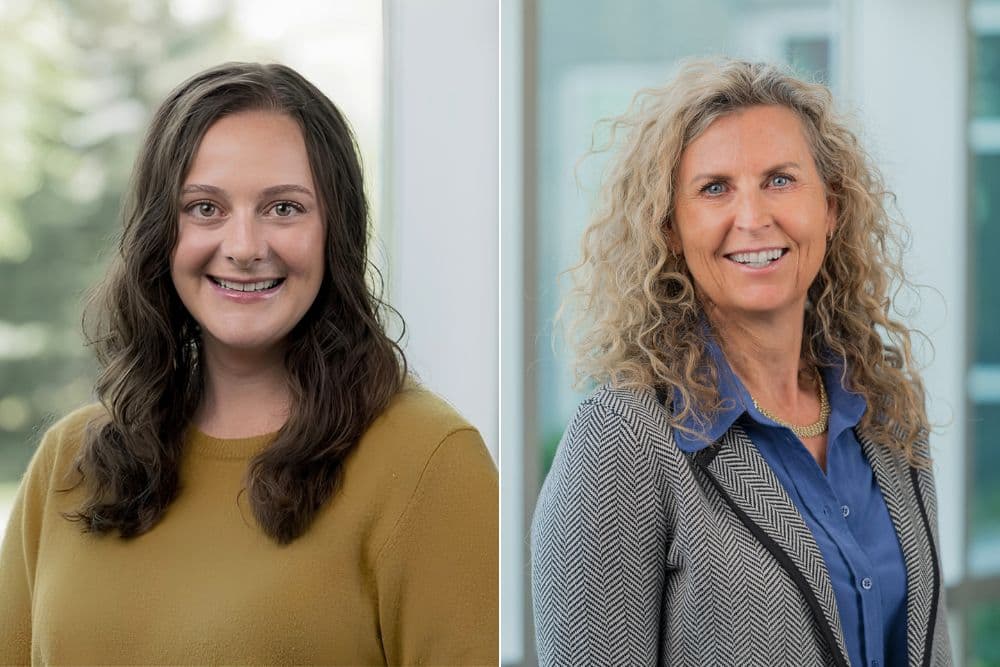
Gwyn McNeal, Chief Legal Officer
Gwyn McNeal has served as Chief Legal Officer since July 2013. She has been with the company since 2005. Prior to her current role, she was the Vice President and Associate General Counsel of Extra Space Storage, providing legal support to the operations team and overseeing litigation, employment law, and intellectual property. McNeal began her career with Latham & Watkins LLP, San Diego and then was General Counsel for 3form, Inc. McNeal holds a Bachelor's from Brigham Young University and a J.D. from the University of Southern California.
McKall Morris, Director of Corporate Communications
McKall Morris is the Corporate Communications Director at Extra Space Storage. She joined the company in March 2019 after several years in the airline industry. Since joining Extra Space, Morris has played a key role in advancing internal and external communications initiatives, helping shape how the company is represented across all channels. She holds a Bachelor's degree in Communications from Brigham Young University and an MBA from the University of Utah.
Read more from Gwyn McNeal in this Q&A. To learn more about Extra Space Storage, visit our investor site, or explore the next step in your career by viewing current job openings. This transcript was auto-generated and edited, including paraphrasing for readability. For the full conversation and exact quotes, listen to the complete episode on YouTube, Apple, or Spotify.