Strategic Capital Expenditure Planning for Self Storage Success
In this article, we explore what CapEx really means in the self storage industry, why it's critical to budget for it, what expenses are essential, what commonly gets overlooked, and how industry leaders track spending effectively to achieve success.

While capital expenditure (CapEx) planning in the self storage industry may seem less complex than other commercial real estate sectors, there are still critical considerations that can make or break long-term success. The relatively limited asset base and minimal consumption during normal operations often leads to the perception that self storage does not require the same level of importance to long-term capital planning that other commercial investments may require.
According to Kurt Gnessin, Vice President of Construction and Facilities at Extra Space Storage, this perception is not only wrong—it's costly. With more than 30 years of experience in leading teams in multi-site construction and facilities services, Gnessin has observed that at Extra Space Storage, a well-maintained facility doesn't just protect your assets—it builds trust with tenants, sustains occupancy rates, and positions your brand to stay competitive in a dynamic and ever-changing market environment.
Understanding Maintenance CapEx vs. Development CapEx
Unlike new developments, property acquisitions, and expansions, maintenance CapEx refers to funds budgeted to maintain existing physical plant assets such as buildings, equipment, or technology. This typically includes projects that improve or extend the life of the facility or enhance customer experience, such as:
Roof replacements
Asphalt resurfacing or striping
HVAC system upgrades
Door replacements or painting
Perimeter fencing or gate systems
Security enhancements
Software and access control upgrades
Sustainability and cost savings initiatives such as LED lighting and solar installations
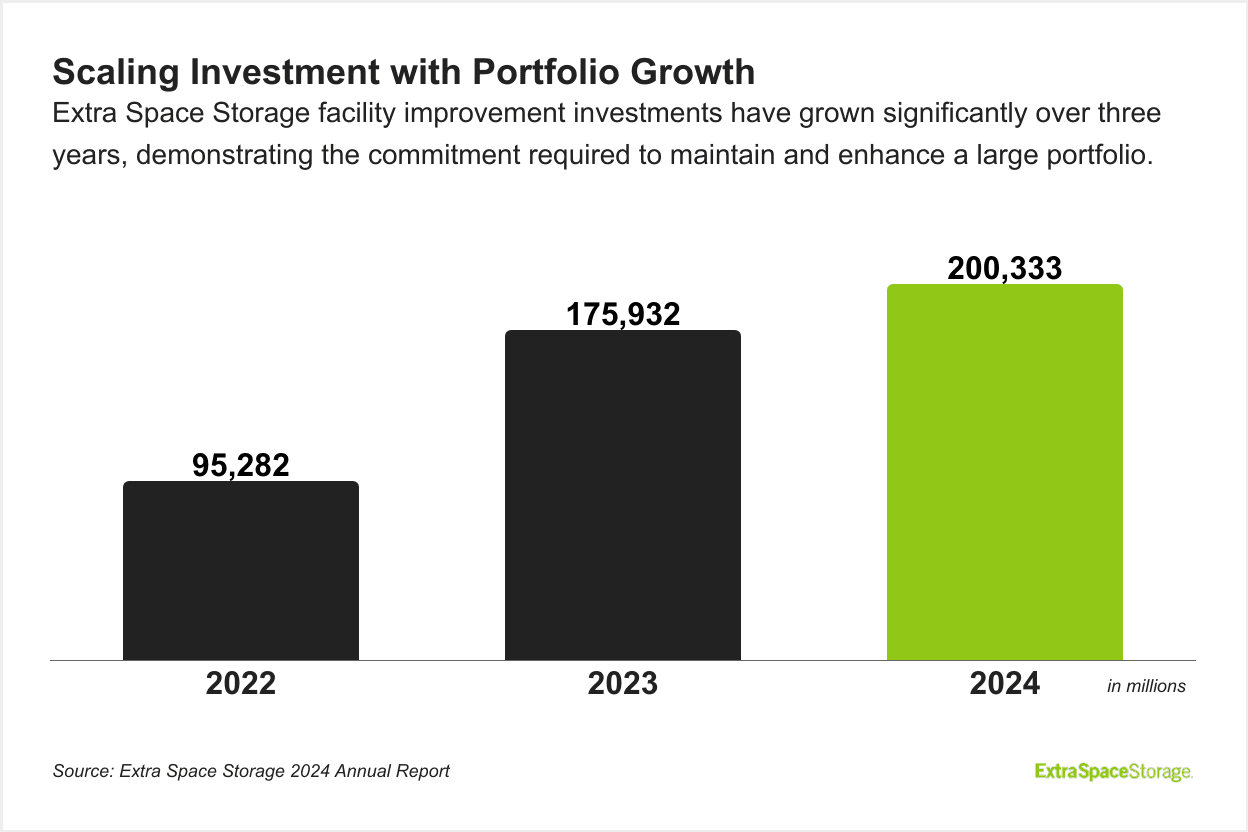
These types of investments are distinct from operating expenses, which are the day-to-day costs required to run the business such as utilities, minor repairs, or routine maintenance. Operating expenses keep the business running, while maintenance CapEx keeps the facility competitive and maintains the value of the asset over time. As Extra Space's portfolio continues to grow, so does our investment in facility improvements, reflecting the ongoing commitment required to maintain quality standards across an expanding asset base. A well-structured maintenance CapEx plan is a roadmap for anticipating future needs, smoothing out resource requirements, managing cash flows, and avoiding surprises.
The Cost of Deferred Maintenance
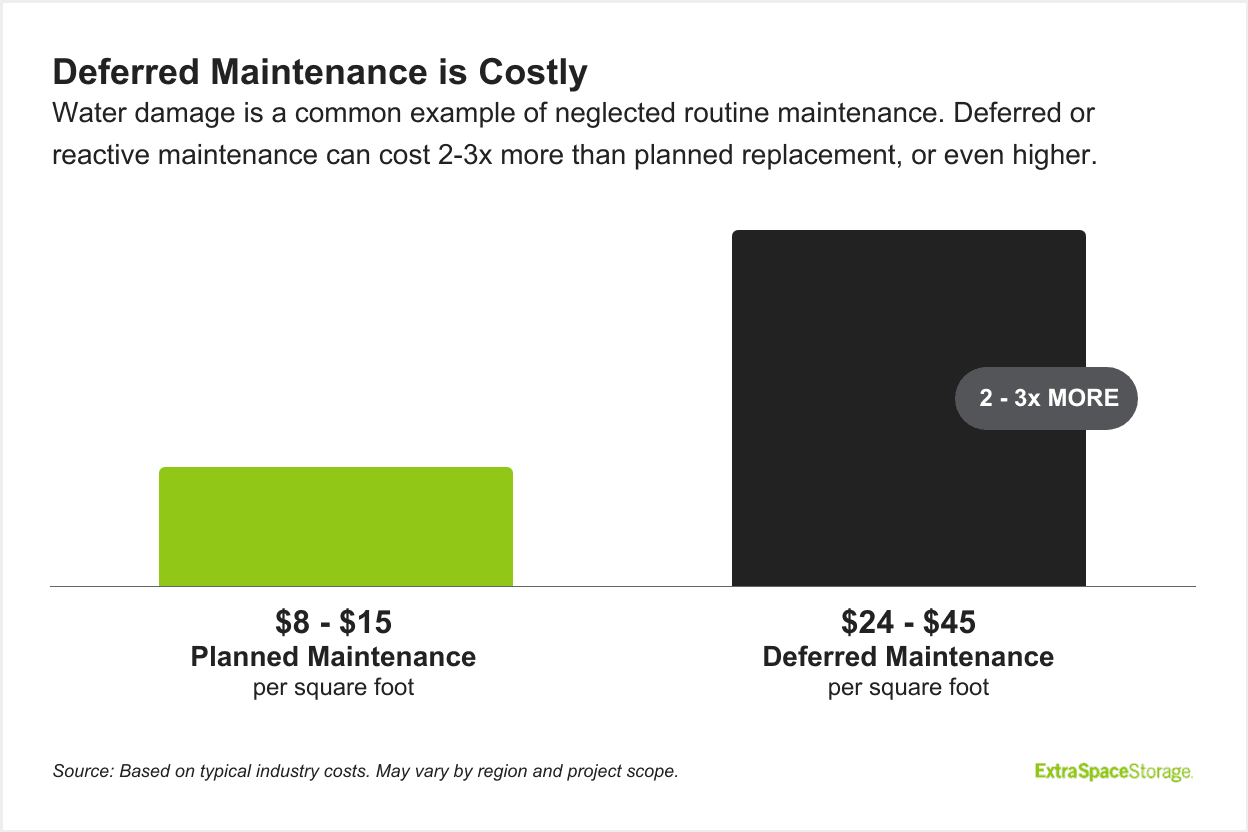
When it comes to preserving property value, it's not a matter of if you need to replace a roof, but when. Deferred roof maintenance erodes property value and makes the facility less attractive to buyers or lenders. More importantly, for example, a leaking roof creates the opportunity for customer goods to be damaged, which can destroy the ability to attract new customers and protect the customers you already have.
Once the building envelope has been compromised, water damage can lead to extensive and costly repairs, and if left unchecked, could eventually destroy the building. For context, a typical roof replacement can cost $8-15 per square foot, but water damage remediation and structural repairs can easily double or triple that investment.
The Strategic Advantage of Annual Planning
Annual planning at Extra Space allows us to schedule repairs to fit into a structured resource model, enabling us to plan work during off-peak seasons and avoid the premium pricing that comes with emergency fixes. It allows us to plan various projects throughout the year to capture synergies and level-set expectations for completing the work, ensuring internal resources and external vendor partners can better schedule their time and be more effective at bidding, contracting, and completing work across a large portfolio of properties.
Without an annual CapEx plan, facility owners could be caught off guard and faced with unexpected major expenses that can drain working capital and stall growth. Emergency repairs typically cost 20-40% more than planned maintenance due to premium pricing and limited vendor availability.
Essential Elements of Any CapEx Plan
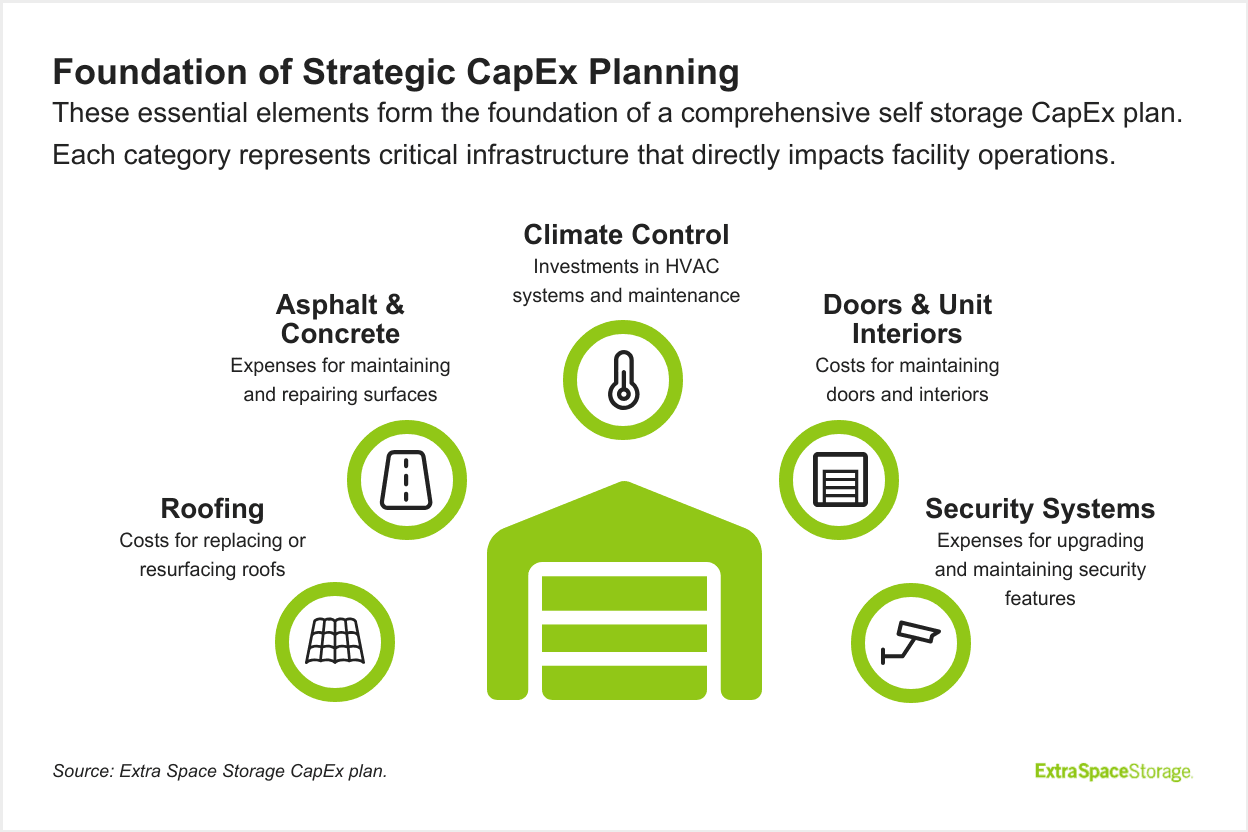
While every self storage facility is different, the following elements are typically essential to building any CapEx plan.
Roofing: Commercial roofs generally have a life expectancy of 15–30 years. Replacing or resurfacing the roof can cost $150,000-$400,000 for a typical 80,000 square foot facility.
Asphalt and Concrete: These surfaces are impacted by weather and the types of vehicles driving on them, resulting in the need for repairs, resurfacing, sealing, and striping. Neglecting the pavement can lead to customer dissatisfaction and even liability issues. Paving large areas can be very expensive, and patchwork paving can disrupt flow lines, leading to drainage issues and water backup into buildings.
Climate Control: These facilities must plan for HVAC unit replacement, ductwork maintenance, and humidity control measures. HVAC is one of the largest consumers of utilities, and as equipment ages, it becomes less efficient and more costly to repair. A typical HVAC system replacement can range from $50,000-$150,000 depending on facility size and complexity.
Doors and Unit Interiors: These are some of the few assets consumed through normal business operations in self storage. Door springs, hasps, and weather all play a part in the deterioration of these essential self storage assets.
Security Systems: Cameras, lighting, fencing, and electronic gate systems are all vital assets that require maintenance and replacement as they age. Modern security system upgrades typically require an investment of $25,000-$75,000 but can help reduce insurance costs and improve customer confidence.
Commonly Overlooked CapEx Items
Self storage owners often have blind spots in their capital planning methodology. At Extra Space, we have grown to recognize the importance of a comprehensive approach. Here are several key enhancements to CapEx planning that should be considered.
Gutters, Downspouts, and Drainage: These systems prevent long-term water damage and, if left unchecked, can lead to foundation damage and costly repairs or compromise the structural integrity of the building.
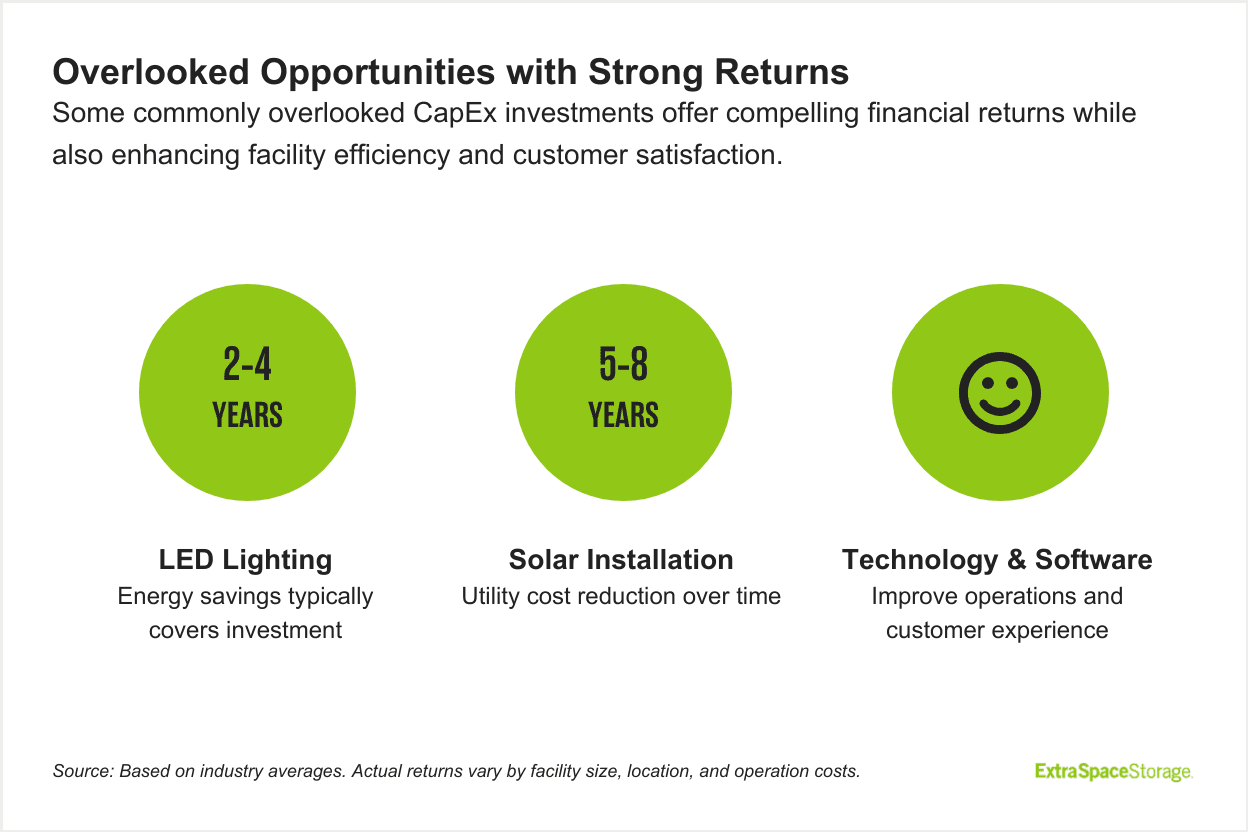
Technology and Software: Investments in items such as access controls and kiosk systems often require substantial upfront costs, but are necessary to maintain a competitive advantage. Modern access control systems can cost $15,000-$40,000 but improve operational efficiency and customer experience.
Lighting Upgrades: LED conversions reduce utility costs and improve safety, but the upfront investment is often significant and frequently deferred by owners. LED retrofits typically pay for themselves within 2-4 years through energy savings.
Paint and Branding Refreshes: Faded signage or exteriors signal the perception of neglect, even if the facility is in good shape structurally.
Pest Control: Pest mitigation is rarely planned but critical in some climates.
Solar: Solar installations can significantly reduce utility costs and provide long-term savings, with many installations paying for themselves within 5-8 years.
Regulatory Compliance: Elevators, ADA compliance, or fire safety system upgrades may become necessary due to changing codes.
Implementing and Managing Your CapEx Plan
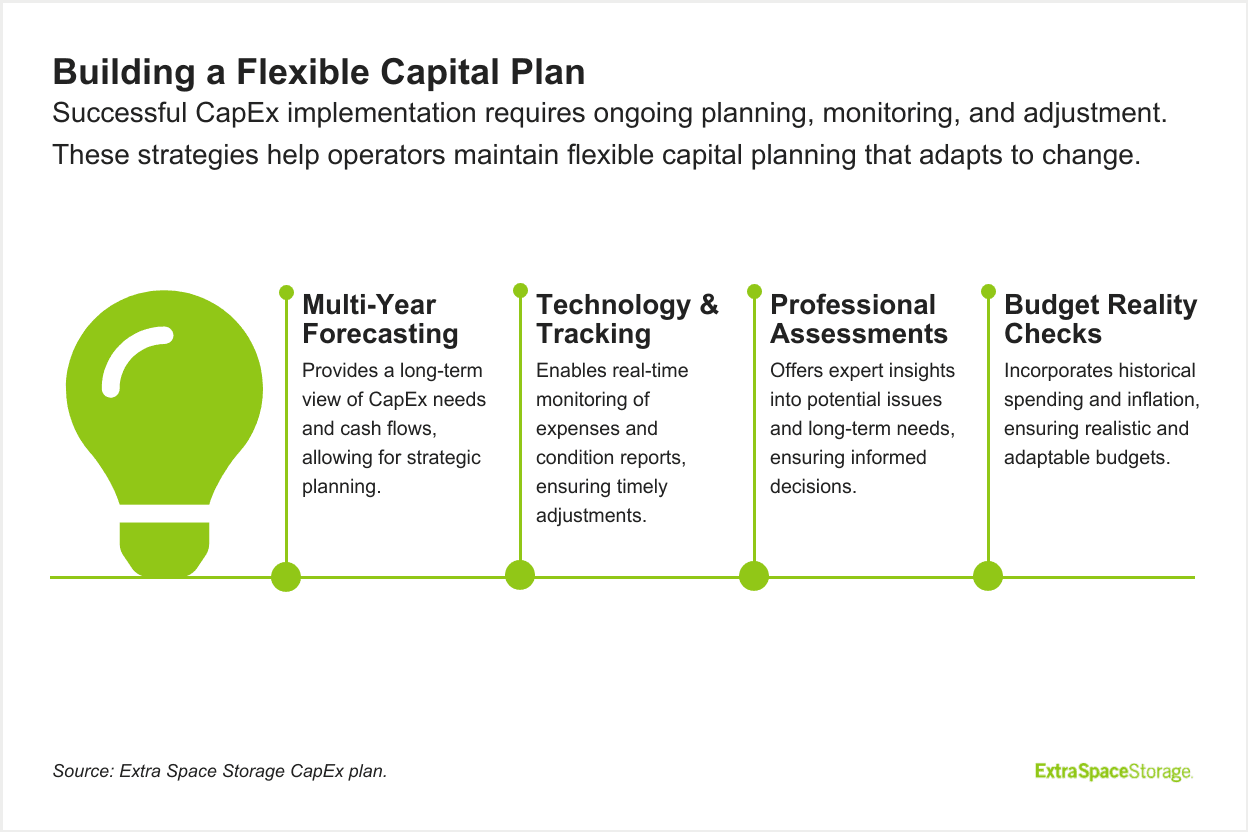
Once an owner has created a CapEx plan, it's essential to treat it as a living document. Markets change, repairs escalate, and new opportunities arise. Here are some ways successful operators stay flexible.
Multi-Year Forecasting: Start by creating a multi-year forecast for current needs and future CapEx considerations. Most commercial real estate professionals build a 5-10 year CapEx reserve schedule, aligning expected lifespans of major components with projected cash flows. In addition to these reserve schedules, at Extra Space, we focus on a 3-5 year CapEx plan of considerations. We recognize that with a large and dynamic portfolio, things change, so we revisit this plan every year and adjust based on the needs of the business.
Technology and Tracking: Use software to track CapEx plans, annual budgets, and spending throughout the year. Many modern software tools allow owners to track expenses, monitor condition reports, and set reminders for upcoming needs. At Extra Space, we complete a property assessment every year to track progress and adjust based on the condition and needs at each property.
Professional Assessments: If owners do not have the resources or expertise, they should obtain professional assessments every 3-5 years, using a third-party property condition assessment (PCA) to identify potential existing needs and long-term issues.
Budget Reality Checks: A budget should factor in historical spending patterns and inflation as material and labor costs rise over time. At Extra Space, we use a cost per square foot target, which works well across a large portfolio but may not work as well for building a plan for a single property or smaller portfolio.
The Bottom Line on CapEx Success
Capital maintenance and planning may not be the most glamorous part of owning a self storage facility, but it's one of the most critical factors in long-term profitability. By creating and maintaining a thoughtful CapEx budget, owners protect their investment, reduce risk, and position their business for long-term success and growth.
The key is to approach CapEx proactively. Plan before the roof leaks, budget before the gate breaks, and track spending with discipline. In doing so, you'll not only avoid costly headaches but unlock the full value potential of your facility for years to come.
Kurt Gnessin is the Vice President of Construction and Facilities at Extra Space Storage, where he has served since 2019 and brings more than 30 years of experience in leading teams in multi-site construction and facilities services. This article was adapted from an article written by Kurt Gnessin for Inside Self Storage. For help managing your storage facility, contact Extra Space Storage's third-party management team today!