How To Store
How to Store Collectibles, Keepsakes, Childhood Toys, & More

Read Time: 8 min read
Summary: To keep your collectibles and keepsakes in good shape, start by keeping items together, clean, and in mint condition, then pack them in sturdy, clearly labeled containers with acid-free paper or bubble wrap. Protect records, cards, and comic books in sleeves and store them vertically, while books, art, and antiques do best in breathable, acid-free boxes. Before packing, clean clothing, jewelry, and antiques, and group photos by date or event. For best results, keep everything off the ground on shelves or pallets in a cool, dry space, and consider climate-controlled storage for delicate items. Remember to maintain an inventory list and check on your belongings every few months.
Knowing how to properly store your valuable belongings is essential to keeping them pristine for generations to come. Certain collectibles and keepsakes can fade, mold, or deteriorate over time if they aren’t stored properly. Whether you’re holding onto the collectibles to sell later, making room for your growing family, or just spring cleaning, check out these self storage tips to keep your irreplaceable items in good shape!
How to Store Collectibles
When storing collectibles, you’ll want to prepare your items for long-term storage. Try keeping collectible items together and in mint condition so they maintain their value. To store collectibles safely, choose a climate-controlled storage unit to guard against temperature and humidity changes. Use high-quality packing supplies like acid-free paper and bubble wrap, and pack items securely in sturdy, clearly labeled containers—placing heavier boxes on the bottom. Keep belongings elevated on pallets, maintain an inventory list, and consider extra security measures or storage insurance for high-value items. Below, we share tips on recommended storage supplies, amenities, and steps to help your collections last.
How to Store Vinyl Records, CDs, & DVDs
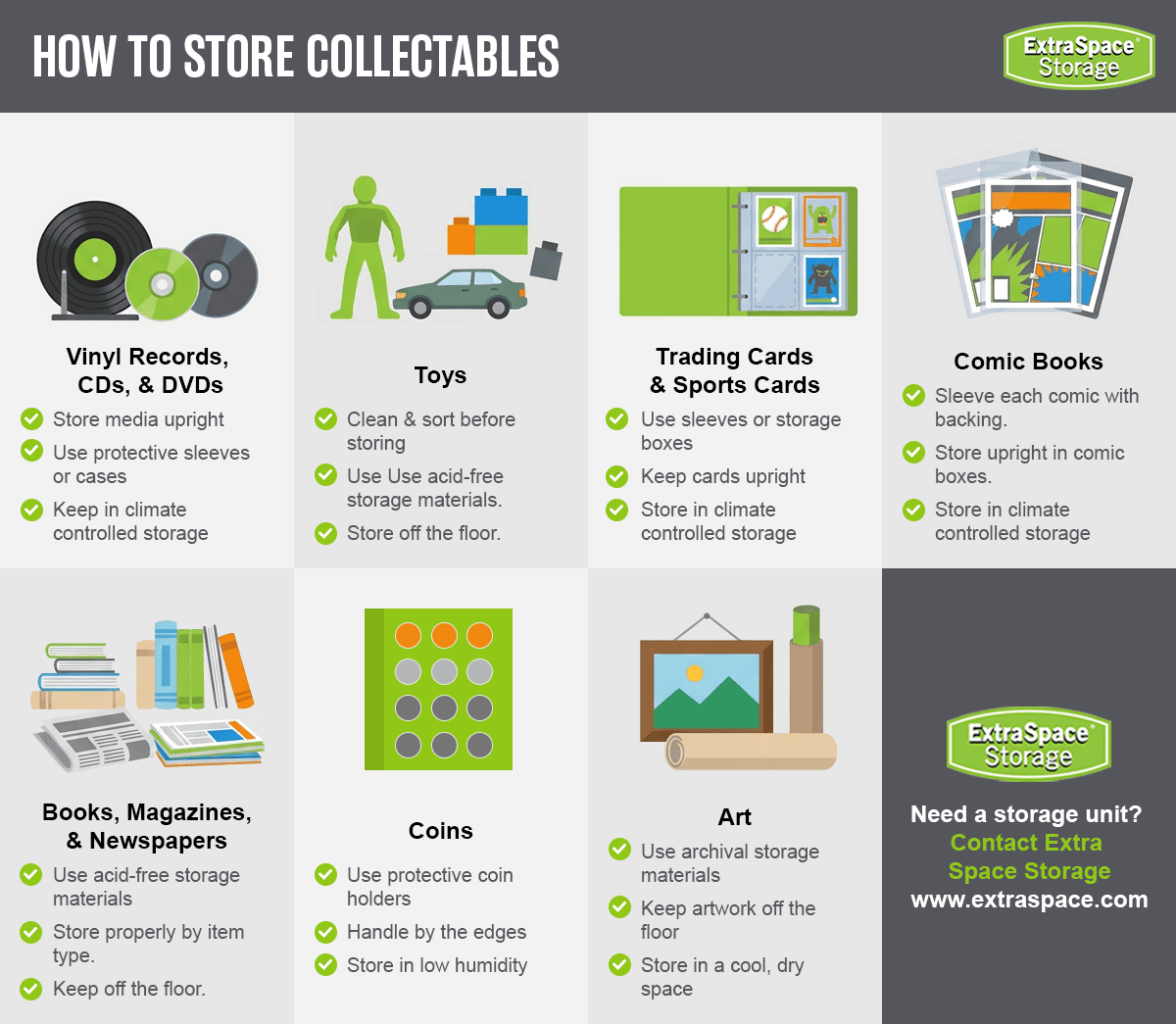
For vinyl record storage, wrapping your records in polyurethane sleeves can protect them from dust and moisture. The best way to store CDs and DVDs is in their original case to lower the risk of them breaking.
To store DVDs without cases, protect them in plastic sleeves in a binder. Opt for a storage container where your records, DVDs, CDs, and binders can sit vertically. This will help to keep them from warping over time. Renting a climate-controlled storage unit is a great way to ensure your media collections are protected from warmth and humidity.
How to Store Toys
Collectible toys such as LEGOs, action figures, or dolls are more valuable when kept in their original packaging, in mint condition, and with their original items. When storing toys, start by preparing and cleaning each toy to remove dust, oils, and other residues. Then sort and separate them by the materials they are made from. Keeping hard and sharp toys away from soft plush toys helps prevent tears and damage that can occur during moving and storage.
The best way to store stuffed animals long-term is in an acid-free box that allows for airflow. Wrap any fragile or painted items in acid-free tissue paper. No matter the material, keep your toy collection off the ground with proper storage equipment and opt for amenities like climate-controlled storage to prevent mold.
How to Store Trading & Sports Cards
When storing trading cards or sports cards, consider purchasing a trading card storage box or individual sleeves for each card. You can also get sheet sleeves to keep in a binder and then in a sealed plastic container.
Store your valuable card collection off the floor and neatly organized on a storage shelf. The best tip for trading card storage is to keep your card collection cool and in a humidity-controlled storage unit. This will help prevent the cards from bowing or warping over time.
How to Store Comic Books
When storing comic books, keep them in individual plastic sleeves with a cardboard backing. This will protect your comic book collection from dust, deterioration, and warping.
Once your comic books are ready for storage, tape their sleeves and store them vertically in comic book boxes inside a room with temperature and humidity control. Low humidity can cause vintage comic book pages to crack, while too much humidity can create dimpling and bending.
How to Store Books, Magazines, & Newspapers
Before moving books, magazines, or newspapers into long-term storage, you’ll want to inspect each for mold, mildew, or any previous damage. Rent a storage unit with humidity control to protect your book, newspaper, or magazine collections from damage.
Storing Magazines: Handle your collectible magazines with clean hands while placing each piece in a protective sleeve to prevent smudges, tears, and fading. Keep them upright in acid-free boxes or file organizers, using dividers to help maintain their shape. Store your organizing boxes or containers off the ground–like on a shelving unit—to protect them from moisture and pests.
Storing Newspapers: The best way to preserve newspapers is to store them horizontally inside a folder or box with acid-free paper interlaced among the pages. Storing books and magazines vertically inside an acid-free plastic container is the best way to preserve them.
Storing Books: The best way to store books is either upright on shelves or flat in breathable containers—airtight plastic bins can trap in moisture, so opt for a storage box for books. Before storing a book collection, dust each volume and wrap it in acid-free paper to help protect them from moisture and temperature fluctuations. A climate-controlled storage unit can help preserve the binding and pages, especially for rare and antique collections.
How to Store Coins
Learning how to store coins can help you keep your coin collection pristine. Make sure to house coins in an appropriately sized coin holder, album, or folder. Always hold the coins by the edges to avoid corrosion caused by skin oil.
The best way to store silver coins is in a protective coin case. Avoid putting your coin collection in direct contact with paper or cardboard that contains sulfur because this can cause discoloration over time. Because metal coins are vulnerable to humidity, climate-controlled storage is best to preserve their condition over time
How to Store Art
Storing artwork involves many special considerations, as many materials can deteriorate if mistreated. Paints, oils, and pigments can crack and become discolored if they come in contact with dust, other oils, or direct light while in storage. These types of artwork need to breathe in storage, rather than be sealed up. Opt for fitted boxes like archival boxes to help keep dust and debris out while protecting the art from deterioration.
When storing ceramics or sculptures, invest in art storage shelves to keep these fragile items off the ground. No matter what medium of art you’re storing, you’ll want to make sure that your items are stored in a cool, dry place. Consider renting a climate-controlled storage unit to protect your art from changing temperatures.
How to Store Keepsakes
When storing sentimental items, it’s important that you use good storage techniques so you can keep these precious belongings in good shape!
How to Store Antiques
Antiques require special care when stored. Storing antiques typically requires a temperature-controlled area with no direct sunlight to help preserve these items. Invest in storage shelves to keep vintage antiques off the floor and organized so you can access them easily.
You can also prevent damage to antiques by storing items in their own storage boxes, lessening the likelihood of them getting crushed together. When it comes to storing wooden furniture or vintage fabrics, you’ll want to clean your belongings before moving them to long-term storage.
How to Store Clothing
Wondering how to store clothing? Hand wash, dry, and fold all clothes before putting them into storage. Any traces of dirt or oil can stain fabrics, which damages your clothing when they come out of climate-controlled storage. Wardrobe boxes or garment racks can keep your clothing items organized, too. Accessories like vintage bags, gloves, or leather goods can be stored using acid-free unbuffered tissue paper.
If you’re storing clothes for less than six months, consider using vacuum storage bags for clothes. However, long-term storage in vacuum-sealed bags can damage your clothes over time. Avoid using plastic bags and cardboard boxes for clothing storage—they can trap moisture and create mold if left unattended for long periods of time.
How to Store Photographs
It can be tricky to store large amounts of sentimental pictures, but sorting through them, getting rid of duplicates, and putting them in temperature-controlled storage is an easy way to start!
The best way to store old photos is by grouping photos by dates and events, then placing them into a box or photo album. Store these items off the ground in clear totes. Keeping photo albums or boxes in a cool and dry place helps preserve old photographs, as does avoiding direct sunlight to prevent fading or discoloration in long-term storage.
How to Store Paper Documents
If you’re running out of room to store paper documents such as letters or postcards, you may consider putting these items into a storage unit. While storing paper items, it’s important to go through each piece and determine what needs to be kept. Shred or throw away any files you no longer need.
Invest in a file cabinet and folders to help organize your documents. Consider organizational supplies like manila envelopes, which are typically acid-free, to help your files stay in good shape. Keep all files in a dehumidified room to prevent them from growing mold or fading.
How to Store Jewelry
The best way to store jewelry is at room temperature, away from direct sunlight and humidity. Clean your jewelry before placing it into storage because any traces of dust, dirt, or oils from your hands can cause damage to your jewelry over time. Storing jewelry by metal type helps prevent different metals from reacting with each other.
Depending on what type of jewelry you’re storing, you’ll want to invest in different storage equipment. Jewelry boxes with soft lining can help collect dust, while silver should be stored in cotton to prevent tarnishing. Hanging necklaces on racks prevents them from tangling. Keep your jewelry in a cool and dry location to help prevent it from being damaged over time.
Frequently Asked Questions About Storing Collectibles & Keepsakes
Do I need to rent climate-controlled storage for my collectibles?
Yes, you should rent a temperature-controlled unit if you plan to store any delicate or fragile items. This includes items like vinyl records, comic books, photos, antiques, and more.
How often should I check on my keepsakes or collectibles in storage?
If you’re storing valuable or sentimental items like keepsakes or collectibles, it’s good to check in on your belongings every few months to ensure they’re not damaged in any way.
Will my collectibles be safe in self storage?
Most self storage facilities use security features to give storage customers peace of mind. At Extra Space Storage, for example, we have video surveillance and electronic gate access, along with more advanced features like individually-alarmed units, on-site resident managers, and security access to your floor only.
What size of storage unit do I need for storing collectibles?
The size of storage unit you need depends on what type of items you're storing. Smaller valuables in boxes can fit in a 5x5 or 5x10 storage unit, but if you have larger furniture or artwork, a 10x10 unit or larger might be best.
***
Find Secure Indoor Storage in Your Area!
Looking to store keepsakes and collectibles? Extra Space Storage offers budget-friendly storage options for the space you need for your belongings!
Popular cities that provide secure storage solutions: