How To Store
How to Store Musical Instruments

Read Time: 5 min read
Summary: To keep your musical instruments in great shape, start by tuning each one and taking photos to document its condition. Before storing, remove mouthpieces, slides, or hardware, loosen strings to relieve tension, and clean with the recommended products, making sure everything is completely dry. Place each instrument in a snug hard case with padding to prevent shifting. For best results, choose a space that stays between 60 and 70 degrees with 40% to 60% humidity, away from direct sunlight, and consider climate-controlled storage if your home can’t provide this. Hire professional movers for pianos, and keep instruments off the floor. Remember to cover them and inspect them every one to six months.
Storing musical instruments properly is essential to preserving their quality and promoting their longevity. Instruments need special care when you place them into storage—no matter if you play piano, strum a guitar, or bang on a drum. Whether you’re keeping them at home or in a climate-controlled storage unit, here are some key tips for proper musical instrument storage.
Consider the Storage Needs of Your Instrument
Assess how many instruments you have and what needs to be stored. Tune your instrument and take photos beforehand to document its condition before storage. Though most musical instruments require similar storage conditions, it’s important to understand the unique risks each type faces. Knowing these concerns can help you take extra precautions to preserve their quality:
String Instruments (Guitars, Violin, Viola, Harp): These instruments are vulnerable to wood warping, cracking, shrinkage, or expansion if exposed to fluctuating temperatures and humidity.
Brass Instruments (Trumpet, Trombone, Tuba): Brass components are prone to rust or corrosion if stored in damp or humid conditions.
Woodwind Instruments (Clarinet, Saxophone, Flute): High humidity and direct sunlight can cause warping, swelling, or damage to delicate pads.
Pianos & Keyboards: Direct sunlight or fluctuating humidity can lead to cracking or warping of wood and plastic components.
Percussion Instruments (Drums, Xylophone, Cymbals): Wooden parts can warp, and metal components can rust if not kept in a stable, dry environment.
Clean & Disassemble Instruments
To preserve the quality of your instrument, it's important to clean it thoroughly before storing it. Proper cleaning, removing any dust or debris, can help prevent warping, cracking, corrosion, and the growth of mold or bacteria, and help instruments last longer. Be sure to use the recommended cleaner or polish designed for your instrument and follow the specific cleaning instructions to ensure it receives the right care and maintenance. Here are some general steps to follow when disassembling and cleaning your instrument for storage:
Remove any mouthpieces, slides, valves, or hardware.
Loosen or remove any strings to relieve tension and prevent damage.
Use appropriate supplies such as microfiber cloths, soft-bristle brushes, mild soap solutions, and oils to clean the instrument.
Ensure the instrument is completely dry before storing it to prevent rust, mold, cracking, or shrinkage.
Store Instruments in Cases
Once your instrument is cleaned and disassembled, store it properly in its case to protect it. Follow these steps to ensure it is secure:
Use a hard case that fits the instrument snugly—without pressing on any parts or allowing it to shift.
Secure all instrument parts with straps, soft padding, or foam inserts to prevent displacement.
If you don't have a hard instrument case, create a protective wrapping using a soft cloth, blanket, pillowcase, fabric bag, or acid-free paper over it.
When closing the case, check that all zippers and latches are tightly fastened.
Choose a Proper Storage Environment
Understanding how a storage environment can affect your instrument's quality is essential. If you don't have a suitable space at home, consider renting a storage unit with climate control. Here are some key factors to keep in mind when choosing a storage area for your instruments:
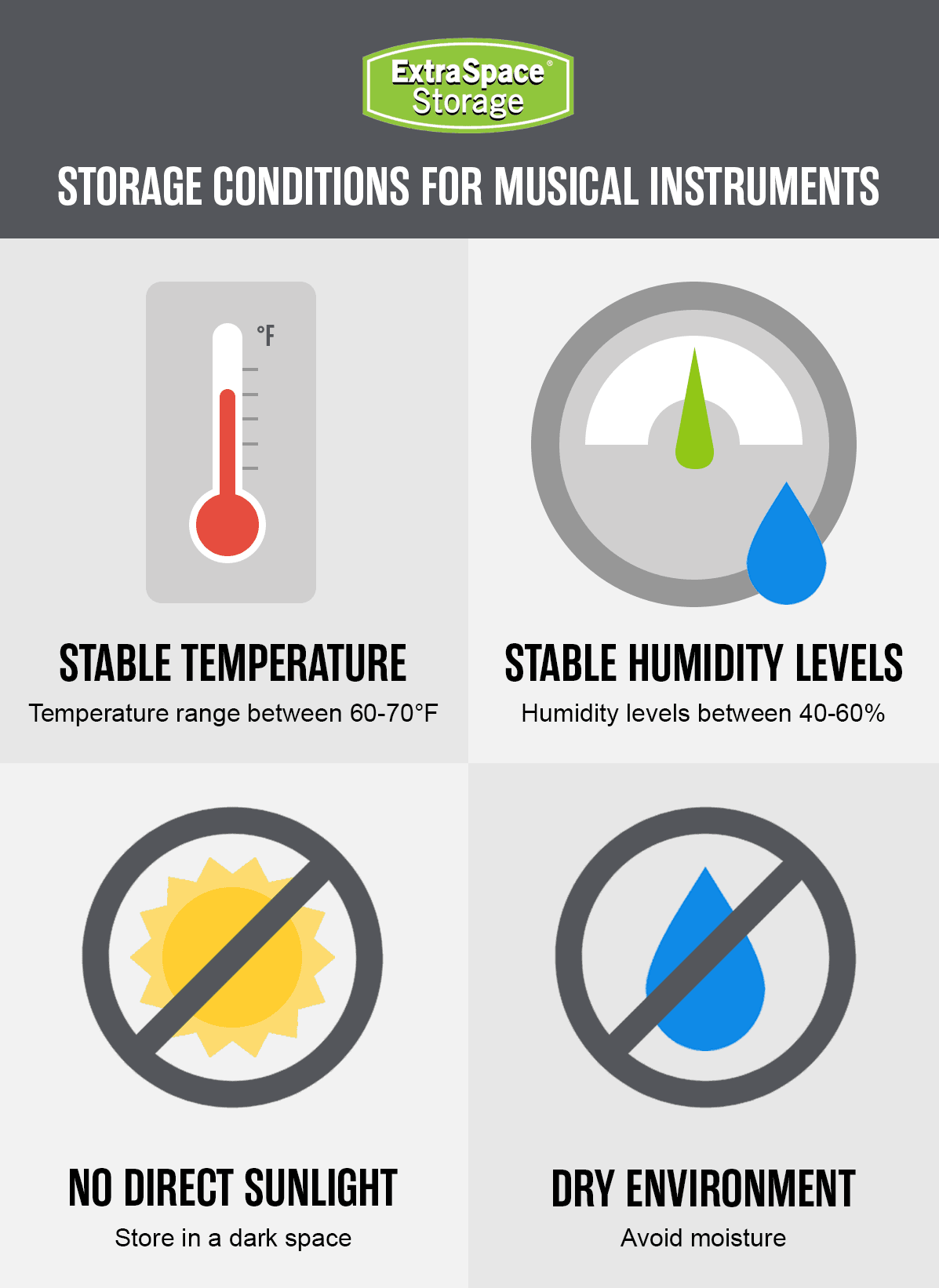
Temperature: Storing an instrument where it’s too cold or too hot can cause instruments to contract or expand. Most instruments should be stored at temperatures between 60 and 70 degrees. Avoid areas where temperatures fluctuate, such as basements and attics.
Humidity: Excessive moisture or dry air can also cause shrinkage and expansion, as well as rust, mildew growth, and other forms of damage. Choose a space where humidity levels stay between 40% and 60%.
Sunlight: Avoid storing instruments in direct sunlight, as it can damage finishes, cause materials to degrade, and throw parts out of tune.
Moisture: High moisture levels can lead to rust, mold, and deterioration. Ensure the storage area is dry, free from leaks, and well-ventilated to prevent prolonged moisture exposure.
Find a Secure Self Storage Facility
Storing your instruments in a storage unit is ideal for helping maintain their condition and keeping your space at home clutter-free. When looking for a storage unit to rent, help ensure the safety of your valuable musical instruments by looking for a facility near your home or business that offers:
Fencing around the property perimeter
Video surveillance throughout the facility and property
Electronic gate access with private keypad entry codes
Indoor storage units with controlled access
Secure access to your floor only (if it’s a multi-level storage facility)
A facility manager living on-site
Individually alarmed storage units
Hire Professional Movers for Large Instruments
Consider hiring professional movers to transport large, heavy instruments like pianos into storage. This not only helps prevent damage to your instrument but also saves you from having to lift it. Have instruments stored in the proper direction, as Baby Grand Pianos are designed to sit flat on their legs with the soundboard horizontal, strings under tension aligned properly against the frame, and internal parts in correct orientation.
Keep Instruments Off the Floor
Storing instruments off the floor helps to avoid any physical damage from being stepped on or knocked over, while also protecting against moisture, dust, and dirt. Here are some storage solutions to consider:
Utilize storage racks or shelves: If you opt for wooden or metal shelves, use padded cushions to help prevent scratches and place heavier instruments on the bottom and lighter ones on top to ensure stability.
Hang instruments: Use high-quality hooks and hangers to securely attach instruments like guitars to the wall.
Use storage cabinets: This option provides an enclosed space that helps keep your instruments protected while still offering easy access.
Maintain & Care for Stored Instruments
While storing musical instruments in climate-controlled storage can help prevent damage from temperature changes, they will still collect dust over the weeks and months in storage. Prevent dust-related damage—as well as damage from pests and mildew—by covering large instruments with a protective cloth or canvas. No matter where you store your instruments, inspect them every one to six months for signs of damage. If any issues are found, take the instrument to a repair shop immediately to maintain its quality. To help prevent damage, follow these maintenance tips:
Regularly check instruments for signs of damage—including warping, cracking, rust, corrosion, mold, mildew, string tension loss, and finish damage.
Tighten loose parts and reapply oils to help preserve appearance and prevent corrosion or warping.
Periodically check the storage environment's temperature and humidity levels to ensure they remain stable.
***
Rent Safe 7 Convenient Storage Units Near You!
Need to store musical instruments while moving or to free up space at home? With climate control at Extra Space Storage, you can help keep your instrument in a more consistent storage environment.
Popular cities with secure storage solutions: