How To Store
How to Store Framed Pictures

Read Time: 4 min read
Summary: To store picture frames safely, start by cleaning each one with a damp microfiber towel, cotton swabs, or a soft-bristled toothbrush. Let it dry completely to prevent mildew. Wrap each frame individually in acid-free, breathable materials like packing paper or muslin, using bubble wrap as an outer layer for fragile pieces and avoiding plastic wrap. For frames with glass, tape a large X with painter’s tape, and add extra protection to the corners. Pack frames in a box close to their size, separating them with cardboard and filling any gaps. Choose a clean, dry space, and consider climate-controlled storage for wood or valuable frames. Be sure to store your frames upright and off the ground.
The best way to store picture frames is by cleaning them, wrapping each frame individually, packing them in containers true to the frame's size, and keeping them in a cool, dry place. Here's how to store framed pictures of all sizes!
Clean Picture Frames Before Storage
The first step when storing picture frames is to clean them, helping prevent damage caused by dust, dirt, and hand oils. To clean a picture frame, first note the material it's made of—for example, picture frames made of wood will need specific care for frame preservation. Generally, you can use a damp microfiber towel, cotton swabs, or a soft-bristled toothbrush to carefully remove dust and grime. Once the frame is clean, give it time to dry completely before wrapping or storing it to help prevent mold or mildew from developing.
Wrap Each Picture Frame for Protection
Once your picture frames are clean and dry, wrap each one individually to protect it from scratches, dents, and other damage. Gather acid-free and breathable packing materials like packing paper, cotton or muslin sheets, or tissue paper, as well as bubble wrap to use as an outer layer on particularly fragile pieces. Avoid plastic wrap as it can trap moisture and increase the risk of mildew or mold.
For frames with glass, use painter's tape to make a large X across the glass—this helps absorb vibrations during transport and keeps shards in place if the glass happens to break. Then, wrap each picture frame with a layer or two of protective packing material. For especially fragile frames, start with a layer of packing paper or tissue paper followed by a layer of cloth or bubble wrap for added protection. Pay special attention to the corners by adding extra wrapping or cardboard corner protectors, as these areas are the most vulnerable to dents and chips.
Pack Picture Frames Based on Their Size
After each picture frame is wrapped, place it in a cardboard box that's as close to the frame's size as possible. Leaving too much empty space in the box could cause shifting and potential damage during transport or storage, so fill any gaps with extra packing material for extra protection. If you're storing multiple frames in one box, separate them from each other with cardboard or extra padding to prevent them from rubbing against one another.
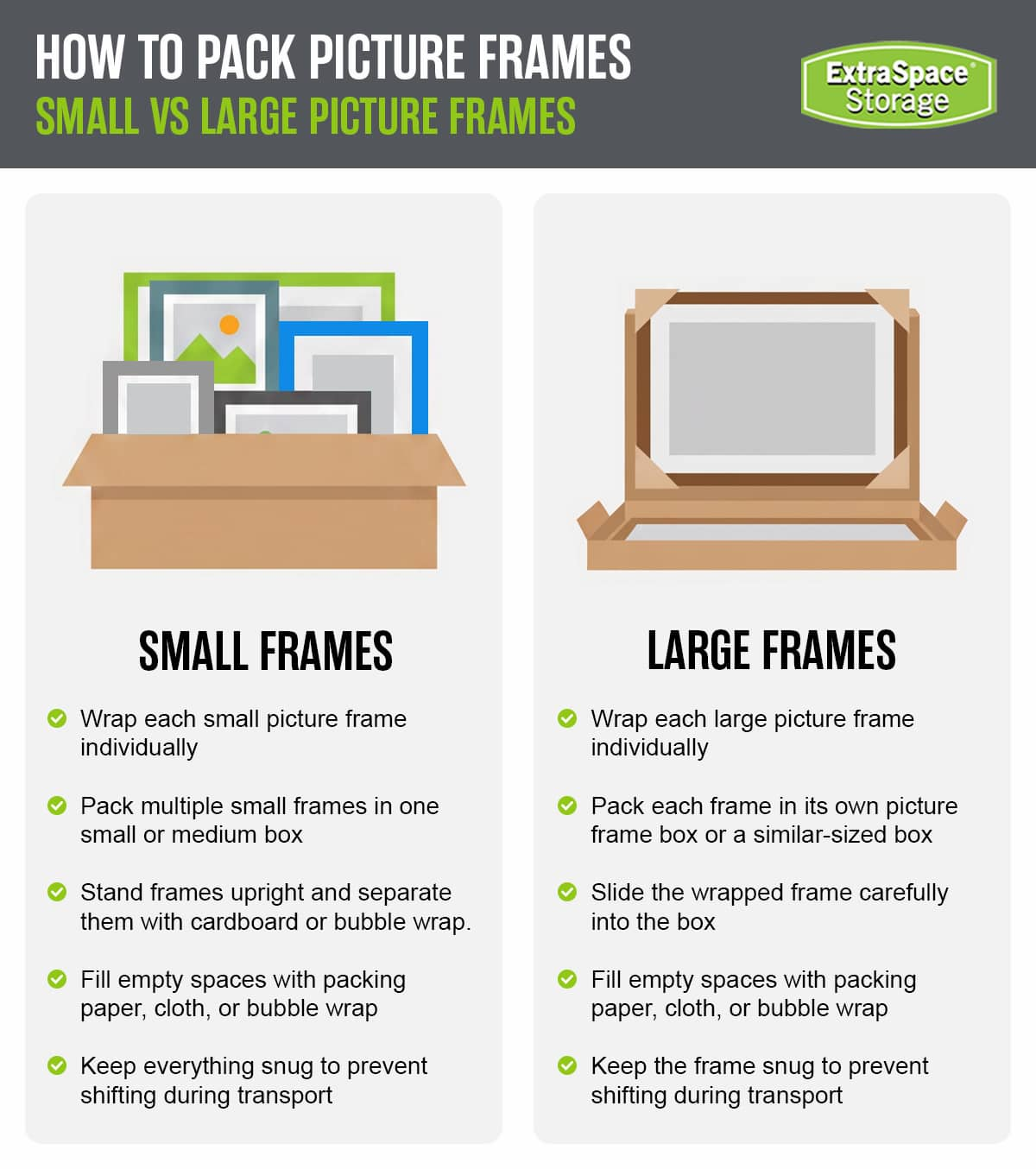
How to Pack Small Picture Frames
Multiple small picture frames can often be packed safely in a single box after being wrapped individually. Stand the frames vertically in a small to medium box, being sure to separate each frame with a layer of cardboard or bubble wrap, and continue packing until the box is full. Fill any empty spaces with more packing paper, cloth, or bubble wrap to minimize movement.
How to Pack Large Picture Frames
Large picture frames should be packed individually for storage, using either a picture frame box or another box that's close in size to the frame's dimensions. After securely wrapping the frame, slide it into its box and fill any remaining gaps with extra packing paper, cloth, or bubble wrap to help keep it in place.
Choose the Right Storage Solution
When you're ready to store your picture frames, choose a storage space that fits your needs. Closets and storage rooms can work well as long as they're clean and dry. Basements may also be suitable if they're climate-controlled and free of excess moisture, but attics and garages generally aren't ideal—especially for fragile or valuable frames—since temperature or humidity changes can cause damage over time.
If you need to free up space at home or plan to store your frames for an extended period, a self storage unit is often one of the most practical solutions. A storage unit provides dedicated space to keep frames organized, upright, and protected from everyday household traffic, while also leaving room to store other belongings.
Store Picture Frames Properly
No matter where you store your picture frames, proper placement can help prevent damage. Store picture frames upright rather than laying them flat, and keep them off the ground using shelving or pallets. Avoid storing picture frames in direct sunlight, and inspect them periodically for signs of mold, pests, or damage so you can address potential issues early—similar to storing antiques and art.
If you're using self storage, a standard drive-up storage unit or indoor unit is often sufficient, especially for short-term storage needs. However, if the frames are made of sensitive materials like wood, or if they contain valuable photos or art, a climate-controlled storage unit can help protect against seasonal temperature and humidity changes.
Need to store picture frames during a move or to declutter your space? Extra Space Storage has convenient storage facilities located across the country that can help. Find a storage facility near you!