How To Store
What Is the Best Way To Store Power Tools in A Storage Unit?

Read Time: 3 min read
Summary: To keep your power tools in good shape, start by cleaning off dust, grease, and sawdust, then dry every surface completely to prevent rust and mildew. Apply a thin coat of machine oil to metal parts, wrap cords loosely, and remove lithium-ion batteries from cordless tools. If a tool is gas-powered, run it dry before storing. Choose a clean, dry, secure space, and keep tools in toolboxes, original cases, or lidded bins. For long-term storage or extreme climates, consider climate-controlled storage. Remember to store batteries separately, off the charger, at about 50% capacity.
Wondering the best way to store power tools? With a few packing and storage tips, you can make sure your power tools stay in good shape while you store them. From where to store your power tools to specific storage types and best storage practices for batteries, here are some tips for storing power tools.
Prepare Your Power Tools for Storage
Before you pack power tools into storage, follow these steps to make sure they stay in good condition for long-term or short-term storage:
Clean Thoroughly: Wipe away dust, grease, or sawdust to prevent buildup and corrosion.
Dry Completely: Wipe down or air-dry all surfaces before storing—even small amounts of leftover moisture can cause rust or mildew.
Apply Light Oil: Use a thin coat of machine oil on metal parts (like drill bits, saw blades, or hinges) to help prevent rust.
Wrap Cords Loosely: Neatly wrap cords and secure them with rope, twist ties, or straps.
Remove Batteries: For cordless tools, take out lithium-ion batteries to prevent leakage or swelling. Store batteries in a separate container.
Empty the Gas Tank: If the power tools are gas-powered, run the tool dry. Storage units do not allow combustible liquids to be present at a storage facility.
Choose the Proper Storage Space
Power tools should be stored in a clean, dry, and secure location to help protect them from theft, moisture, rust, degradation, extreme temperatures, and other potential damage. While storing power tools in a garage, shed, or basement can work, these spaces often lack consistent climate control—which can lead to power tool performance issues later on.
What Size Storage Unit Do You Need for Power Tools?
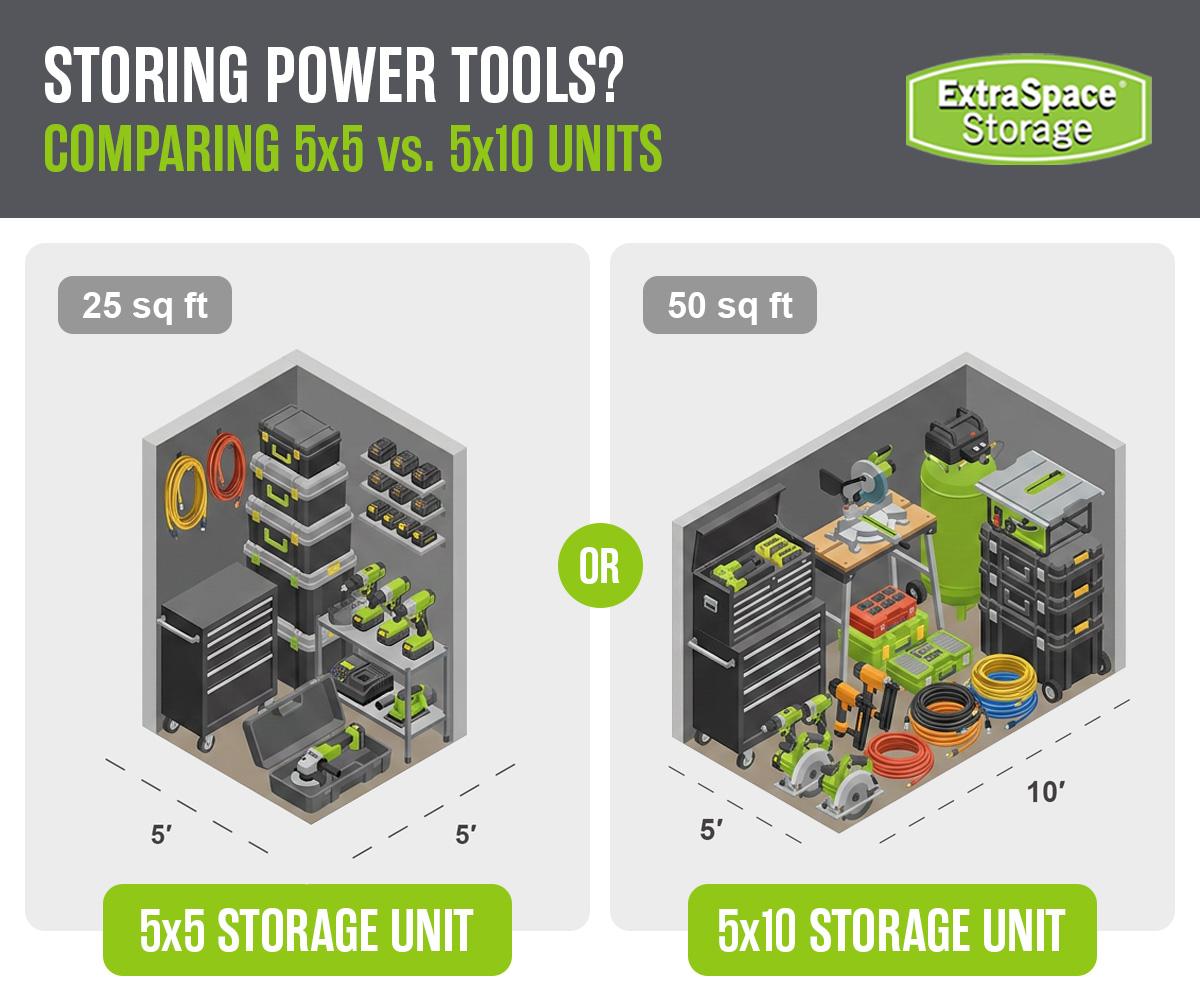
The unit size you'll need for your power tools depends on how many tools you're storing and how large they are, though a 5x5 or 5x10 unit is typically sufficient. While small power tools like handheld drills or sanders don't require much space, you might need to rent a 5x10 unit or bigger if you store large power tools—like table saws—or an especially large collection of tools.
Should You Get Climate-Controlled Storage?
The best way to store power tools is to keep them off the ground in a cool, dry, dark place, like a climate-controlled storage unit. Climate-controlled storage isn't always necessary for power tools, but it's highly recommended for long-term storage or in climates that see extreme temperatures. Extremely cold, hot, or humid conditions can cause rust, corrosion, and damage to electrical components over time. A climate-controlled storage unit helps protect your power tools and preserve their quality long-term by maintaining a stable environment.
Organize Your Power Tools
Keep your power tools organized by storing them in toolboxes or the original cases they came in. This is best for small hand-held tools like drills, grinders, or sanders. You can also use clear plastic bins with lids to keep tools dust-free and to stack them up easily. A rolling, lockable tool chest works well for both security and organization if you have a large collection. You can also use power tool shelves or even a free-standing pegboard inside the unit to hang smaller tools, extension cords, and accessories.
Handle Power Tool Battery Storage Separately
The best way to store power tool batteries is to take them out of the power tools and store them separately within the storage space, either in their original packaging or in a labeled battery case. For cordless tools, take out lithium-ion batteries to prevent leakage or swelling. Store rechargeable batteries off the charger at approximately 50% capacity. If you're wondering how to store power tool batteries in winter, it is recommended that you invest in climate-controlled storage in case temperatures drop below freezing.
***
Storing your power tools has never been easier! Extra Space Storage has facilities across the U.S., making it easy to find a location near you. Reserve a storage unit today!