How To Store
How to Store Shoes for Long-Term Storage

Read Time: 4 min read
Summary: Before you pack and store your shoes, keep its material in mind—leather and suede need the most moisture protection. Before packing, brush off dirt, scrub soles with a baking soda paste, and let each pair air-dry completely for at least 24 hours. Fill toe boxes with acid-free tissue, bubble wrap, or clean socks, and support boot shafts with shoe trees or rolled towels. Add silica gel packets to guard against moisture, and store pairs in clear lidded bins or labeled original boxes. For long-term storage, consider a climate-controlled unit for delicate footwear. Remember to keep heavy items off your shoes and check on them every few months.
Shoes can be a difficult item to store, due to their variety in shape and size. Whether you're decluttering, preparing for a move, or simply need somewhere to store seasonal footwear—renting a storage unit can help keep them in good condition while freeing up space in your home. Follow these steps to properly prepare and store your shoes long-term!
Consider What Type of Shoes You're Storing
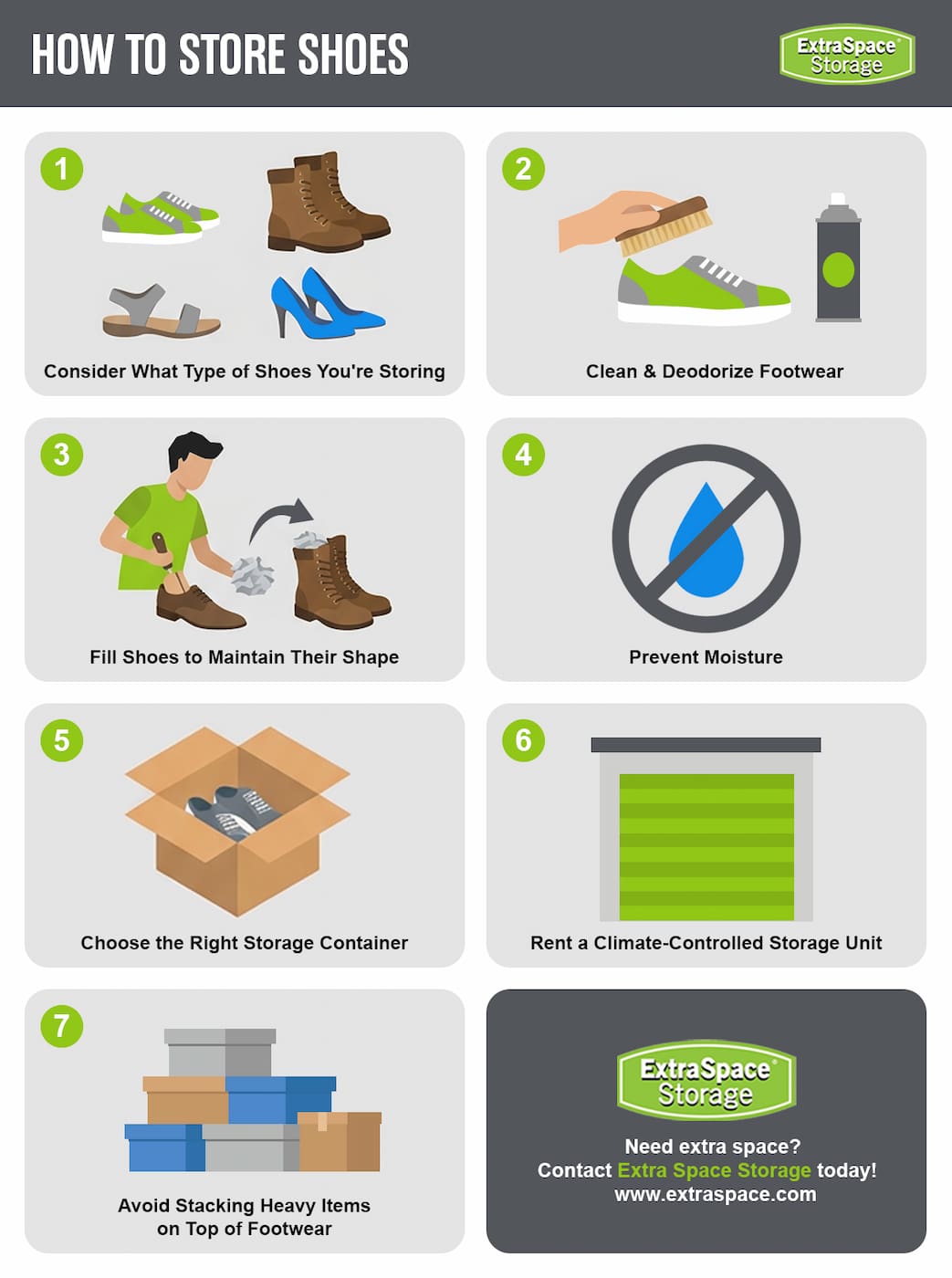
Different shoe materials wear differently in storage, so it's worth prepping each type accordingly. Leather and suede are the most sensitive—prone to cracking, drying out, or discoloring without the right moisture protection. Suede also needs a soft-bristle brush instead of dish soap or a baking soda paste when cleaning, and should air-dry away from direct sunlight to avoid discoloration. Sneakers and canvas shoes are lower-maintenance but still benefit from stuffing to hold their shape, and white soles should be kept out of direct light to prevent yellowing. Boots need extra shaft support to keep them from folding or creasing.
Clean & Deodorize Footwear
Before packing up shoes for storage, take time to clean and deodorize them. Wipe off any dirt or debris using a soft bristle brush or microfiber cloth. Scrub down the soles with dish spray or a baking soda and water paste to remove any scuffs. Once your shoes are clean, let them air-dry completely at room temperature for at least 24 hours, or until fully dry. Keep the interior fresh by placing a baking soda or charcoal packet in the shoes and leaving overnight.
Fill Shoes to Maintain Their Shape
Stuffing shoes helps them hold their form while they sit unworn for weeks or months. Use acid-free tissue paper, bubble wrap, or clean, dry socks to fill the toe box and prevent creasing or collapsing. Skip regular newspaper—the ink can transfer onto light-colored interiors or fabric linings. For boots, insert shoe trees, rolled towels, or pool noodles cut to size to keep the shafts from folding over.
Prevent Moisture
Moisture is one of the biggest threats to stored shoes as it can lead to mold, mildew, and material breakdown. Treat leather and suede shoes with a protective spray or conditioner before packing them away to create a barrier against humidity. Tuck a silica gel packet into each shoe or storage container to absorb excess moisture, and swap them out periodically for longer storage periods.
Properly prepped shoes can typically sit in storage for a year or more without issue, but it's still worth checking in every few months—especially for leather, suede, or other delicate materials, or if your storage space isn't climate-controlled. A quick look lets you catch any moisture buildup, odor, or wear early, before it becomes a bigger problem.
Choose the Right Storage Container
The right container protects shoes from dust, pests, and moisture while keeping pairs organized. Clear plastic bins with snap-on lids are a solid choice—they seal out debris and let you see contents at a glance without opening every box. Original shoe boxes work well too, especially if you label them with the shoe type and size for easy identification later. Avoid stacking loose pairs directly in large tote bins, where they can shift, scuff, or get separated from their match.
If you'll need certain pairs during the storage period—like transitioning seasonal shoes in and out—store those in clearly labeled bins near the front or top of your unit. Reserve deeper, harder-to-reach space for shoes you won't need until the season changes or the unit is cleared out.
Rent a Climate-Controlled Storage Unit
Temperature swings and humidity are especially hard on materials like leather, suede, and glued soles, which can crack, warp, or deteriorate in extreme conditions. A climate-controlled storage unit keeps temperature and humidity levels steady year-round, making it a smart choice for delicate, high-value, or seasonal footwear you're storing long-term. This is especially worth considering in regions with hot summers or cold, damp winters.
Avoid Stacking Heavy Items on Top of Footwear
Shoes are easy to overlook when packing a unit, but heavy boxes stacked on top can crush toe boxes, flatten heels, or warp soles over time. Store shoe containers on a shelving unit if your unit has one, or place them near the top of your stack rather than the bottom. If shelving isn't available, keep shoe boxes together in their own section and avoid piling anything heavier than a few pounds directly on top.
Need a place to store your shoes while downsizing or decluttering? Extra Space Storage has conveniently located storage facilities across the country. Find self storage near you!