
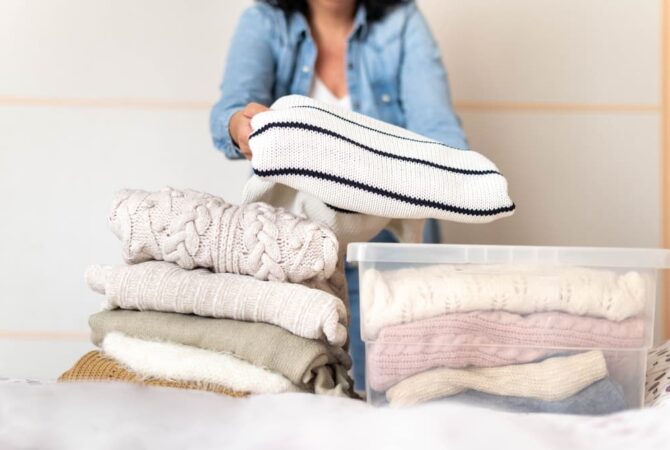
Wondering how to store seasonal clothes? Whether you’re refreshing your wardrobe, decluttering your home, or trying to better preserve your clothes, this guide to off-season clothes storage can help you stay organized all year long!
Grab Your Supplies
Before you get started, gather your storage supplies so everything is in one place! Here are some items you’ll want to have handy for storing seasonal clothes:
- Laundry cleaning supplies
- Sewing kit
- Clear totes & bins
- Hanging garment bags
- Vacuum-seal bags
- Acid-free tissue paper
- Desiccants like silica gel packets
- Natural bug repellents like lavender sachets or cedar blocks
- Labels & markers
- Paper or an online document to make an itemized list
- Portable clothing racks
- Shelving
Decide What You’re Storing
Once you’re ready to swap your clothes for the season, go through your closet to decide what stays and what goes into storage. When storing winter clothing, gather your sweaters, wool garments, coats, snow pants, boots, and cold-weather accessories. When storing summer clothes, pull lighter pieces from your closet and dresser—like T-shirts and tank tops, summer dresses and skirts, swimsuits, shorts, and sandals. If you travel throughout the year to places with different climates, either keep a small number of off-season items in your closet or plan to store them where they’re easy to access. Keeping a few out-of-season pieces handy also helps you stay prepared for unexpected weather and seasonal transitions.
[sc name=”Find Your Store”]Prepare Your Clothes for Seasonal Storage
Before you store your off-season clothes, make sure they’re in good condition. Storing dirty clothes can lead to mold, attract pests, and allow stains to set in—while damaged items may worsen over time. Help protect your clothing for future use by thoroughly washing and drying everything. If possible, dry your clothes in the sun to help kill bacteria, remove odors, and freshen them for storage. Steam delicate fabrics like silk and chiffon to get rid of wrinkles. If you’re storing seasonal shoes like winter boots or summer sandals, clean them to protect your footwear and prevent dirt from transferring to other items. Finally, inspect each clothing item for any tears or imperfections and repair them before storing. This helps prevent further damage and keeps your clothes ready to wear straight out of storage!
Store According to the Fabric
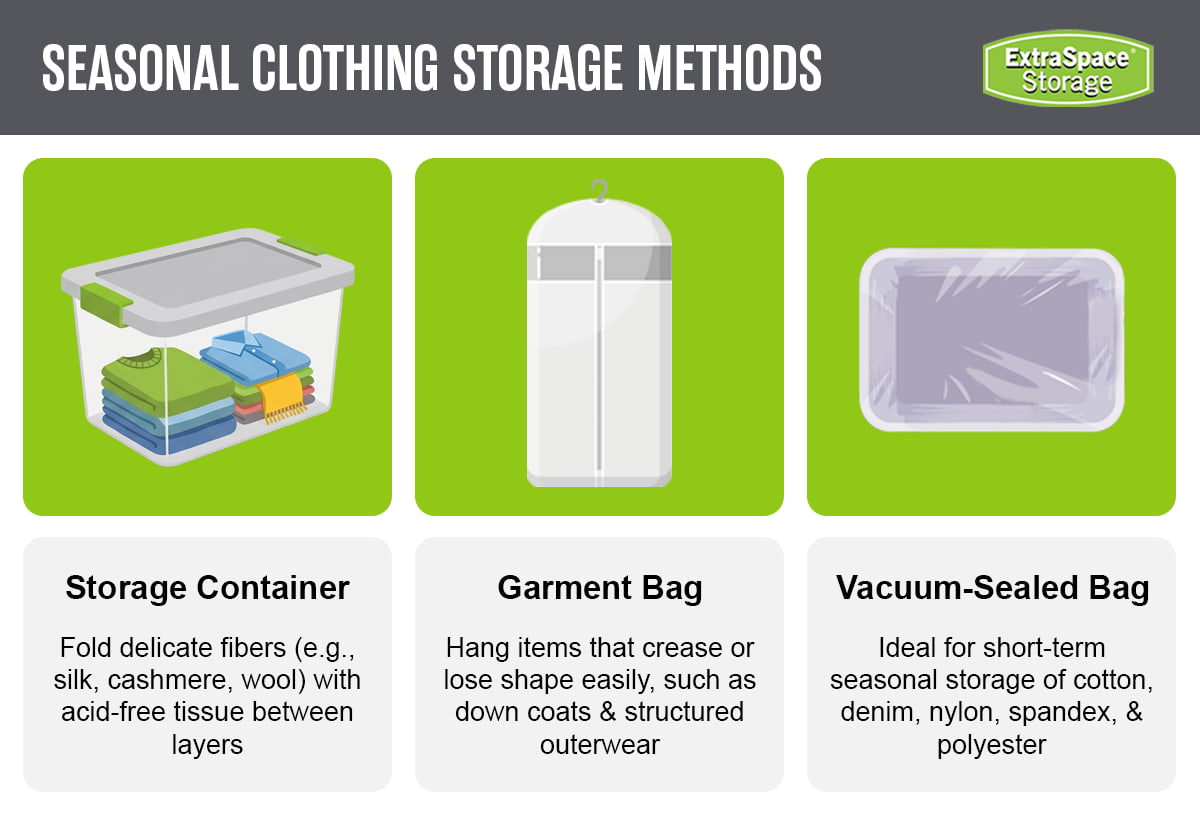
Instead of simply tossing your clothes into a box and forgetting about them until next season, the best way to store out-of-season clothes is to handle them based on their fabric type. This approach helps keep your clothes in good condition so they last longer and makes it easier to find what you need as the seasons change. Here are tips for how to store certain fabrics:
- Fold and place in a container: Protect delicate or natural fibers (e.g., silk, cashmere, wool) by folding them and placing acid-free tissue paper between them. This helps preserve their shape and color while preventing dust and creasing. You can also place acid-free tissue paper inside leather and suede pieces and around zippers or buttons to avoid rubbing and scuffing.
- Hang up in a garment bag: For winter clothes storage, hang items that can easily crease or lose their shape if folded—like down coats and other structured outerwear. For summer clothes storage, flowy garments such as rayon or chiffon dresses and skirts keep their drape better when hung. Many pieces with sequins, rhinestones, or other embellishments can also benefit from hanging to avoid friction.
- Put into vacuum-sealable bags: While vacuum-sealing isn’t recommended for long-term clothes storage, it can work well for short-term, seasonal storage of fabrics like cotton, denim, nylon, spandex, and polyester. These materials compress well and bounce back easily, helping you maximize storage space.
Protect Against Moisture & Pests
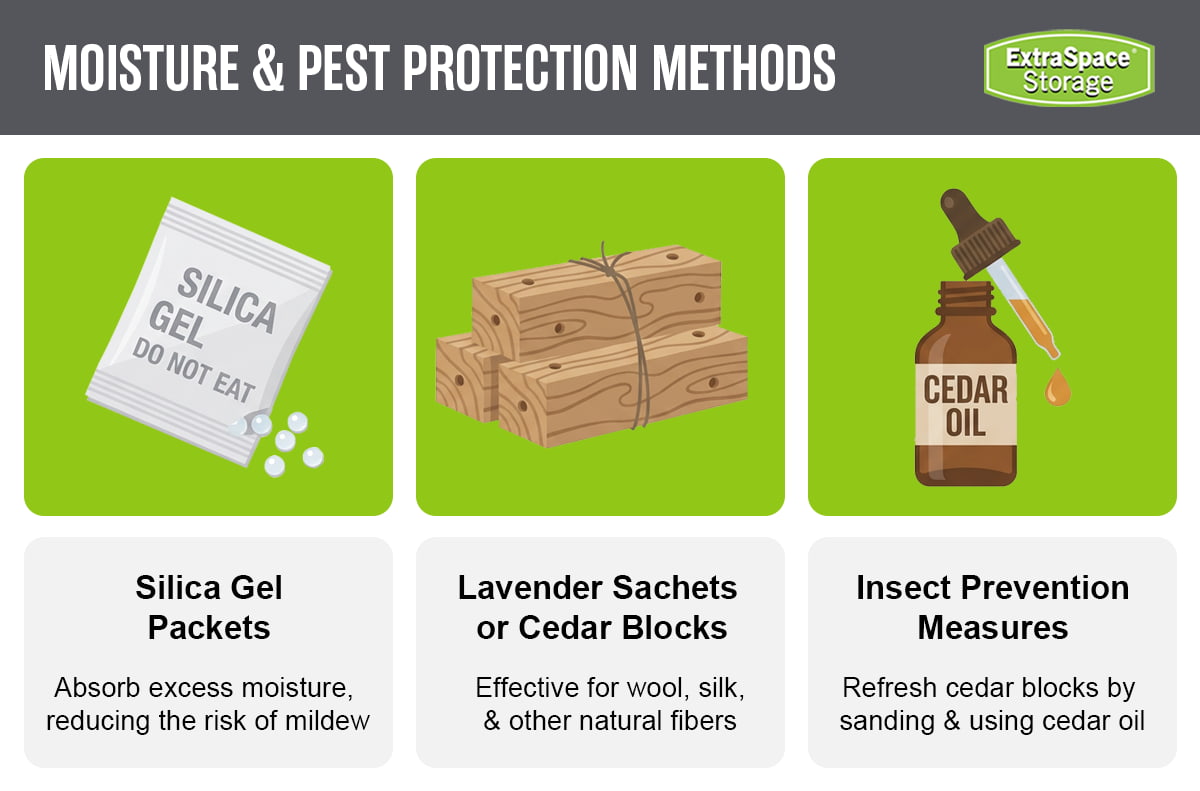
As you pack away seasonal clothing, take a few extra steps to help create moisture and bug-proof clothing storage. These simple steps can help keep your clothes dry, fresh, and protected.
- Pack clothes with silica gel packets: Silica gel packets help absorb excess moisture, reducing the risk of mildew. Make sure to check them each time you rotate your seasonal wardrobe, and if the packets feel damp, replace them or recharge them before storing your clothes again.
- Use lavender sachets or cedar blocks: Instead of mothballs—which require careful handling and can leave behind strong odors—choose natural insect deterrents like lavender sachets or cedar for clothes storage. These options are more pleasant and effective for wool, silk, and other natural fibers. Provide extra protection to clothes in garment bags by using cedar hangers.
- Check on your insect prevention measures: Over time, lavender sachets and cedar blocks can lose their effectiveness. Replace them every few months or whenever you seasonally swap out your clothes. You can also refresh cedar blocks and hangers by lightly sanding them or applying cedar oil.
Keep Track of Your Clothes
Make unpacking, swapping seasonal clothing, and finding specific items easier by creating an inventory list and labeling your storage containers. Start by listing the clothing categories stored in each box or bag—either on paper or in a digital spreadsheet—so you always know where items are located. Categories might include summer tops, shorts and skirts, winter accessories, winter coats, and more. Label each container with its contents and the season, and keep your inventory list updated with each container’s storage location to make future wardrobe changes more efficient.
[nearby_stores map=’0′]Find a Place for Seasonal Clothes Storage
Storing your out-of-season clothes in a cool, dry place helps prevent mildew, odors, and pest damage. Common seasonal clothing storage ideas include basements, attics, garages, closets, or storage units. If you plan to store clothes in a basement, keep in mind that these areas can be humid or prone to flooding—so it’s best to use a dehumidifier and elevate your storage containers off the ground to help protect your belongings. Attics, on the other hand, tend to be dry and dusty, so adding moisture control and dust covers can help keep clothing in good condition. If space is limited at home or you want a more hands-off solution, a climate-controlled storage unit is a convenient alternative. Climate-controlled storage helps protect clothing and other temperature-sensitive items from excess moisture, heat, and cold year-round. When choosing a seasonal storage space, find a location that’s easy to access so you can swap seasonal items as needed.
Organize Your Seasonal Storage
Make a plan for your out-of-season clothes storage by measuring your available space by height, length, and width. Assess how much room each box, vacuum-sealed bag, or garment bag requires, then multiply by the total number of bags and boxes you’ll be storing. To organize your storage space and avoid overcrowding, use rolling clothing racks for hanging items and add shelving units or DIY shelves to safely stack bins and vacuum-sealed bags. Leave a clear walkway with labels facing outward so you can easily grab items when needed. Additionally, place items you’re more likely to access—like transitional pieces—toward the front to make seasonal swaps quicker and more convenient.
***
Find Climate-Controlled Storage Near You!
Extra Space Storage offers different types of climate control that can help you protect and store seasonal clothes until you’re ready to put them back into rotation in your closet.
Popular cities for climate control include:
- Buffalo, NY Climate-Controlled Units
- Cedar Rapids, IA Climate-Controlled Units
- Cleveland, OH Climate-Controlled Units
- Layton, UT Climate-Controlled Units
- Plymouth, MA Climate-Controlled Units
- Portland, ME Climate-Controlled Units
Find climate-controlled self storage near you today!