Comprehensive Guide to Self Storage Facility Management
Discover what it takes to successfully manage a self storage facility and set your business up for long-term growth. From daily maintenance and cleaning to customer service and technology, we outline everything you need to know about storage facility management.

Opening a storage facility is a major milestone, and successfully managing your property will set the foundation for strong operations, satisfied tenants, and lasting growth. From your online storefront to daily operations and technology, every detail impacts customer satisfaction and occupancy rates. As one of the largest self storage operators in the U.S., Extra Space Storage has decades of experience managing thousands of facilities nationwide. In this guide, we’ll share strategies to help you streamline operations, boost tenant satisfaction, and achieve stronger financial results when managing a self storage facility.
Keep Your Storage Facility Clean

Cleanliness is one of the first things tenants notice, and it sets the tone for how your business is perceived. Beyond first impressions, regular upkeep helps protect your property, extend unit lifespan, and reduce issues like pests or damage. At Extra Space Storage, we’ve seen how a well-kept facility not only builds trust with customers but also drives stronger occupancy and retention over time.
Clean Empty Units
Each time a tenant moves out, establish a consistent process for preparing the unit for the next renter. Sweep from corner to corner, wipe down surfaces, and make sure the space is odor-free and ready to show. This level of detail may seem small, but it communicates professionalism and care—two factors that matter when prospects are deciding where to rent.
Implement Pest Control
Pest control plays an important role in helping protect your property and overall reputation. A proactive program with scheduled inspections and treatments can prevent bigger problems down the road. Sealing cracks, addressing leaks, and reducing moisture around gutters or pipes also makes a difference.
Perform Interior Checks
Daily walkthroughs are an effective way to stay ahead of potential problems. Overflowing trash, unkempt hallways, or dirty entryways can create negative impressions quickly. Regular sweeping, vacuuming, and disinfecting of both common areas and vacant units helps keep standards high and avoids surprises during customer visits.
Maintain Curb Appeal
The outside of your facility should be just as polished as the inside. Keep your self storage property clean by regularly removing any discarded items, washing windows, and cleaning out gutters. Empty dumpsters frequently to prevent overflow and unpleasant odors. Mow lawns weekly (or as needed) to maintain a tidy appearance, and inspect fences for any damage that could impact security or curb appeal. Also, make sure your signage is clean and easy to read.
Prioritize Facility Maintenance & Security
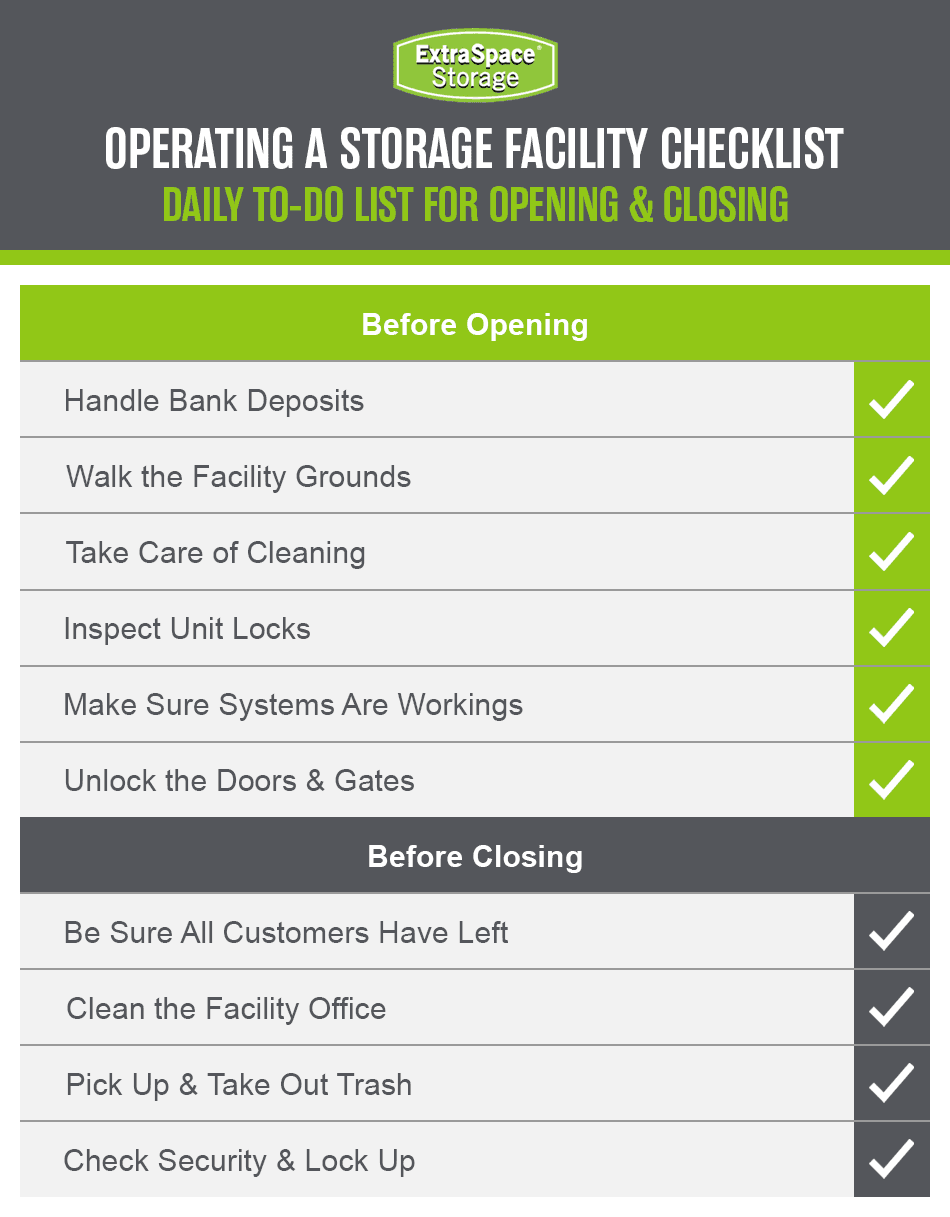
A well-maintained storage facility builds tenant trust and ensures operational efficiency, so it's important to stay on top of regular facility maintenance schedules and daily task lists to avoid costly downtime. Our facility managers have seen how consistent upkeep and proactive security measures directly translate into higher tenant satisfaction and stronger long-term performance.
Check Unit Doors
Storage unit doors are one of the most frequently used components of any facility—and one of the most visible signs of quality to tenants. Regularly inspect for wear, rust, corrosion, or misalignment. Pay close attention to locks and latches, since a faulty mechanism can pose serious security risks and lead to dissatisfaction or liability concerns. If a tenant’s lock appears compromised, notify them immediately and assist with next steps.
Complete Facility Repairs
Going through your facility and conducting necessary repairs will keep the storage environment safe and functional—and preventive maintenance is often more cost-effective than reactive fixes. Compile a list of your available amenities and regularly test each for functionality. Replace burned-out bulbs to maintain good lighting, and keep HVAC systems running smoothly by removing dirty filters and watching for refrigerant leaks or system malfunctions. Hire professionals to fix any larger electrical, HVAC, plumbing, or structural issues—such as roof repair or major building damage.
Conduct Security System Check
Self storage security features are one of the most important operational investments for a facility. Instead of conducting annual inspections, consider testing systems on a quarterly—or even monthly—basis to confirm they’re functioning as intended. Review cameras, alarms, keypads, and access controls, and verify that surveillance footage is recording properly and stored according to your protocols. Taking a proactive approach can help reduce risk, strengthen tenant confidence, and demonstrate a commitment to operational standards.
Improve Customer Service
The self storage market is competitive, but providing existing and potential tenants with exceptional customer service can set you apart from the crowd. Happy tenants are more likely to stay longer, refer others, and leave positive online reviews. Here are some key tips for improving storage facility customer service.
Train Your Staff: Make sure every team member is trained to recognize customer needs, offer helpful assistance, and confidently answer questions about self storage.
Offer Multiple Communication Channels: Tenants should be able to reach you via multiple contact points, including phone, email, and online chat.
Simplify the Rental Process: Ensure that move-ins, contract signings, and account setup are fast and user-friendly, whether in person or online.
Follow Up Promptly: Quickly and professionally respond to inquiries, feedback, and complaints.
Optimize the Payment Process
Late or missed payments can be frustrating for both tenants and the facility. Use these strategies to make paying easier, encourage on-time payments, and improve overall satisfaction.
Provide Clear Payment Guidelines: Communicate your late fee structure and grace periods up front to prevent confusion.
Offer Flexible Payment Options: Allow tenants to pay in store, online, by phone, or by mail—with methods ranging from cash or check to credit card or mobile wallet. Encourage automatic billing to reduce late payments.
Monitor Accounts & Send Reminders: Track tenant balances and use automated text or email reminders before and after due dates to encourage timely payments.
Maintain Payment System: Regularly audit your billing and payment systems to ensure they’re accurate, safe, and functioning properly.
Streamline Operations with Technology
Technology is one of the most powerful tools available to facility owners and operators. From management software to your website and tenant communication systems, the right solutions can make day-to-day operations more efficient, minimize errors, and improve the overall tenant experience.
Track Occupancy Trends
Utilize storage facility management software to track move-in and move-out activity, identify seasonal trends, and pinpoint underperforming unit types. These insights enable you to make informed decisions about pricing, promotions, inventory, and when to schedule services like pest control and preventative maintenance. Making data-driven decisions can help you stay ahead of the curve rather than reacting to issues as they arise.
Automate Communications
Automating routine messages—such as payment reminders, move-in details, and review requests—saves staff time while creating a consistent customer experience. Automated texts and emails reduce the risk of missed payments and keep tenants updated without requiring additional manual oversight. This balance of efficiency and consistency strengthens both operations and customer relationships.
Manage Website Storefront
Your website is often the first interaction prospective tenants have with your business. Keep location pages, FAQs, and other content updated to reflect accurate policies and information. Prioritize a booking system that is intuitive, mobile-friendly, and secure, since most customers will research and reserve units online. If your facility website requires a redesign or maintenance, schedule downtime during off-peak hours and communicate changes in advance to limit disruption.
Troubleshoot Customer Concerns
Technical challenges—such as forgotten passwords, access code issues, or account login errors—can be frustrating for tenants and disruptive for staff if not addressed efficiently. Use secure password reset features, admin recovery tools, and real-time activity logs to quickly resolve issues while maintaining account security. A proactive approach to troubleshooting shows professionalism and helps reduce barriers to payment or access.
Strengthen Operations & Boost Revenue
Building a profitable self storage business goes beyond filling units. Long-term success comes from strengthening operations, optimizing pricing, and finding new ways to provide value for tenants.
Maintain Legal Compliance: Licenses, permits, and insurance policies should be reviewed regularly to confirm they are current and aligned with local, state, and federal requirements. Staying ahead of compliance not only reduces risk but also builds credibility with tenants, investors, and partners.
Update Online Presence: Your digital storefront is just as important as your physical property. Keep your website, Google Business Profile, and social channels updated with current hours, pricing, and promotions. Adding resources like FAQs, how-to guides, or a blog can position your facility as a trusted authority and improve visibility in search results.
Gather Tenant Feedback: Direct tenant feedback provides valuable insight into what’s working and where improvements are needed. Online surveys, email outreach, or on-site suggestion boxes can highlight trends in tenant preferences and reveal opportunities to improve operations.
Review Pricing Strategy: Pricing is one of the most important levers for revenue growth. Compare rates with local competitors and evaluate whether promotions, referral discounts, or dynamic pricing models could benefit your market. Regularly reviewing pricing helps keep occupancy healthy while maximizing return on each unit.
Expand Services & Partnerships: Offering ancillary services can add both revenue streams and customer convenience. Consider providing packing supplies, protection plans, or truck rentals—either in-house or through local partnerships. These services create additional value for tenants while differentiating your facility from competitors.
Need help managing your storage facility? Independent storage owners can strengthen operations through Extra Space Storage’s third-party management program, backed by a trusted brand, effective tools, and industry expertise. Partner with us today!