How To Store
Storing a Kayak: Tips for Short-Term or Long-Term Kayak Storage

Read Time: 4 min read
Summary: To keep your kayak in great condition, start by removing the paddle, seats, rod holders, float bags, and bilge pump, then rinse the float bags and pump with fresh water. Clean the kayak with mild dish soap, let everything dry fully, and wrap it in a waterproof tarp or fitted cover. For storage, consider an outdoor rack in mild climates, an indoor garage or shed, or a storage unit. For wood or composite kayaks, consider climate-controlled options for extra protection. Store the kayak upside down or on its side, on a rack with padded supports, and away from direct sunlight. Remember to inspect it periodically for moisture or pests.
Properly storing your kayak when it's not in use can help maintain its condition and extend its lifespan. Use these kayak storage tips to prep your kayak and find the right storage space so you're always ready for your next adventure.
Prepare Your Kayak for Storage
Whether you're storing your kayak in between trips or need winter kayak storage, proper preparation is key to keeping it in top condition for future use:
Remove the paddle, seats, rod holders, float bags, and bilge pump from your kayak to prevent damage. Rinse the float bags and bilge pump with fresh water.
Thoroughly clean your kayak with a mild dish soap or cleaner to remove salt, dirt, and any other grime or residue.
Let your kayak and its accessories fully dry before moving on.
Wrap your kayak in a weather-resistant or waterproof tarp or fitted cover.
Choose the Right Kayak Storage Solution
Where you store your kayak plays a big role in how well it holds up over time. Consider these storage options to find the space that best fits your needs:
Outdoor rack with a weather-resistant cover: This option can work well in mild climates if indoor space isn't an option, though it offers less protection than storing inside. Additionally, be aware that many HOAs prohibit storing items outside.
Garage, shed, or basement: If you have the space, these indoor spots offer great protection from sun and rain—though they may still be susceptible to extreme temperature changes.
Standard or climate-controlled storage unit: This option is ideal if you're short on garage space, concerned about theft, or want to free up room at home. Plus, if you opt for climate-controlled storage, your kayak gets an extra layer of protection against temperature-related damage.
Maintain Your Kayak in Storage
Once you've picked a space, a few simple kayak storage tips can help keep your vessel in good condition:
Store your kayak upside down or on its side to maintain its shape.
Consider investing in a kayak rack or SUP rack to keep your kayak off the ground and protected from moisture in storage.
Avoid hanging your kayak by the handles—they cannot support the full weight.
Use padded supports to prevent scratches or pressure damage.
Store your kayak out of direct sunlight to prevent UV damage—which can include cracking, brittleness, and cosmetic damage like color fading.
Periodically inspect your kayak for evidence of moisture or pests.
Frequently Asked Questions
What Size Storage Unit Do I Need for a Kayak?
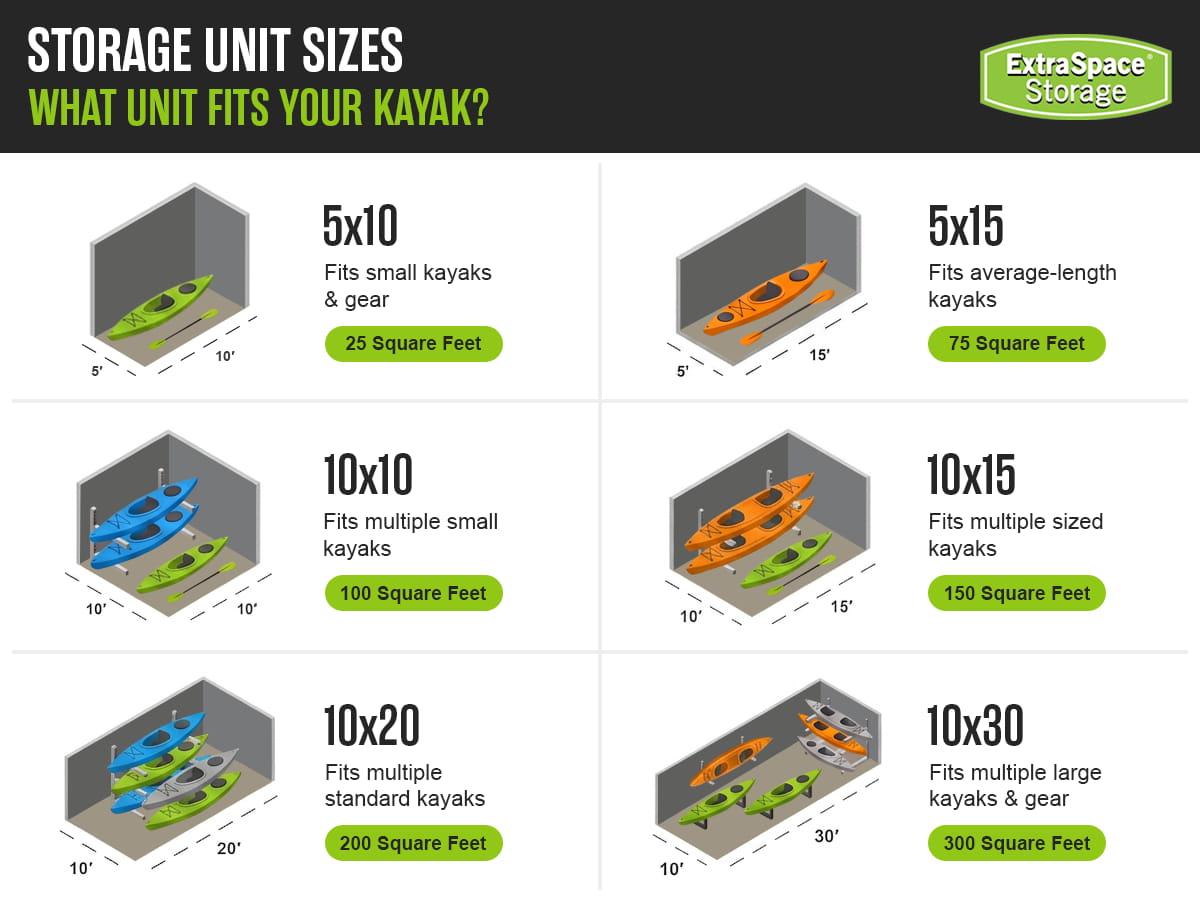
The storage unit you choose for your kayak will depend on its size and your other storage needs:
5x10, 5x15, and 10x10 storage units are great for most kayak types—including whitewater, recreational, and fishing kayaks.
If you're storing longer kayak types like sea kayaks, or you plan on storing additional large or bulky items alongside your kayaks, consider renting a larger unit—like a 10x15, 10x20, or 10x30.
Remember to measure your kayak before booking a unit, and use our storage unit size guide to determine which unit is best for your kayak storage needs—especially if you need to store other items alongside it.
Which Storage Unit Type Is Best for a Kayak?
The storage unit type that's best for you will depend on factors like your specific kayak model, budget, and storage needs. Here are the most common storage unit types offered at self storage facilities:
Standard indoor storage unit: This can be a great option if you want full protection from theft and the elements at an affordable rate.
Climate-controlled unit: This indoor unit type maintains a consistent temperature and humidity level, making it ideal for kayaks sensitive to extreme heat, cold, or moisture.
Drive-up access unit: Drive-up access allows you to pull your vehicle right up to your unit, providing easy access if you plan to use your kayak frequently.
Read our boat storage guide for more insight on how to choose a storage unit for your kayak.
Do Kayaks Need Climate-Controlled Storage?
Climate-controlled storage isn't required for most kayaks, but it can offer valuable protection. By maintaining a stable environment, climate control helps shield your kayak from extreme temperatures, humidity, and sun damage. It's especially worth considering for wood or composite kayaks, which tend to be more sensitive to these conditions than standard plastic models.
Looking for short-term or long-term kayak storage near you? Extra Space Storage has storage facilities located across the U.S. so you can find the best unit for your needs. Rent self storage today!