
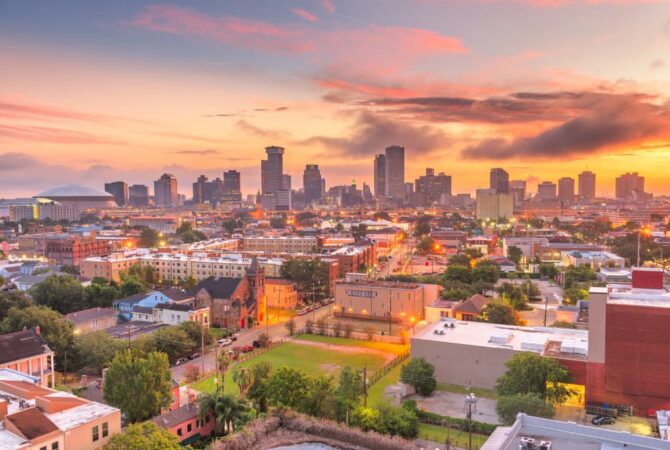
New Orleans is a great place to live and one of the most romantic cities in the U.S.! Residents appreciate NOLA’s lively culture, abundant outdoor activities, and delicious cuisine—though some dislike the city’s noisiness and weather extremes. Explore these pros and cons of living in New Orleans to see if it’s right for you!
Quick Facts About New Orleans
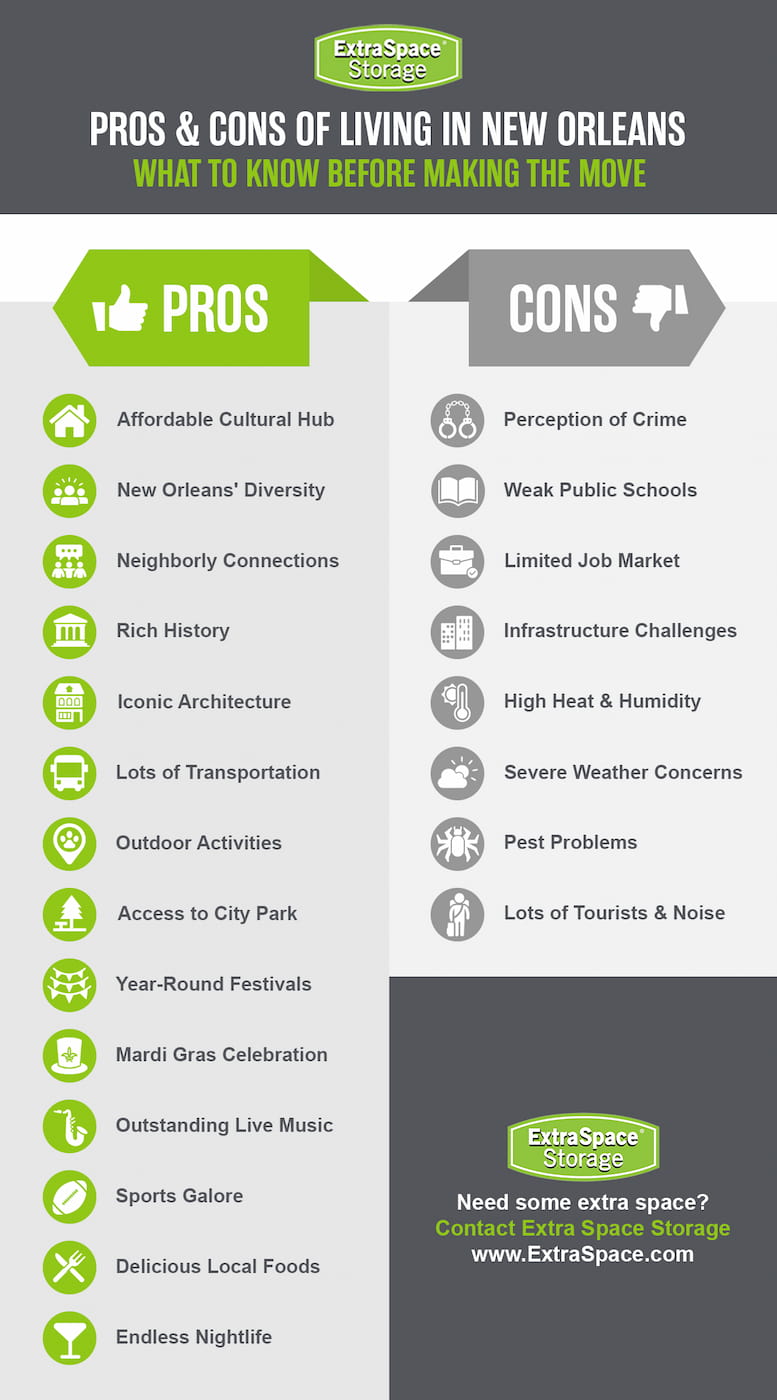
| Population | 391,249 |
| Average Home Price | $863,704 |
| Average Monthly Rent | $2,050 |
| Average Days of Sunshine | 216 per year |
| Average Commute Time | 24 minutes |
Statistics from AreaVibes, Council for Community and Economic Research (C2ER), & BestPlaces
Pros of Living in New Orleans
The benefits of living in New Orleans include its vibrant culture, rich history, and family-friendly attractions—where music, food, and festivals bring the city to life! Here are some top reasons to move to New Orleans.
Pro: Affordable Cultural Hub
New Orleans proves you don’t have to break the bank to thrive in a world-class cultural city. Though housing costs are on the higher end, the overall cost of living in New Orleans is only 13% above the national average—with everyday expenses like groceries, transportation, and utilities all trending lower. Compared to the cost of other major Southern hubs like Miami, New Orleans offers a rare combination of rich arts, music, and cuisine for a relatively affordable price, giving residents the chance to enjoy the Big Easy lifestyle without spending a fortune.
Pro: New Orleans’ Diversity
With a majority Black population, New Orleans’ identity is rooted in African American culture, shining through its music, food, fashion, and traditions. Throughout the year, Second Lines transform city streets into moving neighborhood celebrations—organized processions where Social Aid and Pleasure Clubs like the Young Men Olympian Jr. lead participants through neighborhoods, with brass bands playing and crowds dancing behind them. Another uniquely local tradition, the Jazz Funeral, honors the deceased by moving through the streets with brass bands playing mournful yet celebratory music, blending grief and joy in a way that is distinctly New Orleans.
The city’s culinary scene also highlights Black heritage with dishes like gumbo, jambalaya, and po’boys at establishments such as Dooky Chase’s Restaurant and Willie Mae’s Scotch House. Even beloved Mardi Gras traditions trace back to African roots through “skull gangs” and popular krewes like the Mardi Gras Indians and Krewe of Zulu. NOLA’s diversity can also be experienced through a historical lens at sites like the New Orleans African American Museum or Mardi Gras’ historic Backstreet Cultural Museum and House of Dance & Feathers.
Pro: Neighborly Connections
New Orleans is known for its Southern hospitality, with a laid-back vibe and culture of community and looking out for one another. In fact, NOLA is often cited as one of the friendliest cities in the U.S.! The city’s porch and street culture allows for forming connections at block parties, front stoops, and neighborhood bars. Additionally, NOLA’s community spirit shows up in more serious ways through mutual aid networks like Southern Solidarity and other community engagement initiatives. This sense of connection carries into everyday life through free, recurring meetups like Wednesday at the Square. Neighborhoods with strong community ties, such as Algiers Point, Bayou St. John, and West End, are some of the best neighborhoods in NOLA for families—offering a tight-knit environment for children to grow up in.
Pro: Rich History
NOLA offers an unparalleled connection to the past, shaped by centuries of global trade, migration, and cultural exchange. The city provides deeper insight into its cultural and historic roots through landmark destinations like St. Louis Cathedral, The Cabildo, and the Hermann-Grima + Gallier Historic Houses. You can acknowledge the history and significance of the “Birthplace of Jazz” by attending festivals and musical events held in Louis Armstrong Park at Congo Square. Residents can also explore world-class New Orleans museums—viewing international exhibitions at the New Orleans Museum of Art, learning more about military history at the National WWII Museum, or understanding the legends and traditions of voodoo in NOLA at the Historic Voodoo Museum. Or get a sense of the city’s unique approach to life and death by visiting above-ground cemeteries in New Orleans, often referred to as “Cities of the Dead,” including St. Louis Cemetery No. 1 and St. Roch Cemetery.
Pro: Iconic Architecture in New Orleans
New Orleans is a living museum and epicenter of architectural beauty. Reflecting the city’s history as a trading hub and cultural melting pot, its streets are lined with beautiful Creole cottages, shotgun homes, and double-gallery houses. These distinct architectural styles can be seen across neighborhoods like the Garden District and Marigny & Bywater, creating a visually rich cityscape that feels both historic and alive. The iconic French Quarter dazzles with vibrant balconies, ironwork galleries, and bustling courtyards along Bourbon Street and Royal Street. Tour some of New Orleans’ oldest homes, including the sprawling Longue Vue House & Gardens in Lakewood or the West Indies-style Pitot House in Bayou St. John. And to take it all in, residents can stroll along the Mississippi Riverfront on the Moon Walk to see historic buildings, views, and live music come together in one scenic setting.
Pro: Lots of Transportation Options
Whether you prefer walking, biking, or taking public transit in New Orleans, getting around the city is easy. The city’s walkability in Downtown NOLA and the French Quarter makes exploring historic streets, shops, and restaurants on foot a breeze. Cyclists can take advantage of dedicated lanes supported by the city’s ever-expanding pedestrian and bicycle program. For longer trips, the New Orleans Regional Transit Authority (NORTA) bus system connects residents to neighborhoods and attractions throughout St. Charles, Canal, Riverfront, and more. For a fun riverfront commute, ride across the Mississippi River to historic Algiers Point on the Canal Street Ferry. Visitors and locals can also utilize streetcar lines and bike-share programs, including Blue Bikes NOLA. Even cross-country travel is simple, thanks to flights from the Louis Armstrong New Orleans International Airport!
Pro: Plenty of Outdoor Activities in NOLA
Sitting among the best cities for year-round weather, Crescent City offers an abundance of outdoor spaces for relaxation and recreation—whether you’re exploring wooded trails, parks, or gardens. These are some of the best places for outdoor activities in New Orleans:
- Audubon Zoo for hands-on learning & wildlife encounters for kids
- Cascade Stables for training & horseback riding in New Orleans
- New Orleans Airboat Tours & Bayou Swamp Tours for an authentic look at the city’s scenic bayous
- Jean Lafitte National Historical Park & Preserve for exploring Louisiana’s wetlands & wildlife
- Evening Jazz Cruises for live jazz, craft cocktails, & stunning views of the NOLA skyline
Pro: Access to City Park
As one of the largest urban parks in the U.S., City Park spans more than 1,300 acres and offers a mix of green space, trails, and family-friendly attractions—all just minutes from Downtown New Orleans! These are some of the best attractions to explore within City Park:
- New Orleans Botanical Garden for family-friendly plant displays
- NOLA City Bark for dog-friendly play areas
- Besthoff Sculpture Garden for contemporary sculptures in a natural setting
- Carousel Gardens Amusement Park for classic rides, family-friendly attractions, & nostalgic charm
- Couturie Forest for winding waterways, native trees, & local wildlife
- Bayou Oaks for an 18-hole championship-level golf course in New Orleans
Pro: Year-Round Festivals
The Big Easy is a city built for celebration, with tons of New Orleans festivals occurring throughout the year. Whether you love parades, live music, or unique local traditions, there’s always something happening in the city. Consider attending these top events:
- New Orleans Jazz & Heritage Festival for headline acts & a celebration of music, food, & culture
- French Quarter Festival for live music across 20+ stages spanning every genre
- Dirty Linen Night for browsing art galleries, boutiques, & shops along Royal Street
- ESSENCE Festival of Culture for speakers, live music, & artisan displays honoring Black culture
- Red Dress Run for a charity-driven, cross-town run with a uniquely New Orleans twist
- Southern Decadence for drag shows, stage performances, & the famous parade
Pro: Mardi Gras in New Orleans
Mardi Gras is more than a single day in New Orleans—it’s a full season of traditions, creativity, and community celebration! Here are some of the best things to do during Mardi Gras in NOLA:
- Watch colorful floats and marching bands roll through the city during various parade events.
- Learn about Carnival history, float building, and iconic traditions at Mardi Gras museums.
- Explore historic parade routes and Carnival landmarks on guided Mardi Gras tours.
- Shop for or design custom outfits, masks, and accessories at local costume shops.
- Join a local parade krewe to march, throw beads, and celebrate Mardi Gras alongside the community.
Pro: Outstanding Live Music in NOLA
From live jazz along neighborhood streets to eclectic performances at historic venues, the Big Easy is brimming with tunes—making it one of the best music cities in America! Check out these live music spots:
- Preservation Hall for classic NOLA jazz & brass at one of the city’s most legendary venues
- Le Bon Temps Roule for lively funk, soul, & roots music in a relaxed Uptown setting
- The Spotted Cat Music Club, The Jazz Playhouse, or Snug Harbor Jazz Bistro for local musicians & New Orleans jazz bar atmosphere
- Fritzel’s European Jazz Pub for traditional jazz performances on Bourbon Street
- Gasa Gasa for eclectic performances alongside New Orleans art & culture
- Frenchmen Street, Royal Street, or Jackson Square for street musicians turning sidewalks into unforgettable concerts
Pro: Sports Galore
NOLA is a dream city for sports fans, with professional, college, and club teams playing year-round across the city. Explore the best of New Orleans sports:
- New Orleans Pelicans (NBA) at Smoothie King Center
- New Orleans Saints (NFL) at Caesars Superdome
- New Orleans Jesters (NPSL) at Pan American Stadium
- University of New Orleans Privateers (NCAA D-I) basketball at Lakefront Arena or baseball at Maestri Field
- Tulane University Green Wave (NCAA D-I) football (FBS) at Yulman Stadium or basketball at Avron B. Fogelman Arena
- New Orleans Rugby Football Club teams like the Pontchartrain Po-Boys & Harahan River Coyotes
Pro: Delicious Local Food
New Orleans has been recognized as the best foodie destination in the U.S., offering bold flavors and unforgettable dishes rooted in cultural tradition. Sample some of the best food in New Orleans at these local favorites:
- Mulate’s, Zesty Creole, & Neyow’s Creole Cafe for New Orleans Creole & Cajun favorites—like gumbo & jambalaya
- Oceana Grill, Deanie’s Seafood, & The Original Cajun Seafood for fresh seafood specials, including shrimp, oysters, & crawfish
- Ruby Slipper for New Orleans-style beignets, chicken dishes, & other brunch options
- Royal Sushi & Bar for savory sushi & Japanese cuisine
- Shaya for upscale, Mediterranean-inspired dishes
- Athenian Bar & Grill for Greek specialties in a traditional setting
- Blue Oak BBQ for Southern-style barbecue, including beef brisket & pulled pork
Pro: Endless Nightlife in New Orleans
New Orleans nightlife is legendary—and thanks to the city’s open container laws, you’re free to take your drink from the bar and keep exploring the city streets on foot! Whether you’re into cocktails, dance floors, or late-night comedy, these are the best spots for after-hours fun in New Orleans:
- Pat O’Brien’s & The Cat’s Meow for lively NOLA bars & a classic Bourbon Street experience
- DBA New Orleans for live music shows on the iconic Frenchmen Street
- Carousel Bar & Lounge at Hotel Monteleone for craft cocktails & a spin around the iconic carousel bar top
- Lafitte’s Blacksmith Shop Bar for a unique atmosphere at one of the oldest bars in the U.S.
- The Howlin’ Wolf for comedy acts, live entertainment, & beers on tap
- Republic NOLA for DJ sets from regional & national acts
Get Everything You Need For An Easier Move to New Orleans
Cons of Living in New Orleans
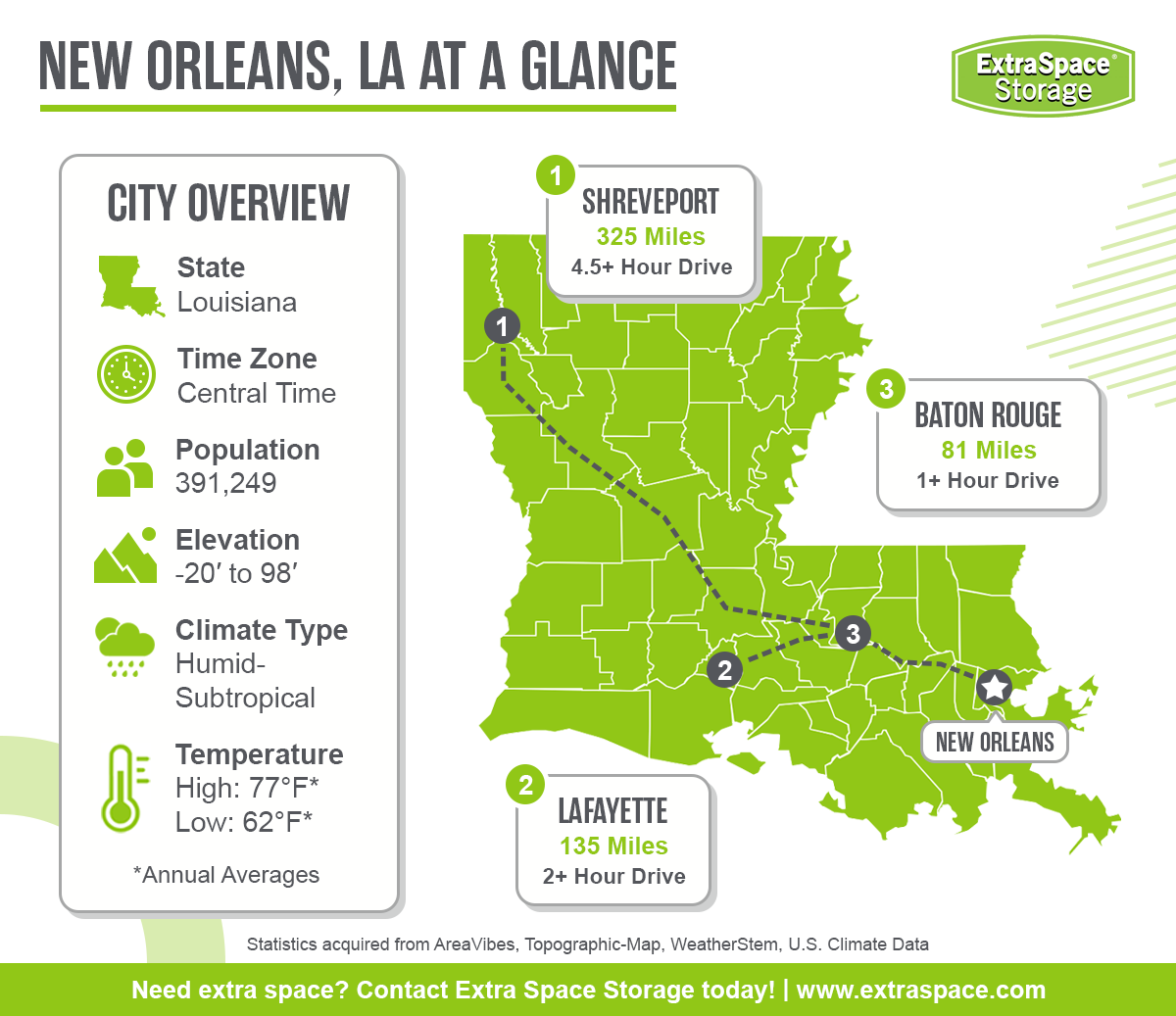
Downsides of NOLA include its weaker job market, infrastructure challenges, and severe weather. Consider the following disadvantages of living in New Orleans before deciding whether you’ll move.
Con: Perception of Crime
While crime in New Orleans can feel more pronounced than in many other U.S. cities, the reality is nuanced. Certain neighborhoods struggle with inequality and infrastructure issues, which can contribute to higher crime reports. Though some sources rank NOLA among the most dangerous cities in the U.S., the overall crime rate is roughly 8% lower than the national average, and the city has introduced public safety initiatives such as N.O.D.I.C.E and NOLA FOR LIFE—which have contributed to crime reduction. Still, the perception of crime may affect newcomers’ sense of security, even as city resources and programs continue to address the challenge.
Con: Weak Public School System
New Orleans faces some challenges in public education, with many schools struggling due to low funding and historically uneven performance. While some public schools have shown improvement in recent years, families often turn to charter schools or private schools for more consistent outcomes.
That said, some of the best schools in New Orleans—like Benjamin Franklin High School, Isidore Newman School, and Haynes Academy for Advanced Studies—provide a stable learning environment for young learners. Plus, the city offers strong higher education options, including Tulane University, Xavier University, and the University of New Orleans, which support educational growth.
Con: Limited Job Market in New Orleans
New Orleans’ job market can feel limited and highly competitive—especially for professionals seeking work outside of top industries like hospitality, healthcare, transportation, and utilities. Although Louisiana ranks as one of the worst states for jobs, it has seen consistent job growth over the past few years. Additionally, top neighborhoods for young professionals in NOLA—like Bywater, Mid-City, and the Central Business District—offer more career options closer to the city’s urban core.
Some top employers in New Orleans include:
- Ochsner Health for healthcare
- Roux Advertising for advertising & media
- Adams & Reese for legal services
- Pan-American Life Insurance Group for financial services
- Entergy Corporation for a Fortune 500 energy company
Con: Infrastructure Challenges
Largely due to its below-sea-level geography, New Orleans faces ongoing infrastructure challenges that affect daily life. In the wake of Hurricane Katrina, many residents feel the slow pace of upgrades and maintenance—especially for street drainage, aging water and power systems, and long-planned projects—has left the city’s infrastructure vulnerable and dependent on reactive fixes. As a result, potholes and deferred maintenance have damaged New Orleans roads, while drainage and utility issues become especially noticeable during heavy rain or severe weather. To address these issues, the city of New Orleans is undergoing significant investment in water infrastructure—including proactive plans such as the Sewerage and Water Board’s Strategic Plan and the Greater New Orleans Urban Water Plan.
Con: High Heat & Humidity
Situated along the Southern coast, NOLA is known for its hot, muggy summers, with average daily highs above 90 degrees. New Orleans is located in one of the most humid states in the U.S. and ranks as one of the most humid cities in the country, with humidity levels peaking at nearly 80% in July—making everyday activities uncomfortable for those unaccustomed to the climate.
That said, the city provides plenty of resources to help residents plan around heat—and the summer months are a great opportunity to explore the city’s many indoor attractions, such as thee Audubon Aquarium. And for the rest of the year, NOLA more than makes up for it—mild temperatures are a big reason the city is considered one of the best destinations for a winter vacation, making errands and outdoor activities much more pleasant.
Con: Severe Weather Concerns
Due to New Orleans’ location along the Gulf Coast, the city is vulnerable to hurricanes, tropical storms, and heavy rainfall throughout the year. The Atlantic hurricane season runs from June through November, and storm surges can push water several feet above ground level, resulting in widespread flooding across many neighborhoods. Residents should expect the possibility of wind damage and power outages during severe storms, and are strongly encouraged to carry flood insurance and have an evacuation plan in place. The city’s resources for emergency planning can help you take proper precautions to protect yourself and your property.
Con: Pest Problems in New Orleans
NOLA’s warm, humid climate means year-round pest issues are a part of life. Some of the most common pests in New Orleans include mosquitoes, cockroaches, termites, rodents, and spiders. To reduce the risk of mosquito-borne diseases, the city provides guidance such as wearing long sleeves, keeping doors and windows closed, and removing trash and clutter. With regular maintenance, sealed entry points, and professional pest control, residents can manage pests effectively and enjoy a comfortable living environment.
Con: Lots of Tourists & Noise
As one of the nation’s top tourist cities, New Orleans welcomes millions of visitors annually—which keeps the city buzzing year-round, but also makes it one of the noisiest cities in the U.S. Festivals, live music, and nightlife contribute to a lively atmosphere, but can also lead to crowded streets, high noise, and occasional sanitation issues—especially during high-tourist events like Mardi Gras. Residents in some neighborhoods report that the constant influx of tourists can make daily errands slower and disrupt quieter residential life. Those seeking a quieter lifestyle but still wanting to enjoy New Orleans’ amenities can consider settling down in the suburbs to avoid peak tourist spots and high noise levels.
Should You Move to New Orleans?
You should move to New Orleans if you value a vibrant culture, rich history, world-class food and music, and green space. These reasons make New Orleans a top spot for families, though NOLA’s lively energy, abundant festivals, and nightlife scene also help make it one of the best cities for singles! Before deciding to relocate, consider your ideal lifestyle, career, and weather preferences—as New Orleans does experience high humidity and some job market limitations.
New Orleans may be the right fit for you if…
- You’re seeking a spirited, tight-knit community with year-round festivals.
- You’re passionate about live music or looking for a great nightlife scene.
- You love exploring outdoor spaces.
- You appreciate history and unique architecture.
- You enjoy Creole and Cajun cuisine.
You may want to consider moving to another city if…
- You’d prefer a low-energy, quiet city with fewer crowds.
- You’re seeking specialized or corporate opportunities outside of healthcare, transportation, or tourism.
- You struggle with hot, humid summers or dislike seasonal pests.
- You want to live somewhere with a lower risk of natural disasters.
- You’re concerned about aging infrastructure.
New Orleans Compared to Nearby Cities
Wondering if New Orleans is better than Baton Rouge, Nashville, or Atlanta? To decide which area best fits your lifestyle, budget, and needs, compare NOLA to popular nearby cities below.
| Factor | New Orleans, LA | Baton Rouge, LA | Nashville, TN | Atlanta, GA |
| Average Monthly Rent | $2,050 | $1,336 | $1,741 | $1,458 |
| Average Home Price | $863,704 | $405,981 | $534,248 | $430,619 |
| Average Commute Time | 24 minutes | 21 minutes | 25 minutes | 26 minutes |
| Walk Score | 58/100 | 39/100 | 29/100 | 48/100 |
| Unemployment Rate | 5.2% | 5.4% | 3.4% | 4.4% |
| Major Industries | Transportation, utilities, healthcare, hospitality | Construction, hospitality, education, healthcare | Healthcare, hospitality, entertainment, manufacturing | Fintech, healthcare, technology, aerospace |
Statistics from Council for Community and Economic Research (C2ER), BestPlaces, Walk Score, & AreaVibes
Frequently Asked Questions About Moving to New Orleans
What salary lets you live comfortably in New Orleans?
A comfortable lifestyle for a single adult with no children usually requires an annual salary of around $42,206. Considering the median household income in New Orleans is $43,258, it’s possible to make a good living in NOLA. Plus, safe, affordable neighborhoods in New Orleans—like Gentilly Terrace and Old Aurora—make it easier for residents to live on less without sacrificing access to great amenities.
Is New Orleans safe?
New Orleans can be considered a relatively safe place to live, with an overall crime rate that is 8% lower than the national average. That said, safety in New Orleans varies widely by neighborhood—with areas further from the city center, like Lakeview and West End, seeing much lower crime rates.
How cold does New Orleans get?
It doesn’t get very cold in New Orleans due to its humid, subtropical climate and location near the Gulf of Mexico. In January, average temperatures in New Orleans range from lows in the upper 40s to highs in the lower 60s, rarely dropping below freezing. This means snow is considered rare in NOLA, with most years seeing little to no measurable snowfall.
Does New Orleans have Daylight Saving Time?
As part of the state of Louisiana, New Orleans observes Daylight Saving Time. The time in New Orleans shifts forward one hour in spring and back one hour in fall. This maximizes evening daylight during the warmer months, which can be beneficial for enjoying outdoor recreation and events.
Is New Orleans a good place to live?
New Orleans can be a great city to live in thanks to its tight-knit communities, vibrant culture, renowned food scene, and laid-back pace of life. The variety of festivals, live music venues, and nightlife spots are a major part of the city’s charm—attracting anyone seeking an exciting, one-of-a-kind place to live. Plus, residents appreciate how the city’s social scene creates natural opportunities to make friends in NOLA!
***
Moving to New Orleans? Extra Space Storage offers conveniently located storage facilities in NOLA to make your transition stress-free. Find a storage unit near you!