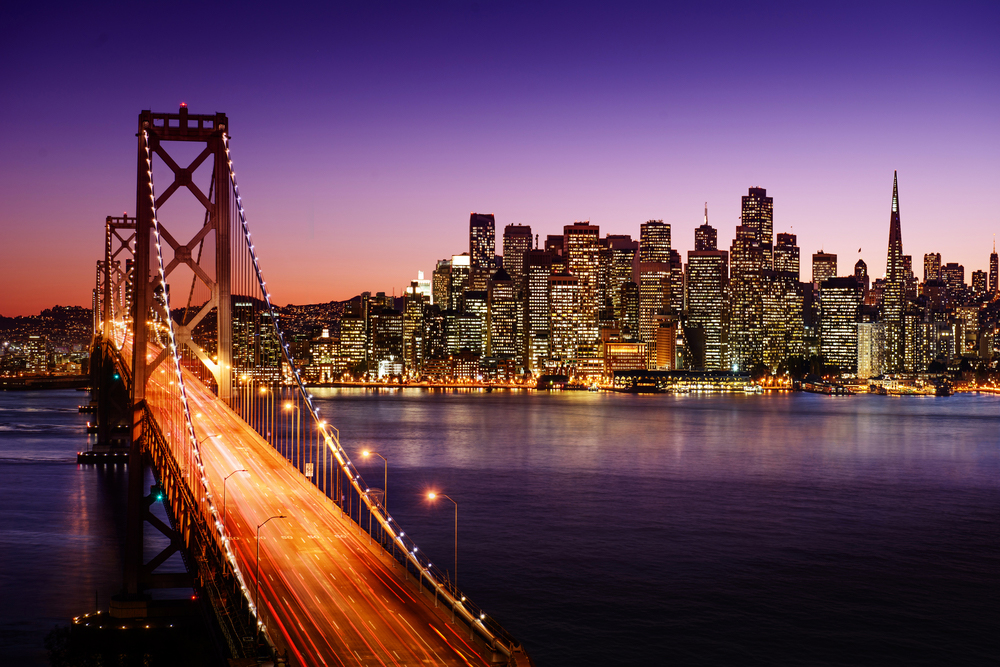
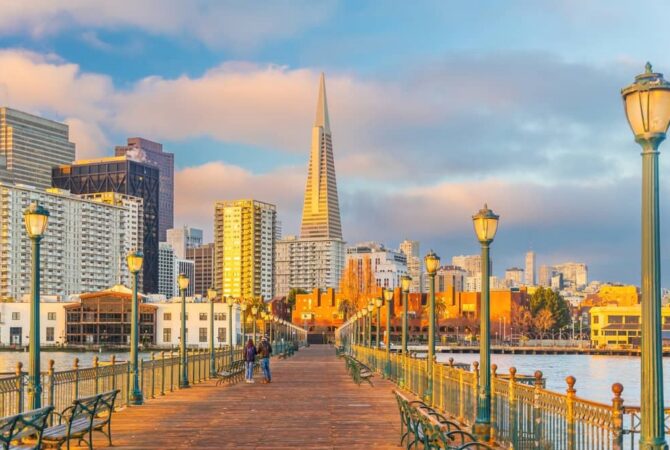
San Francisco is a great place to live on the West Coast, with iconic attractions, beautiful parks, and a strong job market. Residents love SF’s unique neighborhoods, incredible scenery, and mild climate, but many find the city’s crowding and incredibly high cost of living to be notable drawbacks. If you’re thinking about moving to San Francisco, these are 22 pros and cons to consider!
Quick Facts About San Francisco
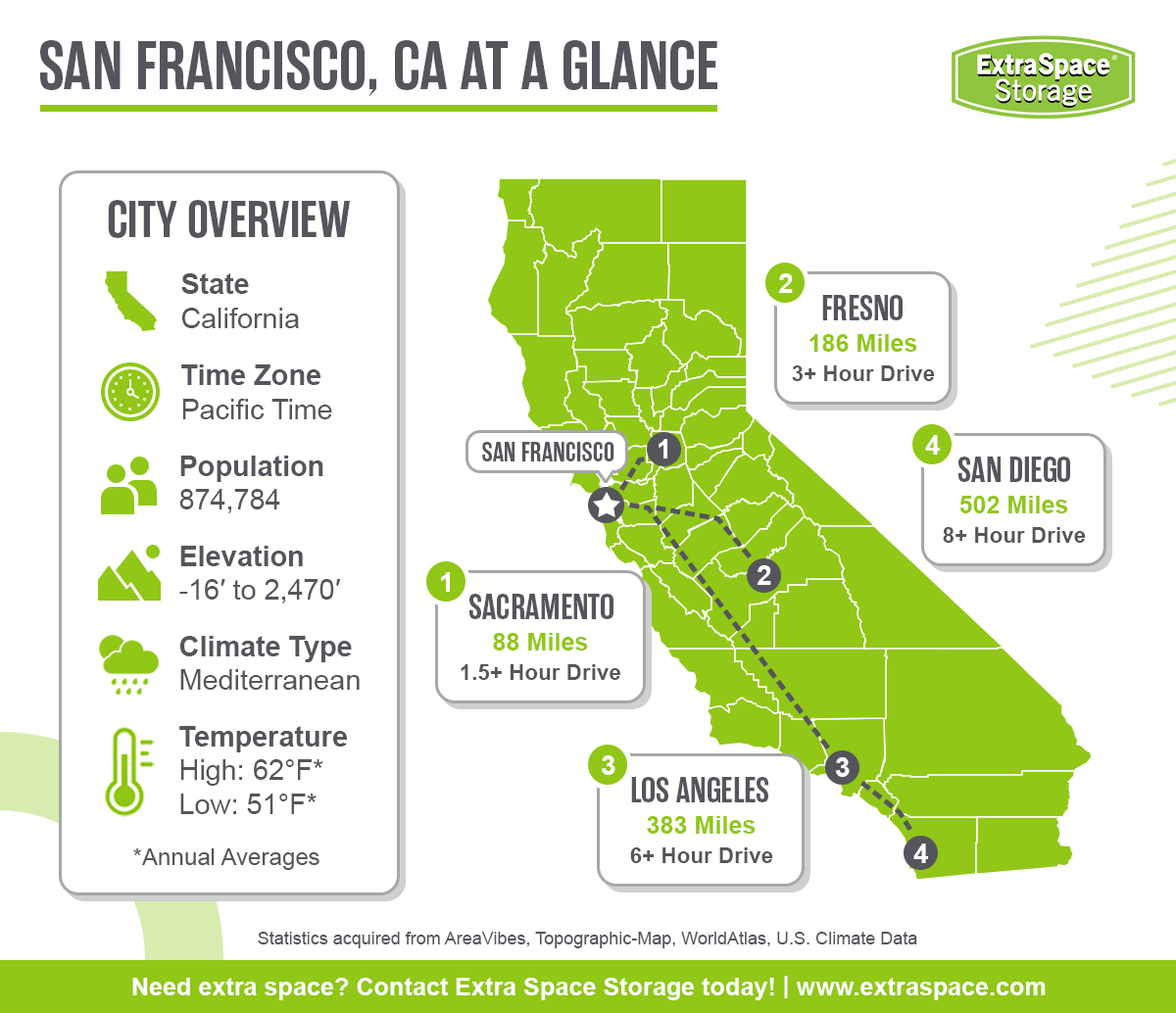
| Population | 874,784 |
| Average Home Price | $1,381,625 |
| Average Monthly Rent | $3,752 |
| Median Household Income | $119,136 |
| Unemployment Rate | 3.3% |
Statistics from AreaVibes & Council for Community and Economic Research (C2ER)
Pros of Living in San Francisco
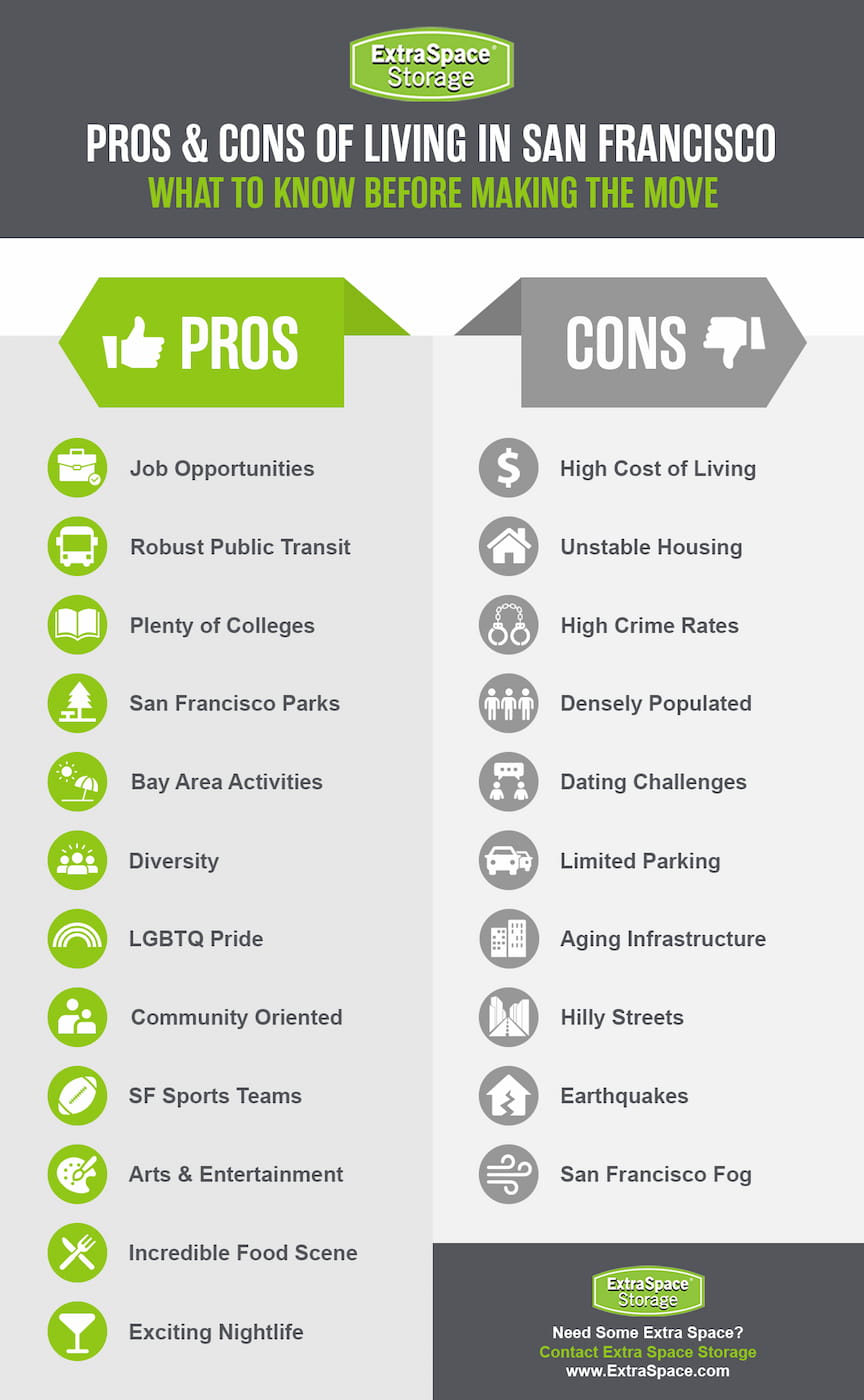
San Francisco has many advantages, including a culturally diverse population, an abundance of jobs with great pay, and a wide array of educational opportunities. These are some of the benefits of living in San Francisco.
Pro: Excellent Job Opportunities in San Francisco
San Francisco is a great place to live if you’re looking for a high-paying job in the tech industry or other large sectors. The city’s median household income is just over $119,000, and you’ll find several major tech companies headquartered in San Francisco, such as Salesforce, Dropbox, and Slack. The San Francisco job market also includes key sectors like life sciences and biotech, digital media, and business—supported by other major companies like Wells Fargo, Philo, Jives Media, Landis Communications, and Vida Health.
Pro: Extensive San Francisco Public Transit
You don’t need a car in San Francisco thanks to its great walkability and robust public transit options. The city is famous for its iconic streetcars, run by the San Francisco Municipal Transportation Agency (SFMTA)—which also manages Muni transit buses and Metro trains. Bay Area Rapid Transit (BART) trains also operate in San Francisco, connecting residents to the rest of the Bay Area. Whether you’re commuting for work or exploring the city on the weekends, SF public transportation is the best way to get around.
Pro: Plenty of Colleges & Universities to Choose From
San Francisco has education options for all ages, with K-12 public school options through the San Francisco Unified School District, as well as a notable presence of excellent Bay Area colleges and universities:
- San Francisco State University, a large public university with over 130 degree programs
- City College of San Francisco, a community college with over 60,000 students and multiple locations throughout the SF metro area
- University of San Francisco, a private Jesuit university with undergraduate and graduate degree programs
- University of California San Francisco, the San Francisco branch of the University of California system, specializing in health fields like medicine and nursing
- Golden Gate University, a private nonprofit college offering online and hybrid undergraduate and graduate degrees
- San Francisco Conservatory of Music, San Francisco’s premier music conservatory—offering degrees across numerous music concentrations, as well as a Pre-College program
Pro: San Francisco Parks
Despite being a densely populated city, San Francisco offers a wide variety of green spaces with beautiful views—and the region’s mild weather means residents can enjoy the outdoors year-round. With over 230 parks throughout the city, nature in San Francisco is typically just a short walk away! Some of the best parks in San Francisco include:
- Golden Gate Park for coastal views, museums, gardens, & more at the largest urban park in San Francisco
- Mission Dolores Park for city views, open lawns, tennis courts, an off-leash dog area, & occasional festivals & performances
- Pioneer Park on Telegraph Hill for a visit to the iconic Coit Tower & sweeping views of the Bay
- Ina Coolbrith Park for a steep hike up to some of the best panoramic views in the city
- Alamo Square for iconic views of the Painted Ladies & the scenery made famous by Full House
- Buena Vista Park, the oldest park in San Francisco, for scenic hiking trails in the heart of the city
- Ocean Beach for 3.5 miles of quiet shoreline, perfect for picnicking & bonfires
Pro: Easy Access to Bay Area Activities & Beyond
While there’s plenty to do in the city, San Francisco is also perfectly situated for easy access to activities beyond its borders. Large Bay Area cities like San Jose and Oakland are just a short drive away, and you can ski at nearby areas like Lake Tahoe with Heavenly Ski Resort, or surf in SF or at nearby locations like Pacifica and Half Moon Bay.
If you’re looking for more nearby attractions, there are several national parks near San Francisco—including Golden Gate National Recreation Area, Muir Woods National Monument, Point Reyes National Seashore, Pinnacles National Park, and Yosemite National Park. You’ll also find state parks near San Francisco, such as Big Sur and Mendocino Headlands. And if you want to take a day trip to explore the wineries of Napa Valley, it’s just over an hour and a half away!
Pro: Diversity in San Francisco
San Francisco’s diversity has helped drive initiatives like The San Francisco Cultural Districts Program and other programs aimed at preserving the cultural presence and practices of the city’s many communities. This is reflected in San Francisco’s multiple cultural districts, including:
- Japantown Cultural District for authentic Japanese events like traditional taiko drumming & tea ceremonies, plus landmarks like the Peace Plaza & Japan Center Malls
- Calle 24 Latino Cultural District for Latino businesses, colorful murals, authentic restaurants, & celebrations like Carnaval & Dia de los Muertos
- SOMA Pilipinas for Filipino heritage, community centers, galleries, & small businesses spread across the South of Market neighborhood
- Chinatown—one of the oldest & largest in the U.S.—for the iconic Dragon Gate, authentic dining, & cultural spots like the Chinese Culture Center of San Francisco
- North Beach (Little Italy) for Italian heritage, cozy cafes, & authentic restaurants, particularly along Columbus Avenue
Pro: SF Celebrates LGBTQ Pride
Along with embracing racial diversity, San Francisco has a long LGBTQ history spanning back to the 19th century, and today the city provides a welcoming environment for its LGBTQ population! The City by the Bay is home to the first legally recognized transgender neighborhood in the world, The Transgender District, founded in 2017 in the Tenderloin District. There’s also The Castro, one of the first gay neighborhoods in the U.S. and an LGBTQ cultural district that’s home to the GLBT History Museum and The Castro Theatre. Finally, SF Pride is a quintessential annual celebration, featuring a parade, live music, and other fun and lively events.
Pro: San Francisco Is Community-Oriented
If you want to live in a city that prioritizes community engagement and resident input, San Francisco is a great place to live! Not only are there plenty of free government resources for everything from healthcare to housing and legal information, but SF town hall meetings are open to all residents, and past meeting agendas and minutes are open to the public.
There are also a variety of volunteer opportunities with city organizations like SF Marin Food Bank and San Francisco Recreation & Parks—or you can check out the long list of volunteer resources available on the San Francisco government website. Plus, San Francisco offers accessible public library locations around the city, community recreation facilities with programming for all ages, and free events like night markets and street festivals, Downtown First Thursdays, and more!
Pro: San Francisco Sports Teams
Whether you’re a football, baseball, or basketball fan, there’s a San Francisco pro sports team for you to cheer on! There are also teams in nearby San Jose if you want more variety. Choose from the following teams for your next fan following:
- San Francisco 49ers (NFL) at Levi’s Stadium
- San Francisco Giants (MLB) at Oracle Park
- Golden State Warriors (NBA) & Golden State Valkyries (WNBA) at the Chase Center
- San Francisco Unicorns (MLC) at Oakland-Alameda County Coliseum
- San Jose Sharks (NHL) at SAP Center
- San Jose Earthquakes (MLS) & Bay FC (NWSL) at PayPal Park
Pro: San Francisco Arts & Entertainment
The San Francisco arts and entertainment scene has something for every interest! From museums to theaters, you can find exciting, fun, and even educational things to do in SF at these places:
- San Francisco Museum of Modern Art for modern & contemporary art, rotating exhibitions, & free visit days
- de Young Museum for fine art, textiles, & special exhibits in the heart of Golden Gate Park
- Exploratorium for hands-on science, technology, & art exhibits on Pier 15
- San Francisco Opera for opera performances from a renowned non-profit company
- San Francisco Ballet for professional seasonal productions or all-ages dance lessons & recitals
- San Francisco Symphony for world-class performances by local & national artists in a premier symphony hall
- Orpheum Theatre for touring Broadway productions, stand-up comedians, & more in a historic SF venue
- Golden Gate Theatre for touring plays, operas, & Broadway productions at a beautifully restored historic theatre
Pro: San Francisco’s Incredible Food Scene
SF restaurants offer up nearly every type of cuisine—from seafood straight from the Bay, to pizza in Little Italy, to dim sum in Chinatown—making it a great city for foodies! You’ll have your pick of the best places to eat in San Francisco at restaurants like these:
- Scoma’s Restaurant for fresh seafood dishes at a famous waterfront restaurant in San Francisco
- Brenda’s French Soul Food for French, Creole, & Southern comfort food favorites on Polk Street
- Kokkari Estiatorio for classic Greek & Mediterranean cuisine in the San Francisco Financial District
- The Progress for upscale, modern dining with locally-sourced ingredients
- Tony’s Pizza Napoletana for classic Italian pizza with seven ovens & 12 different types of pizza
- Good Mong Kok Bakery for delicious Cantonese dim sum in the heart of Chinatown
- House of Nanking for popular Chinese dishes & outdoor dining from local owners originally from Shanghai
Pro: Exciting Nightlife in SF
The San Francisco nightlife scene is lively and vibrant, with plenty of clubs and cocktail lounges to suit every vibe—whether you’re looking for a relaxed evening with a view or a night on the dance floor. These spots offer some of the best nightlife in San Francisco:
- The Valencia Room for bottle service, DJ sets, & live music at a popular SF nightclub
- Cat Club for two dance floors, theme nights, & nightly drink specials in SOMA
- Hawthorn SF Nightclub & Lounge for craft cocktails & an elevated modern nightclub experience in Union Square
- Raven Bar for dancing & signature cocktails at a fun throwback-themed nightclub
- Cityscape for panoramic city views, craft cocktails, & small plates at an upscale cocktail bar
- Monroe SF for an Art Deco-style dance club & cocktail lounge experience on Broadway Street
- Smuggler’s Cove for a cozy nautical atmosphere & the largest rum selection in the country
Get Everything You Need For An Easier Move to San Francisco
Cons of Living in San Francisco
San Francisco has a few downsides to consider, like a particularly high cost of living and crowding throughout the city. Here are some of the disadvantages of living in San Francisco to keep in mind before moving.
Con: High Cost of Living
At 65% above the national average, the cost of living in San Francisco is quite high. The state of California levies high taxes, and the local taxes in San Francisco will add to your cost burden—the city even levies a 0.38% personal income tax. Costs for utilities, transportation, healthcare, and goods and services all come in above the national average, as well. Thankfully, the median income is also higher than average, which can help alleviate financial concerns for many residents.
Con: Expensive & Unstable Housing
San Francisco housing costs are 161% above the national average, and the market is highly competitive—making it difficult for some residents to stay in SF long-term. Property is so expensive that only 38% of residents are homeowners. Even renting comes with challenges like high move-in fees, bidding wars, and pet rent laws inherited from the state of California that can significantly drive up costs. These housing expenses are also partly to blame for SF’s large unsheltered population. However, researching the most affordable neighborhoods in San Francisco or considering living in San Francisco suburbs can help you avoid the city’s highest costs.
Con: High Crime Rates
San Francisco’s crime rate is 114% higher than the national average, with property crime running 123% higher and violent crime 66% higher. However, crime is going down, and the city is actively working to address it through initiatives like the San Francisco Violence Reduction Initiative and the Access to Hope Initiative. Residents can also refer to crime prevention and safety tips from the San Francisco Police Department.
Con: SF Gets Crowded
San Francisco may not have the largest population in the country, but it is one of the most densely populated cities due to the smaller area the city covers—only 46 square miles. This has resulted in increased traffic, higher commute times, and bigger crowds throughout the city, which can be overwhelming to those looking for a quieter, laid-back lifestyle.
Con: Dating Can Be Challenging
Residents say it’s not always easy to meet people or date in San Francisco. The city sees a lot of turnover, and despite its diverse population, many residents find themselves socializing mainly within their own industry, neighborhood, or political circle—making it harder to connect with people outside their usual sphere. To combat this, some good ways to meet people in San Francisco include joining meetup groups, volunteering, or becoming a regular at a favorite local restaurant or bar.
Con: Limited Parking in San Francisco
San Francisco residents with cars report that parking is notoriously difficult to find, and the city consistently ranks among the most expensive for parking. If you’re planning on moving with a car, research where to park in San Francisco in advance to find more affordable areas. Or consider selling your car and relying on SF’s excellent public transportation instead!
Con: Aging Infrastructure
The Presidio of San Francisco was established in 1776, and while Mission Dolores is the city’s only surviving original building, the median home age is among the oldest in the country—and the same goes for much of the city’s infrastructure, including its roads and historic streetcars. Depending on your neighborhood, certain services and permits may be unavailable or vary widely in response time due to the city’s age and historical character. Some residents also find the local government a bit fragmented, which can compound these issues. However, these challenges are fairly normal for a city with so much well-preserved historic charm—and many residents find them well worth the trade-off.
Con: SF’s Hilly Streets Can Be Hard to Navigate
While San Francisco is a walkable city, the notoriously hilly landscape can pose an issue for elderly residents or those with mobility challenges. However, this disadvantage of living in SF is largely offset by the city’s great public transit, with the SFMTA offering accessibility solutions for all.
Con: Earthquakes Are Common
The Bay Area sits on the San Andreas Fault, and as a result, earthquakes in San Francisco have historically been a significant problem. That said, for several decades now, the city has been in a “quiet period,” experiencing no earthquakes over a magnitude of six. Today, the San Francisco Bay Area sees roughly 1,600 earthquakes per year, but most are below a magnitude of two, which is a level most people don’t feel. There are also plenty of resources available for residents to prepare for potential earthquakes, like the government’s Earthquake Resources collection through the San Francisco Public Library. Additionally, the city has an alert system so residents can receive alerts and instructions following a natural disaster or other emergency.
Con: San Francisco Fog
SF is famous for Karl the Fog, an affectionate name given by residents to the persistent fog that often settles over the city. While the fog is common, the San Francisco climate still experiences more sunny days than the national average in a year, so you don’t have to worry about missing out on sunshine. However, sudden fog patches can result in dangerous driving conditions, especially during the winter, so it’s important to know the best practices for navigating in foggy weather if you have a car.
Should You Move to San Francisco?
You should move to San Francisco if you’re seeking job opportunities in the tech industry, top-tier amenities, robust public transit, and a diverse, multicultural city. SF is particularly great for young professionals, families, and active seniors who value the city’s vibrant culture and fast-paced environment. Before deciding to make the move, consider factors like your lifestyle, transportation needs, and budget, as living in SF comes with crowds, challenging parking, and a high cost of living.
San Francisco may be the right fit for you if…
- You work in tech or finance
- You’re looking for work opportunities that will increase your earning potential
- You don’t need a car and value great public transit and walkability
- You prefer living in a lively, diverse city
- You’re a foodie looking to try new and different restaurants featuring a variety of cultural cuisines
You may want to consider moving to another city if…
- You’re on a tight budget or want affordable housing
- You want to live in a quieter city with more open space
- You prefer to use a car and need easy driving and parking accessibility
- You’re concerned about earthquake risks
- You want to live in a city where it’s easy to meet new people and date
San Francisco Compared to Nearby Cities
Trying to decide if you should move to San Francisco or Los Angeles—or another city in the region? Make an informed decision by comparing San Francisco to popular West Coast cities like Seattle and San Diego with these facts.
| Factor | San Francisco, CA | Los Angeles, CA | San Diego, CA | Seattle, WA |
| Average Monthly Rent | $3,752 | $2,991 | $3,111 | $3,200 |
| Average Home Price | $1,381,625 | $1,320,663 | $1,145,226 | $1,080,684 |
| Average Commute Time | 33 minutes | 31 minutes | 24 minutes | 28 minutes |
| Walk Score | 89/100 | 69/100 | 53/100 | 74/100 |
| Unemployment Rate | 3.3% | 4.6% | 3.8% | 3.0% |
| Major Industries | Technology, biotech, finance | Entertainment, technology, bioscience | Tourism, military, healthcare | Technology, aerospace, healthcare |
Statistics from Council for Community and Economic Research (C2ER), BestPlaces, Walk Score, & AreaVibes
Frequently Asked Questions About Moving to San Francisco
What salary lets you live comfortably in San Francisco?
A livable salary in San Francisco is $67,469 per year before taxes for a single adult with no children, or $113,251 or more for families with one working adult and one child. Since the median household income in SF is close to $120,000, many residents are able to live comfortably here.
Does San Francisco have a high crime rate?
San Francisco’s crime rate is higher than the California average and around 114% higher than the national average—in fact, SF is safer than only 4% of U.S. cities. However, crime has been declining thanks to various community initiatives, and rates vary by neighborhood. Some of SF’s safest neighborhoods include Noe Valley, Outer Richmond, and Outer Sunset.
How cold does San Francisco get?
The San Francisco climate is mild, with temperatures rarely dropping below 50 degrees even in the coldest months. It usually doesn’t snow in the Bay Area, and winters are generally cool and mild. The summer months also tend to be mild due to frequent fog and coastal breezes.
What is the distance from San Francisco to Los Angeles?
San Francisco is just under 400 miles from Los Angeles. The most efficient route for driving from San Francisco to Los Angeles is on I-5, which usually takes around six hours. Alternatively, traveling to LA from San Francisco on US-101 N takes closer to seven hours but provides easy access to coastal stops in San Jose, Santa Barbara, Santa Clarita, and more.
Is San Francisco a nice place to live?
San Francisco is a great place to live, offering a high quality of life, a strong tech scene, exciting attractions, and plenty of big-city amenities. It’s a particularly good fit for young professionals and anyone who wants an urban lifestyle with easy access to the outdoors.
***
Thinking about moving to San Francisco? Extra Space Storage can help with your transition, with convenient storage facilities located throughout California and the Bay Area. Find a storage facility near you!