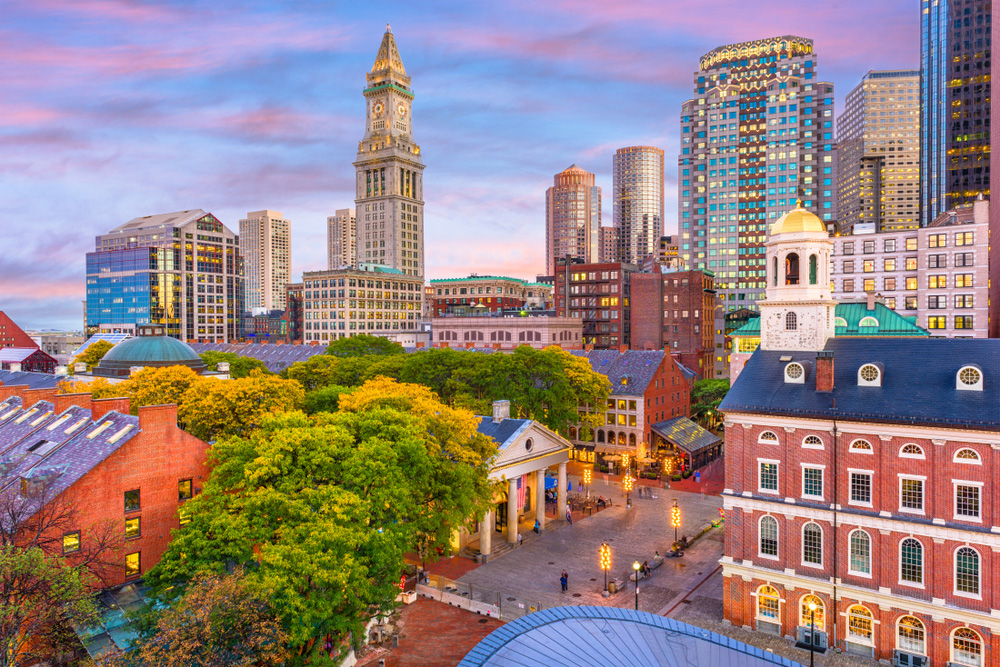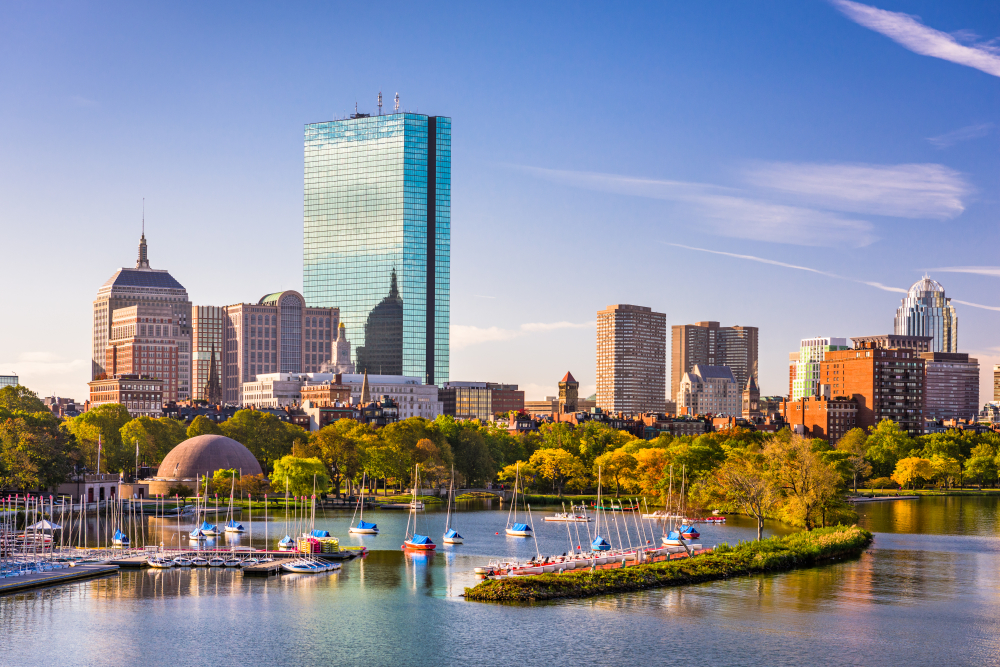

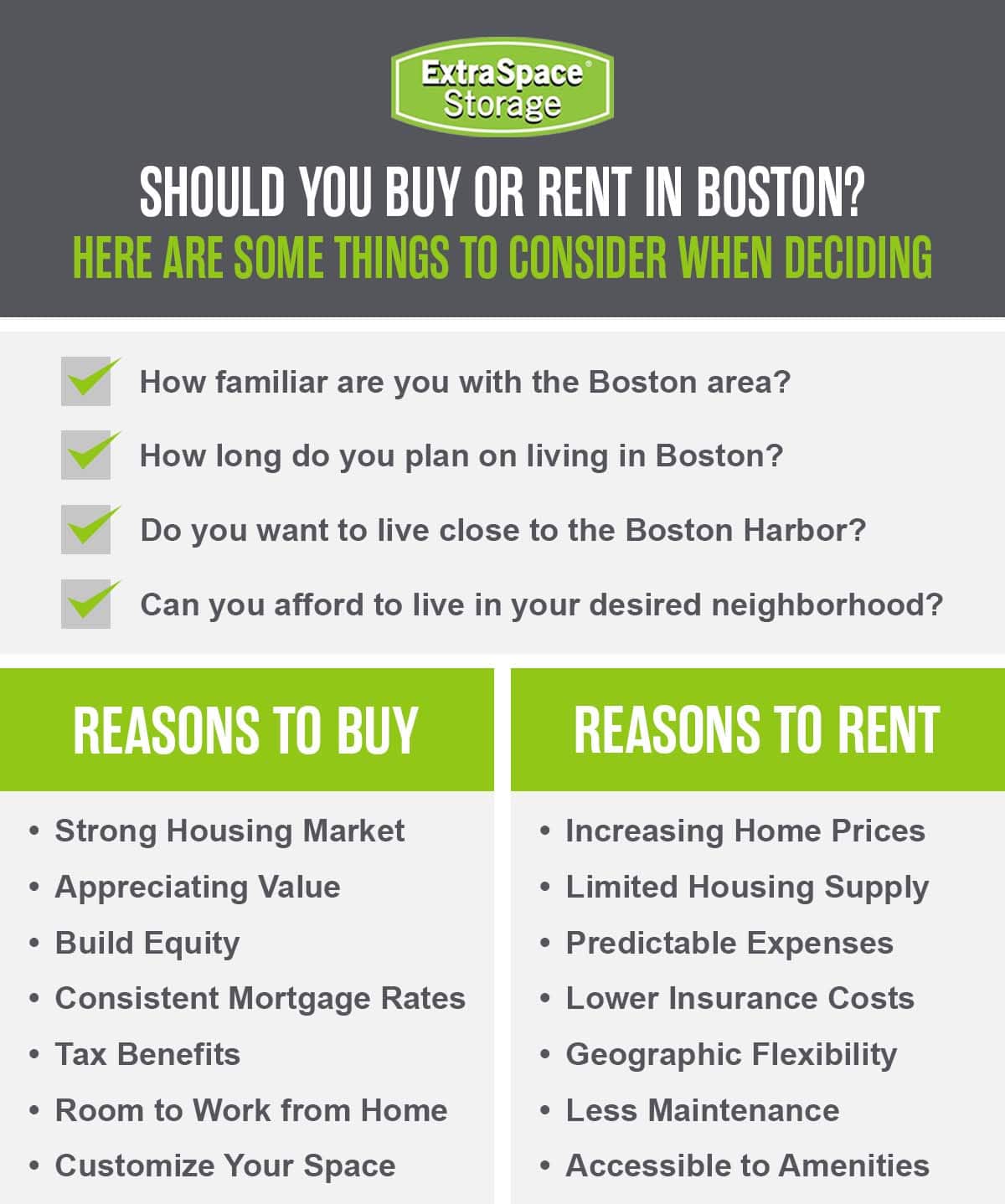
Relocating to Boston? With a number of accessible schools and a diverse job market, Boston is a great city for young professionals looking for education and employment. Additionally, the historical significance, famous brownstones, and unique outdoor recreation make Beantown one of the best places to live on the East Coast—and a prime location for home buyers and renters of all ages! If you’re considering moving to Boston but not sure whether you should buy or rent, begin by asking yourself these questions:
- How familiar are you with the Boston area?
- How long do you plan to live in Boston?
- Do you want to live close to the Boston Harbor?
- Can you afford to buy or rent in your preferred neighborhood?
Now that you’ve thought about these questions, you’re ready to begin your research. Explore the pros and cons of buying vs. renting in Boston below!
Reasons to Buy in Boston
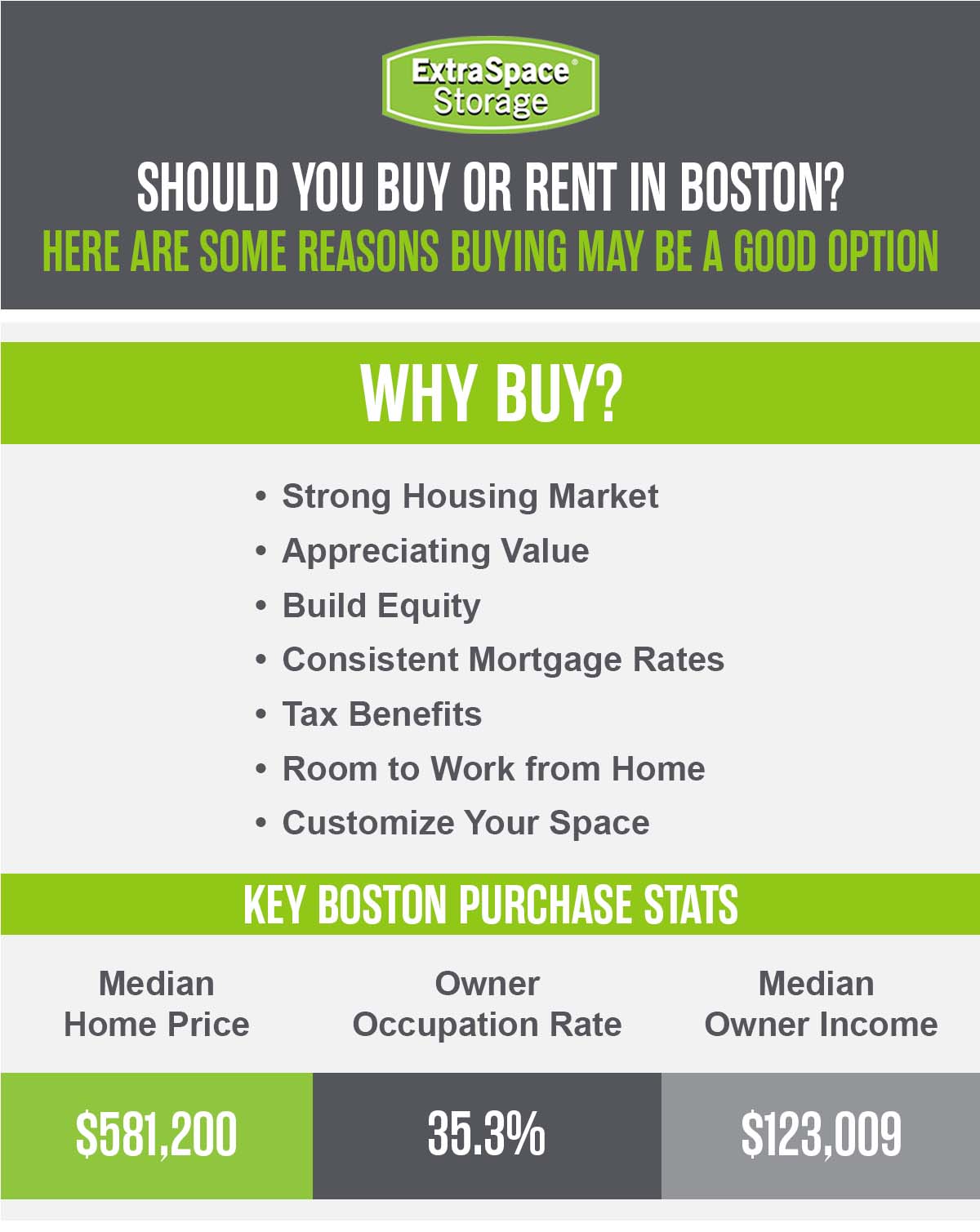
While buying a home in Boston is a big commitment, there are some definite advantages to owning your home, including the possibility of more space and the ability to build equity! Below are a few things to consider when investing in the Boston real estate market.
Strong Housing Market
Compared to other nearby real estate markets, the Boston housing market is strong and competitive, yet approachable. Though homes within the city limits can be more difficult to come by—and more expensive—there’s plenty of new construction popping up in Boston suburbs. Plus, growing housing inventory within the city is giving home buyers more options to choose from, helping to balance out the market between buyers and sellers.
Appreciating Value
Home prices in Boston have risen by nearly 105% since 2015—increasing by 8.6% in 2024 alone—which makes home appreciation a major reason why the Boston housing market is so strong. And while the city’s lack of inventory means some homes are selling at prices higher than list value, the Boston real estate market shows great potential to generate a high ROI—so purchasing a home now will likely prove to be worth it when it comes time to sell it down the line.
Build Equity
Buying a home in Boston can help you build equity. As you continue to pay your mortgage, your equity increases. Additionally, an increase in a home’s value through major renovations can potentially boost a homeowner’s equity. Keep in mind, however, that historic homes can’t always be altered as significantly as newer residences in order to protect their charm and antiquity.
Consistent Mortgage Rates
Unlike renting a home, where landlords can increase rent prices at the end of a lease agreement, buying a house in Boston can mean paying the same mortgage expenses each month for the life of your loan. Average mortgage terms are 15 years or 30 years, and while Boston mortgage rates have risen in recent years alongside national rates, you’ll still have the security of knowing the rate you lock in when you purchase your home won’t change over time.
Tax Benefits
Boston offers various tax exemptions to those who own their homes and use it as their primary residence. By taking a standard deduction, you pay a determined, fixed amount to deduct from your residential tax—Boston homeowners can save nearly $4,000 from this exemption. Some residents may also qualify for property tax exemptions. Additionally, Massachusetts residents can deduct some energy-efficient home improvements, and there are deductions available for home office space as well!
Room to Work from Home
The increase in remote work has expanded the need for more in-home space. The average size of a Boston apartment is 804 square feet, while newly-built Boston homes are about 1,578 square feet—so buying a home in Boston could mean you have more room for a nice home office space.
Customize Your Space
You can make your home your own by remodeling any of the rooms, adding personalized details to your space, or working on specific home improvements when you buy a house in Boston! If you choose to rent a home, there are only so many temporary changes you are allowed to make before you risk losing your security deposit.
Best Places to Buy a Home in Boston
Below are the neighborhoods you should check out if you’re interested in buying in Boston!
| Neighborhood | Charlestown | Hyde Park | Roslindale | West Roxbury |
| Median Home Price | $742,385 | $433,932 | $503,105 | $558,847 |
| Owner-Occupied Rate | 50.8% | 58.6% | 55.0% | 61.9% |
| Home Appreciation Rate | 43% | 25% | 42% | 27% |
| Safer than % of the City | 63% | 56% | 81% | 94% |
Charlestown
- Home Price: $742,385 median purchase price
- Crime Rate: Safer than 63% of Boston neighborhoods
Just under 15 minutes from Downtown Boston and Boston Logan International Airport is Charlestown, one of the best neighborhoods in Boston for families. This walkable Boston neighborhood provides quick access to historic landmarks like Bunker Hill, and offers a variety of brick townhomes and Colonial-style houses near highly-rated schools like Warren-Prescott School and Harvard-Kent Elementary School.
Hyde Park
- Home Price: $433,932 median purchase price
- Crime Rate: Safer than 56% of Boston neighborhoods
Hyde Park is an urban-suburban Boston neighborhood bordered by green spaces like George Wright Golf Course and Neponset River Reservation. About 25 minutes outside of the city center, this quiet neighborhood offers affordable housing options for home buyers seeking single-family properties in the Greater Boston metro. Plus, Hyde Park is a diverse neighborhood in Boston, offering a great community for all types of people.
Roslindale
- Home Price: $503,105 median purchase price
- Crime Rate: Safer than 81% of Boston neighborhoods
With quaint community parks, hiking trails, and golf courses, Roslindale is a hot spot for homeowners who want a family-friendly community filled with Victorian, Colonial, and Queen Anne-style homes. This safe, affordable Boston neighborhood also attracts residents due to its accessible business districts—like Roslindale Village, which boasts more than 100 shops, restaurants, businesses, and a local farmers market!
West Roxbury
- Home Price: $558,847 median purchase price
- Crime Rate: Safer than 94% of Boston neighborhoods
A quiet, safe neighborhood on the southwestern edge of the Boston metro, West Roxbury is an excellent choice for residents interested in buying a home in Boston. This neighborhood is full of single-family homes near the trails and green space in Millennium Park—but also has a stop on the Needham Line for easy access to the amenities in Downtown Boston. Not to mention, there are a number of local businesses to explore or work at in West Roxbury’s commercial district on Centre and Spring Streets.
Easier Moving Starts Here: Costs, Boxes, & Movers in Boston
Reasons to Rent in Boston
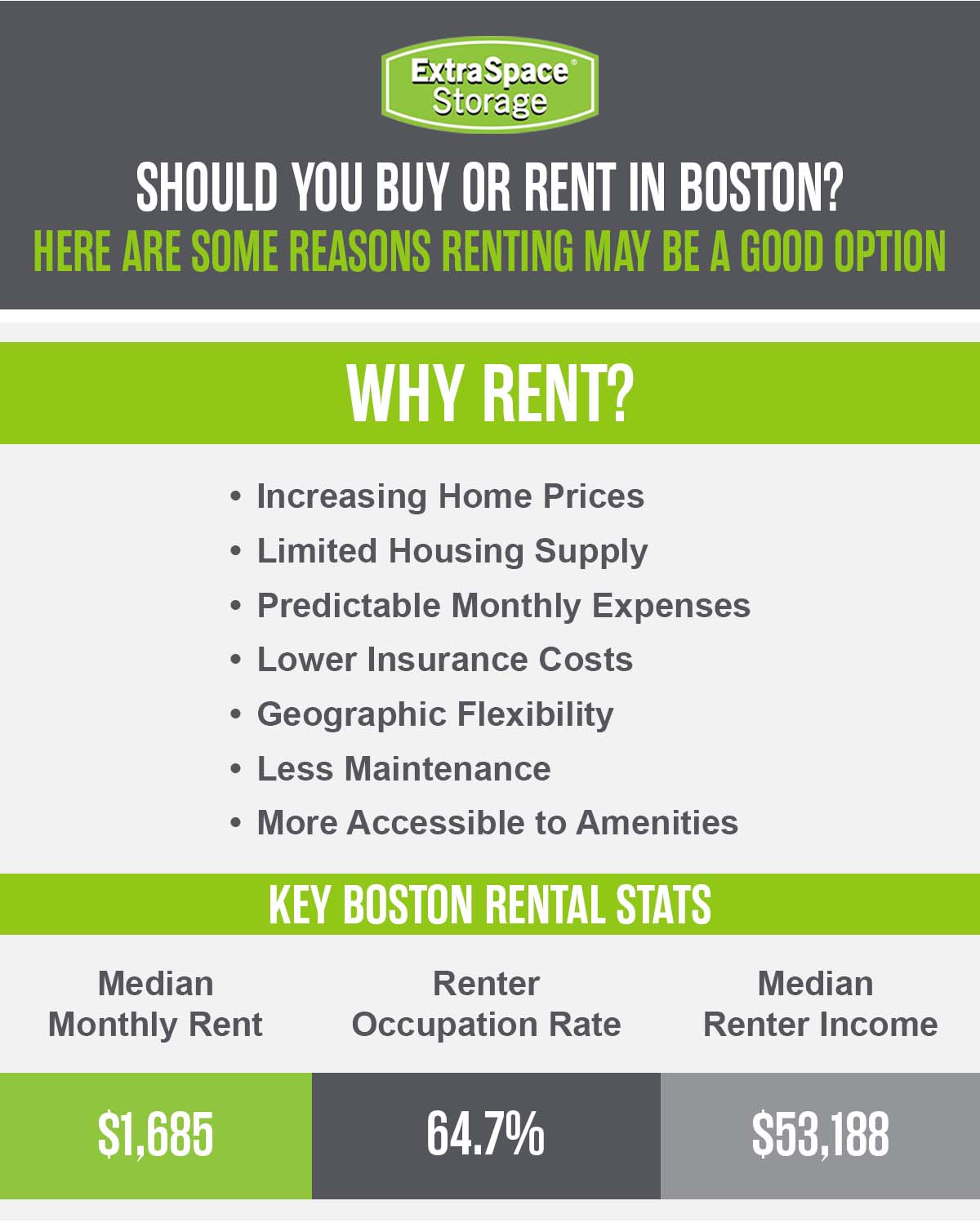
Maybe buying a house in Boston isn’t an option, or you aren’t sure how long you plan to stay in the city. Flexibility, predictable monthly expenses, and lower insurance costs are all reasons why renting a home in Boston is a great choice!
Increasing Home Prices
The median Boston home price is approximately 215% higher than the national average, with home prices rising by nearly 5% yearly since 2000. And while home values continue to appreciate, this also means home buyers are looking at higher initial listing prices, potential bidding wars, and more expensive long-term payments.
Limited Housing Supply
Renters make up a majority of Boston’s population, not just because of how expensive it is to purchase a house, but also because the Boston real estate market has a limited housing supply. The number of available houses for sale in Boston has been declining for years, and homes don’t stay on the market for long. Even if you can afford to buy in your preferred neighborhood, there may be a lack of homes to choose from.
Predictable Monthly Expenses
When you rent a home in Boston, you sign a lease saying you will pay your landlord a fixed monthly rent for the length of the agreement. That means Boston renters have the benefit of consistent rent rates, whereas homeowners sign adjustable-rate mortgages and need to budget for property taxes.
Lower Insurance Costs
Equivalent to a homeowners insurance policy, most renters are required to keep a renters insurance policy. However, a renters policy is substantially less expensive than a homeowners policy, which means Boston renters save a considerable amount in insurance costs. While many insurance policies have limits, renters policies often cover most, if not all, of a resident’s belongings.
Geographic Flexibility
A great benefit of renting a home in Boston is the flexibility of experiencing different neighborhoods before settling down in a permanent place. This flexibility is especially helpful in cases of sudden life changes, like relocating for a job, since ending a lease is typically easier than selling your home. Boston is a great city for singles and young professionals to rent in partly due to its numerous rental options—which can give you a chance to find communities you enjoy living in and get a feel for where you might like to buy a home down the line.
Less Maintenance
Say goodbye to mowing lawns, raking leaves, and shoveling snow when you rent in Boston! In most cases, landlords are in charge of exterior and structural maintenance of Boston apartments and rental homes, as well as some interior improvements and repairs. That means if your pipes are backed up, you don’t have to worry about contracting a plumber yourself—or paying for the necessary repairs.
Amenities
Renters in Boston generally have access to unique amenities with their rental properties. Whether it’s access to a fitness center, pool, or event space, rental homes and apartments have the added benefit of additional co-use spaces!
Best Places to Rent a Home in Boston
If you’re interested in renting in Boston, here are some of the best neighborhoods to consider!
| Neighborhood | Allston-Brighton | Dorchester | East Boston | Jamaica Plain |
| Median Monthly Rent | $1,546 | $1,564 | $1,563 | $1,979 |
| Renter-Occupied Rate | 79.5% | 56.7% | 73.1% | 55.0% |
| Safer than % of the City | 88% | 25% | 69% | 50% |
Allston-Brighton
- Home Price: $1,546 median monthly rent
- Crime Rate: Safer than 88% of Boston neighborhoods
Bordered by the Charles River to the north, Allston-Brighton provides Boston renters with an urban-suburban feel, blending green space and apartment buildings with an abundance of restaurants, shops, and nightlife establishments. On top of that, Allston-Brighton’s location near Boston College, Harvard Business School, and Boston University makes it a great area for singles and young professionals in Boston.
Dorchester
- Home Price: $1,564 median monthly rent
- Crime Rate: Safer than 25% of Boston neighborhoods
One of the city’s first established communities, Dorchester is full of great homes and apartments for rent in Boston, and tops the city’s charts in diversity—which is reflected in its local businesses and community events. The UMass Boston campus is also located in the northern portion of Dorchester, making this neighborhood a great option for student renters. You can find all kinds of cuisine in this Beantown area—from Indian food at Shanti to Italian fine dining at Venezia. No wonder this is a top Boston neighborhood for food lovers!
East Boston
- Home Price: $1,563 median monthly rent
- Crime Rate: Safer than 69% of Boston neighborhoods
With gorgeous waterfront views of the city skyline and a great mix of brownstone homes and high-rise apartments, East Boston lies just across the water from Downtown Boston and Charlestown. The neighborhood is also conveniently located next to Boston Logan International Airport, and Eastie residents have access to all kinds of local amenities—including East Boston’s historic waterfront, Belle Isle Marsh, Constitution Beach Park, and more!
Jamaica Plain
- Home Price: $1,979 median monthly rent
- Crime Rate: Safer than 50% of Boston neighborhoods
At the southern tip of the Emerald Necklace, Jamaica Plain is a haven for outdoorsy individuals who still want the conveniences of an urban neighborhood—and access to a lively and vibrant Latin Quarter and LGBTQ+ scene. Known to locals as “JP,” this classic streetcar Boston neighborhood is characterized by a mix of single-family homes, apartments, and condos for rent, as well as natural areas like Jamaica Pond, Olmsted Park, and the Arnold Arboretum of Harvard University.
***
Whether you plan to rent or buy in Boston, Extra Space Storage has convenient self storage facilities located throughout the Boston metro that can help with your transition. Find a storage facility near you!
The team at Extra Space Storage understand that moving to a new city can be stressful, which is why we’ve created our Best Places to Live selections to help make the process easier. We’ve done the research for you—considering factors like cost of living, job market, local attractions, and education—to provide a well-rounded and accurate view of each metro area. Check out our methodology page today to learn more about how we select the best places to live.
Neighborhood statistics from AreaVibes