How To Store
How to Store Clothes for Future Use

Read Time: 7 min read
Summary: To keep your clothes in great condition, start by decluttering and creating a labeled inventory so seasonal swaps are easier. Wash, dry, and repair each item before packing to prevent stains, odors, and mildew from setting in. Store garments based on their fabric: fold delicate fibers with acid-free tissue, hang structured or flowy pieces in breathable garment bags, and reserve vacuum-seal bags for short-term storage of hardy fabrics. Lidded plastic bins with silica gel and cedar or lavender help guard against moisture and pests. For best results, choose a cool, dry, dark space, and consider climate-controlled storage for delicate items. Remember to air out your clothes once a year.
Storing clothes is a great way to declutter, improve closet organization, and preserve special garments for the future. Whether you’re decluttering your home, storing winter clothes for the season, stowing away baby clothes for your next child, or saving sentimental pieces for the long haul, it's crucial to follow the right steps so your items stay in good condition. This guide tells you everything you need to know about how to store clothes long term or in a seasonal rotation!
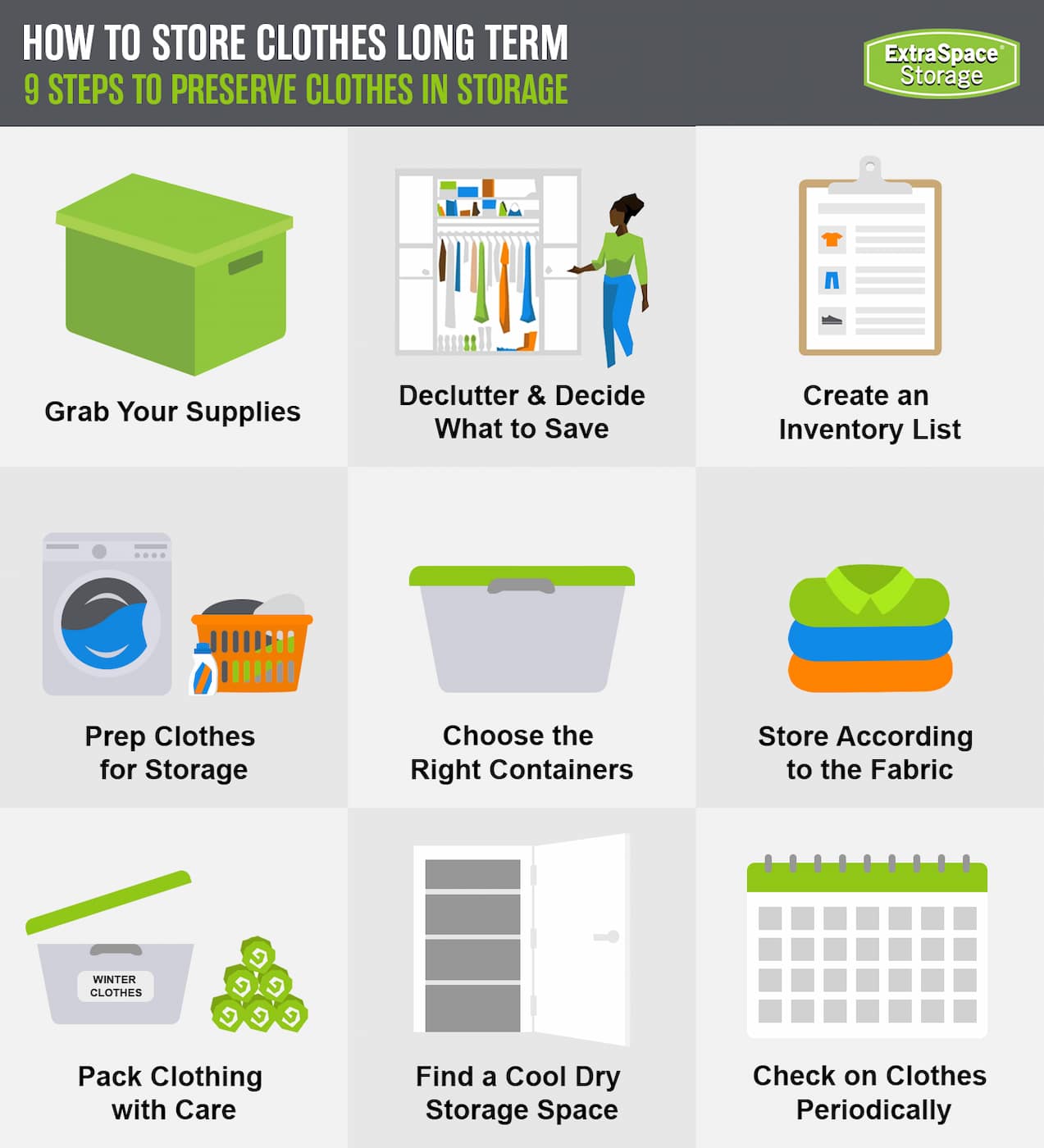
Declutter Unwanted Clothes & Decide What to Store
Take time to declutter your wardrobe to avoid storing items you won't want in the future. Focus on only storing items in good condition that you'll actually wear again—or pieces you want for sentimental reasons. If there are clothes with stains, tears, odors, or other damage, consider getting rid of them, as stains can become more permanent and odors can transfer to your other pieces in long-term clothes storage. After decluttering, determine which items to toss, sell, donate, or store, keeping the size of your storage space in mind. If you're storing hand-me-down clothing, try limiting yourself to a few high-quality items in each size and season. If you're storing off-season clothes, it can be a good idea to keep a few out-of-season pieces in your closet—or easy to access in storage—for unexpected weather and seasonal transitions.
Create an Inventory List
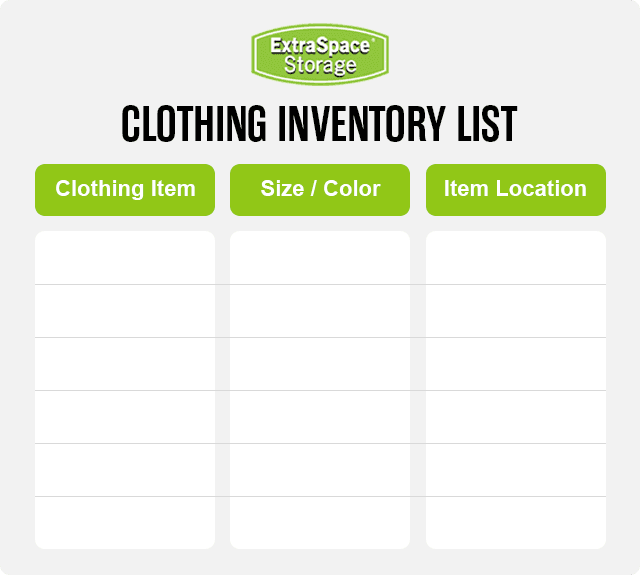
One of the best clothing storage tips is to create an inventory list and label your storage containers—this makes unpacking, swapping seasonal clothing, and finding specific items significantly easier. An inventory list also helps you keep track of what you have, which can be especially helpful when storing large amounts of clothing. Start by listing the clothing categories stored in each box or bag—either on paper or in a digital spreadsheet—so you always know where items are located. Categories might include summer tops, shorts and skirts, winter accessories, winter coats, and more. Label each container with its contents and the season, and keep your inventory list updated with each container’s storage location to make future wardrobe changes more efficient.
Prepare Your Clothes for Seasonal or Long-Term Storage
It's crucial to prepare your garments before storing them for the long term, as simply tossing clothes into a bin isn't enough to help preserve them. Even if your clothes appear clean, wash them thoroughly to remove lingering dirt, oils, odors, and unseen stains, then make sure they're completely dry before packing to help prevent mildew and musty smells. Steam delicate fabrics like silk and chiffon to remove wrinkles. If you're storing shoes like winter boots or summer sandals, clean them to protect your footwear and prevent dirt from transferring to other items. Finally, inspect each clothing item for tears, loose buttons, or other damage and make any necessary repairs before storing. Taking these extra steps will help keep your clothes in good condition and ready to wear when you need them again.
Choose Appropriate Clothing Storage Containers
Using the right storage container for clothes is important. For example, wire hangers won't maintain the shape of your garments during long-term clothes storage, and cardboard boxes offer limited moisture control, which can lead to damaged clothes. Vacuum-sealed bags can save you space, but be mindful that long-term compaction can cause permanent creasing for certain items. For most items, it's best to use non-airtight, lidded plastic containers. While airtight containers can trap moisture and odors, storage bins allow your clothes' fine fibers to breathe while also protecting them against pests and compaction. For delicate, sentimental, or vintage garments, consider using acid-free archival boxes for additional protection. If you're using garment bags, choose breathable fabric options instead of plastic whenever possible.
Store According to the Fabric
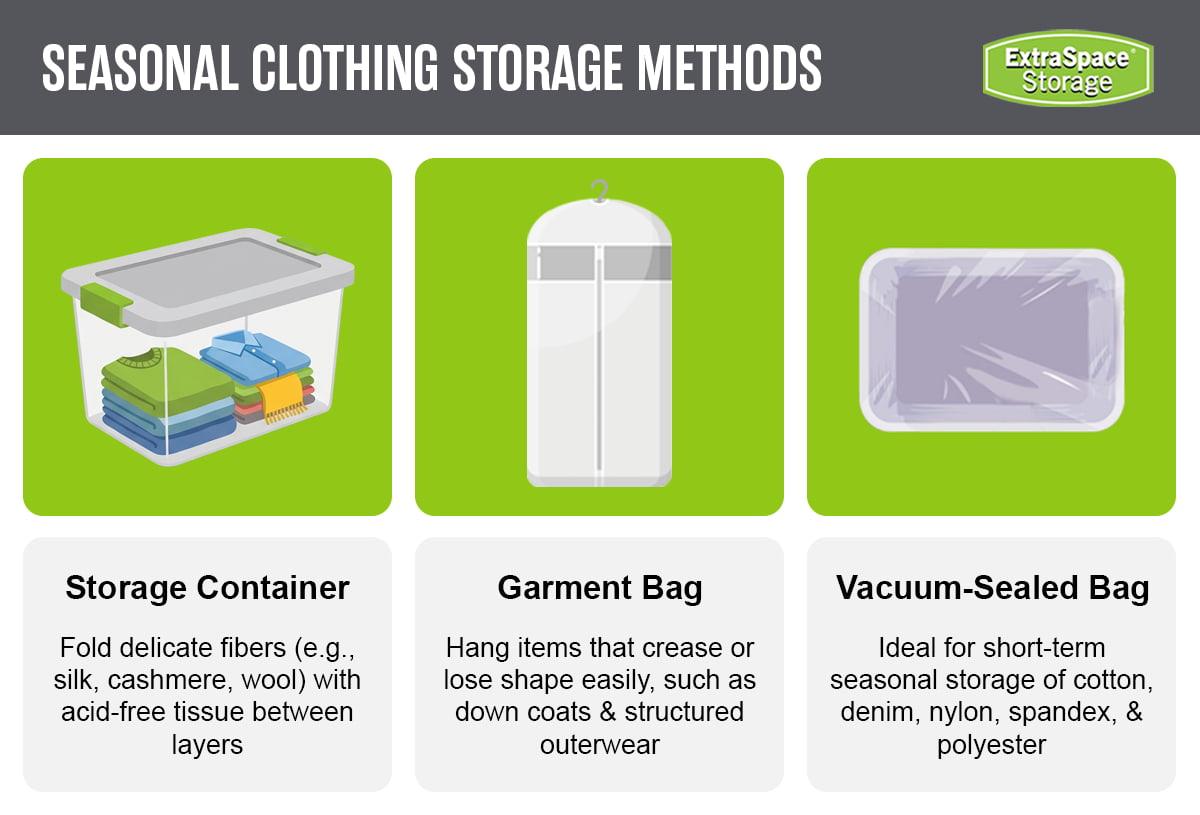
The best way to store clothes is to handle them based on their fabric type. This approach helps keep your clothes in good condition for longer and makes it easier to find what you need as seasons change. Here are tips for how to store certain fabrics:
Fold and place in a container: Protect delicate or natural fibers (e.g., silk, cashmere, wool) by folding them and placing acid-free tissue paper between them. This helps preserve their shape and color while preventing dust and creasing. You can also place acid-free tissue paper inside leather and suede pieces and around zippers or buttons to avoid rubbing and scuffing.
Hang up in a garment bag: For winter clothes storage, hang items that can easily crease or lose their shape if folded—like down coats and other structured outerwear. For summer clothes storage, flowy garments such as rayon or chiffon dresses and skirts keep their drape better when hung. Pieces with sequins, rhinestones, or other embellishments can also benefit from hanging to prevent friction.
Put into vacuum-sealable bags: Vacuum-sealing can work well for short-term, seasonal storage of fabrics like cotton, denim, nylon, spandex, and polyester. These materials compress well and bounce back easily, helping you maximize storage space. Avoid using vacuum-sealed bags for long-term clothing storage or for pieces made out of natural materials like wool, leather, or silk.
Pack Clothing with Care
The way you pack your clothes can make all the difference when it comes to best preserving them. Group similar garments together by season, category, or family member before placing them into storage containers. This makes it easier to find what you need without unpacking multiple bins. Many prefer rolling their garments rather than folding them, as this can reduce wrinkles and hard crease lines. When storing clothing in plastic bins, put heavier items in first—such as leather or denim jackets—to help protect more delicate clothing from unnecessary pressure. Separating each item with a piece of acid-free tissue paper can help protect your fabrics from discoloration. Avoid overpacking containers and leave room for airflow, which can help reduce trapped moisture. Once a bin is full, be sure to label it with its contents so your items are easy to locate when it comes time to take them out of storage. For extra protection, consider using silica gel packets to help prevent moisture and mildew growth, and place cedar blocks or lavender sachets in your containers to keep your items fresh and repel pests.
Find a Cool, Dry Storage Environment
When choosing a storage space for clothing, make sure it's cool, dry, dark, and has consistent temperatures to help preserve your clothes over time. Attics, closets, and garages typically have unstable temperatures that can damage textiles, though spaces like storage rooms can be ideal if they offer good airflow and don't receive direct sunlight—protecting fabrics from fading, mildew, and other damage. Similarly, self storage units provide an affordable, convenient way to preserve your clothes. Depending on how many clothes you have, a small self storage unit or locker could do the trick. And for any delicate or temperature-sensitive items, climate-controlled storage can offer even better protection.
Check On Your Clothes Periodically
To maintain your garments in long-term clothing storage, it’s important to give them a little attention each year. Textiles need to breathe, so make an effort to take your clothes out of their containers annually and let them air out for a minimum of a few hours. Hanging clothes briefly can give them a much-needed refresh. This is also a great time to inspect and address your clothes for any signs of pests, moisture, or mold. When returning your clothes to storage, a great tip is to unfold and roll them again in a different way to help prevent permanent creases, which can weaken fabrics over time. These tasks may seem simple, but yearly maintenance is key to preserving clothes and will help keep your garments in great condition for years to come!
Frequently Asked Questions
What is the Best Way to Store Clothes in a Storage Unit?
If you plan to store clothing long-term in a storage unit, there are a few tips you can follow to keep your clothes fresh and clean:
Wash before storing: Always clean clothes first to prevent stains and odors from setting in.
Fold neatly: Folding prevents snags and maximizes space in containers.
Use vacuum-sealed bags: Evenly fill bags and remove air fully for the best seal. Place sealed bags inside containers for added protection.
Line containers with acid-free paper: Add a sheet on the bottom and top to prevent yellowing and fabric damage.
Protect hanging clothes: Use garment bags with acid-free paper inside to reduce wrinkles and discoloration. Hang them on a portable rack if possible.
Control moisture: Add silica-gel packets to containers to guard against humidity.
Store delicate fabrics in climate control: Fur, silk, and leather last longer in a climate-controlled storage unit.
Are Vacuum Seal Bags Good For Clothes?
Vacuum seal bags can be a great option for clothing storage when used correctly. Avoid using vacuum-sealed bags for clothing made out of natural materials like wool, leather, or silk to avoid any damage. For an easily stackable and storable shape, make sure you fold your clothes neatly and put them in the bag evenly.
How Long Can You Keep Clothes in a Vacuum-Sealed Bag?
Clothes can safely stay in a vacuum-sealed bag for about six months. While sealing out air helps save space and protects against dust, leaving clothes compressed for too long can cause permanent creases and weaken fibers, especially in delicate fabrics. If you need to store clothing longer, consider rotating items out of the bags every few months to let them breathe. For added protection against moisture and mildew, place silica-gel packets inside the bag before sealing.
***
Find Climate-Controlled Storage Near You!
Extra Space Storage offers different types of climate control that can help you protect and store clothes until you’re ready to put them back into rotation in your closet. Popular cities for climate control include:
Find a self storage facility near you!