How To Store
How to Store a Freezer in a Storage Unit: The Ultimate Guide

Read Time: 5 min read
Summary: To keep your freezer fresh and functional in storage, start by choosing a space with enough room to maneuver and airflow. At least 48 hours before moving, empty, unplug, and defrost the unit, avoiding metal tools that could puncture cooling lines. Wash removable parts, then wipe the interior with baking soda paste or a vinegar-water solution instead of bleach. Vacuum the coils, dry the gaskets, and tape down the power cord. For best results, store the freezer upright on a pallet, a few inches from the walls, with the door cracked open. Remember to keep the top clear.Consider climate control and drive-up access, offered at select locations, for easier access and ample protection.
Whether you are downsizing, remodeling your kitchen, or simply need to free up space at home—putting a major appliance into self-storage requires careful preparation. Storing an unplugged freezer without proper prep traps moisture, which can lead to mold, mildew, and odors that can ruin the appliance. Follow this step-by-step guide to keep your freezer fresh, functional, and ready for future use.
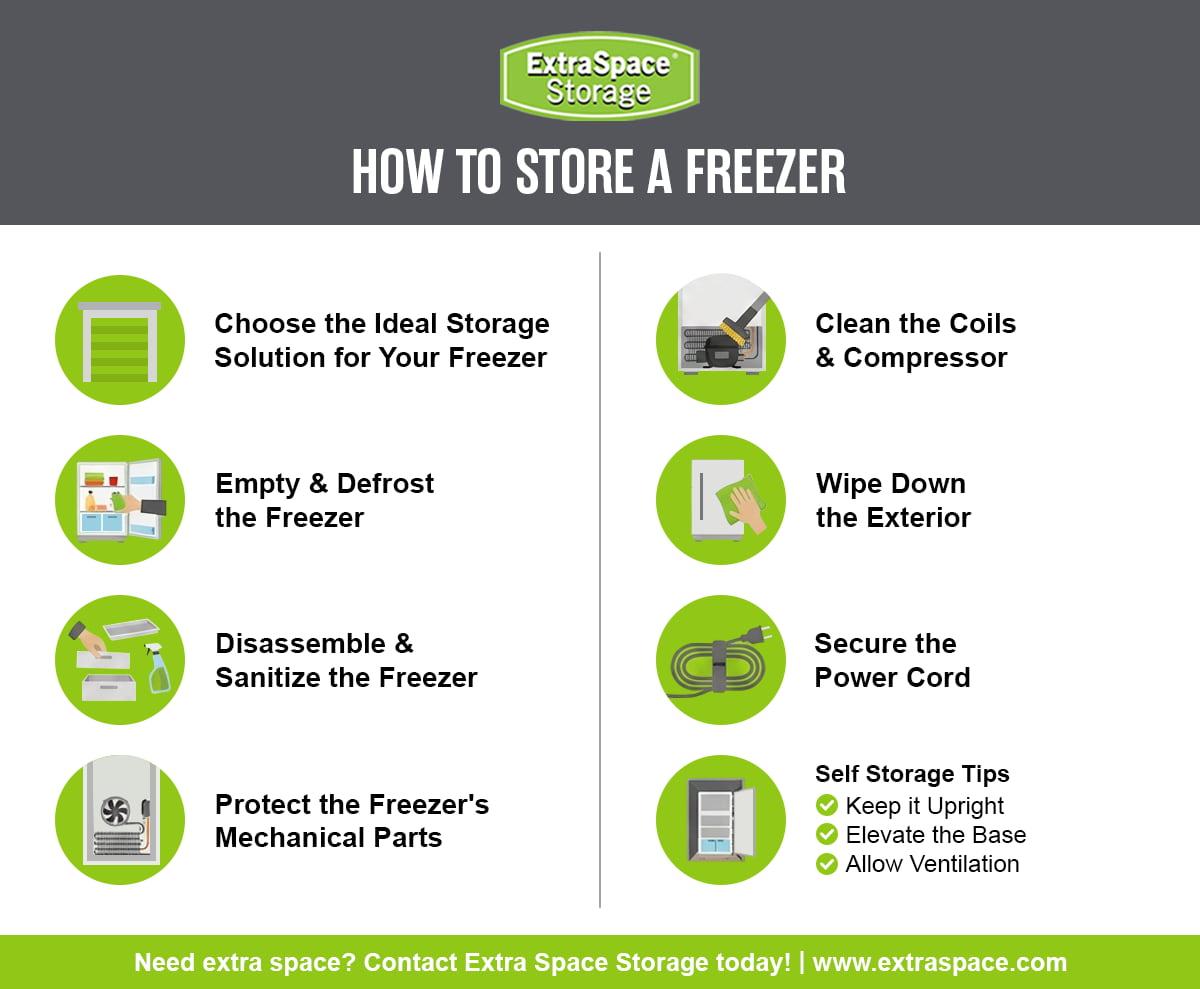
Choose the Ideal Storage Solution for Your Freezer
Before unplugging and prepping your freezer for storage, you need to find the right environment for long-term storage. While you can store it at home in a garage or shed—renting a storage unit is often recommended to keep your freezer in good condition. Use the following guidelines to help you choose the right storage unit for your freezer.
Rent Climate-Controlled Storage: A climate-controlled storage unit can protect internal electronics, wiring, and seals from damage caused by extreme temperatures or high humidity.
Prioritize Drive-Up Access: Standalone freezers are heavy and can be awkward to handle. A drive-up storage unit allows you to unload directly at the door.
Verify the Dimensions: Ensure the unit ceiling accommodates tall upright models and has space to maneuver around the freezer.
Plan for Airflow: A 5x5 unit can comfortably accommodate a compact chest freezer or a deep freezer. However, if you are storing a full-sized appliance or need space to keep the doors slightly cracked open for ventilation, opt for a 5x10 or 10x10 space instead.
Empty & Defrost the Freezer
After deciding where you'll store your freezer, one of the first steps for storage prep is to empty and defrost it. Remove all food, taking the opportunity to discard anything that has expired while transferring the remaining perishables or donating them. Once the freezer is empty, unplug it and open the lid or door completely to allow any accumulated ice to thaw naturally. Place old towels around the base of the freezer to catch runoff, and change them out frequently to protect your floors. If you choose, you can scrape some of the excessive ice away by placing a pot of boiling water inside to loosen the ice, then gently use an ice scraper to chip away any remaining chunks—avoid metal tools, knives, or ice picks, as they could puncture the internal cooling lines and cause damage to the freezer. Begin preparing your standalone freezer at least 48 hours before placing it in storage. This allows the internal temperature to rise safely, gives you time to defrost the unit completely, and ensures it is dry enough that mold doesn't grow.
Disassemble & Sanitize the Freezer
Once all the ice has melted, remove any detachable shelves, sliding baskets, dividers, and drawer tracks and wash them individually in a sink with warm water and mild dish soap. When cleaning the freezer's interior, avoid harsh chemical cleaners like bleach, which can damage the plastic liners and leave behind strong fumes that food will absorb later. Instead, use a soft microfiber cloth with a baking soda paste or a solution of equal parts warm water and distilled white vinegar. Wipe the interior thoroughly, paying close attention to the corners, drainage holes, and crevices around the rubber gaskets, where food crumbs often gather.
Protect the Freezer's Mechanical Parts
Taking a few minutes to secure loose components and clear out built-up dust will prevent expensive damage and ensure the freezer's motor doesn't have to work twice as hard when you plug it back in. Before loading in a truck, complete these quick tasks:
Clean the coils & compressor: Use a vacuum hose or soft brush to gently remove dust, lint, and pet hair from the condenser coils and compressor cage at the back or bottom of the unit.
Wipe down the exterior: Clean the outer shell with a damp cloth and mild soap, paying close attention to thoroughly cleaning and drying the rubber door gaskets.
Secure the power cord: Coil the cable neatly and tape it to the side or back of the freezer to prevent it from dragging and fraying during transit.
Freezer Self Storage Tips
Keep these essential appliance storage tips in mind once you're ready to place your freezer in storage:
Keep it upright: Always transport and store a freezer upright in the unit by strapping it to a dolly. Lying a freezer on its side allows compressor oil to leak into the cooling lines, which can permanently ruin the motor once it is plugged back in.
Elevate the base: Once inside your storage unit, place the freezer on a wooden pallet or heavy boards. Elevating it slightly off the concrete floor shields the appliance's bottom from rust, ground moisture, and unexpected water leaks.
Allow ventilation: Position the freezer a few inches away from the walls to maintain steady airflow. Additionally, use a folded towel, a piece of cardboard, or a doorstop to keep the lid or door cracked open by an inch or two to prevent trapped humidity and stale air.
Frequently Asked Questions
Can I store food in a freezer while in storage?
No. Extra Space Storage doesn't allow food to be stored in units to ensure clean, safe on-site environments.
How long can I store an upright freezer unplugged?
Letting a freezer sit idle for more than a year can lead to mechanical issues down the road. To keep things in working order, try plugging it in and running it empty every once in a while. This quick check-up keeps the compressor active and prevents the motor from seizing up while in storage.
Is climate-controlled storage necessary for a freezer?
It's always best to store household appliances in a climate-controlled storage unit. Extreme heat and humidity can accelerate rust on the exterior shell, degrade the rubber door seals, and potentially compromise the internal electronic components or the compressor.
Can I store items or stack boxes on top of a chest freezer in storage?
No, you should never stack boxes or other heavy belongings on top of a standalone freezer. Heavy weight can warp the lid, compromise the seal's structural integrity, or dent the outer shell. Keep the top completely clear to protect the appliance and preserve airflow.
Find Climate-Controlled Storage Units Near You!
Extra Space Storage offers climate control at facilities across the nation, where you can safely store appliances, electronics, and other temperature-sensitive items. Find climate control near you now!