
Selling an old house or an inherited family home that needs repairs? Don’t fret! Just because your home needs some work doesn’t mean that you can’t get a great offer. From how to market a fixer-upper to the best way to handle offers from investors, these are our real estate tips for selling a home that needs repairs.
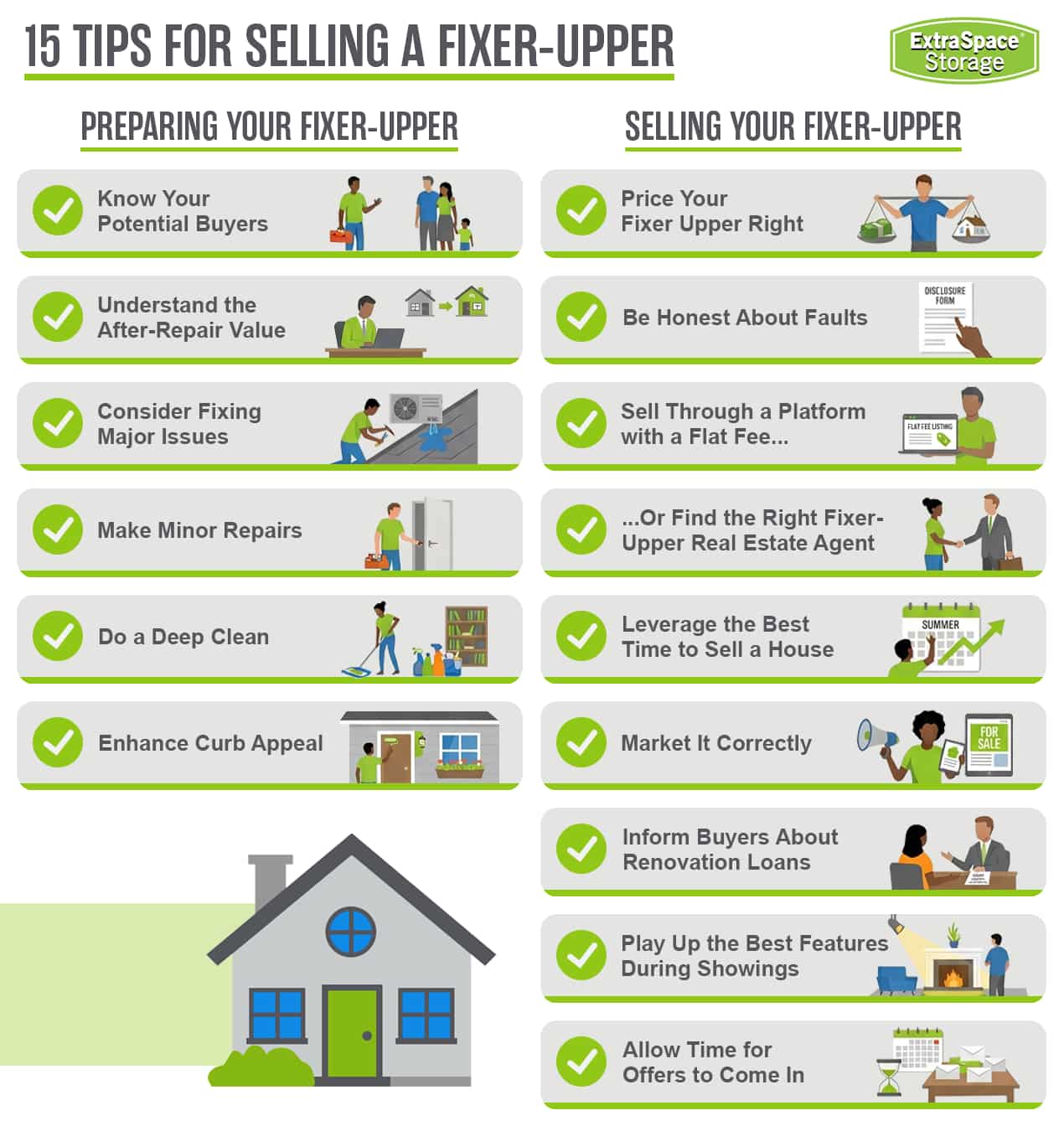
Preparing Your Fixer-Upper
Before you list, it’s worth taking stock of what you have and what buyers will see. From understanding your likely buyer pool to sprucing up the property itself, these steps will help you put your best foot forward—even if your home needs significant work.
Know Your Potential Buyers
If you’re trying to sell a fixer-upper home, you may attract budget-conscious or first-time home buyers who would otherwise be priced out of the area—but statistically, the more work a home needs, the more likely you are to be selling to investors or buyers with a house flipping business. This is especially true if your home has structural issues or requires major reconstruction. Because these buyers are looking to purchase, renovate, and resell for a profit, expect their offers to be low and come with pressure for a quick turnaround.
Understand the After-Repair Value
The after-repair value (ARV) refers to how much a home is expected to be worth after repairs. If buyers are considering flipping the house, this will factor into their offering price. Most real estate investors calculate their offer based on 65% to 85% of the ARV minus repair costs. If you’re selling a house that needs repairs, this is a great way to anticipate what offers might look like.
Consider Fixing Major Issues
Rather than selling a house in bad condition, you may want to invest in fixing major issues found during a home pre-inspection before putting it on the market—especially if the repairs involve core systems like electrical, plumbing, or septic, or safety concerns like mold. Not only is this the responsible thing to do, but it can expand your buyer pool by allowing for straightforward traditional financing rather than renovation loans, which helps you market to everyday buyers as well as investors. You can still leave cosmetic updates to the buyer’s discretion.
Make Minor Repairs
While selling a home that needs repairs is absolutely possible, some low-cost upgrades can make it much more appealing to buyers. Fresh paint on the walls, new or brighter light bulbs, removing damaged curtains or blinds, and replacing old switch plates and outlet covers can give your home’s interior an aesthetic lift. Fixing minor faucet leaks and patching roof leaks can help buyers feel more confident about the home. None of these require a big investment, but a little spending in these areas can go a long way toward putting buyers at ease when touring your home.
Do a Deep Clean
A deep clean can go a long way! Decluttering and deep cleaning your home is one of the most impactful things you can do when selling a fixer-upper house. Not only is proper cleaning an important part of staging your home to sell, but a fresh, uncluttered space also makes it easier for buyers to see the potential your home has.
Enhance Curb Appeal
If you’re wondering how to sell a fixer-upper home fast, don’t overlook curb appeal. Tend to your landscaping to boost home value—trim shrubs and trees, add a pop of color with a new plant, or give your exterior a fresh coat of paint. Even if your home is dated on the inside, a well-kept exterior shows buyers the great bones they have to work with.
Selling Your Fixer-Upper Home
Once you’ve done what you can to prepare the home and understand its value, the next step is positioning it effectively on the market. Pricing, timing, marketing, and negotiation all play a role in getting the best possible offer. Here’s what to keep in mind.
Price Your Fixer-Upper Right
Pricing is one of the most important factors when selling a fixer-upper. Today’s homebuyers are savvy and have access to a wealth of information, so overpricing an aging home can scare away offers. Plus, if a buyer is searching online and filtering by price, an overpriced fixer-upper could simply not reach the right buyers. However, you also need to determine how low you’re willing to go so you don’t accept a quick cash offer you might regret later. To avoid missing out on potential offers or pricing too low, price your home at or slightly below the going rate.
Be Honest About Faults
While you can pitch a fixer-upper home needing design updates as a great move-in-ready deal with just a little TLC, it’s important to be up front about any structural or safety issues when you’re selling a home as-is. Even if you’re not planning to make any big improvements, you can get your home pre-inspected so buyers know what they’re getting into. Save yourself from losing a deal by either addressing any of these major issues first or acknowledging them with a reduced listing price.
Sell Through a Platform with a Flat Fee…
Transaction costs can add up when selling a fixer-upper home, so keeping intermediary fees as low as possible is key. One way to do that is by paying a flat fee through an online real estate app or website instead of paying commission to a real estate agent. Depending on the sale price, this can save you thousands of dollars in commission fees.
…Or Find the Right Fixer-Upper Real Estate Agent
If the ease of working with a real estate agent is worth the commission to you—or if time is of the essence—make sure you choose the right realtor for a fixer-upper. The most important question to ask any candidate is whether they have experience selling a fixer-upper house. Because these properties are trickier to sell, working with an agent who knows the process can make a real difference.
Leverage the Best Time to Sell a House
Even with all the fixer-upper advice out there, some things are simply beyond your control—like the weather or the competitiveness of the housing market. However, you can be strategic and consider the best time to list a house. Winter is generally the worst time to sell a fixer-upper since fewer buyers want to take on a home project in cold weather—so aim to time your listing for spring or early summer if possible. It’s also worth researching to see whether your area is currently a buyer’s or a seller’s market, so you can confirm you’ve priced appropriately. If your timeline is flexible, waiting for the market to shift in your favor can give you a competitive edge.
Market It Correctly
Not sure how to market a fixer-upper house? To get the best offer possible, take extra care when writing your listing description. Here are some important things to include:
- Highlight what’s been updated over the years.
- Focus on unique selling points like location, an uncommon floor plan, and large bedrooms—anything that would be difficult to find at this price point.
- Use high-value keywords that highlight attractive features buyers are searching for, such as garage, parking, mountain view, lakefront, fenced yard, or flex room.
- Mention the potential resale value after repairs or improvements.
- Include a virtual tour of the home using a home staging app or software.
Inform Buyers About Renovation Loans
Renovation loans are specifically designed for buyers who want to purchase a home that needs improvements, bundling the cost of the home and repairs into a single mortgage. For buyers who may not have the money to cover renovations up front, this can make financing significantly more accessible. If you’re selling a home that needs repairs, mentioning renovation loans in your listing can make it more appealing to a wider range of buyers.
Play Up the Best Features During Showings
Don’t forget to showcase your fixer-upper home’s best features during tours with prospective buyers. Do you have a spacious living room? Have you done any recent renovations to boost your home value? Does your aging home have historical elements or original wood? An in-demand location? Whatever you have working in your favor, stage your home properly to make sure buyers leave thinking about the positives—not just what needs work!
Allow Time for Offers to Come In
If you’re set on selling your home fast, you might be tempted to take the first offer that rolls in. But if possible, this is the time to have patience—especially because many potential buyers are likely investors. In fact, investors make up the largest share of residential homebuyers—and while this is great for fast cash offers, they may not always offer the fairest price. Give yourself a few days or even a week before responding, leaving time for more offers to come in so you can get a clearer sense of how your home is being valued.
***
Need a place to store items while your fixer-upper house is on the market? With convenient self storage locations throughout the U.S., Extra Space Storage is here to help. Find a storage facility near you!