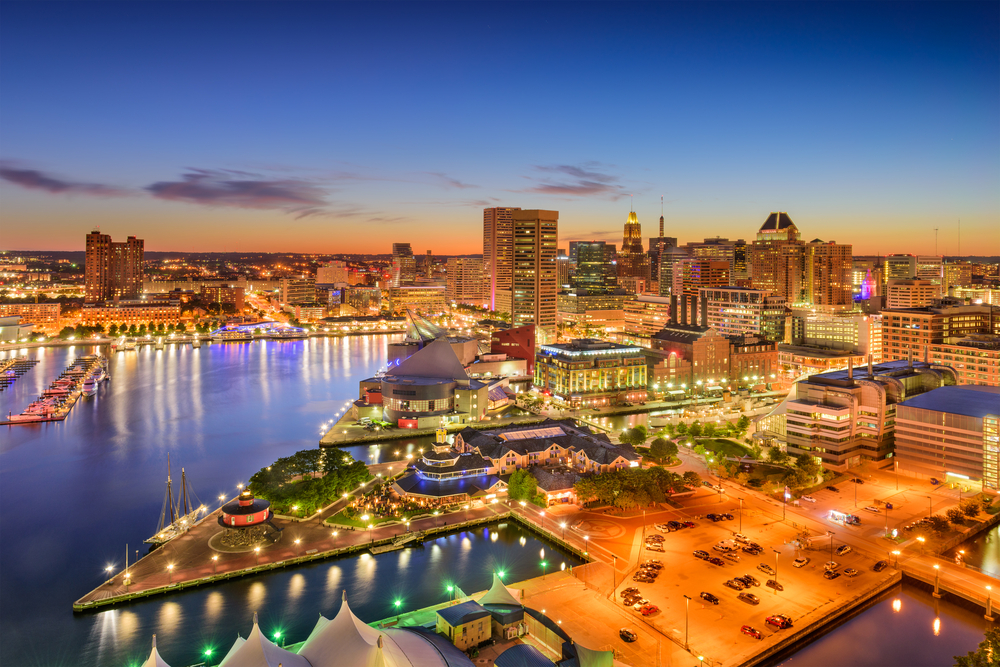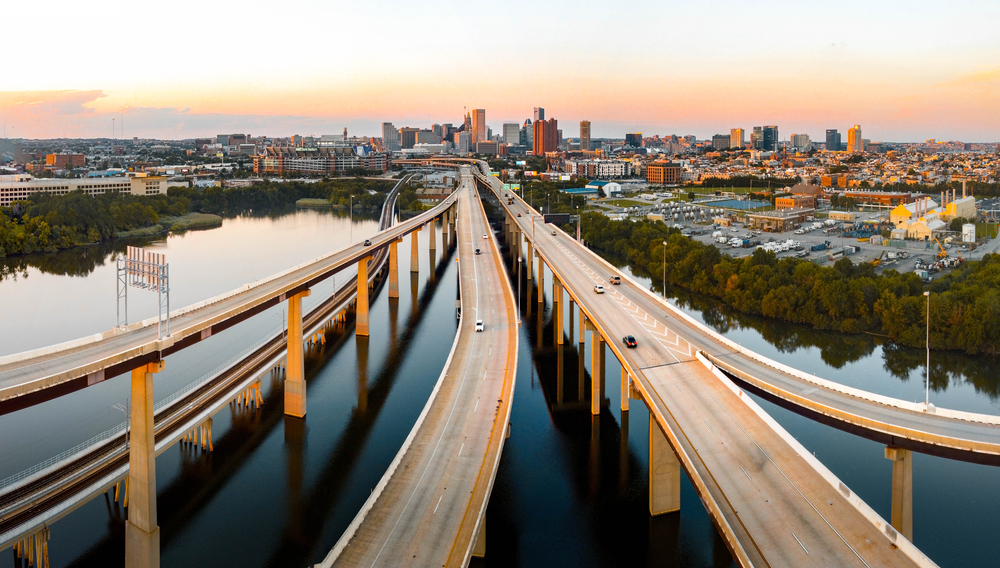

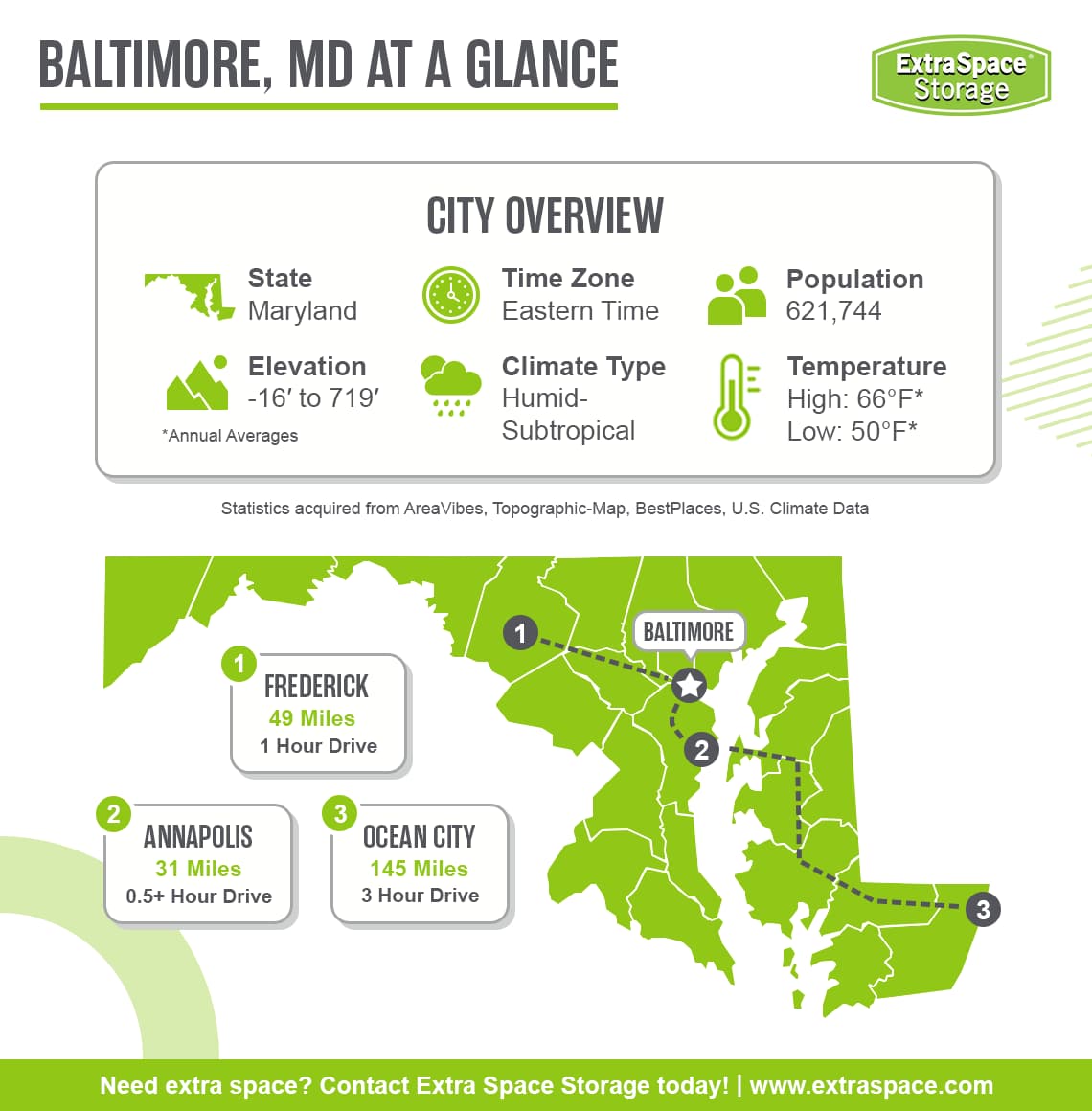
Baltimore is a great East Coast city to live in. As Maryland’s largest city, Charm City attracts residents with its relatively affordable housing, thriving job market, rich culture, and great seafood—though some dislike Baltimore’s traffic and humid summers. Explore the pros and cons of life in Baltimore below!
Quick Facts About Baltimore
| Population | 602,274 |
| Average Home Price | $394,250 |
| Average Monthly Rent | $1,676 |
| Median Household Income | $52,164 |
| Average Days of Sunshine | 213 |
Statistics from AreaVibes, Council for Community and Economic Research (C2ER), & Best Places
Pros of Living in Baltimore
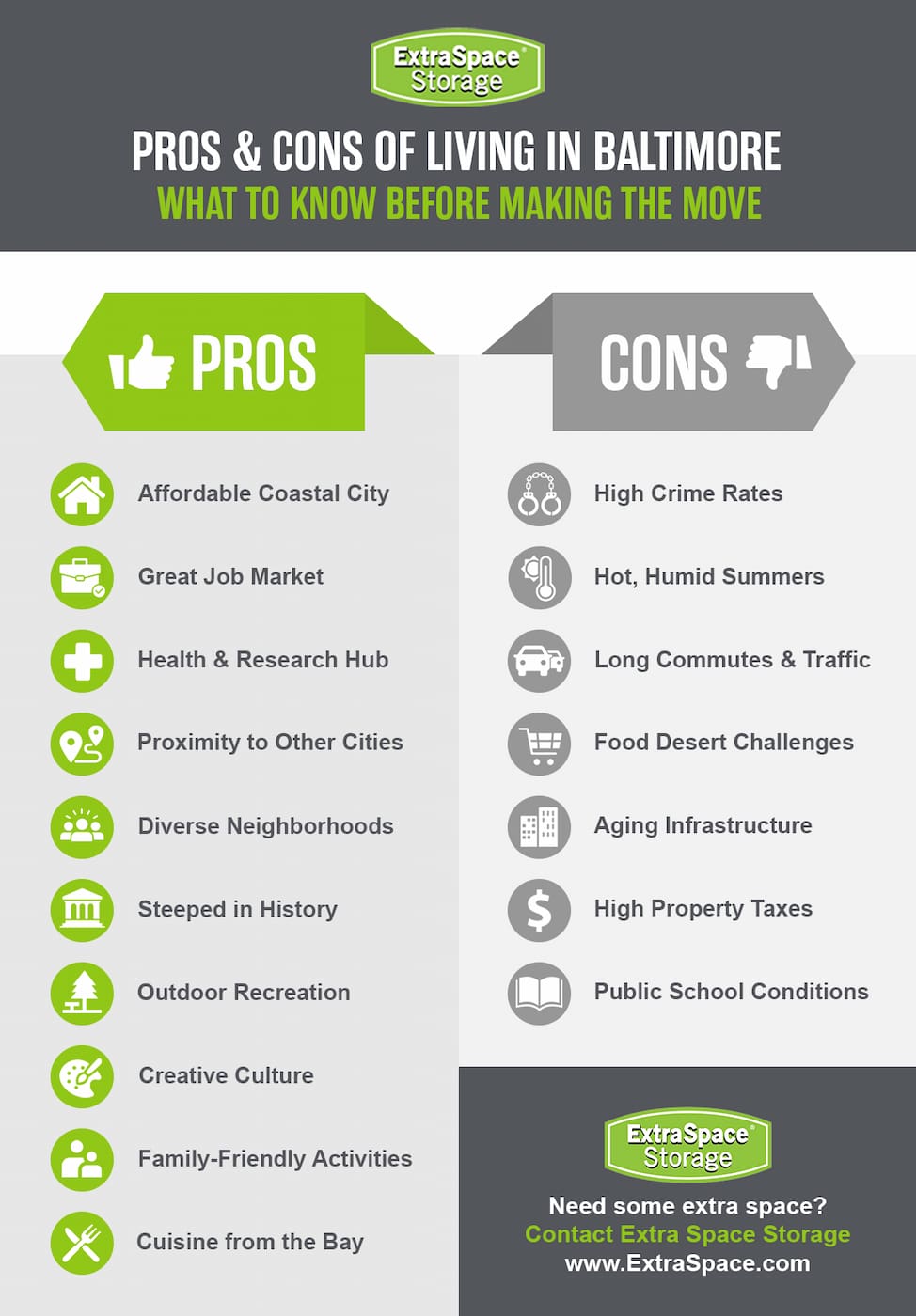
Some benefits of living in Baltimore include affordable housing on the East Coast, a thriving cultural scene, fresh-caught seafood, and more. Learn more about the reasons people move to Baltimore below!
Pro: Affordable East Coast City
The overall cost of living in Baltimore is only 0.5% above the national average, making it affordable for a city of its size—and a budget-friendly alternative to pricier East Coast metros like DC or Philadelphia. Home prices in Baltimore are also significantly lower than the U.S. average—but even if you don’t plan to buy a home, the median monthly rent in Baltimore is only slightly higher than the national average. As is the case in most major cities, there is a high population of renters in Baltimore, with around half the population opting to rent, so you’ll have plenty of opportunities for rentable properties!
Pro: Great Job Market in Baltimore
Affordability is further boosted by the active job market in Baltimore. While there are abundant careers in the medical field here, there are also opportunities in industries like finance, technology, and more. Many residents also take advantage of the easy commute via the train at Penn Station to federal roles in nearby Washington, DC. Major employers in Baltimore include:
- Under Armour headquarters, providing careers that utilize skills in marketing, merchandising, and more.
- Science + Technology Park at Johns Hopkins offers research and laboratory positions, retail and office space, and even a K-8 public school.
- Johns Hopkins Health System, Baltimore VA Medical Center, and Mercy Medical Center, which are known for great careers in healthcare.
- Morgan Stanley, Franklin Templeton, and T. Rowe Price Group, which provide employment opportunities in the financial services sector.
Pro: Healthcare & Research Hub
Recognized as one of the best healthcare cities in the U.S., Baltimore is renowned for its high-quality healthcare and biomedical research advancements. The city is anchored by world-renowned institutions like Johns Hopkins University and its medical system, which attract talent and innovation. This concentration supports jobs in healthcare, biotech, and education while providing residents with access to top-tier medical services. Additionally, the city’s influence continues to expand through the Baltimore Tech Hub, a federal initiative aimed at transforming the region into a global leader in predictive healthcare technologies.
Pro: Proximity to Major East Coast Cities
A great reason to live in Baltimore is its central location within the Mid-Atlantic region of the East Coast, making it a strategic home base for travel and work. The city sits along the Northeast Corridor, with Amtrak and MARC rail service at Penn Station providing direct connections—taking between one to four hours—to Washington, DC, Philadelphia, and New York City. This makes it easier to commute for work or take weekend trips to experience some of the nation’s best museums, professional sports games, world-class theatrical performances, and more—all without needing to pay the price of living in these more expensive metros.
Pro: Diverse Baltimore Neighborhoods
Baltimore is known as a “city of neighborhoods,” home to a mosaic of communities that offer a distinct small-town feel within a major East Coast metro. This close-knit atmosphere is so prevalent that locals affectionately call the city “Smalltimore,” a nickname highlighting how easy it is to feel socially connected in a city of over half a million people. Whether it’s Canton’s waterfront charm, the quirky boutiques in Hampden, or Federal Hill’s iconic hilltop views, Baltimore neighborhoods are known to foster a deep sense of local identity and bonds among residents.
Pro: Baltimore Is Steeped in History
Living in Baltimore gives residents a fantastic opportunity to immerse themselves in U.S. history. Some great historic spots to explore include:
- Fort McHenry to see where Francis Scott Key was inspired to write the Star-Spangled Banner
- Edgar Allan Poe House & Museum, where you can learn about the renowned poet’s literary legacy
- B&O Railroad Museum, which offers a glimpse into the city’s impact on the nation’s railways
- USS Constellation & USS Torsk, historic ships located in The Inner Harbor district
- Frederick Douglass-Isaac Myers Maritime Park & Lillie Carroll Jackson Civil Rights Museum to learn about prominent Baltimore historical figures
Pro: Waterfront Access & Outdoor Recreation in Baltimore
Living in Baltimore means having a front-row seat to the Chesapeake Bay and a wealth of outdoor recreation. Whether you’re seeking water taxi tours, scenic trails, or green spaces, Charm City has it all! Some local favorite outdoor recreation spots in Baltimore include:
- Baltimore’s Waterfront Promenade, an eight-mile path with scenic views—perfect for walks with friends, jogs, & bike rides
- The Inner Harbor, where you can get out on the water via paddle boat, kayak, or sailboat
- Canton Waterfront Park, a great place for picnics, fishing, & boating
- Patterson Park, offering a public pool, ice rink, sports courts, & more
- Druid Hill Park, one of the oldest public parks in the country, with disc golf, gardens, & trails
Pro: Creative Baltimore Culture
If you’re a creative spirit, you’ll be right at home in Baltimore! Here are some of the best places to experience the city’s vibrant arts and culture scene:
- Immerse yourself in the city’s deep connection to jazz music at the Eubie Blake National Jazz Institute & Cultural Center.
- Experience Baltimore’s theatre scene with tickets to Broadway shows like Disney’s The Lion King, Some Like It Hot, and Chicago at the Hippodrome Theatre, part of the France-Merrick Performing Arts Center.
- Explore powerful, rotating art exhibitions and find the most extensive collection of Matisse paintings in the world at the Baltimore Museum of Art.
- Discover works by professional and self-taught artists that challenge visitors to rethink the definition of fine art at The American Visionary Art Museum.
- Catch some summer sun while seeing fantastic comedians, writers, DJs, dance groups, and more at America’s largest free arts festival, Artscape.
- Celebrate LGBTQ pride with a parade, glow party, high-heel race, and more at Baltimore Pride.
Pro: Family-Friendly Activities in Baltimore
From sporting events to kid-friendly museums, Baltimore offers exciting options for all kinds of family outings. If you’re looking for some of the best family-friendly things to do in Baltimore, check out these attractions:
- Watch the two-time Super Bowl-winning team, the Baltimore Ravens (NFL), at M&T Bank Stadium.
- Witness the Baltimore Orioles (MLB) in action on the diamond at Oriole Park at Camden Yards.
- Visit the birthplace of a Baltimore sports legend at the Babe Ruth Birthplace & Museum.
- Get up close to thousands of aquatic and exotic animals at the National Aquarium.
- Discover interactive exhibits like Dinosaur Mysteries, Newton’s Alley, and SciLab, or explore the planetarium at Maryland Science Center.
- Let the kids choose their own adventures with programs like Budding Musicians, Discovery Tales, and Tech & Tinker at the Port Discovery Children’s Museum.
Pro: Baltimore’s Cuisine from the Bay
In the mood for fresh-caught Baltimore seafood? The city has a wealth of award-winning restaurants, many of which feature Maryland blue crab, oysters, lobster, and fish of all kinds—and it’s also home to the world-famous seasoning, OLD BAY! Some of the best spots to grab a bite to eat or a drink include:
- Petit Louis Bistro for upscale French cuisine
- L.P. Steamers, one of Maryland’s best crab houses, with crab cakes, calamari, fish sandwiches, & more
- Golden West Cafe for vegan-friendly options & twists on Americana favorites & Southwestern comfort food
- Woodberry Kitchen for farm-to-table dishes in a cozy atmosphere
- Mobtown Brewing Company, where you can sample innovative Baltimore craft beers
<div class=”qa-block”>
Everything You Need For An Easier Move to Baltimore
- Free & Cheap Moving Boxes in Baltimore
- Cost of Living in Baltimore
- Local Movers in Baltimore
- Cost of Professional Movers in Baltimore
Cons of Living in Baltimore
Some disadvantages of living in Baltimore include long commutes, high property taxes, and humidity. Before relocating to Baltimore, take a look at the cons of moving to the city below.
Con: High Crime Rates in Baltimore
Typical of large metro areas, crime rates in Baltimore are higher than the national average, which is reflective of issues relating to poverty, segregation, and houselessness. However, these issues are not universal throughout the city.
Prospective homebuyers can consider moving to particularly safe neighborhoods in Baltimore—such as Inner Harbor, Locust Point, Riverside, and more—if low crime rates are a priority. Additionally, the city has implemented several measures to reduce crime and promote a safe atmosphere. For example, initiatives like the Group Violence Reduction Strategy (GVRS) and the Safe Streets program are in place, contributing to a nearly 58% reduction in gun violence across the city.
Con: Hot, Humid Summers
The differences in Baltimore’s climate between seasons can be quite drastic. The summers experience an average high temperature of 88 degrees. While it’s not as extreme as in other parts of the country, it can be overwhelming for those who aren’t used to it when combined with the high humidity from June to September and above-average precipitation. Thankfully, there are plenty of ways to combat the summer heat and still find fun things to do in Baltimore. Many choose to stay in air-conditioned spots during peak temperatures or set up sprinklers in their yards, but there are also fun activities to take advantage of, like:
- Splash pads & public pools in Baltimore, such as Druid Park Pool & Cherry Hill Splash Park
- Rawlings Conservatory & Botanic Gardens, where you can appreciate the beauty of native & exotic plants in temperature-controlled environments
- Maryland Zoo in Baltimore, offering amazing exhibits & zoo experiences including penguin encounters, hand-feeding otters, & more
Con: Long Commute Times & High Traffic in Baltimore
Baltimore is no exception when it comes to long commutes. The average one-way commute in Baltimore is about 31 minutes—about four minutes longer than the national average. Though longer commutes are common in large metropolitan areas, this can be challenging for residents who don’t own a car—especially those farther from downtown.
However, Baltimore is one of the most walkable large cities in the U.S., which means it’s filled with pedestrian-friendly neighborhoods like Fells Point and Mount Vernon. And while less extensive than other major cities, there are still some great options for public transit in Baltimore, including:
- Maryland Transit Administration (MTA), which operates a great bus & light rail system
- Charm City Circulator, a free bus service for those looking to navigate central Baltimore neighborhoods
- Penn Station, a hub for area trains
- Baltimore-Washington International Airport (BWI), a gateway to domestic & international travel
- Bikemore Shared Mobility Program, offering convenient access to public scooters & bikes
Con: Food Desert Challenges
Access to full-service grocery stores and healthy food options remains a challenge in some parts of Baltimore. Several neighborhoods are classified as food deserts, where residents must travel long distances for affordable, nutritious foods. The city’s public transportation hurdles can make this even more difficult for those without cars. That said, local farmers markets, urban agriculture, food access initiatives like the Baltimore Hunger Project, and other city-wide programs are helping to fill gaps and address these issues head-on.
Con: Aging Infrastructure
Though Baltimore’s historic qualities can be charming, the city’s aging infrastructure can also come with real maintenance burdens. Maryland’s infrastructure consists of old roads, bridges, water systems, and buildings, which can pose challenges for Baltimore residents. In fact, some report that poor road conditions lead to costly repairs. However, the city is actively working toward infrastructure upgrades for its water and sewage systems, and is taking action to make Baltimore streets safer for all. The Reinvest Baltimore Initiative is also in place, which aims to rebuild abandoned communities in ways that benefit current residents.
Con: Relatively High Property Taxes in Baltimore
Baltimore’s property tax rate is consistently among the highest in Maryland at 2.248%—double the rate of other counties in the state. For Baltimore residents who own their homes, this can present a financial burden. However, it’s important to note that housing prices in Baltimore are lower than the U.S. average, which makes homeownership more attainable upfront. Plus, city leadership has been working to provide relief from property taxes for Baltimore locals, and Maryland’s property taxes seem to be rising at a much more sustainable pace now compared to years past.
Con: Inconsistent Public School Conditions
Residents report that the quality of K-12 public schools in Baltimore give them pause. Baltimore is considered among the cities with the worst public schools, with average test scores 53% lower than the national average. That said, there are still a number of standout public schools in Baltimore. Plus, if you’re looking to advance your career or expand your knowledge, there are several top colleges in Baltimore where you can pursue higher education, such as:
- Johns Hopkins University, one of the ten best national universities
- University of Maryland, Baltimore, with opportunities in their Schools of Medicine, Social Work, Law, & more
- Morgan State University, where you can learn more about psychology, theater arts, & more
- Notre Dame of Maryland University, providing degrees in art therapy, business, & education
- Loyola University Maryland, a top private college in Maryland
Should You Move to Baltimore?
You should move to Baltimore if you’re seeking big-city living on a budget, as the city offers top jobs, a vibrant culture, delicious seafood, and more. Before moving, consider your desired lifestyle, climate preferences, and transportation needs—as B’more experiences hot, humid summers and longer commutes. Read on to determine whether life in Baltimore is right for you.
Baltimore may be the right fit for you if…
- You’re seeking affordable East Coast living with proximity to DC, NYC, and Philly.
- You want to advance your career in healthcare, finance, or technology.
- You enjoy diverse outdoor recreation options, from waterfront activities to sprawling green spaces.
- You’d appreciate a rich arts and culture scene.
You may want to consider moving to another city if…
- You’re looking for quick commutes or will rely exclusively on public transit.
- You dislike humidity.
- You want a variety of highly-rated K-12 education options for your kids.
- You want to live in one of the safest U.S. cities.
Baltimore Compared to Nearby Cities
Wondering if Baltimore is better than Washington, DC, Philadelphia, or Detroit? Compare Baltimore to nearby cities using the chart below to figure out which destination best aligns with your budget and desired lifestyle.
| Factor | Baltimore, MD | Washington, DC | Philadelphia, PA | Detroit, MI |
| Average Rent Price | $1,676 | $3,361 | $2,147 | $1,620 |
| Average Home Price | $394,250 | $1,085,511 | $524,116 | $522,708 |
| Average Commute Time | 31 minutes | 30 minutes | 33 minutes | 26 minutes |
| Walk Score | 64/100 | 77/100 | 75/100 | 51/100 |
| Unemployment Rate | 4.7% | 5.0% | 5.4% | 8.2% |
| Major Industries | Healthcare, finance, technology | Federal government, technology, healthcare | Healthcare, education, technology | Manufacturing, local government, healthcare |
Statistics from Council for Community and Economic Research (C2ER), Best Places, Walk Score, & AreaVibes
Frequently Asked Questions About Moving to Baltimore
What salary do you need to live comfortably in Baltimore?
A livable wage in Baltimore is around $51,264 for a single adult with no children, though this can vary based on your lifestyle, type of home, and other factors. Considering the cost of living in Baltimore is on par with the national average, and the median household income is just over $52,000, many residents find it relatively easy to live comfortably in Charm City.
Is Baltimore safe?
Though crime rates in Baltimore trend higher than the national average, safety levels in Baltimore vary widely by neighborhood. That said, prospective residents can find plenty of safe neighborhoods in Baltimore—like Inner Harbor and Riverside—or consider settling down in one of the city’s many great suburbs.
Does it snow in Baltimore?
While Baltimore’s climate is considered humid subtropical, the city still receives an annual average of 19 inches of snow. January typically sees the most snowfall. With average temperatures in Baltimore as low as 27 degrees during the winter, it’s possible for snowfall to accumulate and affect commutes.
What is the distance from Baltimore to Washington, DC?
Washington, DC is roughly 40 miles from Baltimore—an approximate 90-minute drive. Baltimore residents love visiting DC to explore the Smithsonian museums and historical landmarks, attend the vibrant Cherry Blossom Festival, watch professional sports, and more!
Is Baltimore a nice place to live?
Baltimore is a great place to live for those seeking affordable living on the East Coast. Baltimore residents are often drawn to the city’s rich history and culture, world-class healthcare, great outdoor recreation, and close-knit vibe.
***
Moving to Baltimore? Extra Space Storage offers storage units throughout the city to make your move easier. Rent month-to-month self storage in Baltimore today!