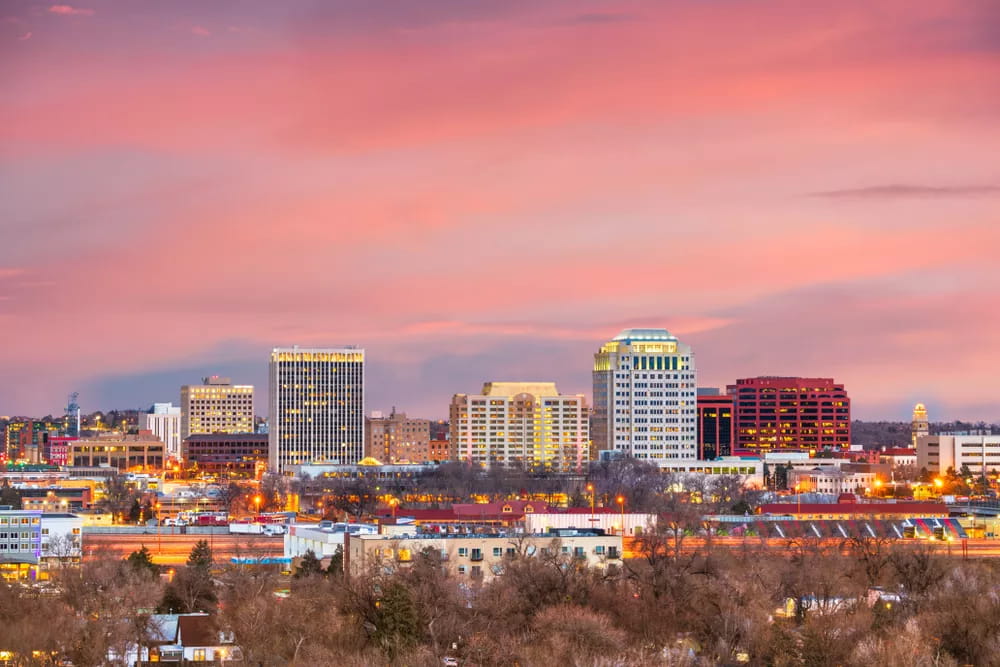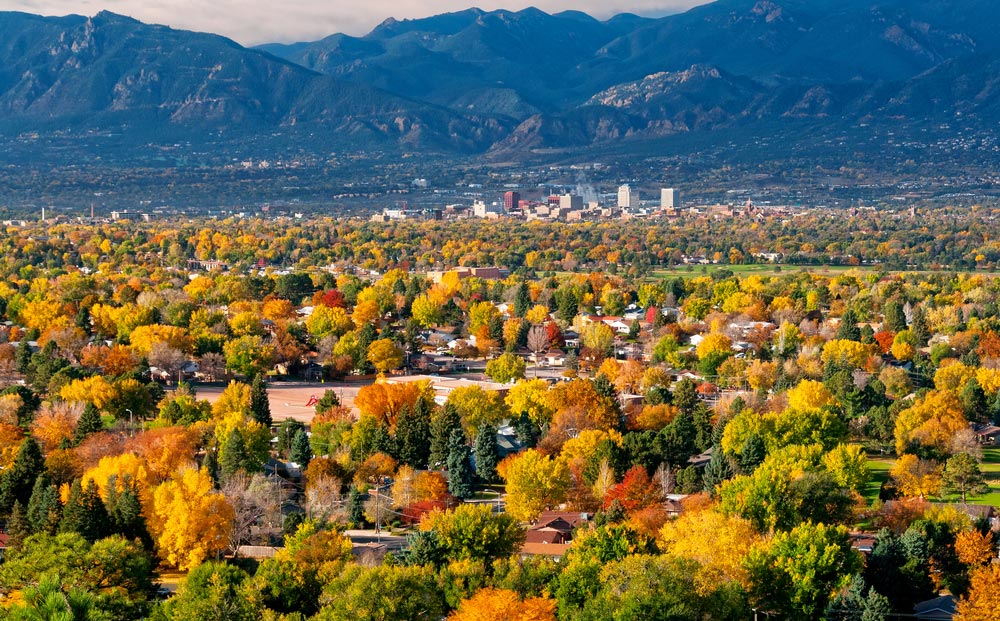
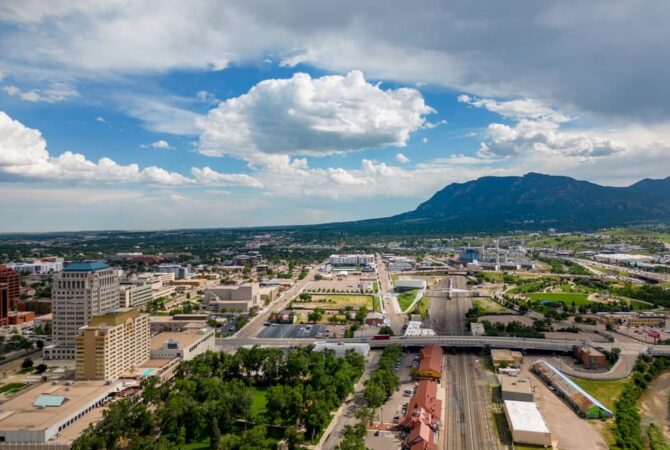
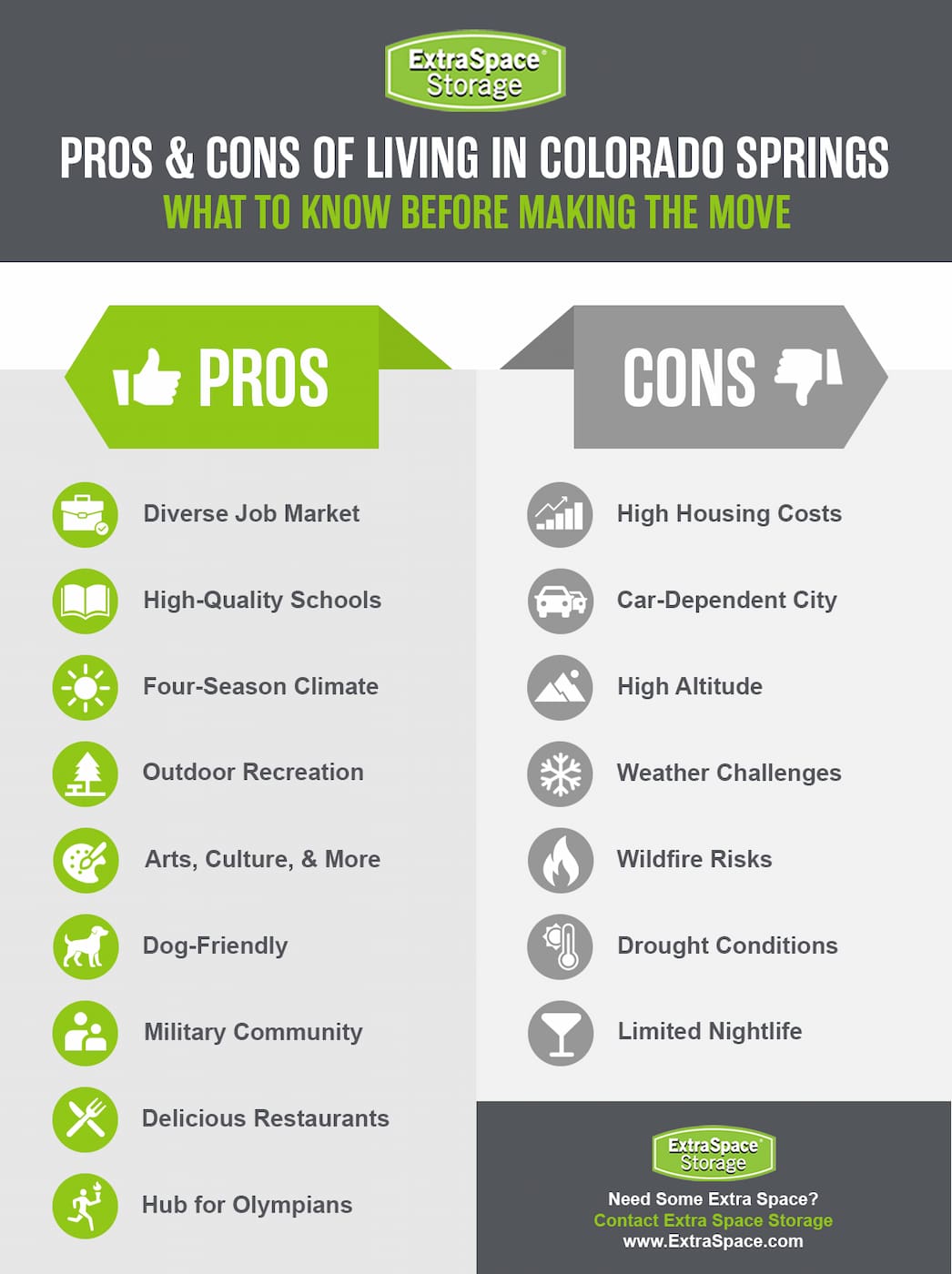
Colorado Springs is one of the best places to live in Colorado! Residents appreciate its strong job market, outdoor lifestyle, and military roots. However, many residents also point to rising housing prices, traffic, and limited nightlife as potential drawbacks. Keep reading to learn more about the pros and cons of living in Colorado Springs.
Quick Facts About Colorado Springs
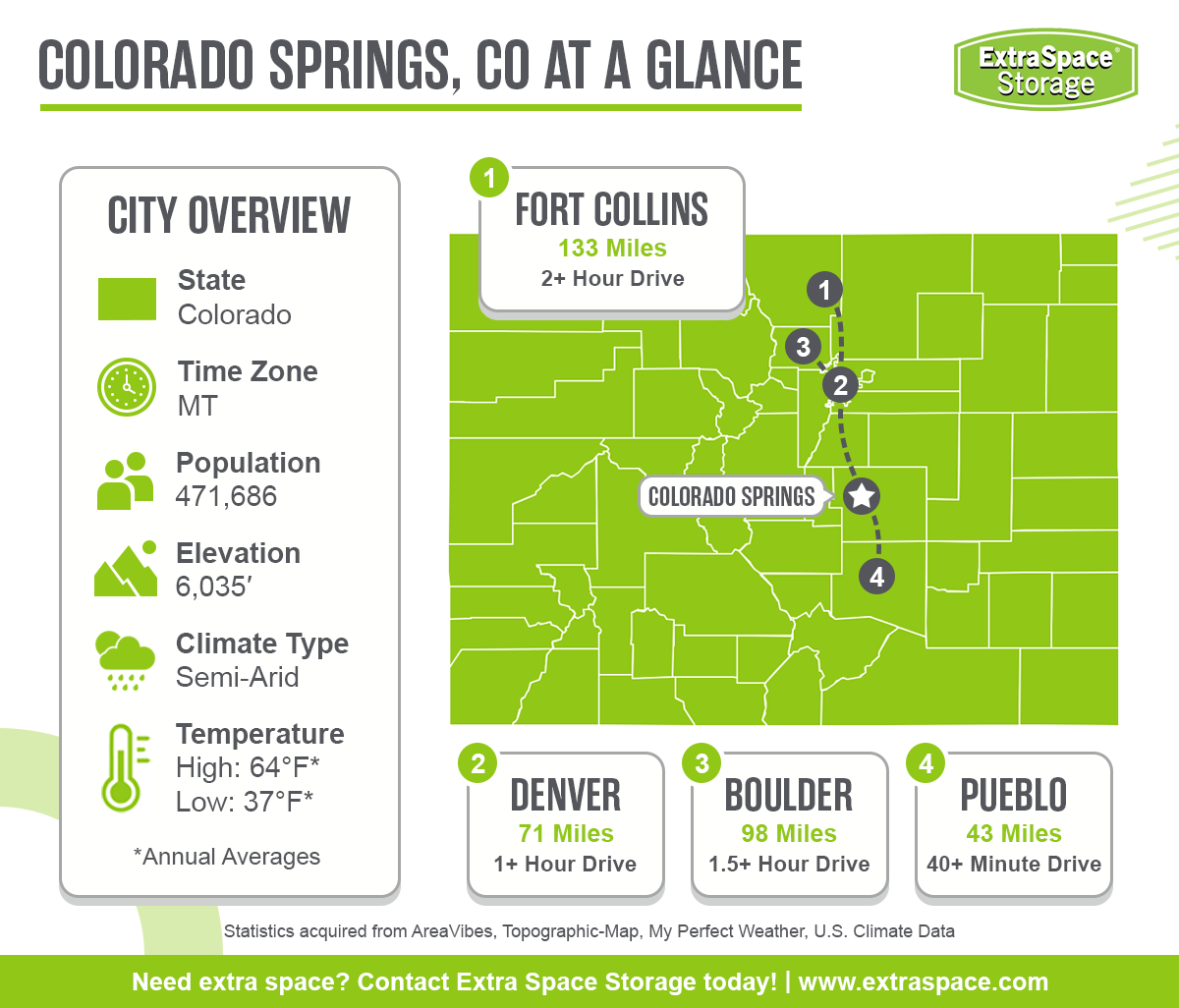
| Population | 471,686 |
| Average Home Price | $557,457 |
| Average Monthly Rent | $1,828 |
| Average Days of Sunshine | 243 days |
| Unemployment Rate | 3.7% |
Statistics from AreaVibes, Council for Community and Economic Research (C2ER), & BestPlaces
Pros of Living in Colorado Springs
There are many benefits of living in Colorado Springs, including natural beauty, abundant career opportunities, and a family-friendly environment. Here are the biggest pros of moving to The Springs!
Pro: The Diverse Colorado Springs Job Market
Colorado Springs is one of the best-performing large cities in the U.S. in terms of its economic growth, job creation, and innovation. With an unemployment rate of 3.7%—lower than the national average of 4.7%—The Springs is a fantastic place to find high-paying work in major sectors like aerospace and defense, technology, manufacturing, finance, and healthcare.
The top employers in Colorado Springs include major entities like U.S. Air Force Academy, Peterson Space Force Base, Lockheed Martin, UCHealth, Northrop Grumman, and the University of Colorado – Colorado Springs. This diversity of career opportunities makes Colorado Springs appealing to both young professionals and families alike.
Pro: High-Quality Schools & Universities in Colorado Springs
Families moving to Colorado Springs can benefit from access to highly rated public and private schools throughout the area. Many schools emphasize STEM programs and career-readiness, with some partnering with nearby military organizations to help students build practical, in-demand skills early on. The city is also home to several respected colleges and universities. Top schools in Colorado Springs include:
- Gold Camp Elementary School
- Cheyenne Mountain Junior High School
- Cheyenne Mountain High School
- Fountain Valley School
- The Colorado Springs School
- University of Colorado, Colorado Springs (UCCS)
- Colorado College
- Pikes Peak State College
Pro: Four Seasons & Lots of Sunshine
If you like to experience all four seasons without the heavy humidity found in other parts of the country, the climate in Colorado Springs may be right for you. Summers in The Springs are warm but comfortable with average highs around 84 degrees, while winter lows are near 17 degrees with about 57 inches of snowfall per year. Thanks to its high elevation and dry mountain air, Colorado Springs enjoys plenty of sunshine all year long, making outdoor activities possible even during the colder months.
Pro: Incredible Outdoor Recreation in Colorado Springs
Living in Colorado Springs means having year-round access to some of the best outdoor recreation in Colorado as well as some of the state’s most iconic natural landmarks.
- Garden of the Gods for towering red rock formations, paved trails, and scenic overlooks
- Pikes Peak for summit drives or hikes with sweeping Front Range views
- Royal Gorge Bridge & Park for canyon views, aerial trams, and ziplines
- Cave of the Winds for underground cavern tours and adventure rides
- Local climbing areas for sandstone cliff scaling
- Adventures Out West for ziplining at Pikes Peak
- Arkansas River for fishing or guided whitewater rafting trips
Pro: Arts, Culture, & Family Fun
Colorado Springs offers plenty of entertainment beyond its outdoor attractions, with activities and cultural experiences for all ages. From world-class museums and performing arts venues to family-friendly attractions, there’s always something to explore in The Springs.
- Cheyenne Mountain Zoo for up-close animal encounters
- May Natural History Museum for the world’s largest private collection of tropical insects
- Colorado Springs Pioneers Museum, Western Museum of Mining & Industry, and Ghost Town Museum for local history and interactive exhibits
- National Museum of World War II Aviation for extensive exhibits on the role of aviation in World War II
- Fine Arts Center and Ent Center for the Arts for art galleries and theater performances
- Pikes Peak Center for the Performing Arts for concerts, ballets, and Broadway shows
- Cosmo’s Magic Theater for all-ages magic shows or live jazz
Pro: Colorado Springs is Dog-Friendly
With everything from dog-friendly attractions and hiking adventures to pet-friendly patios, Colorado Springs is a great place to move with your furry friend! Ranked among the most dog-friendly cities in the U.S., The Springs has a variety of off-leash dog parks, including Antlers Dog Park and Rampart Park. You can also bring your pet along to explore the trails in dog-friendly areas at prominent locations like Garden of the Gods, Red Rock Canyon Open Space, Pikes Peak, Manitou Cliff Dwellings Museum, and Pub Dog Colorado—one of many dog-friendly restaurants in Colorado Springs.
Pro: Strong Military Community in The Springs
Colorado Springs has one of the largest military presences in the country, with the U.S. Air Force Academy, Peterson Space Force Base, and Fort Carson all located nearby. This concentration of military bases and institutions plays a major role in shaping the local economy and community, driving job creation, federal investment, and long-term economic resilience during downturns. The military presence also supports a range of community benefits, from events like the Front Range Space Force Ball and MilSpouseFest to art classes sponsored by the Department of Military and Veterans Affairs.
Pro: Delicious Colorado Springs Restaurants
Looking for a great place to eat in Colorado Springs? The city has a fantastic dining scene that spans from local flavors to international cuisine. Here are some Colorado Springs restaurants that are sure to satisfy your tastes!
- Juniper Valley Ranch for Southern-style comfort food
- Summit for an upscale dining experience with refined dishes
- Shuga’s for a cozy spot with creative eats and a dog-friendly patio
- Edelweiss German Restaurant for traditional German fare in an old-world setting
- Mausam Indian Flavors for flavorful Indian cuisines
- Oro for Italian dishes made from fresh, seasonal ingredients
Pro: Colorado Springs Is a Hub for Olympians
Living in Colorado Springs means sharing a city with some of the most elite athletes in the world. The Colorado Springs Olympic and Paralympic Training Center has helped shape the city into a nationally recognized hub for high-performance sports and athletic innovation, earning it the nickname “Olympic City USA.”
At the U.S. Olympic and Paralympic Museum, you can explore the history of the Olympic Games, see medals from famous winners, and learn about the rigorous training Olympic and Paralympic athletes endure. Plus, every two years, the U.S. Olympic & Paralympic Festival brings the community together to celebrate groundbreaking athletic achievements, meet the athletes themselves, and participate in events ranging from movie nights to sports clinics.
Cons of Living in Colorado Springs
There are a few drawbacks of living in Colorado Springs, from high housing costs to limited transit options. Here are some cons to consider before making the move to Colorado Springs.
Con: High Colorado Springs Housing Costs
The overall cost of living in Colorado Springs is about 2% higher than the national average, driven primarily by housing prices that sit 10% above the national average. That said, while housing is competitive due to high demand from job seekers and outdoor enthusiasts, the Colorado Springs real estate market is beginning to stabilize. Plus, everyday costs like healthcare, utilities, transportation, and goods and services all fall below national averages. Colorado Springs also remains relatively affordable compared to other Colorado metros—the cost of living in Denver is 9% higher than the national average, with housing costs that are nearly 24% above average.
Con: The Springs Is a Car-Dependent City
If you’re planning to move to Colorado Springs, it’s best to have a personal vehicle—with a walk score of 36 and transit score of 19, residents of this city are very reliant on their cars. Mountain Metro Transit does operate bus routes throughout the metro, but service coverage is limited compared to larger cities.
On the upside, the grid-like layout of The Springs and bike infrastructure like bike lanes and urban trails make driving and biking relatively easy. Plus, commuting in Colorado Springs is quicker than average—22 minutes compared to the U.S. average of 26 minutes.
Con: High Altitude
Located at more than 6,000 feet above sea level, Colorado Springs’ elevation can take some getting used to. New residents may experience short-term symptoms of altitude sickness like headaches, fatigue, or dehydration during their first few weeks in the city. The thinner air can also impact exercise tolerance and even affect sleep quality, particularly for those coming from lower elevations.
Con: Weather Challenges
Winters in Colorado Springs bring cold temperatures and consistent snowfall, which can impact driving conditions and daily routines. The Springs also sometimes experiences high winds due to warm air from the plains meeting cooler mountain air. However, residents are well-prepared for the cold, layering up to stay warm, while the city maintains efficient snow removal services to keep major roads clear when snow accumulates. And the high winds even provide a benefit—enabling wind turbine power that helps reduce the city’s carbon emissions.
Con: Wildfire Risks
Colorado Springs faces notable wildfire risk. The area sits in the wildland-urban interface (WUI), where homes and wildlands mix—making these communities more vulnerable when wildfires start in nearby forests and grasslands. Hot, dry summers and low humidity create conditions where fires can spread quickly.
Local fire authorities and forestry partners take these risks seriously, encouraging residents to maintain a clearance of brush and trees around their homes, follow seasonal burn restrictions, and use wildfire risk maps to assess potential danger. The Colorado Springs Fire Department also provides wildfire readiness resources and community education to help homeowners prepare for and mitigate wildfire damage.
[nearby_stores map=’0′ lat=’38.8863494‘ lng=’-104.7836421‘]
Con: Drought Conditions
Periodic drought conditions are another ongoing concern in Colorado Springs. Extended dry spells can strain water resources, impact landscaping and outdoor recreation, and contribute to broader environmental stress across the region. The lack of precipitation means brown, dormant landscaping much of the year, which some locals find unappealing. Drought conditions also make water conservation efforts and seasonal restrictions a regular part of life for residents.
Con: Limited Colorado Springs Nightlife
If you’re moving from a major metro known for a wide variety of late-night entertainment, Colorado Springs’ nightlife may feel quiet by comparison. While the city does have a growing number of breweries, cocktail bars, and live music venues, options here are more limited than in Denver or Boulder. However, many residents prefer the city’s calmer pace and community-oriented lifestyle. And if you’re looking for excitement after dark, you’ll still have some great options to choose from.
- Copperhead Road Bar for dancing to house and hip-hop music or country line dancing
- The Rabbit Hole for late-night bites and unique cocktails
- Blondie’s for DJs, multiple levels, and rooftop views
- Goat Patch Brewing Company for craft brews and relaxing evenings with friends
- Cerberus Brewing Company for a dog-friendly environment and beer patio
Should You Move to Colorado Springs?
You should move to Colorado Springs if you value strong career opportunities, outdoor adventure, and a four-season climate with plenty of natural beauty. The city is often ideal for outdoor enthusiasts, military families, and active professionals. Before deciding, think about your budget, transportation needs, and tolerance for weather extremes.
Colorado Springs may be the right fit for you if…
- You want to work for major employers in aerospace, defense, finance, technology, or manufacturing.
- You love spending time outdoors hiking, skiing, climbing, biking, or exploring national landmarks.
- You prefer a mid-sized Colorado city with less traffic congestion than Denver.
- You’re part of a military family or value strong community support systems.
- You prefer four distinct seasons and cooler summer temperatures.
You may want to consider moving to another city if…
- You rely heavily on public transportation.
- You prefer a large, fast-paced nightlife and entertainment scene.
- You’re sensitive to high altitudes or cold winter weather.
- Your housing budget is restricted.
- You want to live in a dense, walkable urban center.
Colorado Springs Compared to Other Nearby Cities
Wondering whether it’s better to live in Colorado Springs or another city—such as Denver, Boulder, or Albuquerque? Use the comparison table below to help you understand how Colorado Springs compares to neighboring cities in several key categories.
| Factor | Colorado Springs, CO | Denver, CO | Boulder, CO | Albuquerque, NM |
| Average Monthly Rent | $1,828 | $1,883 | $1,588 | $1,600 |
| Average Home Price | $557,457 | $659,481 | $736,000 | $428,432 |
| Average Commute Time | 22 minutes | 25 minutes | 19 minutes | 21 minutes |
| Walk Score | 36 | 61 | 56 | 43 |
| Unemployment Rate | 3.7% | 3.1% | 3.6% | 3.6% |
| Major Industries | Defense, aerospace, technology | Aerospace, technology, healthcare | Aerospace, bioscience, cleantech | Aerospace, bioscience, technology |
Statistics from Council for Community and Economic Research (C2ER), BestPlaces, Walk Score, & AreaVibes
Frequently Asked Questions About Moving to Colorado Springs
Is Colorado Springs expensive to live in?
The cost of living in Colorado Springs is slightly more expensive than the national average, but still more affordable than in many other Colorado cities—including Denver, Boulder, and Fort Collins. Housing is the biggest cost factor, while utilities, groceries, and healthcare remain relatively affordable.
Is Colorado Springs safe?
While crime rates in Colorado Springs are higher than the national average, the city is safer than 14% of cities in Colorado and 8% of cities across the nation. There are also many safe neighborhoods in Colorado Springs that provide family-friendly environments—including Briargate, Northeast Colorado Springs, and Northwest Colorado Springs.
How cold does it get in Colorado Springs?
On average, temperatures in Colorado Springs drop to around 17 degrees in the winter, with snowfall averaging about 57 inches per year. However, there are plenty of ways to take advantage of Colorado winters, including fun outdoor activities like snowshoeing, skiing, ice skating, and more!
What is the distance from Colorado Springs to Denver?
Colorado Springs is located approximately 70 miles from Denver. You can make the drive between these cities in around one hour and 20 minutes by car, or in two to three hours by bus. Colorado Springs is also located near other lively cities such as Boulder, Breckenridge, and Fort Collins.
What is it like to live in Colorado Springs?
Life in Colorado Springs is active, outdoorsy, and community-oriented. Residents enjoy scenic views, short commutes, and a slower pace of life than in Denver while still benefiting from urban amenities and a strong job market.
***
Moving to Colorado Springs? With storage facilities located in The Springs and across the country, Extra Space Storage can help with your transition. Rent self storage near you today!