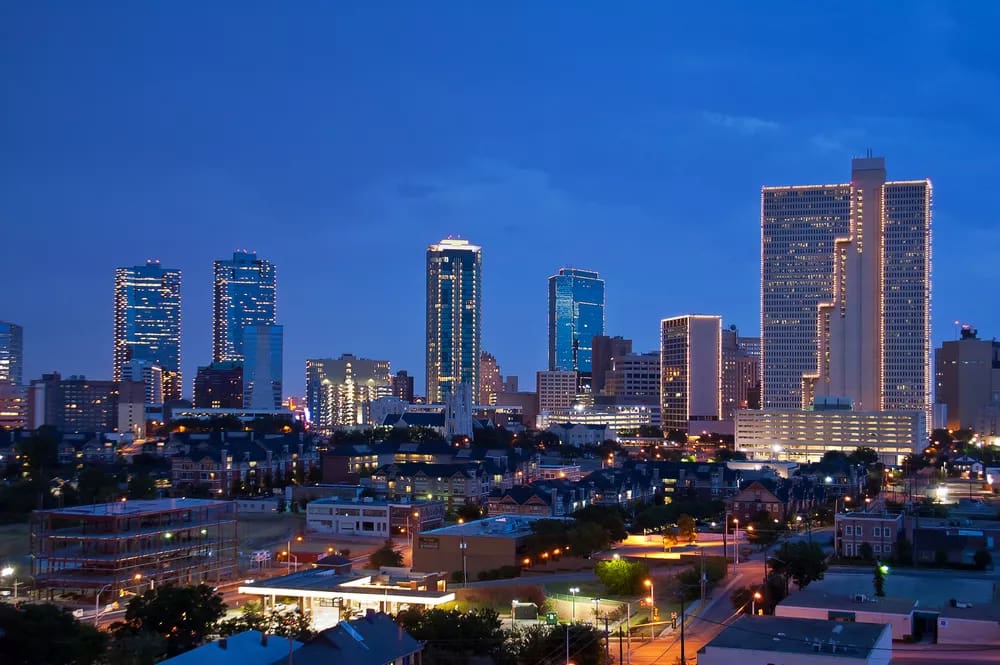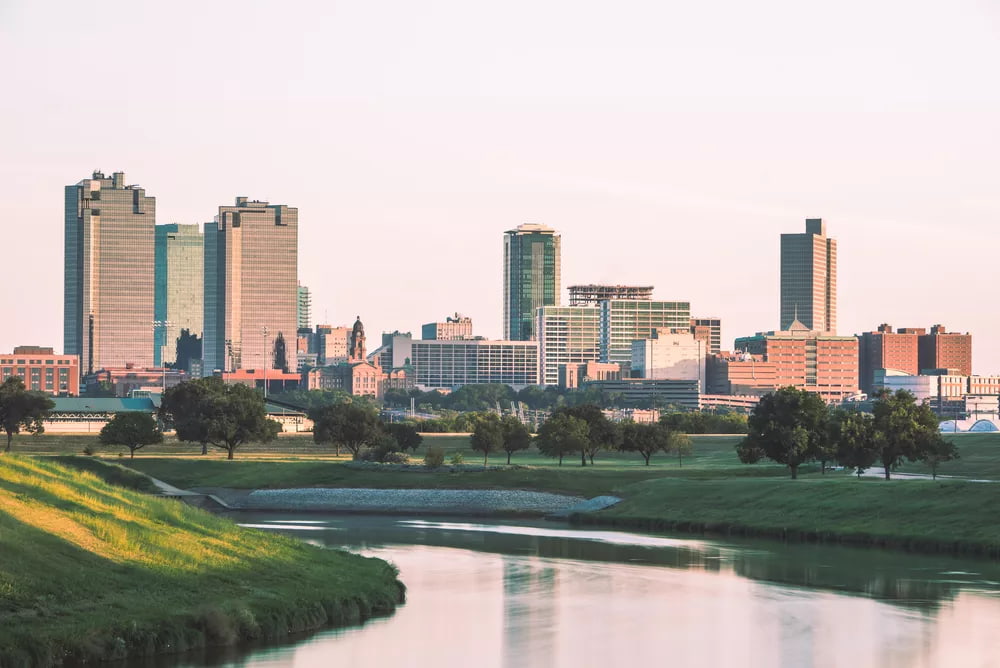
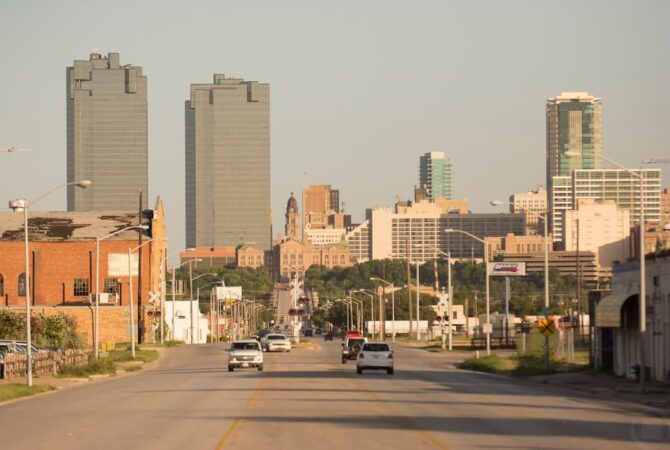
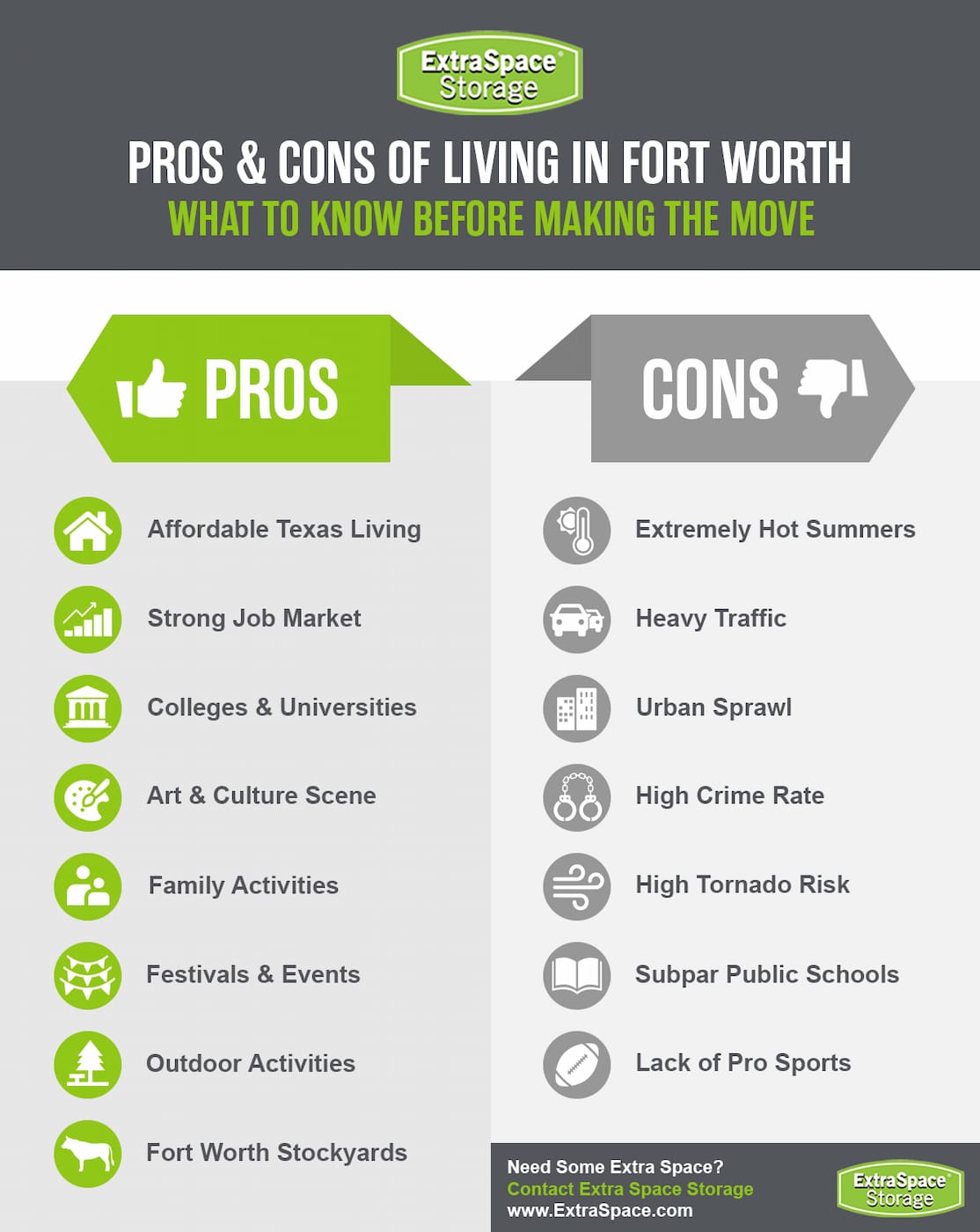
Fort Worth is a great place to live in Texas, thanks to its affordability, booming job market, and vibrant culture. Residents love the city’s unique blend of cowboy heritage and modern amenities, but many locals point to heavy traffic and brutal summer heat as potential drawbacks. Here are 16 pros and cons of living in Fort Worth to consider before your move.
Quick Facts About Fort Worth
| Population | 892,221 |
| Average Home Price | $443,224 |
| Average Monthly Rent | $1,572 |
| Unemployment Rate | 3.9% |
| Commute Time | 27 minutes |
Statistics from AreaVibes, Council for Community and Economic Research (C2ER), & Best Places
Pros of Living in Fort Worth
Benefits of living in Fort Worth include affordable living compared to nearby metros, great education opportunities, and tons of fun attractions. These are some of the best things about life in Fort Worth!
Pro: Affordable Living in Texas
If you’d like to live in Texas but want to avoid the higher price tags of Dallas and Austin, consider living in Fort Worth. Fort Worth’s average home price is around 13% below the national average—compared to Dallas at just 6% below and Austin at 3% above average. The city’s median household income is also nearly $10,000 higher than both the state and national averages. And since Texas residents don’t have to pay income tax, Fort Worth residents get to keep more money in their pockets. Although the cost of living in Fort Worth is 4% higher than the state average, it’s 4% lower than the national average—with budget-friendly housing, transportation, and healthcare options.
Pro: Strong Fort Worth Job Market
Fort Worth’s job market is one of the city’s standout advantages. With an unemployment rate of 3.9%, the city supports a strong range of career opportunities across key industries like manufacturing, aviation, aerospace, and energy. Major employers include Fortune 500 companies like American Airlines and the Fort Worth campus of Lockheed Martin—one of the largest aerospace companies in the U.S.—as well as aerospace manufacturer Bell and energy firms like Forum Energy Technologies and Finley Resources. Additionally, Naval Air Station Joint Reserve Base Fort Worth offers careers for both civilian and active duty military personnel.
Pro: Top Colleges & Universities in Fort Worth
Cowtown is a strong option for students pursuing higher education, thanks to the variety of private and public universities and colleges in Fort Worth. Whether you’re looking for affordable community college options, private undergraduate programs, or advanced medical degrees, the city has plenty of options. Here are the top schools in Fort Worth to consider:
- Texas Christian University, a private research university with a wide range of undergrad & grad programs, including medical degrees through the Burnett School of Medicine
- Tarrant County College, an affordable community college with degrees & workforce certificates in fields like business, accounting, & healthcare
- Texas Wesleyan University, a small liberal arts university with specialized programs in mass communication, physics, & more
- UNT Health Fort Worth, a health-focused institution with specialized programs in nursing, public health, & clinical practice
- UTA Fort Worth, a satellite campus of the University of Texas at Arlington, offering graduate degrees in engineering, health care administration, & more
Pro: Active Art & Culture Scene
Residents have easy access to world-class museums, live performances, cultural events, and art galleries in Fort Worth, located in the Fort Worth Cultural District and beyond. Some of the best things to experience in Fort Worth’s art scene include:
- The Modern Art Museum of Fort Worth to see contemporary artwork, view films, & grab a bite to eat at Cafe Modern
- Kimbell Art Museum to admire over 370 pieces of artwork from artists like Pablo Picasso, Teresita Fernandez, & Philip Guston
- Amon Carter Museum of American Art for art exhibitions, Second Thursdays, & family-friendly events
- Bass Performance Hall for Broadway shows, live performances from the Fort Worth Opera, & tours in the heart of Sundance Square
- Sid Richardson Museum to browse artwork from the American West, including oil & watercolor paintings
- Ballet Concerto for seasonal performances like A Holiday Special or the Summer Dance Concert
Pro: Family Activities in Fort Worth
From hands-on activities and museum exhibits to play areas and wildlife encounters, if you’re looking for family-friendly things to do in Fort Worth, there are plenty of fun attractions for all ages!
- Fort Worth Zoo for close-up encounters with local & exotic wildlife & cooling off at the Safari Splash
- National Cowgirl Museum & Hall of Fame to learn about the women who helped shape the Wild West & visit the Sergeant Reckless statue in the Alice Walton Cowgirl Park
- Fort Worth Museum of Science & History to view fossils like Paluxysaurus jonesi, catch shows at the Noble Planetarium, & play on the Galaxy Park Playground
- Texas Motor Speedway for NASCAR races at “The Great American Speedway”
- Casa Manana Theatre for acting or dance classes & kid-friendly productions like Mary Poppins Jr.
- KidMania to let your kids burn off energy by crawling through tunnels, going down slides, playing in the arcade, & more
Pro: Exciting Fort Worth Festivals & Events
There’s a wide range of Fort Worth festivals and events to keep residents busy year-round!
- Lone Star Film Festival to see some of the year’s most anticipated films, attend panel discussions, & more
- Mayfest to listen to live music, hit up the carnival rides, & chow down on finger food
- Fort Worth Oktoberfest to sample German food & beer, watch the Dachshund Dash, & participate in a variety of games & competitions
- Main St. Fort Worth Arts Festival in Downtown Fort Worth to appreciate dance performances, try all kinds of new foods, shop for art, & more
- Fort Worth Music Festival to jam out to live musical performances taking place across four venues
Pro: Outdoor Activities in Fort Worth
You’ll find plenty of outdoor activities to enjoy in Fort Worth! From gardens and nature preserves to lakes, parks, and family-friendly things to do, Cowtown makes it easy to get out and enjoy the fresh air. Some of the top fun outdoor things to do in Fort Worth include:
- Benbrook Stables for horseback riding lessons, scenic trail rides, & summer camps for your kids
- Fort Worth Botanic Garden to explore more than 120 acres of gardens—including The Rose Garden, Perennial Garden, & Cactus Garden—at the oldest botanic garden in Texas
- Fort Worth Nature Center & Refuge for more than 20 miles of hiking trails through forests, prairies, & wetlands
- Burgers Lake for swimming, relaxing on the beach, & summer cookouts with the family
- Marine Creek Lake for fishing, canoeing, kayaking, or kite surfing
- Trinity Park to play basketball, enjoy the playground, & host picnics & cookouts with friends in a 252-acre green space
Pro: Diverse Fort Worth Food Scene
There are plenty of great places to eat in Fort Worth, serving up everything from Tex-Mex and barbecue to Italian and traditional American favorites—making the city a foodie’s dream! Here are some popular Fort Worth restaurants to check out:
- Press Cafe for sweet & savory brunch favorites
- Los Asaderos for authentic Mexican food in Fort Worth
- Mercado Juarez Mexican Cafe for classic Tex-Mex plates
- Woodshed Smokehouse for Texas-style BBQ with creative twists
- Drew’s Place for classic Southern soul food
- 61 Osteria for refined Italian cuisine & delicious desserts
Pro: Visit the Fort Worth Stockyards
One of the biggest perks of living in Fort Worth is easy access to the Fort Worth Stockyards—a historic district that celebrates the city’s deep Western roots and “Cowtown” identity with a mix of history, entertainment, shopping, and nightlife. Popular Stockyards highlights include:
- Stockyards Museum to explore the district’s history through Wild West artifacts
- Fort Worth Herd Cattle Drive for a glimpse into Texas herding tradition
- Cowtown Coliseum for Stockyard events like Ultimate Bullfighters & the Stockyards Championship Rodeo
- M.L. Leddy’s for handcrafted leather goods like boots, saddles, & more
- Billy Bob’s for line dancing, live music performances by country music legends
- White Elephant Saloon or Sidesaddle Saloon for Western drinks, dancing, & good times
Get Everything You Need For An Easier Move to Fort Worth

Cons of Living in Fort Worth
Potential disadvantages of moving to Fort Worth include hot summers, urban sprawl, and busy traffic. Consider these cons of living in Fort Worth before making a move.
Con: Extremely Hot Fort Worth Summers
A potential drawback to living in Fort Worth is its hot, humid summer weather. Due to the city’s location in North Central Texas, the average high temperature in Fort Worth during the summer months can reach over 95 degrees, and the humidity can get to nearly 70%. But don’t let the sweltering heat stop you from having fun! Cool off with a dip at the Forest Park Pool, or take the kids to play at the Sycamore Spray Ground.
Con: Heavy Fort Worth Traffic
If you’re relocating to Fort Worth, plan on leaving early every day for work or school, since Fort Worth ranks among the cities with the hardest commutes, with an average commute time of about 27 minutes. Traffic issues in Fort Worth are closely tied to population growth and road capacity—more residents mean more congestion.
Fortunately, residents do have some excellent Fort Worth public transit options, primarily through Trinity Metro! Ride city bus routes all over the metro or use the Trinity Metro TEXRail for simple trips between Downtown Fort Worth and the DFW International Airport. Or for residents who plan to regularly commute between Fort Worth and Dallas, utilize the convenient Trinity Railway Express.
Con: Urban Sprawl
Fort Worth’s rapid growth has also contributed to urban sprawl, meaning neighborhoods, jobs, and amenities are spread out over a large area. Most residents require a car for commuting, errands, and other aspects of daily life. This can be an issue for those who prefer urban density and don’t want to rely on a vehicle.
However, there are options for walkable neighborhoods in Fort Worth, including Downtown, the Cultural District, and Bluebonnet Place. There are also efforts to make Fort Worth safer and more convenient for pedestrians through the Active Transportation Plan—like increasing the width of sidewalks, adopting a pedestrian zone near schools, and increasing connectivity across town.
Con: High Crime Rate in Fort Worth
Fort Worth’s crime rate is 49% higher than the national average. That said, its densely populated sister city of Dallas has a crime rate 89% higher than the national average, making Fort Worth a safer alternative. You can also opt to move to safe neighborhoods in Fort Worth like Wedgwood or TCU-Westcliff. Additionally, the Fort Worth Police Department actively supports residents through its Crime Control & Prevention District, which provides educational resources and crime prevention programs.
Con: High Tornado Risk
Fort Worth is in Tornado Alley, meaning its risk of tornados is considerably higher than the state and national averages—especially in peak Texas tornado season from April to June. As a result, residents tend to have high home-owners insurance rates. However, those who live here benefit from tornado preparedness programs from the Office of Emergency Management, such as the advance warning siren, the Community Connect initiative, and the Community Emergency Response Team.
[nearby_stores map=’0′ lat=’32.8000219′ lng=’-97.6466144′]Con: Subpar Fort Worth Public Schools
The Fort Worth Independent School District does not rank highly among Texas school districts, which could be a concern for parents moving to Fort Worth with children. Academic performance and ratings can vary widely by school campus, so be sure to research school options carefully when choosing a neighborhood.
Keep in mind that Fort Worth families still have strong alternatives, including highly rated school districts nearby like the Carroll Independent School District and Grapevine-Colleyville Independent School District—as well as private schools like Fort Worth Country Day School, Nolan Catholic High School, and Trinity Valley School.
Con: Lack of Professional Sports Teams in Fort Worth
Fans of professional sports should keep in mind that Fort Worth does not have any major league teams of its own. However, its proximity to Dallas means residents still have plenty of teams to cheer on without traveling far. Nearby professional teams include:
- Dallas Cowboys (NFL) at AT&T Stadium
- Texas Rangers (MLB) at Globe Life Field
- Dallas Stars (NHL) & Dallas Mavericks (NBA) at American Airlines Center
You can also support local Fort Worth college teams like the TCU Horned Frogs and Texas Wesleyan University Rams, competing in a variety of sports!
Should You Move to Fort Worth?
You should move to Fort Worth if you value affordable living, career opportunities in aerospace, energy, or defense, and a vibrant culture rooted in the American West. Fort Worth is a great fit for young professionals, families, and art and culture enthusiasts—thanks to its strong job market, diverse neighborhoods, and thriving arts scene. Before deciding to relocate, consider your lifestyle, weather preferences, and transportation needs.
Fort Worth may be the right fit for you if:
- You want to live in a large Texas city with a strong sense of history, culture, and community.
- You’re looking for more affordable housing than in nearby metros like Dallas or Austin.
- You enjoy family-friendly attractions, outdoor recreation, and a slower-paced lifestyle.
- You work in industries like healthcare, education, aerospace, manufacturing, or energy.
- You like having access to delicious, authentic Mexican and Tex-Mex cuisine.
You may want to consider another city if:
- You prefer a denser, more walkable urban environment with extensive public transit.
- You want a short commute without much traffic congestion.
- You prefer cooler year-round weather.
- You want consistently high-ranking public school districts near you.
- You value living in a city with a wealth of its own professional sports teams.
Fort Worth Compared to Nearby Cities
Are you wondering if Fort Worth is better than Dallas, Austin, or Houston? Use the facts below to help you decide which Texas city is best for you.
| Factor | Fort Worth, TX | Dallas, TX | Austin, TX | Houston, TX |
| Average Monthly Rent Price | $1,572 | $1,554 | $1,829 | $1,329 |
| Average Home Price | $443,224 | $476,573 | $501,645 | $397,435 |
| Average Commute Time | 27 minutes | 27 minutes | 24 minutes | 27 minutes |
| Walk Score | 35/100 | 46/100 | 42/100 | 47/100 |
| Unemployment Rate | 3.9% | 3.4% | 3.2% | 4.2% |
| Major Industries | Manufacturing, aviation, aerospace, energy | Skilled trades, business, government, education | Healthcare, education, technology, business | Energy, technology, healthcare, aerospace |
Statistics from Council for Community and Economic Research (C2ER), Best Places, Walk Score, & AreaVibes
Frequently Asked Questions About Moving to Fort Worth
Is Fort Worth expensive to live in?
Fort Worth is an affordable place to live, especially when compared to nearby metros like Dallas or Austin. The cost of living in Fort Worth is 4% lower than the national average, with many expenses like housing, groceries, and transportation being comparable to or lower than the national average.
Is Fort Worth safe?
While Fort Worth’s crime rate exceeds both Texas and national averages, it remains safer than neighboring Dallas. Safety can also vary significantly by neighborhood, with areas like Wedgwood, Downtown, and TCU-Westcliff standing out as some of the city’s safer communities.
What is the average temperature in Fort Worth?
The average temperature in Fort Worth ranges from a high of 96°F in summer to a low of 35°F in winter. Spring and fall offer the most comfortable temperatures. Residents can also expect around 37 inches of rain annually and minimal snowfall of about 1 inch per year.
What is the distance from Fort Worth to Houston?
Located in North Texas, Fort Worth is around 260 miles northwest of Houston. You can make the trip in approximately four hours by car or six hours by bus.
Is Fort Worth a nice place to live?
Fort Worth is considered a nice place to live thanks to its distinct American West heritage, growing economy, and diverse culture. Residents enjoy big-city amenities like museums and restaurants at a slower pace of life than in larger metros—making it an appealing choice for families, young professionals, and retirees alike.
***
Relocating to Fort Worth? Extra Space Storage offers storage facilities in Cowtown to make your move easier. Find self storage units in Fort Worth today!