
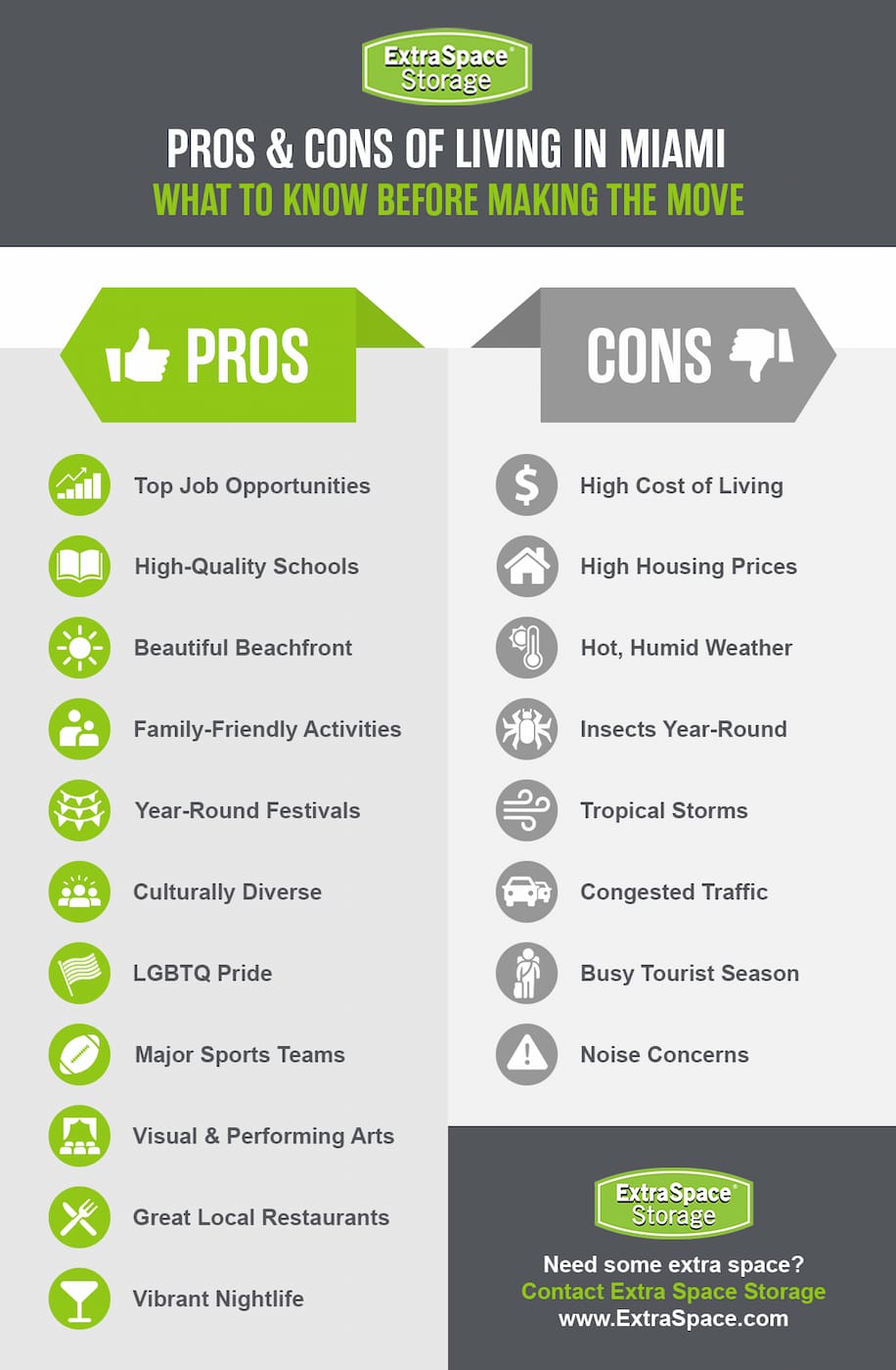
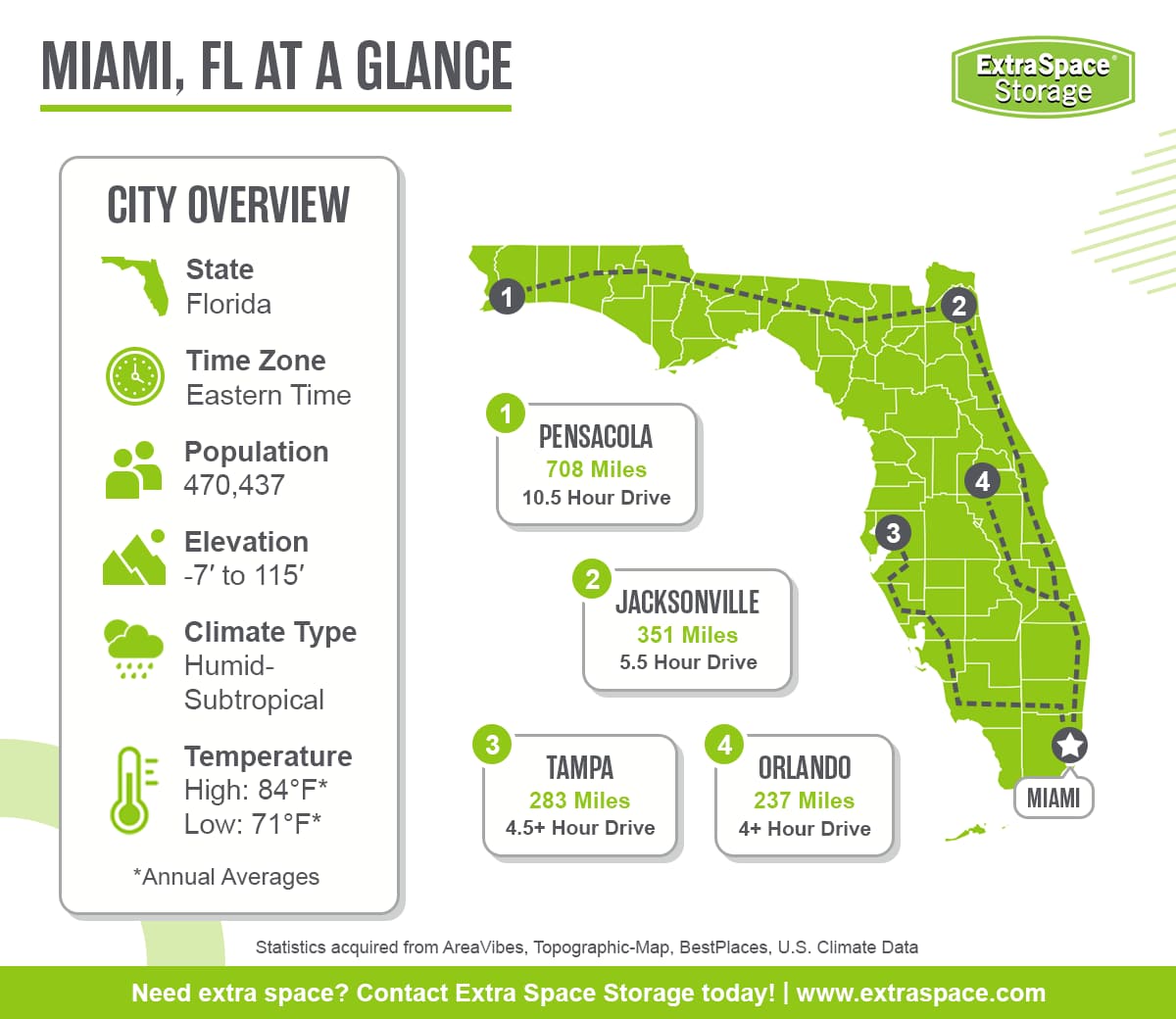
Miami is a scenic Florida city that ‘s ideal for young professionals, families, and retirees alike. Those living in Miami appreciate the abundance of things to do, lively nightlife, and the cultural diversity—however, the city has high traffic and noise concerns. Check out these 19 pros and cons to help you decide if moving to Miami is right for you!
Quick Facts About Miami
| Population | 461,080 |
| Average Home Price | $710,492 |
| Average Monthly Rent | $3,299 |
| Walk Score | 77/100 |
| Average Days of Sunshine | 248 days |
Statistics from AreaVibes, Council for Community and Economic Research (C2ER), Walk Score, & Best Places
Pros of Living in Miami
Living in Miami offers many benefits, including the variety of jobs, access to beaches, family-friendly activities, and more! Read more about why you should move to Miami below!
Pro: Top Job Opportunities
Miami is an excellent place to pursue your dream job, offering a wide variety of careers, large companies, and a lower-than-national-average unemployment rate. The city’s key industries include tourism, finance, aviation, and healthcare at companies like:
- Royal Caribbean Group & Carnival Cruise Line
- Royal Bank of Canada
- Amerijet International & Commercial Jet
- Baptist Health South Florida
Other major Miami companies include:
- Lennar Corporation, a major homebuilding company
- World Kinect Corporation, which offers aviation & marine fuel services, as well as energy & sustainability services
- PortMiami, one of the largest container ports in the U.S. & the Cruise Capital of the World
- Cargill, one of the largest companies in Miami & major food supplier
Pro: High-Quality Schools
There are several renowned universities in Miami that are perfect for anyone pursuing a degree! Check out these notable Miami colleges to see the best option for you:
- University of Miami for a top-ranked private university with well-ranking economics, nursing, & real estate programs
- Florida International University for a Preeminent State Research University & to attend one of the most innovative public universities in the U.S.
- Barry University for more than 50 undergraduate & graduate degrees in a private Catholic college
- Miami Dade College for a university that ranks well as a regional public college, college for veterans, & best value school
- Lindsey Hopkins Technical College for adult general education programs & career & technical programs
Pro: Beautiful Beachfront
Ranked as one of the top beach cities in the U.S. with an average of 248 sunny days per year, it goes without saying that Miami is perfect for sunbathing. These Miami beaches, boardwalks, and piers make life in Miami exciting—and offer space for activities like picnicking and rollerblading. Check out these top water recreation spots in Miami:
- South Beach, Mid-Beach, & North Beach—Miami Beach’s three major neighborhoods—for over nine miles of stunning recreation
- The Miami Beach Boardwalk for must-see pier attractions like the Espanola Way artists’ colony
- South Pointe Pier for a mini water playground & panoramic views of Downtown Miami & Fisher Island
- Historic Ocean Drive for a renowned Art Deco District, Muscle Beach outdoor gym, & beach volleyball
- Haulover Park for kite flying, fishing, & skateboarding
Pro: Family-Friendly Miami Attractions
Beyond beaches, Miami is a great place for family fun, with a variety of kid-friendly museums, zoos, parks, and more. Here are some of the top family-friendly things to do in Miami:
- Miami Children’s Museum to roam a variety of exciting traveling exhibits
- Frost Science Museum for a three-level aquarium and immersive planetarium
- Jungle Island to marvel at animals like capybaras, wallabies, & giant tortoises
- Biscayne National Park to go canoeing, boating, or learn about coral reefs
- Miami Beach Botanical Garden to explore the city’s flora & fauna or do yoga in the garden
- Coral Gables for swimming in the Venetian Pool or hanging out in Matheson Hammock Park
Pro: Year-Round Festivals in Miami
No matter the time of year, there’s always something to celebrate in Miami! From cultural festivals to vibrant music festivals, here are some of the must-attend festivals in Miami:
- Coconut Grove Arts Festival for works from talented local artists & live mural painting
- Art Miami—Miami’s premier winter arts fair—for a Contemporary gallery, or visit its sister festival, CONTEXT Art Miami
- Skyward Kite Festival for colorful kite displays & making & flying your own kite
- Ultra Music Festival—one of the largest EDM festivals in the world—for elite DJs & headliners
- South Beach Wine & Food Festival for drinks from culinary experts, renowned Food Network chefs, & sommeliers
- Miami Film Festival for independent American & international films from emerging & established filmmakers
- Miami International Boat Show for fishing seminars, a mega claw machine, & the SuperYacht Miami marina
Pro: Miami Is Culturally Diverse
Spanish-speakers—or those interested in Latin culture—will feel right at home in Miami! The city has a large Hispanic and Latino population, which has had an influence on the city’s abundance of Latin activities—like supporting Miami’s Latin dance clubs, such as El Patio Wynwood and Salsa Mia, where you can enjoy mojitos and take salsa lessons! There are also a variety of events year-round where you can celebrate the city’s Latin culture, including:
- Carnival, a festival celebrating Latin culture with Parade of the Bands, a music truck, & more.
- Golf Classic—hosted by Carnival—with 144 players & fundraising for four-year college scholarships to undergraduate students.
- Calle Ocho Music Festival—the largest Latin music festival in the U.S.—which features 15 street blocks of Little Havana, international food, & folkloric dances.
- Miss Carnaval Miami, a yearly pageant celebrating Hispanic women across the U.S.
Pro: A Variety of LGBTQ Resources & Great Pride
Miami is an LGBTQ-friendly city to live in, as it is a hot spot for gay-friendly culture, events, and resources. Here are some the top resources and events you can find throughout Magic City.
- LGBT Visitor Center, sponsored by the Greater Miami LGBTQ Chamber of Commerce, offers weekly community events, publications, and attraction recommendations.
- Pridelines and Safe Schools South Florida help empower and educate young adults.
- Aqua Foundation for Women serves the wellbeing and community of Miami’s LGBTQ women.
- Miami Beach Pride to celebrate queer culture with a variety of fun events—including the iconic parade.
- Wynwood Pride to experience an eclectic weekend filled with headliner concerts, drag shows, and DJ.
- OUTshine Film Festival to discover culturally-diverse films throughout the year highlighting the LGBTQ experience.
- Twist—Miami’s longest-running gay club—which has weekly events like House Party Tuesdays, Fresh Wednesdays, or Sabroso Thursdays.
- Palace for iconic nightly performances and drag shows in Miami.
Pro: Major Sports Teams in Miami
Good news if you’re a big fan of professional sports—Miami is home to several major franchises! Get your tickets and support these top Miami sports teams:
- Miami Dolphins (NFL) at Hard Rock Stadium
- Miami Heat (NBA) at Kaseya Center
- Miami Marlins (MLB) at loanDepot Park
- Inter Miami CF (MLS) at Inter Miami CF Stadium
- Florida Panthers (NHL) at Sunrise’s Amerant Bank Arena
Pro: Amazing Visual & Performing Arts Scene
Home to a range of art fairs and year-round art galleries, Miami and Miami Beach are vibrant hubs for visual and performing art. Immerse yourself in Miami’s art scene at any of these venues and events:
- Art Basel, a three-day international art sensation, for striking works from over 200 leading galleries & over 4,000 artists
- Superblue Miami to experience an awe-inspiring & immersive mirrored maze with light-based displays
- Museum of Graffiti for the history of graffiti with engaging exhibits
- Wynwood Walls to get up close with Miami street art from over 100 featured artists
- Perez Art Museum Miami for a vast collection of Contemporary works & rotating exhibitions
- Miami City Ballet for bold choreographed performances
- Florida Grand Opera for world-class opera
- New World Symphony for ensemble concerts at venues across the city
- Adrienne Arsht Center for the Performing Arts for family-friendly musicals & dance theater shows
Pro: Great Local Restaurants
Avid foodies can line up for a taste of international cuisine that reflects the city’s diverse identity! From Miami seafood to Michelin-star winning cuisine, be sure to stop by at some of Miami’s best restaurants.
- Crazy About You for delicious Miami brunch
- Versailles Restaurant for authentic Cuban cuisine
- Boia De for relaxed Italian dining
- OMAKAI Sushi for some of the best sushi in Miami
- El Palacio de los Jugos for some of the best Latin American food in Miami
- Stubborn Seed—a Michelin Star-winning restaurant—for an 11-course dinner
- Flanigan’s for casual Miami seafood
Pro: Vibrant Miami Nightlife
Nearby Miami Beach is considered one of the top party cities in the U.S., with glamorous bars and nightclubs along eclectic Ocean Drive and plenty more to see and do in Miami proper. Enjoy a night out on the town at any of these top Miami nightlife spots:
- E11EVEN for performances from top artists
- Sweet Caroline Karaoke & Cocktails for unique cocktails & karaoke
- Mac’s Club Deuce—former speakeasy and the oldest bar in Miami—for laid-back ambiance & vintage decor
- Broken Shaker for handcrafted cocktails & a relaxing backyard oasis
- Axe Habits for axe-throwing & escape rooms
Get Everything You Need For An Easier Move to Miami
Cons of Living in Miami
While Magic City has plenty to offer residents, there are some disadvantages of living in Miami, like the city’s high cost of living, tropical storms, high traffic, and more. Here are the cons to be aware of before you decide to move to Miami.
Con: High Cost of Living
Due to the city’s prime location and luxury amenities, living in Miami without breaking the bank can be a challenge. The average cost of living in Miami is 21% higher than the national average, making it an expensive U.S. city to live in. However, when compared to other major cities like Los Angeles and San Diego, the cost of living is significantly lower. Not to mention, many residents believe the city’s extensive amenities combine to justify a higher price tag.
Con: High Housing Prices
With average housing costs around 56% higher than the national average, finding housing in Miami within your budget can be difficult. Plus, the average rent is 116.5% higher and average home price is 37% higher than the national averages, contributing to the city’s housing and unhoused crisis.
However, the city is working hard to create more affordable housing in Miami, with the help of increased county funding and the Building Blocks Fund—plus the use of tools like the Miami Affordability Project (MAP). Local groups like Miami Homes For All also work to ensure all residents—including residents in marginalized groups—have access to affordable housing through research and coalition-building. Plus, living in Magic City means no state income tax or estate tax, which helps offset housing costs.
Con: Hot, Humid Weather
Adjusting to Miami weather can be tough, especially if you’re used to cooler climates, as Miami comes with uncomfortably high humidity. The average temperature in Miami ranges from 62 to 90 degrees, rarely falling below 50 degrees—even during winter months. Miami also receives around 59 inches of rain per year, which is significantly more than the national average of 38 inches. However, the city receives no snowfall, which is perfect for those who prefer a warmer, more tropical climate for lounging on the beach, enjoying water sports, and more. Additionally, the City of Miami offers several tips and resources for combatting heat-related illnesses and dealing with extreme heat.
Con: Insects Year-Round
Miami’s subtropical, humid climate makes it prone to various insects, including mosquitoes, ants, and biting midges. Plus, the city is considered the top termite city in the U.S. However, knowing the peak insect activity times in Miami helps residents prepare and adapt—termite season typically starts in the spring while peak mosquito season is in the summer and fall. Miami-Dade County also provides inspection services and mosquito tips and resources—urging residents to clean out rain gutters and clear yard areas of discarded items. Plus, many residents adapt by having repellent on hand and regular pest control visits.
Con: Tropical Storms
Located on the shores of Biscayne Bay and the Atlantic Ocean, Miami often deals with severe tropical weather and has been named the city most vulnerable to hurricanes. Due to Miami’s above-average rainfall and rising sea levels, the city also frequently faces moderate flood risks. Magic City residents also should be aware of other severe weather phenomena in Miami, including rip currents, thunderstorms, and tornadoes.
Nevertheless, taking the proper precautions can help keep you safe, and the city provides several resources to assist. For instance, Miami’s Hurricane Guide provides instruction on the evacuation process as well as stocking up on essential supplies before hurricane season. This guide also comes with a resource for Storm Surge Planning Zones, displaying areas that are most likely to be affected by Miami’s hurricane weather. Similar resources are available for floods and other emergency scenarios.
Con: Busy Miami Traffic
It’s no secret that Miami is a popular tourist spot with well-traveled roads and access to Miami International Airport for domestic or international flights, including to Latin America and the Caribbean. Magic City consistently ranks as one of the cities with the highest traffic delays and often sees heavy congestion. However, Miami is also considered one of the most walkable large cities in the U.S., and there are excellent options for Miami public transit available for use, including:
- Metrobus for access to the best shopping, entertainment, & cultural hot spots around Miami
- Metromover for an elevated metro system that travels to Downtown Miami on the Omni Loop, Inner Loop, & Brickell Loop
- Metrorail rapid transit system for a ride from South Miami through downtown all the way to Northwestern Miami
Con: Busy Tourist Season
One of the most visited cities in the U.S., Miami is a popular spring destination and year-round tourist hub—with peak tourist seasons being in winter—because of the city’s various events and location. The high amount of tourists can cause prices for dining, hotels, and rentals to surge. Plus, traffic can increase along popular tourist routes—like Ocean Drive and Little Havana—resulting in limited parking. Beaches can often be packed as a result, so residents adapt by exploring quieter beaches—including Bal Harbor Beach and Hobie Island Beach Park—and planning errands around peak rush-hour times.
Con: Noise Concerns
Though Magic City is home to unmatched nightlife and downtown recreation, this can cause concern for those looking for a quieter lifestyle. Miami frequently plays host to lively events and loud celebrations during peak tourism seasons. It also ranks among the noisiest cities in America. If you settle down near Downtown Miami, you can come to expect a more crowded and loud environment. However, some of the best places in the Miami metro for finding a more peaceful atmosphere include Palmetto Bay, Coconut Grove, and Coral Gables. Plus, the City of Miami has enacted strict noise ordinances to reduce excessive sounds from horns, whistles, speakers, and more, helping prevent unsafe levels of noise pollution.
Should You Move to Miami?
You should move to Miami if you’re a young professional looking for job opportunities and a lively nightlife scene, or a family wanting ample access to family-friendly attractions. Before you pack up and move to Miami, consider your ideal lifestyle, as Magic City has busy traffic, noise concerns, and humid weather year-round. Keep the following in mind when making your decision.
Miami may be the right fit for you if…
- You’re looking for work in finance, tourism, aviation, or healthcare.
- You value walkability and living in a less car-dependent city.
- You enjoy going to the beach and outdoor activities like kite-flying and picnicking.
- You value diversity and want to experience Latin American culture.
- You want year-round access to exciting festivals and other family-friendly activities.
- You’re a fan of professional sports teams.
You may want to consider moving to another city if…
- You’re looking for a large city with a budget-friendly cost of living.
- You’re moving on a budget and need more affordable housing.
- You prefer living in a city that experiences all four seasons or isn’t humid.
- You prefer living in a large city less susceptible to severe weather.
- You prefer living in city with less congestion or lower levels of activity.
- High insect activity would impact your daily life.
Miami Compared to Nearby Cities
Wondering if Miami is better than Orlando, or another nearby city like Tampa or Jacksonville? These quick facts can help you decide which Florida city is right for you based on your desired lifestyle.
| Factor | Miami, FL | Orlando, FL | Tampa, FL | Jacksonville, FL |
| Average Monthly Rent | $3,299 | $1,634 | $1,761 | $1,690 |
| Average Home Price | $710,492 | $431,323 | $451,609 | $384,019 |
| Average Commute Time | 28 minutes | 25 minutes | 24 minutes | 25 minutes |
| Walk Score | 77/100 | 41/100 | 50/100 | 26/100 |
| Unemployment Rate | 3.6% | 3.6% | 3.8% | 3.5% |
| Major Industries | Tourism, finance, aviation | Advanced manufacturing, healthcare, aviation | Finance, healthcare, information technology | Hospitality, finance, information technology |
Statistics from Council for Community and Economic Research (C2ER), BestPlaces, Walk Score, & AreaVibes
Frequently Asked Questions About Moving to Miami
Is Miami an expensive place to live?
With an average cost of living that’s 21% higher than the national average, Miami is considered an expensive U.S. city to live in. However, Miami’s cost of living is lower compared to similar cities like Los Angeles and San Diego. Plus, Miami doesn’t have a state income tax or estate tax—making finding affordable housing in the city possible.
Is Miami safe?
Miami’s crime rates are 32% higher than the state average—and 64% higher than the national average. Despite Miami’s high crime rates, residents can live safely and comfortably in Magic City—as the crime rate can vary from neighborhood to neighborhood. Plus, there are plenty of safe neighborhoods in Miami—including Flagami, Hialeah, and Coconut Grove.
What is the average temperature in Miami?
The average temperature in Miami ranges from 62 degrees to 90 degrees. The temperature rarely falls below 50 degrees, even during the winter months—allowing residents to enjoy the beach year-round.
What is the distance from Miami to Orlando?
Orlando is 236 miles from Miami and is around a three-and-half-hour drive. Orlando’s central Florida location allows Miami residents to enjoy day or weekend trips to major attractions like Walt Disney World or Universal Studios.
Is Miami a nice place to live?
Miami is a nice place to live because of its abundance of job opportunities, variety of year-round festivals, and things to do around the city. Residents also appreciate Magic City’s vibrant nightlife scene and beachfront views.
***
Moving to Miami? Extra Space Storage provides self storage facilities throughout Florida to help with your move. Rent Miami self storage today!