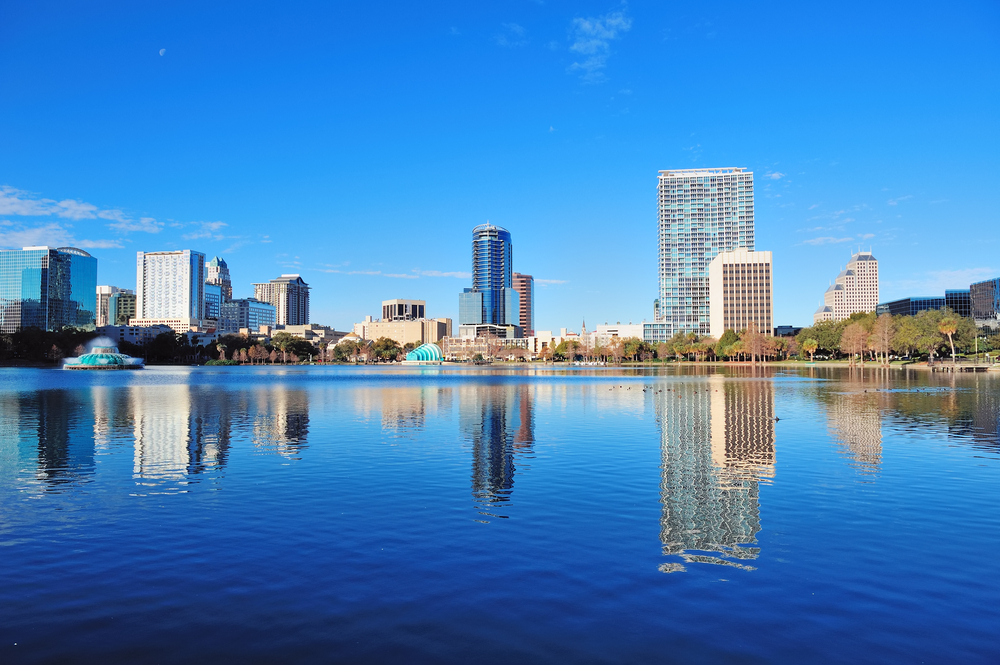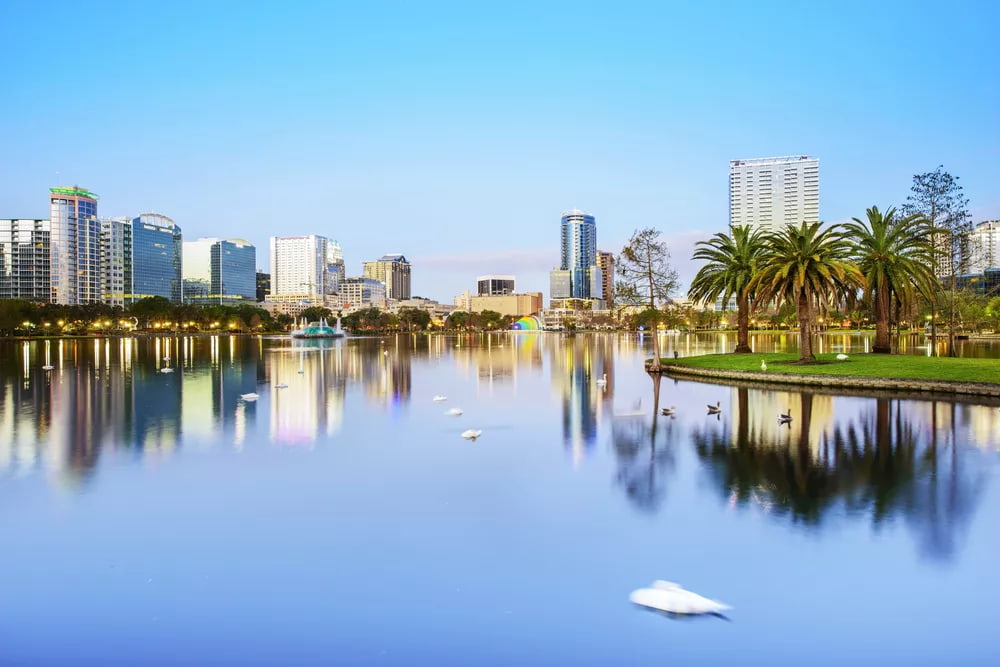

Orlando is a top Florida city for anyone looking for a dynamic, high-growth urban lifestyle. Known as The City Beautiful, this Central Florida hub boasts a diverse economy and a deep-seated cultural heritage, complemented by world-class amenities that residents love—and that extend well beyond the typical tourist areas. However, potential downsides of moving to Orlando include the notorious summer humidity and heavy traffic. Explore the advantages and drawbacks of relocating to Orlando!
Quick Facts About Orlando
| Population | 284,817 |
| Average Home Price | $431,323 |
| Average Monthly Rent | $1,634 |
| Unemployment Rate | 3.6% |
| Average Days of Sunshine | 233 days |
Statistics from AreaVibes, Council for Community and Economic Research (C2ER), & BestPlaces
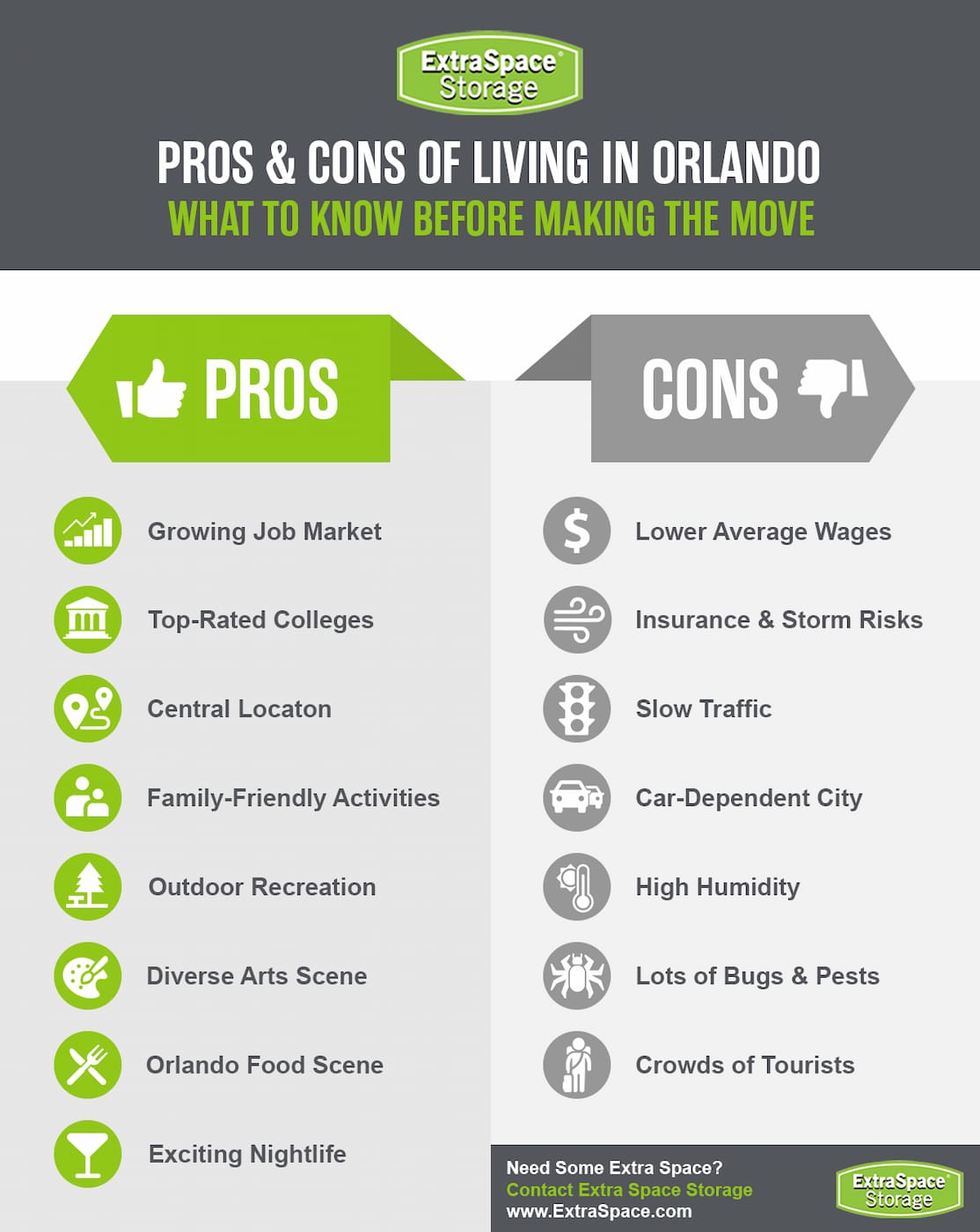
Pros of Living in Orlando
Orlando boasts a thriving arts scene, plenty of family-friendly activities, reliable transportation, and more. Check out these benefits of living in Orlando.
Pro: Growing Job Market
One major perk of moving to Orlando is the abundance of jobs! Orlando has one of the fastest-growing job markets in the U.S. and ranks among the best cities for jobs—making it a great city for young professionals seeking exciting career opportunities. Some of Orlando’s top industries include tourism and hospitality, aviation and aerospace, finance, logistics, manufacturing, technology, and healthcare. The biggest employers in Orlando include:
- Walt Disney World Resort & Universal Orlando in the leisure & tourism sector
- Orlando International Airport & Lockheed Martin in areas like aviation & business administration
- AdventHealth Orlando & Orlando Health Regional Medical Center for healthcare careers
Pro: Top-Rated Orlando Colleges
Ready to pursue a degree? You can find plenty of higher education opportunities at one of the many excellent Orlando universities and colleges. Top options include:
- University of Central Florida for a large public research university with strong programs in business, engineering, & the arts
- Valencia College for an affordable community college with ten area locations offering degrees, career & technical certificates, & continuing education
- AdventHealth University for a private, faith-based university focused on healthcare fields
- Ana G. Mendez University–Orlando for a bilingual campus offering classes in both English & Spanish across a variety of fields
- Concorde Career Institute Orlando for a career-focused school specializing in hands-on training in medical, dental, & pharmaceutical fields
- Polytechnic University of Orlando for a tech-oriented university with programs in computer science, mechanical engineering, & technology management
Pro: Central Location for Easy Florida Travel
Living in Orlando provides a convenient hub for exploring the Sunshine State—including the rare luxury of being just one to two-and-a-half hours from top Florida beaches on both coasts. You can catch the sunrise over the Atlantic at local favorites like Cocoa Beach, Daytona Beach, and New Smyrna Beach, or head west to experience the calm, turquoise waters of Gulf Coast gems like Clearwater Beach and St. Pete Beach.
Pro: Family-Friendly Activities in Orlando
With so many all-ages things to do in Orlando, you may never get to them all! Here are some of the top attractions to visit with the whole family:
- SeaWorld Orlando to see marine life up close & make memories at the accompanying Sesame Street Land
- Walt Disney World Resort for fantastic lands like the Magic Kingdom & EPCOT, full of rides & immersive experiences
- Universal Orlando Resort for themed attractions from iconic film franchises
- Discovery Cove to swim with the dolphins, walk underwater during a SeaVenture, or see otters, rays, sloths, & more
- Crayola Experience Orlando to learn about the science of colors, see how crayons are made, & make creative crafts
- Ripley’s Believe It or Not! for a mirror maze, glow-in-the-dark mini-golf, & a number of unusual artifacts
- Madame Tussauds Orlando for realistic wax sculptures of celebrities, historical figures, & other icons
Pro: Exciting Outdoor Activities in Orlando
While Orlando is famous for its man-made wonders, there’s magic in its natural landscape, too—and the “City Beautiful” nickname is well-earned! The region is dotted with over 100 lakes and world-famous freshwater springs, making it easy to escape city life. Here are some top outdoor destinations in and around Orlando:
- Lake Eola Park for swan boat rentals, a 0.9-mile paved walking loop, & a bustling Sunday Farmers Market
- Bill Frederick Park at Turkey Lake for premier freshwater fishing, disc golf, & sprawling picnic areas
- Tibet-Butler Preserve for peaceful hikes through woods, wetlands, & more on well-maintained trails
- Wekiwa Springs State Park for horseback trail rides or kayaking & canoeing along the Wekiwa River
- Kelly Park / Rock Springs for paddling or tubing in the clear, cool water
- Lake Louisa State Park for glamping, off-road biking, & paddleboarding across three major lakes
- Blue Spring State Park for snorkeling & a chance to see hundreds of manatees during the winter months
Pro: Accessible & Diverse Orlando Arts Scene
With an array of galleries, museums, theaters, and performance spaces, Orlando is a haven for artists and performers of all kinds. Explore popular art spaces like:
- Orlando Museum of Art for traveling exhibitions, permanent collections like Art of the Ancient Americas, & recurring events like Art Night Out
- Dr. Phillips Center for the Performing Arts to see Broadway musicals, performances by Opera Orlando, & comedy shows
- Orlando Shakes for Shakespeare plays, children’s productions, musicals, & more
- Orlando Ballet Company to see both classical & Contemporary ballet performances or sign up for dance classes
- Orlando Philharmonic Orchestra for classical symphonies, film screenings with live orchestra, & the annual Resonate Festival
- Downtown Arts District Orlando to check out various galleries, performance venues, & art programs
Pro: The Orlando Food Scene
Orlando is considered a wonderful city for foodies, offering everything from famous bakery treats to upscale resort dining. These are some of the best places to eat in Orlando:
- Se7en Bites for nostalgic Southern comfort food
- Kabooki Sushi for inventive Japanese fare
- King Bao for creative takes on steamed buns
- Bombay Street Kitchen for authentic Indian street food favorites
- Reyes Mezcaleria for elevated Mexican cuisine
- Four Flamingos for a tropical fine-dining experience inside the Hyatt Regency Grand Cypress Resort
- Black Rooster Taqueria for modern “farm-to-taco” creations & some of the best handmade guacamole in the city
Pro: Exciting Nightlife Options in Orlando
With an array of bars, live music, clubs, and more, there are many places to go out in Orlando when night falls:
- Disney Springs for a mix of international flavors & eclectic entertainment—including live music at The Edison, world-class pours at Wine Bar George, & Celtic dancing at Raglan Road Irish Pub
- ICON Park for a bird’s-eye view of the city on The Orlando Eye or live music & drinks at Blake Shelton’s Ole Red
- Pointe Orlando for everything from authentic Mediterranean music at Taverna Opa to indoor golf at The Greens
- Aero Rooftop Bar & Lounge for a high-energy nightlife scene featuring private cabanas, open-air dancing, & signature events like Lazy Sundays
- Hanson’s Shoe Repair for exclusive craft cocktails & a secretive speakeasy vibe (password required)
- SAK Comedy Lab for improv & comedy shows or professional improv classes
Get Everything You Need For An Easier Move to Orlando
- Free & Cheap Moving Boxes in Orlando
- Cost of Living in Orlando
- Local Movers in Orlando
- Cost of Professional Movers in Orlando
Cons of Living in Orlando
Potential drawbacks of living in Orlando include busy traffic, weather risks like hurricanes, and the annual influx of tourists. Consider these downsides of living in Orlando before moving.
Con: Lower Average Wages in Orlando
Unfortunately, wages in Orlando fall below the national average, with residents continuing to earn less than those in most large U.S. metros despite the state’s recent minimum wage increase. However, Florida has no state income tax and ranks in the top ten for state tax competitiveness. Add in a cost of living that’s 4.5% below the national average, and Orlando is considerably more accessible than many other major Florida cities—for example, Miami‘s cost of living is 21% higher than the U.S. average. Plus, the strong job market in Orlando helps the city maintain its status as an appealing place to grow your career.
Con: High Insurance Costs & Weather Risks
Florida’s homeowners’ insurance rates are among the highest in the nation, largely driven by the risk of tropical storms. While inland areas like Orlando may avoid storm surge, they remain vulnerable to high winds and moderate flood risks—and it’s worth noting that wind and flood coverage are typically sold as separate policies. The Atlantic hurricane season runs from June through November, peaking in August and September. You can stay prepared by:
- Installing impact-resistant windows or hurricane shutters, which can often qualify you for insurance discounts
- Reviewing state & local hurricane preparedness resources to establish evacuation routes & emergency kits
- Checking your policy limits each spring to ensure coverage keeps pace with current construction costs
Con: Traffic in Orlando Is Slow
Traffic conditions are a common complaint of Orlando residents. Two Orlando corridors have ranked among the worst in the nation, with commuters spending an average of 70 more hours per year in traffic compared with a non-delayed commuter. That said, how much traffic affects your daily life depends largely on where you live—suburban residents may face less traffic but also less walkability, while those in centrally-located neighborhoods like South Eola or the Orlando Central Business District often have more options for getting around.
Con: Orlando Is a Car-Dependent City
Getting around Orlando without a car can be tricky—walkability is limited outside of downtown due to urban sprawl, and public transportation options are hampered by limited service hours, reduced weekend routes, and sparse connectivity to major tourist hubs. However, the city is working to expand its public transit systems, and there are still several options available for those who need them:
- LYNX for 68 bus routes throughout Orlando & its neighboring counties
- LYMMO‘s orange, lime, or grapefruit lines for getting around Downtown Orlando
- Orlando Bike & Scooter Share programs for exploring in an environmentally-friendly way via city streets & local bike trails
- SunRail for a 61-mile commuter rail line connecting 17 stations between DeLand & Poinciana
- Brightline for connecting to major Florida cities like Boca Raton, Fort Lauderdale, & Miami via the only privately owned passenger railroad in the U.S.
Con: Orlando’s High Humidity
Those not fond of heat and humidity may find living in Orlando uncomfortable. This Florida city experiences long, hot summers with an average high of 90 degrees in July and humidity peaking at 79% in August. That said, Orlando still manages to rank among the best cities in the U.S. for year-round weather, and it’s easy to see why—residents enjoy about 233 sunny days per year, while the national average is 205. Many Americans and Canadians agree that the climate is a draw, making Orlando a popular destination for snowbirds escaping cold northern winters. In fact, Orlando winters are often the envy of the country, with average highs of 73 degrees and minimal rain!
Con: Lots of Bugs in Orlando
Insects are common in Florida due to the state’s warm, humid climate—and Orlando is no exception. Urban areas also tend to be hotter and have more garbage than rural areas, which can attract more pests. The most prevalent bugs in Orlando are love bugs, palmetto bugs, chiggers, and mosquitoes. Besides being annoying, pests can carry diseases, so you need to be aware of what to do about them. Preventing pests in your home includes sealing any holes or cracks, storing food in tightly sealed containers, and keeping all areas of your home dry. When engaging in outdoor activities in Orlando, use EPA-registered insect repellents to avoid bug bites. Though Orlando residents deal with more pests than some, the city isn’t among the top ten worst cities for pests in the U.S.
Con: Crowds of Tourists
As the most-visited city in the U.S.—and with over a dozen different theme parks and Orlando International Airport—Orlando sometimes receives more than 70 million tourists per year. This contributes to Orlando’s traffic issues, so you’ll want to avoid areas with tourist-heavy parks during opening and closing times. That said, Orlando tourism is a major contributor to the city’s economy, generating billions annually and creating thousands of jobs for Orlandoans. You can also benefit from special discounts for Floridians at Orlando tourist destinations, including Walt Disney World and Universal Studios! If you want to avoid most tourists altogether, there are a slew of wonderful things to do that draw mainly locals, like experimenting with science firsthand at the Orlando Science Center and paddling in swan boats at Lake Eola Park.
Should You Move to Orlando?
You should move to Orlando if you’re craving a vibrant, sun-drenched city with world-class entertainment, a diverse economy, and a strong job market. Orlando is often a great fit for young professionals, families, and retirees alike—thanks to its abundance of activities, highly-rated schools and suburbs, and year-round sunshine. Before making the move, consider your budget, ideal lifestyle, transportation needs, and weather preferences.
Orlando may be the right fit for you if…
- You work in hospitality, aviation and aerospace, or medical research.
- You prefer warm weather year-round.
- You want a city with no state income tax.
- You crave a multicultural food and arts scene.
- You enjoy an active lifestyle with access to lakes, springs, and nature preserves.
You may want to consider moving to another city if…
- You have a low tolerance for heat and humidity.
- You want to avoid heavy traffic and tourism.
- You are looking for a walkable urban landscape.
- You prefer a more rooted, tight-knit community.
- You want a transit-friendly city where a car isn’t necessary.
Orlando Compared to Nearby Cities
Deciding where to plant roots often comes down to a few key lifestyle and budget trade-offs. If you’re wondering if Orlando is better than Tampa, Jacksonville, or Miami, comparing them side-by-side is a great way to see how your daily life might change. While Orlando serves as the state’s central hub for entertainment, Miami offers an international energy, while Jacksonville has an expansive, value-driven suburban sprawl, and Tampa has a balanced waterfront lifestyle.
| Factor | Orlando, FL | Tampa, FL | Jacksonville, FL | Miami, FL |
| Average Monthly Rent | $1,634 | $1,761 | $1,690 | $3,299 |
| Average Home Price | $431,323 | $451,609 | $384,019 | $710,492 |
| Average Commute Time | 25 minutes | 24 minutes | 25 minutes | 28 minutes |
| Walk Score | 41/100 | 50/100 | 26/100 | 77/100 |
| Unemployment Rate | 3.6% | 3.8% | 3.5% | 3.6% |
| Major Industries | Tourism & hospitality, aviation & aerospace, technology, healthcare | Finance, technology, defense, healthcare, logistics | Transportation, finance, healthcare services, aviation & aerospace | International trade, tourism, finance, healthcare, technology |
Statistics from Council for Community and Economic Research (C2ER), BestPlaces, Walk Score, & AreaVibes
Frequently Asked Questions About Orlando
What is a livable salary in Orlando, Florida?
A single adult with no dependents needs to make about $52,300 a year before taxes to live comfortably in Orlando. For a family of four or more, the range is around $86,700 to $112,400 annually.
Is Orlando safer than Miami?
Orlando is generally considered safer than Miami. Its inland location shields it from the dangerous flooding and storm surges Miami faces during hurricane season, and while Orlando does experience petty theft, it tends to be concentrated in tourist areas rather than residential neighborhoods. Those looking for safe, affordable neighborhoods can choose from options like Baldwin Park, Delany Park, and Ventura.
How often does Orlando get hurricanes?
While Orlando is inland and avoids the direct storm surge that hits coastal cities like Miami or Tampa, it can still experience high winds, heavy rainfall, and flooding when hurricanes make landfall elsewhere. Florida averages about one hurricane landfall per year, so these indirect impacts are not uncommon. Fortunately, the city proactively helps residents prepare for hurricane season.
How far is Orlando from Tampa?
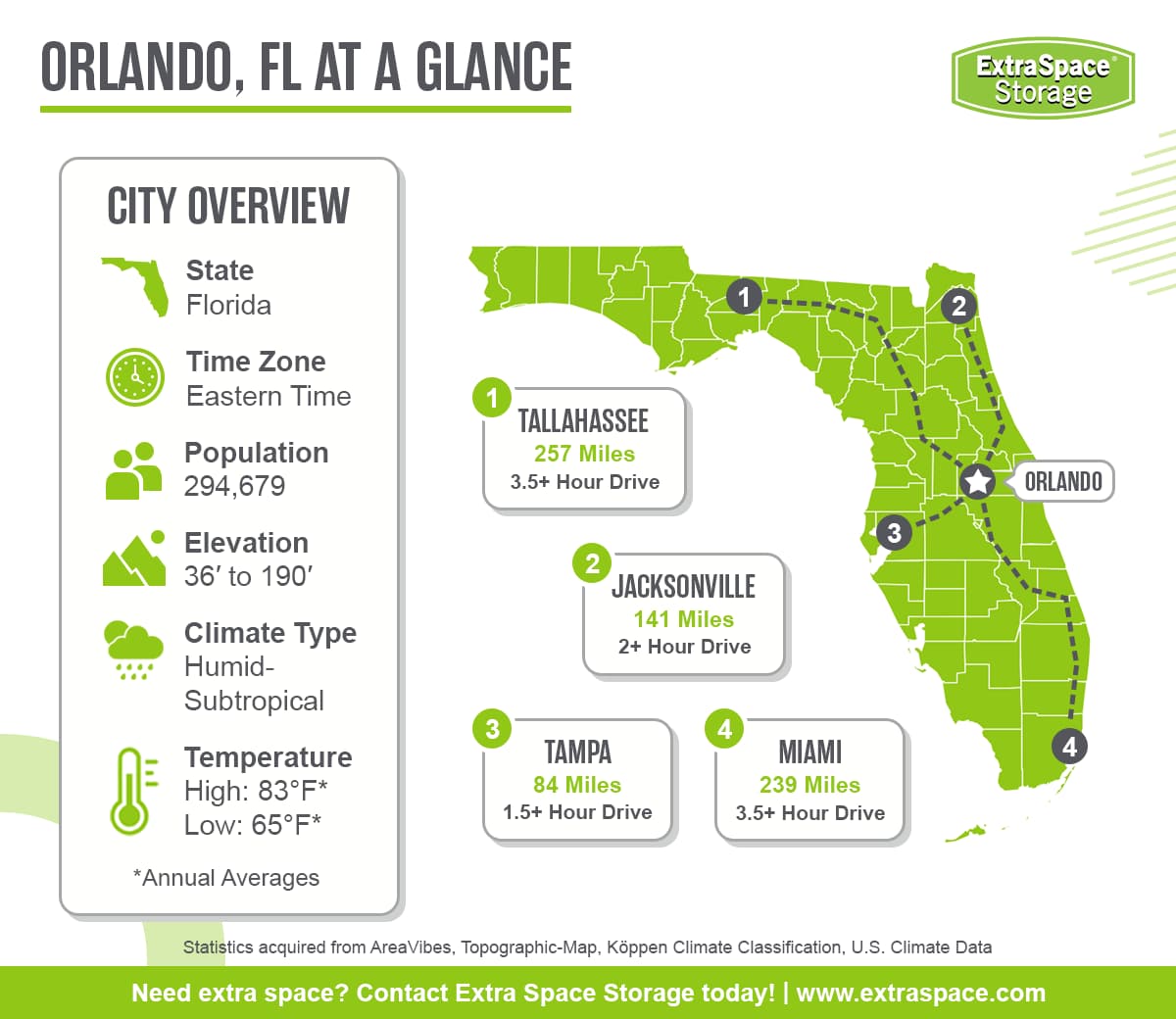
The drive from Orlando to Tampa is roughly 90 miles—which typically takes just under two hours by car or FlixBus, and just over two hours by Amtrak train. This quick trip makes it easy to visit attractions like the Busch Gardens Tampa Bay or see a Tampa Bay Buccaneers game at Raymond James Stadium.
Is Orlando a nice place to live?
Orlando is widely considered a great place to live, offering a dynamic blend of entertainment, cultural diversity, and economic opportunity. The city boasts a strong job market, year-round sunshine, and a cost of living that’s more affordable than many other major Florida cities—making it a popular choice for families, young professionals, and retirees alike.
***
Thinking about relocating to Orlando? Extra Space Storage offers reliable self storage options to help with your move. Find self storage in Orlando today!