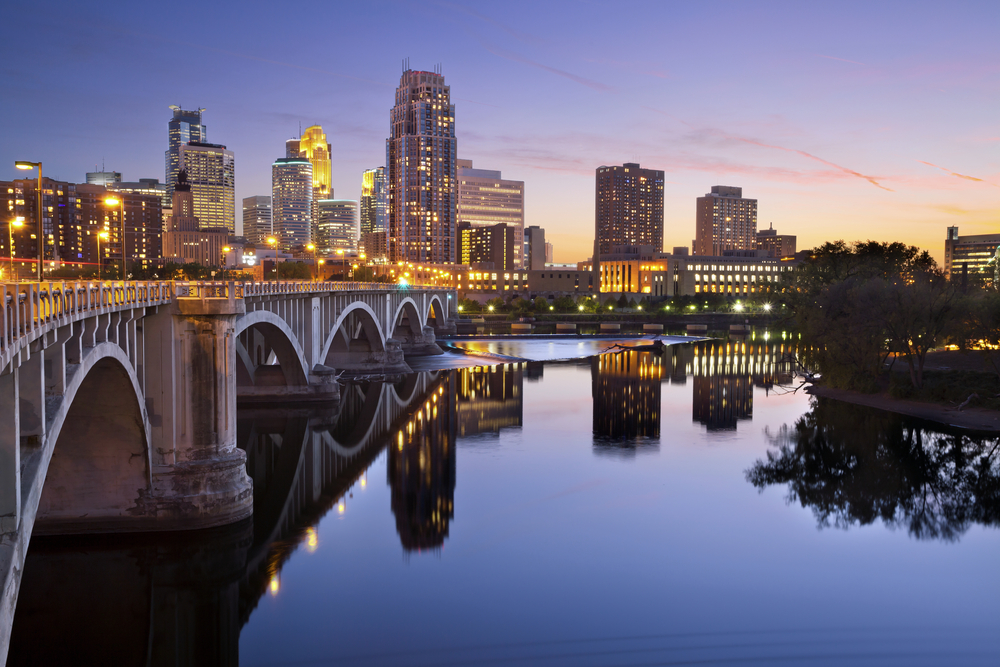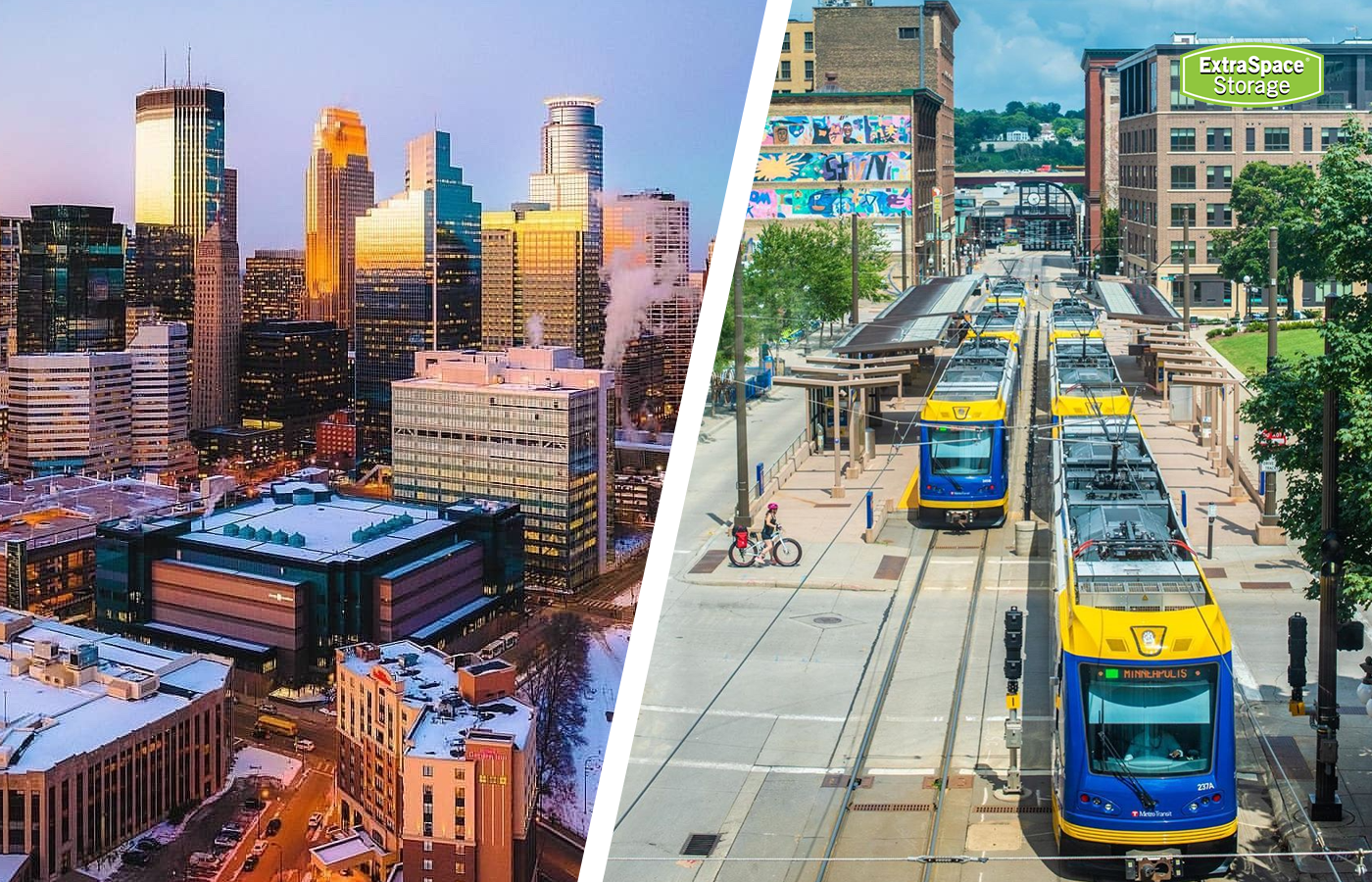

Minneapolis is a good place to live! Residents like and even praise its beautiful outdoor attractions, strong economy, and quality of life—but common complaints include its long, cold winters and high taxes. Whether you’re a young professional relocating for work or education, a family planting roots, or just looking for a lifestyle change, here are the top 15 pros and cons of living in Minneapolis!
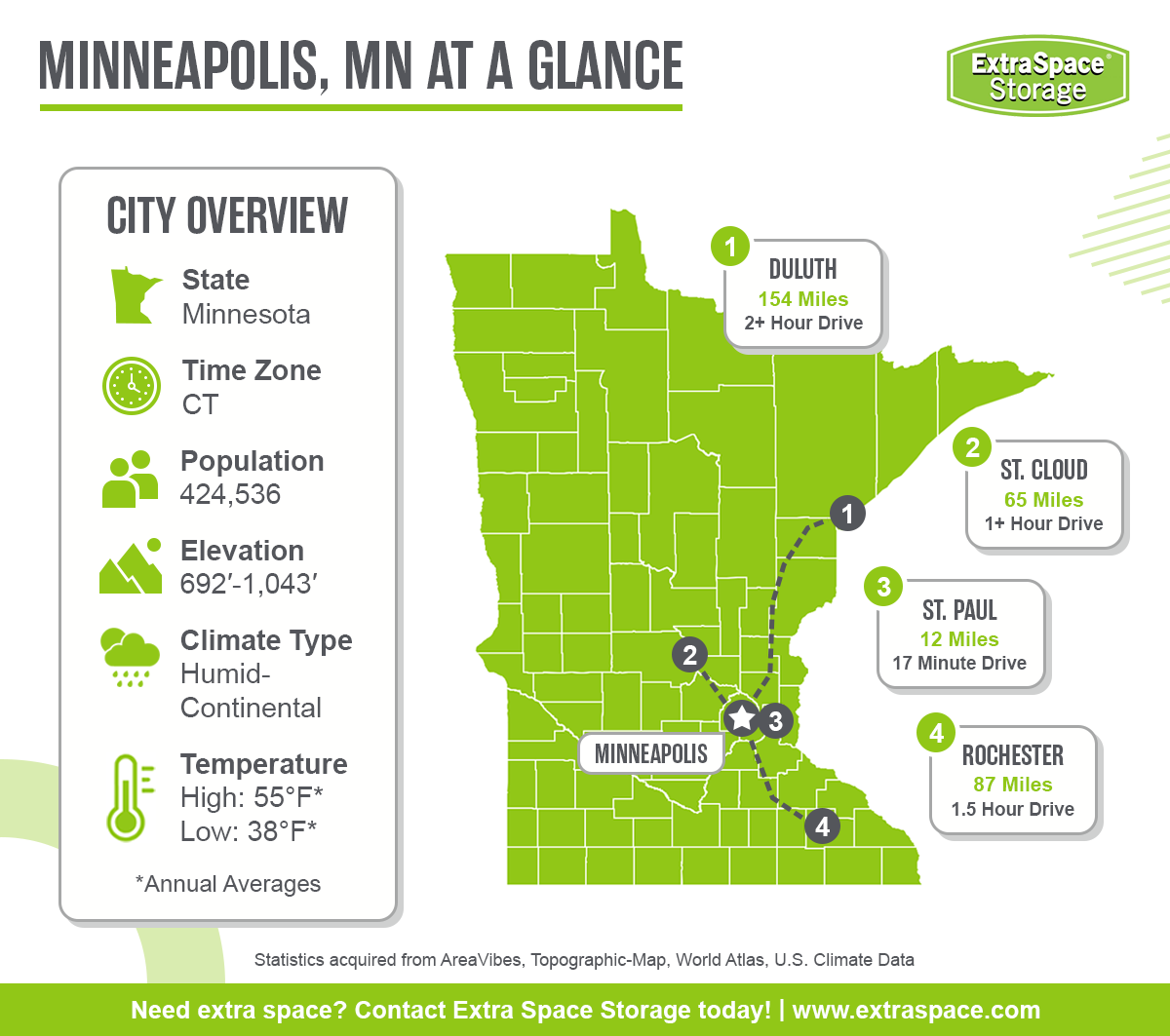
Quick Facts About Minneapolis
| Population | 424,536 |
| Average Home Price | $404,910 |
| Average Monthly Rent | $1,426 |
| Unemployment Rate | 3.9% |
| Commute Time | 23 minutes |
Statistics from Council for Community and Economic Research (C2ER), AreaVibes, & BestPlaces
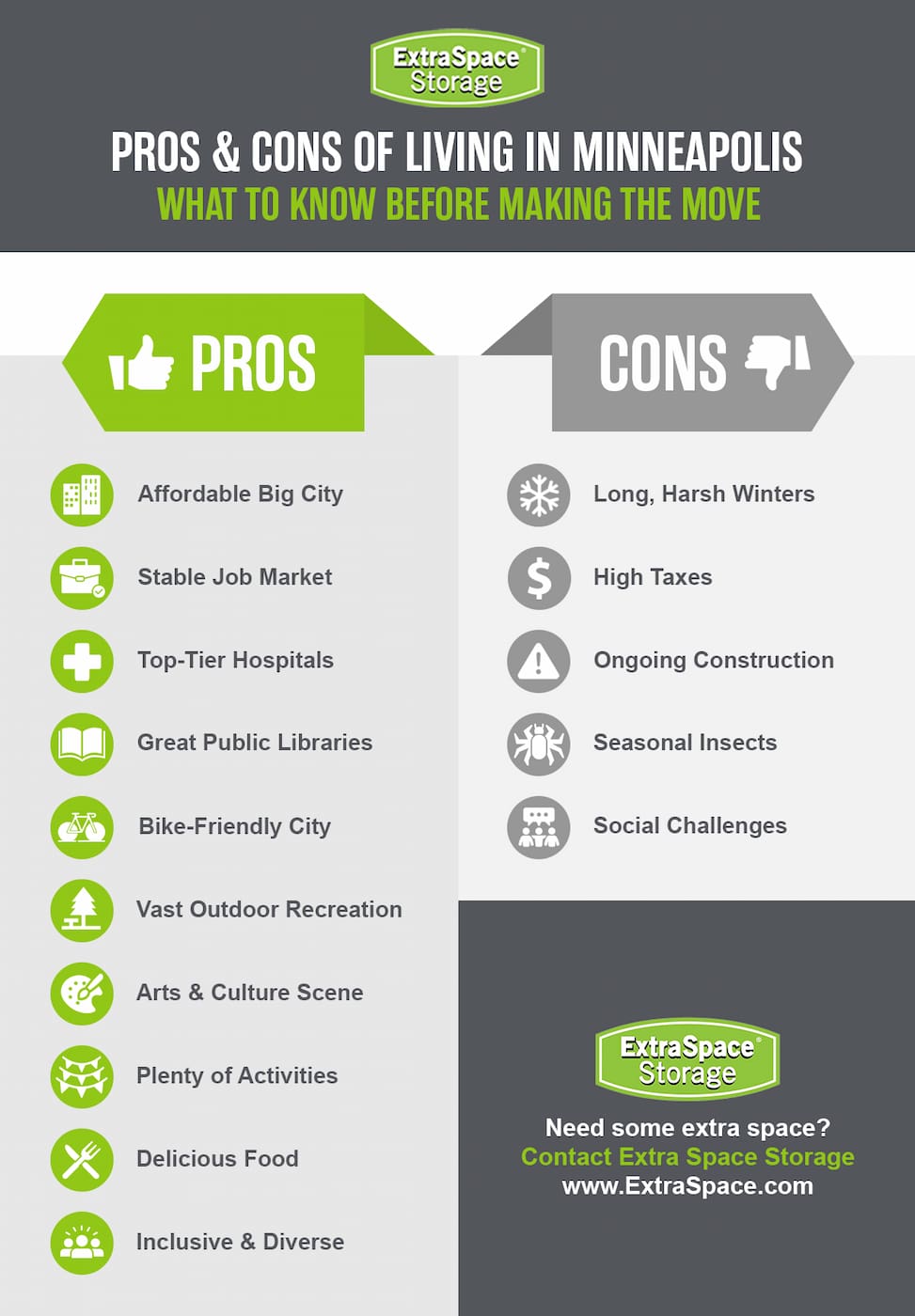
Pros of Living in Minneapolis
There are many benefits of living in Minneapolis, from career opportunities to gorgeous green spaces and more. Use the guide below to learn why people are moving to Minneapolis!
Pro: An Affordable Big City
One of the key reasons to live in Minneapolis is that it provides big-city amenities without the high costs you might find in other large metros. The overall cost of living in Minneapolis is nearly 7% lower than the U.S. average, with housing costs about 18% lower—making the city much more affordable when compared to metros like Chicago. In addition, the city offers economic appeal in its higher-than-average median household income, so residents generally have more purchasing power in their daily lives.
Pro: Stable & Diverse Minneapolis Job Market
With the Minneapolis unemployment rate being around 3.9%, the Mini Apple still offers plenty of job opportunities in Minnesota. The city’s economy is anchored by major industries like healthcare, manufacturing, finance, construction, and education. Impressively, Minneapolis is the city with the most Fortune 500 companies per capita in the U.S., with big names like Target, U.S. Bancorp, General Mills, and Xcel Energy Inc. serving as major employers for residents. Young professionals are also drawn to career opportunities at key institutions like University of Minnesota Twin Cities, which employs over 27,000 people.
Pro: Access to Top-Tier Minneapolis Hospitals
Given that Minnesota as a whole ranks among the top states for healthcare quality, it makes sense that Minneapolis is regarded as a healthcare hub, with multiple high-quality hospitals serving the area. The city is home to major institutions like Alina Health Abbott Northwestern Hospital, Park Nicollet Specialty Center at Methodist Hospital, and M Health Fairview – University of Minnesota Medical Center. Minneapolis also benefits from its proximity to the Mayo Clinic in nearby Rochester, one of the top-ranked hospitals in the world!
Pro: Exceptional Public Libraries & Community Resources
The City of Lakes stands out for its investment in public resources like libraries. The Hennepin County Library system ranks among the largest and most-used library systems in the country. More than just places to check out books, Minneapolis libraries serve as community hubs with strong local support—within the past couple years, voters approved $76 million in funding for libraries. Beyond book lending, Hennepin County Library branches offer a variety of services and programming, including:
- Free co-working spaces & reservable meeting rooms
- Job search assistance, resume workshops, & career resources
- Language learning tools, children’s programming, & cultural events
- Tool & seed libraries at some branches
- Game nights & clubs
Pro: Minneapolis Is a Bike-Friendly City
Minneapolis ranks among the most bike-friendly cities in the world, with 36+ miles of curb-protected bikeways, 89 miles of trails, and 140 miles of painted bike lanes. The high bike score of Minneapolis allows enthusiasts and commuters to run errands with relative ease, especially near the heart of the city. Whether you’re pedaling to work or exploring the area’s greenways on weekends, Minneapolis’ bike infrastructure makes traveling without a car and staying active that much easier.
Pro: Endless Minneapolis Parks, Lakes & Outdoor Rec
Often cited as one of the greenest cities in the U.S., Minneapolis is packed with lakes, trails, and parkland that provide a wide variety of outdoor activities. The Minneapolis park system manages over 180 parks—distributed so that residents are always within six blocks of a park—and it ranks among the best in the country. Here are some outdoor activities in Minneapolis you can enjoy:
- Taking a stroll or enjoying a picnic at Boom Island Park or Mill Ruins Park.
- Wandering among butterflies and hummingbirds at Lyndale Park Gardens.
- Riding along the scenic Midtown Greenway Regional Trail.
- Fishing or kayaking at Minneapolis lakes, including Bde Maka Ska, Lake of the Isles, and Lake Nokomis.
- Hiking the trails and admiring the 53-foot waterfall at Minnehaha Park.
Pro: Thriving Minneapolis Arts & Culture Scene
Minneapolis has one of the nation’s most arts-vibrant communities in the Midwest, supporting a creative scene that appeals to a wide range of interests with museums, theaters, public art, and annual festivals. These are some of the highlights of the Minneapolis art scene to experience:
- Minneapolis Institute of Art for more than 100,000 works spanning 5,000 years of history
- Walker Art Center & Minneapolis Sculpture Garden for Contemporary exhibitions & iconic outdoor installations
- Guthrie Theater for live theatrical performances of classics & new works
- Northeast Minneapolis Arts District for galleries, murals, studios, & public art
- Minnesota Fringe Festival, Loring Park Art Festival, & the Minneapolis St. Paul International Film Festival (MSPIFF) for annual arts events & entertainment
Pro: Plenty of Things to Do in Minneapolis
Minneapolis offers a wide variety of entertainment options for residents, from major attractions and pro sports to family-friendly destinations and local shopping. It’s also easy to take a quick day trip to St. Paul to explore even more historic neighborhoods, museums, restaurants, and entertainment districts. Check out some of these popular things to do in Minneapolis:
- Nicollet Mall for shopping, dining, & events
- Mall of America for hundreds of stores, restaurants, & attractions like the aquarium & indoor theme park
- Minnesota Vikings (NFL), Minnesota Timberwolves (NBA), Minnesota Lynx (WNBA), & Minnesota Twins (MLB) for professional sports in Minneapolis
- Minnesota Zoo for hundreds of animals & seasonal events
- Minnesota Children’s Museum for hands-on exhibits & play spaces
- Minneapolis Farmers Market for fresh, locally grown produce
Pro: Delicious Food in Minneapolis
On the hunt for great places to eat in Minneapolis? You’ll have your pick of fantastic options in this Twin City’s restaurant scene, from upscale establishments and standout international cuisine to cozy neighborhood favorites. Whether you’re looking for a special night out or just grabbing a quick bite, here are some Minneapolis restaurants you’ll want to try.
- Hen House Eatery for a hearty brunch in Downtown Minneapolis
- Owamni for authentic Indigenous cuisine
- Quang Restaurant for flavorful Vietnamese dishes
- Spoon and Stable for a refined dinner made with seasonal, locally-sourced ingredients
- Nicollet Diner for 24-hour, late-night comfort food
- Patisserie 46 when it’s time for something sweet
Pro: Diverse, LGBTQ-Friendly City
Minneapolis has a long history of supporting LGBTQ residents through activism, community resources, events, and inclusive local polices—making it one of the best cities for LGBTQ people in the Midwest. In fact, Minnesota as a whole is ranked among the safest states for LGBTQ people in the country! From attending lively Pride celebrations to supporting LGBTQ-owned businesses and nightlife, the city offers an environment where people of all identities can commingle. Highlights from the Minneapolis LGBTQ community include:
- Twin Cities Pride Festival for annual celebrations of love, identity, & community
- Loring Park, Uptown, & Northeast Minneapolis for LGBTQ-friendly neighborhoods
- Our Space MN for community engagement, centering marginalized voices, & advocacy projects
- The Saloon, The Gay 90s, & A Bar of Their Own for LGBTQ nightlife in Minneapolis
- Stonewall Sports – Twin Cities for LGBTQ-oriented adult sports leagues
Get Everything You Need For An Easier Move to Minneapolis
Cons of Living in Minneapolis
Disadvantages of living in Minneapolis include the winter cold, summer bugs, and high taxes. Consider these cons of moving to Minneapolis before making your decision.
Con: Long, Harsh Minneapolis Winters
Minneapolis winters can get very cold, with average January highs of 21 degrees and lows of 0 degrees. The metro area receives around 52 inches of snow each year on average—compared to the U.S. average of 28 inches—and winter conditions often last from November to March, shortening daylight hours and increasing heating costs. The city is well-equipped to handle snow removal, but extreme cold can affect commuting and outdoor recreation.
However, residents are resilient, and there are plenty of winter activities in Minneapolis like ice skating, snowshoeing, and playing pond hockey. The city also hosts winter events like The Great Northern Festival, an annual winter celebration featuring outdoor activities, art, food, and more—turning the coldest months into something locals can look forward to.
Con: High Taxes in Minneapolis
One of the biggest drawbacks of life in Minneapolis is that Minnesota is one of the states with the highest tax burdens. Residents face above-average income taxes, high property taxes, and elevated meal taxes, which reduces take-home pay and makes certain expenses more costly. While housing costs are competitive, taxes in Minneapolis are often among the biggest surprises for new residents.
It’s important to note, however, that the cost of living in Minneapolis is still quite affordable compared to larger coastal markets like New York City and San Francisco, and high taxes uphold its strong public services—like public transit, schools, hospitals, and parks—all of which contribute to Minneapolis’ rank as one of the happiest cities in the world.
Con: Ongoing Infrastructure & Road Construction
Minneapolis manages extensive infrastructure maintenance, especially due to the freeze-thaw cycles that contribute to road and bridge wear. Residents commonly encounter seasonal lane closures, detours, and long-term construction projects that can impact commute times. Minneapolis is like many other older cities in this way—the age of a city and its seasonal climate naturally impact how often maintenance is necessary.
However, as construction makes up one in 20 jobs in Minnesota, this cycle helps power the economy. The City of Lakes also has a robust transit system, with METRO operating numerous bus routes and light rails like the METRO Blue Line and Green Line, with the Northstar commuter rail connecting northern suburbs to Downtown Minneapolis.
Con: Heavy Mosquito & Seasonal Insect Activity
The abundance of lakes, wetlands, and riverfront green spaces in Minneapolis contribute to seasonal influxes of mosquitoes and other pests—typically starting around March and beginning to fade around August. The prevalence of insects and pests can limit evening outdoor activities and require the routine use of repellents and protective clothing. Fortunately, Minneapolis residents can rely on robust mosquito control programs from the Metropolitan Mosquito Control District, which engages in a variety of tactics to limit the breeding of mosquitoes, ticks, biting gnats, and other pests.
Con: Making Friends in Minneapolis Can Be Challenging
Many newcomers to Minneapolis hear about “Minnesota Nice,” which refers to a tendency by residents to be polite yet guarded—which is sometimes read as passive-aggressive. Long-established friend groups formed at school, through family, or from community ties can sometimes feel closed to new arrivals, making it harder to break into social circles at first. That said, many newcomers eventually find that Minneapolis rewards their efforts to make friends. There are plenty of ways to meet people in Minneapolis, like:
- Attending Break the Bubble meetup events
- Going to live music venues like First Avenue & 7th Street Entry & The Armory
- Joining Minneapolis cycling clubs like the Bone Saw Cycling Collective
- Exploring & bar-hopping during Twin Cities First Friday events
Should You Move to Minneapolis?
You should move to Minneapolis if you value strong career opportunities, a vibrant cultural scene, and a low cost of living compared to other major cities. Before deciding whether living in the City of Lakes is right for you, remember to weigh your lifestyle preferences, career goals, climate tolerance, and budget—especially given the city’s long winters and high tax environment. Use the factors below to help make your decision about whether you should move to Minneapolis.
Minneapolis may be the right fit for you if…
- You want access to abundant jobs in healthcare, tech, finance, or construction.
- You enjoy outdoor activities like biking, kayaking, running, or winter sports.
- You prefer a big-city feel without the cost of coastal metros.
- You value arts, culture, and diverse dining options.
- You’re comfortable in a four-season climate.
You may want to consider moving to another city if…
- You dislike cold weather or long winters.
- You’re looking for a low-tax environment.
- You have a strong aversion to seasonal bugs.
- You want a social environment that is immediately open to newcomers.
- You prefer a fast-paced, highly competitive job environment.
Minneapolis Compared to Nearby Cities
If you’re wondering whether Minneapolis is right for you, it helps to compare it with nearby alternatives. Many people weigh Minneapolis vs. St. Paul, since the Twin Cities offer distinct personalities, while others consider larger metro areas like Milwaukee or Chicago.
| Factor | Minneapolis, MN | St. Paul, MN | Milwaukee, WI | Chicago, IL |
| Average Monthly Rent | $1,426 | $1,416 | $1,650 | $3,230 |
| Average Home Price | $404,910 | $403,747 | $578,988 | $588,157 |
| Average Commute Time | 23 minutes | 24 minutes | 22 minutes | 35 minutes |
| Walk Score | 71/100 | 60/100 | 62/100 | 77/100 |
| Unemployment Rate | 3.9% | 3.5% | 4.1% | 5.4% |
| Major Industries | Healthcare, manufacturing, finance, construction | Public administration, education, finance, healthcare | Manufacturing, energy, finance, medical technology | Healthcare, technology, manufacturing, finance |
Statistics from Council for Community and Economic Research (C2ER), BestPlaces, Walk Score, & AreaVibes
Frequently Asked Questions About Moving to Minneapolis
Is Minneapolis expensive to live in?
Compared to many major U.S. cities, Minneapolis is not expensive to live in—though Minnesota does have above-average income taxes, property taxes, and meal taxes. However, living in Minneapolis is still considered affordable, with key expenses like healthcare and utilities remaining reasonable.
Is Minneapolis safe?
The safety of Minneapolis varies by the neighborhood. Like most large cities, Minneapolis has areas with higher crime rates as well as safe neighborhoods—including Hale, Linden Hills, and Lowry Hill.
Is Minneapolis cold?
Minneapolis winters are known for being cold and snowy. Winter temperatures in Minneapolis can often drop to below zero, with January typically being the coldest month. Snowfall averages around 52 inches each year. Many residents embrace the colder months with winter activities like skating, snowshoeing, cross-country skiing, and more.
What is the distance from Minneapolis to Chicago?
The distance from Minneapolis to Chicago is approximately 400 miles—nearly a six-hour drive depending on traffic conditions, or a seven and a half to 11-hour ride by train or bus. Direct flights typically take about an hour and a half. The relatively easy access makes Chicago a popular destination for Minneapolis residents looking for a weekend getaway.
Is Minneapolis a nice place to live?
Minneapolis is considered a nice place to live! Minneapolis offers a high quality of life at a relatively affordable cost, along with beautiful outdoor spaces, a strong job market, and a friendly culture. The city also features excellent restaurants, arts venues, and museums.
***
Moving to Minneapolis? With thousands of self storage facilities around the country, Extra Space Storage has the solutions to help make your transition easier. Find self storage near you!