Chicago is one of the best big cities to live in. While residents flock to the Windy City for top job opportunities, diverse culture, and fun things to do for people of all ages, some dislike Chicago’s traffic and bitter winters. Before moving, check out these pros and cons of living in Chicago!
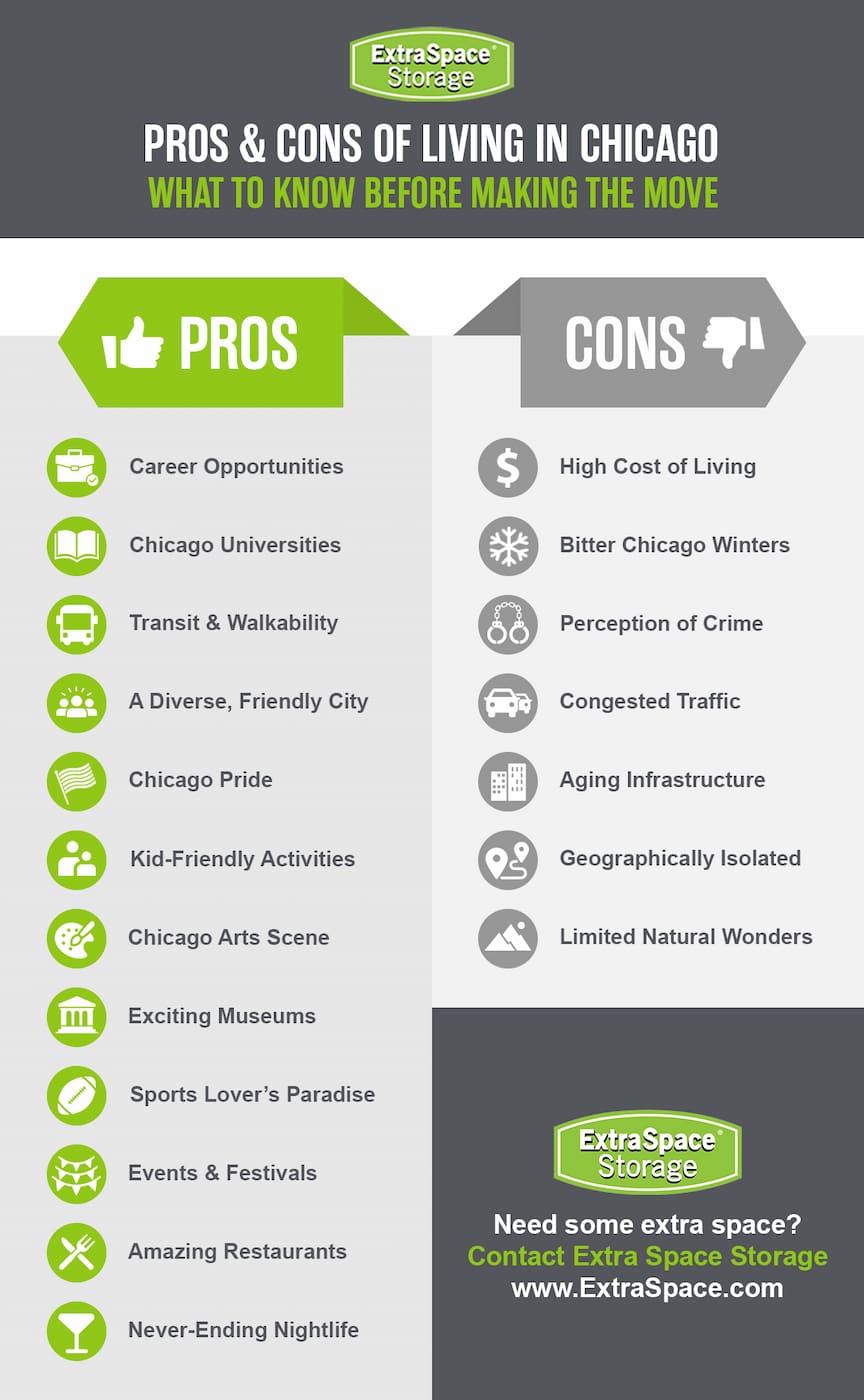
Quick Facts About Chicago
| Population | 2,699,347 |
| Average Home Price | $588,157 |
| Average Monthly Rent | $3,230 |
| Transit Score | 65 |
| Median Household Income | $62,097 |
Statistics from AreaVibes, Council for Community and Economic Research (C2ER), & WalkScore
Pros of Living in Chicago
There are multiple benefits of living in Chicago, such as having access to interesting museums, great transportation options, and buzzing nightlife. Read these pros of Chicago living.
Pro: Plenty of Top Jobs in Chicago
With over 2.5 million residents, Chicago is the third-biggest city in the U.S., with numerous businesses and career opportunities in the city center and beyond. The top industries include healthcare, science, technology, manufacturing, and transportation, but you can find a career in every industry in the Chicago area.
Chicago is also home to the second-largest number of Fortune 500 company headquarters in America, including Exelon, AbbVie, United Airlines, and Archer Daniels Midland (ADM). Some of the best places to work in Chicago include RSM US LLP, Hyatt Hotels Corporation, BDO USA, and Encore. Additionally, Chicago is known for being a great city for entrepreneurs with all kinds of startups and small businesses, so it’s the perfect place to start your own business!
Pro: Fantastic Chicago Universities
As one of the best cities for education in the U.S., Chicago has a variety of colleges to suit your interests, including:
- University of Illinois Chicago, the largest university in Chicago, with majors like business administration & biological sciences
- The University of Chicago, one of the best universities in the U.S., where you can study social sciences, mathematics, & more
- DePaul University, a highly-rated private, Catholic university in Chicago
- Illinois Institute of Technology to enroll in classes for engineering, computer science, or architecture
- Loyola University Chicago to earn a degree in marketing, anthropology, or psychology
- Roosevelt University, a national leader in developing socially conscious students
Pro: Chicago Public Transportation & Walkability
With all the various transportation options, traveling in and out of Chi-town is a breeze. Due to its centralized location and diverse population, Chicago is a major travel hub—offering not only great walkability and bikeability, but also excellent public transit. Many residents take advantage of the Chicago Transit Authority (CTA)—the second-largest public transportation system in the country—by purchasing a monthly pass for the bus and train (aka “the L”). Here are some great ways to get around Chicago:
- Metra Rail, an accessible train system with 11 lines to Chicago suburbs & nearby cities
- Pace bus system, which also offers ADA Paratransit services
- Chicago Water Taxis & Shoreline Water Taxis for transportation & sightseeing on the Chicago River
- Divvy Bikes to rent a scooter, classic bicycle, or ebike
- O’Hare International Airport & Chicago Midway International Airport—two huge airports serving Chicago that allow for further travel
Pro: A Diverse, Friendly City
Proof of Chicago’s diversity is everywhere within its more than 200 neighborhoods! In fact, Chicago is the most immigrant-friendly city in the U.S. for many reasons, including government leadership, inclusivity, legal support, and job opportunities. There are also various resources for immigrants and refugees—like Centro Romero and the National Immigrant Justice Center—which assist with transitions to American life. Additionally, this populous city is home to people of diverse religions, orientations, backgrounds, and walks of life, and that’s reflected in Chicagoans’ attitudes. Generally, the people are welcoming, inclusive, and proud of their diversified metropolis.
Pro: Chicago Has Pride
Speaking of inclusivity—Chicago is one of the top ten most LGBTQ+ friendly cities in the country. In 1997, Northalsted—also called Boystown Chicago—became the first official gay neighborhood in the nation! If you need community resources while in the Chicago area, the Brave Space Alliance, Center on Halsted, Equality Illinois, and more are happy to help. There are also a slew of fun Chicago LGBTQ+ things to do, like:
- Northalsted Market Days, ranked among Thrillist’s Can’t-Miss Queer Events—with live music on four stages, over 250 vendors, & dance exhibitions
- Chicago Pride Parade, complete with floats, bands, & colorful vehicles—and other events of Chicago Pride Month, like Chicago Pride Fest
- Kit Kat Club for diva-filled weekend brunches & nightly drag shows in Chicago
- Big Chicks & Nobody’s Darling, some of the best Chicago gay bars for drinks, music, & more
Pro: Family-Friendly Activities in Chicago
If you’re looking for kid-friendly things to do in Chicago, you won’t be disappointed! Here are some local favorite spots:
- Millennium Park to snap a photo with The Bean (aka Cloud Gate), splash around in Crown Fountain, & walk through the beautiful Lurie Garden
- Maggie Daley Park, accessible via the BP Pedestrian Bridge, which offers a play garden, mini golf, ice skating in the winter, & more
- North Avenue Beach to swim, cook hamburgers on a grill, & catch some rays on Lake Michigan
- Lincoln Park Zoo to learn about African lions, American beavers, & chimpanzees, or stroll the Conservation & Science Gardens
- Shedd Aquarium to go behind the scenes with penguins, sharks, & beluga whales, participate in cool events like Teen Nature Days, & watch stingrays, green sea turtles, & sea otters swim
- Navy Pier to grab a seat on rides like the Centennial Wheel & Tea Cups, catch fireworks shows, & attend themed events like Spring Break at the Pier along the Lake Michigan shoreline
- American Girl Chicago store to shop for dolls & accessories or have a real tea party
Pro: Amazing Chicago Arts Scene
From Chicago public art—like the digital projections at Art on The Mart and the bronze Statue of the Republic—to music venues, theaters, and more, there are countless opportunities for arts and entertainment in Chicago, including:
- The Chicago Theatre & Thalia Hall, Chicago music venues hosting big names like Ash, The Wallflowers, & Laufey
- Chicago Symphony Orchestra to listen to both classical & modern music
- Lyric Opera of Chicago to see performances of Aida & Rising Stars in Concert
- James M. Nederlander Theatre & Cadillac Palace Theatre to attend Broadway shows like My Fair Lady, Peter Pan, & Mamma Mia!
- The Joffrey Ballet & Deeply Rooted Dance Theater for stunning shows that celebrate the art of dance
- Hyde Park Art Center, Corbett Vs Dempsey, & Rhona Hoffman Gallery, some of the best Chicago art galleries
- Zanies Comedy Night Club, a popular comedy club in Chicago
- The Second City, the precursor to Saturday Night Live in New York
Pro: Exciting Chicago Museums
There are so many interesting museums in the Paris of the Prairie that you might not get to all of them with just one trip! A few of the best museums in Chicago include:
- Griffin Museum of Science & Industry to see fascinating exhibits like Science Storms, watch exploratory films in the Giant Dome Theater, & more
- Adler Planetarium, the first planetarium in the U.S., where you can view shows like Imagine the Moon
- Field Museum to see mummies in the Inside Ancient Egypt exhibit, sit inside a Pawnee Earth Lodge, & meet Maximo the Titanosaur—the largest dinosaur ever found
- Chicago History Museum to step back in time with urban history seminars & exhibits like Facing Freedom in America & Injustice: The Trial for the Murder of Emmett Till
- The Art Institute of Chicago, one of the biggest museums in the world, to spend the day viewing the Impressionism and Fashion collections, installations like Landscape in Light: The Tiffany Window, & more
- National Museum of Mexican Art to admire paintings, textile art, & photography, or attend kid-friendly events like Listo para el museo: Storytime in the Galleries
- American Writers Museum to immerse yourself in creativity with permanent exhibits like A Nation of Writers & event series like Get Lit happy hours
Pro: Great Chicago Sports Teams
No matter your sport, moving to Chicago means you have plenty of teams to cheer for all year long, such as:
- Chicago Fire (MLS) & Chicago Bears (NFL) at Soldier Field
- Chicago Cubs (MLB) at iconic Wrigley Field
- Chicago White Sox (MLB) at Rate Field
- Chicago Bulls (NBA) & Chicago Blackhawks (NHL) at the United Center
- Chicago Sky (WNBA) at Wintrust Arena
- Chicago Stars FC (NWSL) at Northwestern Medicine Field at Martin Stadium
Pro: All Kinds of Chicago Festivals
Those in the Windy City love to gather, so plan to attend some of the best Chicago festivals, including:
- St. Patrick’s Day in Chicago to see the Chicago River dyed green
- Chicago Jazz Festival & Chicago Blues Festival to connect with the rhythm
- Ribfest Chicago to eat your fill of BBQ, watch the masters compete in contests including the “People’s Choice,” & listen to live indie music
- Lincoln Park Wine Festival to sample varieties of sauvignon blanc & Chianti wine
- Lollapalooza to see more than 170 bands & musicians perform on nine stages
- Taste of Chicago to munch on dishes from the city’s top restaurants & food trucks while enjoying live music
- Chicago International Film Festival to attend special events & score tickets to see prestigious films
Pro: A Foodie’s Paradise
Drawing culinary experts from around the globe, Chicagoland is one of the ten best food cities in the country. Make sure to stop by some of Chicago’s top restaurants, like:
- Kasama for a Michelin-star breakfast experience
- The Purple Pig for high-end pork dishes
- RL Restaurant for fresh seafood
- Aster Hall food court for a variety of restaurant choices along the Magnificent Mile
- Pequod’s Pizza or Bartoli’s Pizzeria for Chicago deep-dish pizza
- Avec for Mediterranean cuisine paired with wine
- Redhot Ranch or Devil Dawgs for a famous Chicago-style hot dog
- Monteverde Restaurant & Pastificio for a mix of classic & modern Italian dishes
- The Chicago Diner for plant-based vegan & vegetarian food
Pro: Never-Ending Chicago Nightlife
All the nightlife options in Chicago mean you won’t be bored any night of the week! If you’re looking for some fun after the sun goes down, check out these hot spots:
- Kingston Mines & Buddy Guy’s Legends, Chicago blues clubs with live music & great food
- Jazz Showcase & Andy’s Jazz Club & Restaurant to listen to live local, national, & international jazz acts while sipping smooth drinks
- Lincoln Hall & Schubas Tavern to be entertained by diverse bands & musicians or attend events like open mic nights & Lip Sync for Life
- Chicago Magic Lounge to see acts by magicians while sipping a How Houdini Died or Misdirection cocktail—after stepping through the secret entrance
- The Bassment to dance the night away or vibe to live singers & bands amongst 1960s British invasion decor
- The Aviary for creative cocktails—or downstairs in The Office for vintage spirits in a speakeasy atmosphere
- The Gage & Hopleaf, some of Chicagoans’ favorite gastropubs, where you can take a seat outside to relax with beer, wine, entrees, & shareable plates
Get Everything You Need For An Easier Move to Chicago
Cons of Living in Chicago
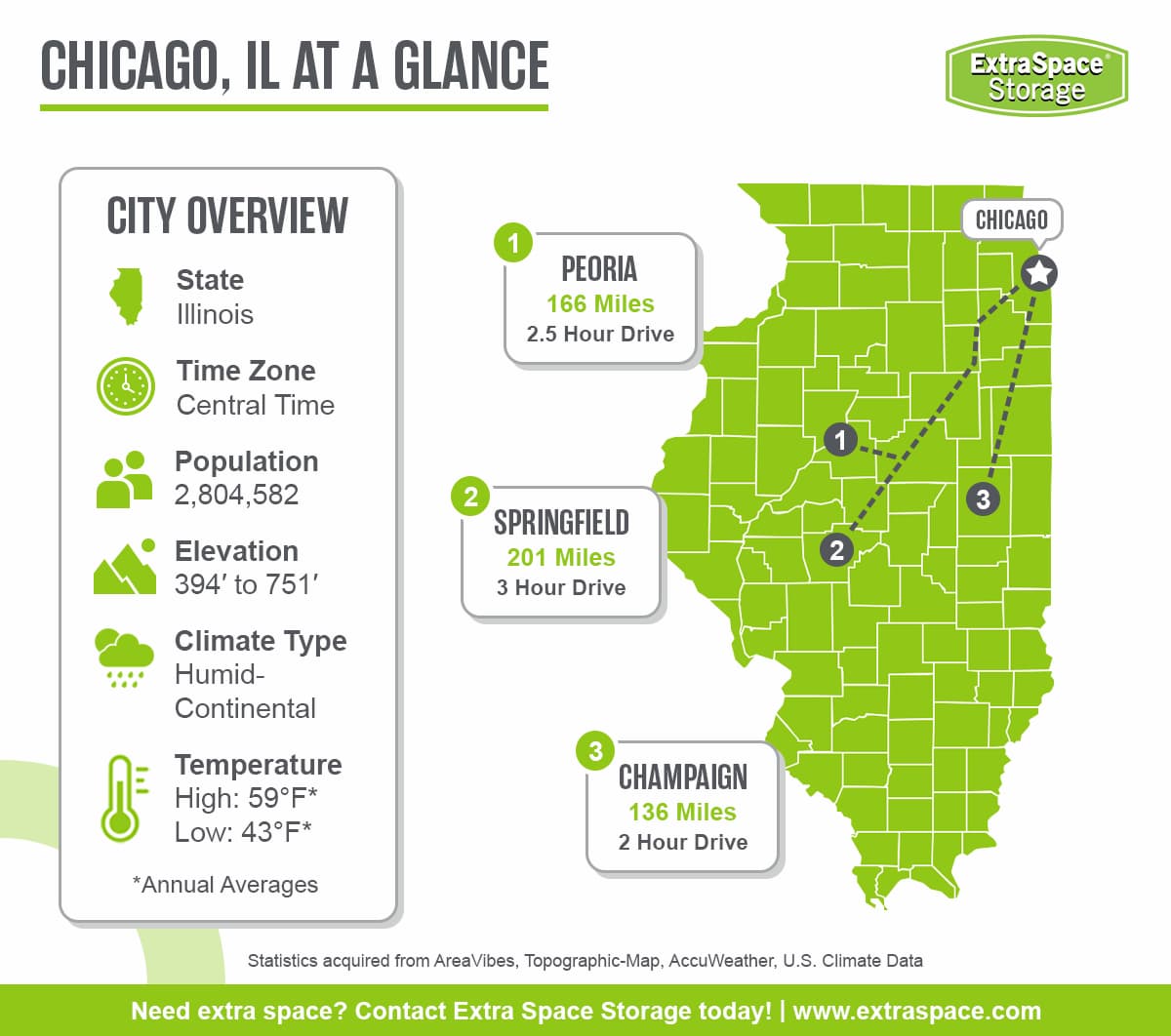
As with any city, there are some disadvantages of living in Chicago—including above-average living costs and traffic congestion. If you’re thinking about moving to Chicago, consider the cons below.
Con: High Cost of Living in Chicago
It’s no secret that life in Chicago is expensive. The cost of living in Chicago is 15.6% higher than the national average—including housing costs that are nearly 43% more expensive than the U.S. average. You’re also likely to pay more for groceries and healthcare than the rest of the state.
But when taking into account Chicago’s population as the third-largest city in America, the Windy City is a fairly affordable big city to live in. For example, Chicago’s cost of living is much more affordable than New York‘s 132% or LA‘s 50% above-average costs of living. And while a move to Chicago means paying more for certain things, it also offers access to world-famous museums, top-quality theatre, beloved sports teams, diversity, and so much more—making the costs well worth it for most residents.
Con: Bitter Chicago Winters
Since the city is situated right on Lake Michigan, it experiences the lake effect, which often produces higher quantities of snow during certain times. The average yearly snowfall in Chicago is around 35 inches, which is a lot compared to the nearby city of Indianapolis’ 22 inches per year. Chicago’s climate is also very cold in the wintertime, with an average low of 20 degrees in January.
Even though surviving Chicago winters can be difficult, many locals say the summer makes it worth it! With average temperatures reaching an ideal 84 degrees in July and cool breezes rolling off Lake Michigan’s waves, Chicago residents can enjoy all the outdoor activities they like without much heat interference. And though Chicago is nicknamed the Windy City, it’s not any worse than the average metropolis—it doesn’t even make the list of the windiest cities in the U.S.!
Con: The Perception of Awful Crime
As a major metropolis, Chicago’s crime rates are 89% higher than the national average. That said, violent crime in Chicago is actually decreasing. Homicides declined 36% in recent years, and the average number of shooting victims over the past three years has decreased by about 40%. Chicago isn’t even considered one of the top ten most dangerous cities in America by actual statistics, and cities with lower populations than Chicago—including Memphis and Detroit—have crime rates nearly double or triple the Windy City’s. This Midwestern city’s government programs for violence reduction also work with the local community to continue bringing Chicago’s crime down, including Street Outreach, Victim Services, and Neighborhood Activation.
Con: Chicago Traffic
If you’re not planning to rely on public transit, prepare to lose a lot of time sitting in your car—unfortunately, the city has some of the worst traffic in America. To add to the problem, public transit is limited in suburbs, so many residents outside Chicago’s urban center need a car. Many of these professionals will commute to the city, park in a lot, and take public transit to work.
Luckily, as one of the cities with the best public transportation in the country, Chicago does offer commuter-friendly options, like the efficient Chicago Transit Authority (CTA). Additionally, the City of Chicago constantly works to improve the roads and sidewalks, helping to maintain its status as one of the nation’s most walkable cities.
Con: Aging Infrastructure
Chicago’s beautiful, historic neighborhoods and architecture come with a caveat—the foundational infrastructure of the city has aged. The Windy City’s residential water mains were built with lead, meaning any house built before 1986 requires pipe replacement with copper. On top of this, Chicago faces decay issues with bridges, roads, sidewalks, and more, especially in areas facing higher rates of poverty. However, the City of Chicago and other local groups have implemented programs and initiatives aimed at alleviating these infrastructural issues—including pipe replacement programs, transportation projects, the Sustainable Square Mile Program, and more.
Con: A Geographically-Isolated City
The City of Chicago is located in the middle of the Midwest, and it’s quite far away from other popular places to visit—Indianapolis being the closest with almost a three-hour drive. This can make residents feel somewhat isolated. That said, for those who love travel, the city offers several fantastic transportation options that can get you where you want to go, including multiple airports and Amtrak stations. And luckily, you never really need to leave Chicago for entertainment, as there are tons of attractions, amenities, and hidden gems within the city—so you’ll always be able to find something new!
Con: Limited Natural Wonders
Though there are plenty of ways to enjoy the outdoors in Chicago—like visiting the city’s more than 600 parks or wonderful beaches—there are few natural areas for those looking for more solitude or adventure. For example, Chicago doesn’t have mountains for hiking or oceans for surfing. But if you’re up for a drive, it’s still possible to find beautiful natural spaces within a few hours of the city, including:
- Indiana Dunes National Park (1-hour drive)—to see miles of sand dunes, along with prairies, wetlands, & woodlands
- Starved Rock State Park (2-hour drive)—to walk 13 miles of trails or admire canyons & waterfalls
- Lake Geneva, WI (2-hour drive)—for lake beaches, hiking, & skiing or snowboarding in the winter
- Elkhart Lake, WI (3-hour drive)—for pontoon cruises, kayak water tours, fishing, & lounging by Fireman’s Park & Beach
- Ice Age National Scenic Trail (4-hour drive)—to walk the edge of Wisconsin’s last continental glacier
Should You Move to Chicago?
You should move to Chicago if you want to live in a bustling city with cultural diversity, tons of great attractions, top job opportunities, and a world-class food scene. However, evaluate your budget, lifestyle, and climate preferences, as Chicago residents deal with cold winters, traffic congestion, and above-average living costs. Consider the following to figure out if the Chicago lifestyle makes sense for you.
Chicago may be the right fit for you if…
- You’d like to start your own business or work in leading industries like healthcare, technology, transportation, or manufacturing.
- You want to live somewhere with a reliable public transportation system.
- You’re looking for a family-friendly city with a wide variety of things to do.
- You appreciate cultural diversity.
- You love trying new foods.
You may want to consider moving to another city if…
- You’re moving on a budget and looking for affordable housing.
- You want to live in one of the safest cities in the U.S.
- You’d like to be able to travel efficiently by car.
- You prefer living in a consistently warm location.
- You don’t want to travel very far in order to visit other major cities.
Chicago Compared to Nearby Cities
Wondering if Chicago is better than Kansas City, Indianapolis, or Milwaukee? To decide which destination is ideal for your lifestyle, compare Chicago against other popular Midwest cities using the chart below.
| Factor | Chicago, IL | Kansas City, MO | Indianapolis, IN | Milwaukee, WI |
| Average Rent Price | $3,230 | $1,512 | $1,353 | $1,650 |
| Average Home Price | $588,157 | $434,284 | $364,401 | $578,988 |
| Average Commute Time | 35 minutes | 22 minutes | 23 minutes | 22 minutes |
| Walk Score | 77/100 | 35/100 | 31/100 | 62/100 |
| Unemployment Rate | 5.4% | 3.4% | 3.8% | 4.1% |
| Major Industries | Healthcare, technology, manufacturing, transportation | Manufacturing, animal health, technology, finance | Healthcare, tourism, retail, manufacturing | Manufacturing, healthcare, data processing, retail |
Statistics from Council for Community and Economic Research (C2ER), Best Places, WalkScore, & AreaVibes
Frequently Asked Questions About Moving to Chicago
Does Chicago have a state income tax?
Illinois has a state income tax rate of 4.95%, which Chicago residents are subject to. That said, there is no additional city-level income tax, and Social Security income and retirement income are also not taxed.
Is Chicago safe?
Though Chicago’s crime rates are higher than the national average, the city remains safer than 12% of U.S. cities. Chicago’s crime rate is also lower than that of other regional cities, including Detroit and St. Louis. If you’re thinking of moving to Chicago with family or as a single, young professional, keep in mind some neighborhoods are safer than others—so you’ll want to research which areas best suit your lifestyle and needs.
Does Chicago get tornadoes?
Chicago sees some tornadoes, though most serious tornadoes hit the central and southeastern regions of Illinois, and they are not very common in the Downtown Chicago area. Chicago also occasionally experiences thunderstorms in the summer, receiving about 38 inches of rain throughout the year.
How far is Chicago to New York by plane?
Chicago is approximately a two-hour flight from New York City, covering a distance of around 740 miles. By car, the drive from Chicago to NYC takes over 12 hours, and a train ride between the two cities is nearly 20 hours long.
Is Chicago a nice place to live?
Chicago is a great place to live for singles, young professionals, and families alike, as it’s chock-full of career opportunities, great transportation options, museums, and kid-friendly activities. It’s also a diverse city with unique year-round festivals, vibrant cuisine, and a buzzing nightlife scene.
***
Relocating to Chicago? Extra Space Storage offers storage units throughout the Windy City to make your move easier. Find cheap self storage in Chicago today!