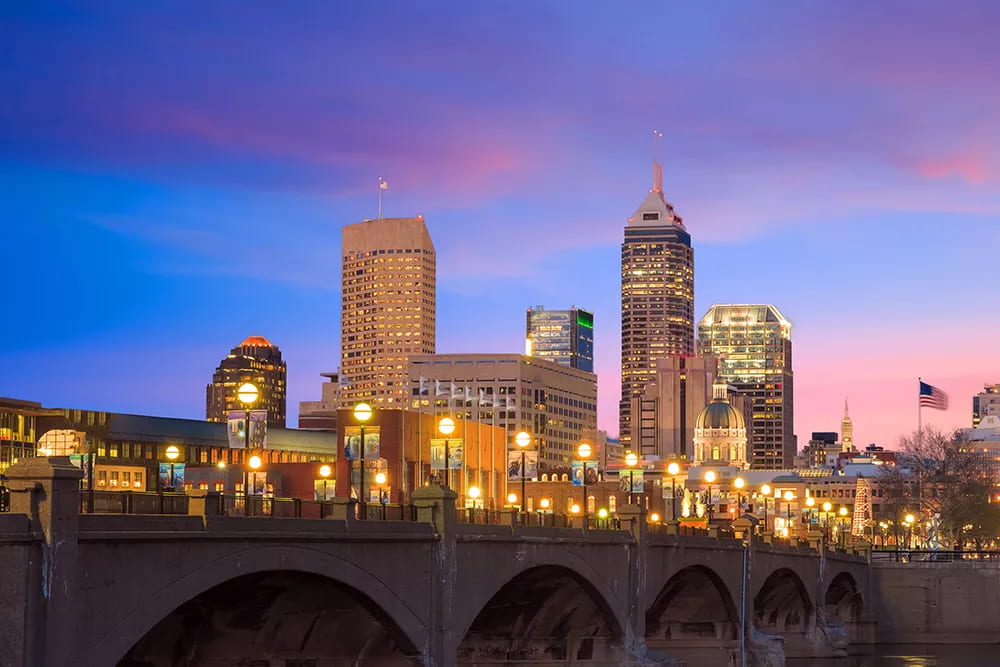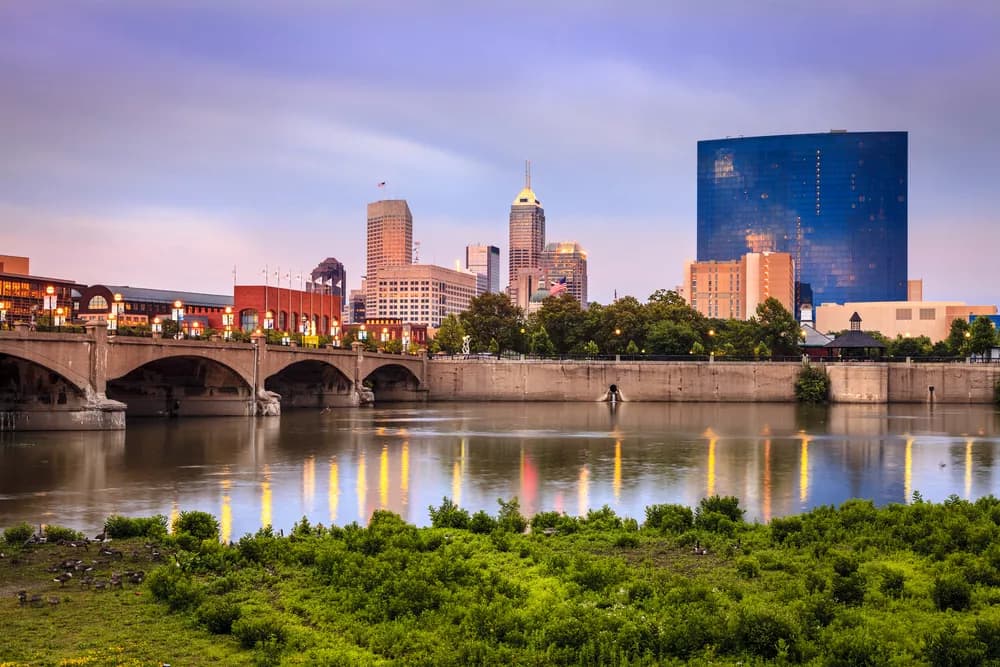
Indianapolis is considered a good Midwestern city to live in! Residents are drawn to the tight-knit community, food & beverage scene, and sports culture in Indianapolis. However, many locals point to Indy’s unpredictable weather and high crime rates as drawbacks. Find out what living in Indianapolis is like with these 13 pros and cons.
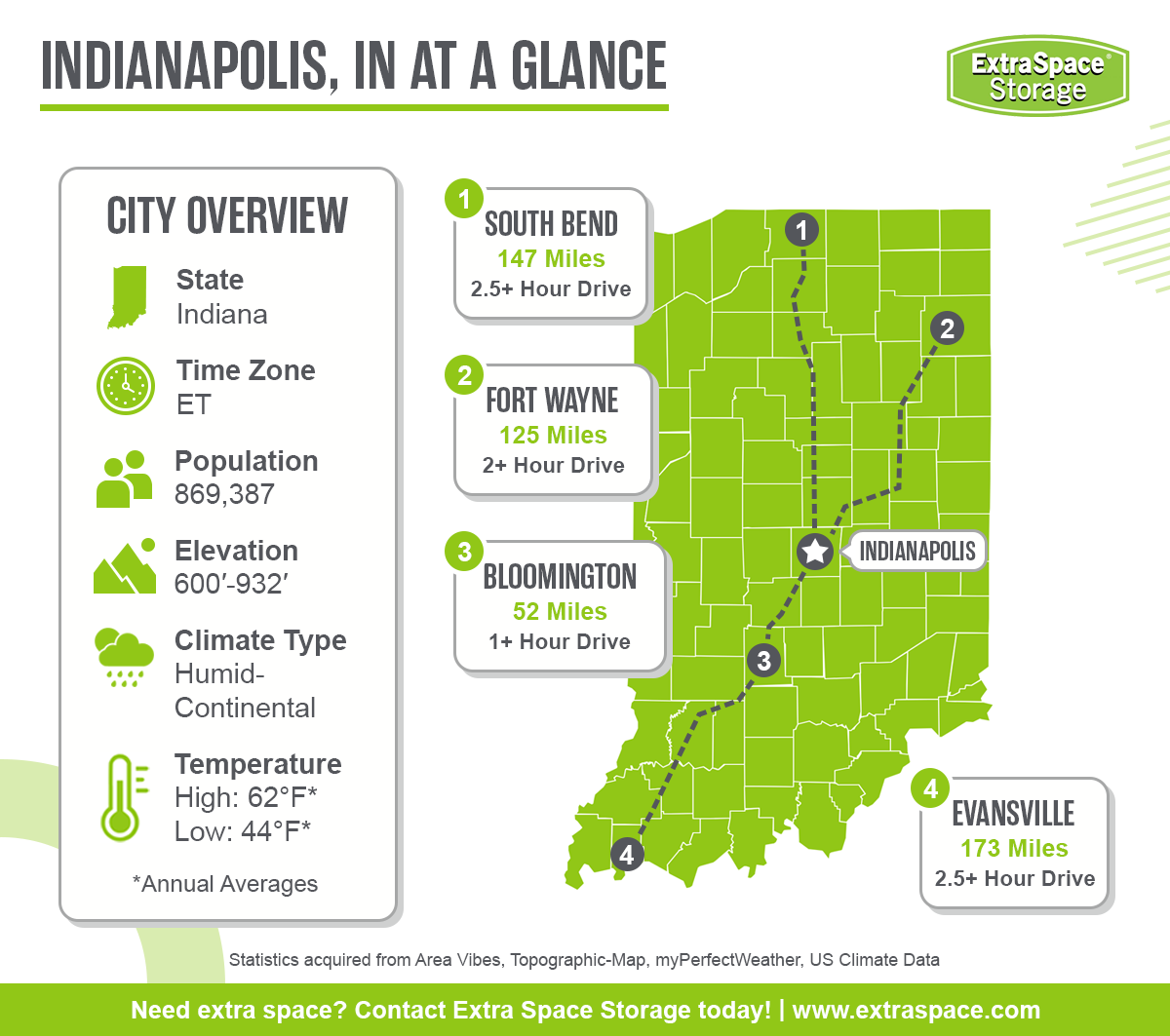
Quick Facts About Indianapolis
| Population | 869,387 |
| Average Home Price | $364,401 |
| Average Monthly Rent | $1,353 |
| Unemployment Rate | 3.8% |
| Median Household Income | $50,813 |
Statistics from AreaVibes & Council for Community and Economic Research (C2ER)
Pros of Living in Indianapolis
There are several benefits of living in Indianapolis—including the affordable cost of living, stable job market, food and brewery scene, and incredible sports culture! Read more about why you should move to Indianapolis below.
Pro: Affordable Cost of Living in Indianapolis
If you want to enjoy Midwestern city living without breaking the bank, Indianapolis may be for you! Located in one of the most affordable states, Indianapolis boasts an average cost of living that is 10.9% lower than the national average—with much of these savings coming from lower housing, utilities, and healthcare costs. In fact, Indianapolis is often ranked among the best U.S. cities for real estate thanks to its affordable home prices, steady appreciation, and growing supply of homes. Average home prices in Indianapolis are 29.8% lower than the national average—making it relatively easy to find affordable Tudor, Craftsman, and Farmhouse-style housing in the city. And for those looking to rent in Indianapolis, costs are 13.2% lower than the national average!
Pro: Stable Indianapolis Job Market
The city’s job market is among the top reasons to move to Indianapolis! With a 3.8% unemployment rate—lower than both the Indiana and national averages—finding a job in Indianapolis very achievable. Some of the city’s key industries include transportation and logistics, life sciences and healthcare, and advanced manufacturing. Residents can find jobs with major employers like Amazon, Eli Lilly, and Rolls-Royce. Indy is also considered one of the best cities for remote work, offering quality coworking spaces like Industrious and The Haverstick. And if you’re looking for healthcare jobs in Indianapolis, the city is home to major hospitals like Franciscan Health, Indiana University Health, and Ascension St. Vincent Hospital.
Pro: Variety of Indianapolis Schools & Universities
Whether you’re looking for a school for your kids or want to continue your own education, Indianapolis has you covered! For school-aged children, the city offers plenty of great options, including:
- International School of Indiana
- Irvington Community Elementary School
- GEO Next Generation Academy Indianapolis
And for those pursuing higher education, Indianapolis offers both four-year universities and community colleges:
- Butler University
- Indiana University Indianapolis
- Purdue University Indianapolis
- The University of Indianapolis
- Ivy Tech Community College – Indianapolis Campus
Pro: Indy Is a Big, Small Town
While it is a large city, Indianapolis’ friendly, welcoming community and Midwestern hospitality help make it a good city to live in! Several neighborhoods in the area have neighborhood associations, such as Broad Ripple, Centerbury, and Forest Hills, adding to the city’s tight-knit feel. You can also find a variety of community events and celebrations, which are perfect for meeting new people and making friends. Some events and festivals in Indianapolis include:
- Feast of Lanterns for local artisans, food trucks, and a beer & wine garden
- 500 Festival for celebrating the spirit and legacy of the Indianapolis 500
- Talbot Street Art Fair for spotlighting local and national artists in Downtown Indianapolis
- Broad Ripple Art Fair for supporting and shopping from over 150 local, regional, and national artists
- Indiana State Fair for livestock shows, delicious food, and vibrant entertainment
Pro: Indy 500 & Other Indianapolis Sports
Indianapolis is known for hosting annual sporting events, such as the world-renowned Indianapolis 500 at the Indianapolis Motor Speedway. The city is also home to the NCAA National Office and hosts March Madness events each year. Plus, residents love cheering for professional Indianapolis sports teams!
- Indianapolis Colts (NFL) at Lucas Oil Stadium
- Indiana Pacers (NBA) and Indiana Fever (WNBA) at Gainbridge Fieldhouse
- Indianapolis Indians (MiLB) at Victory Field
Pro: Growing Food & Beverage Scene
Whether you’re a foodie or just want to try local restaurants in Indianapolis, the city has plenty to offer—featuring everything from steaks to Cajun food. Try these restaurants for some of the best food in Indianapolis:
- Sangiovese Ristorante for authentic Italian dining
- Paco’s Taqueria for classic Mexican dishes
- Yats Restaurant for some of the best Creole and Cajun food in Indianapolis
- The Fountain Room for world-class steaks and seafood dishes
Lovers of unique craft beer will also enjoy the variety of Indianapolis breweries:
- Metazoa Brewing Co. for craft beer in a dog-friendly atmosphere
- Sun King Brewing for unique brews paired with food from Nacho a La Margarita
- Deviate Brewing for 12 rotating beer taps and board games with friends
- Guggman Haus Brewing Co. for German-style brews and Trivia Tuesdays
Pro: Indy Entertainment & Attractions
Whether you’re looking for children’s activities in Indianapolis or a spot for your next date night, you’ll never run out of things to do in Indianapolis.
Best things to do in Indianapolis for couples:
- Old World Gondoliers for romantic gondola rides down the canal
- The District Theatre to catch plays and concerts in the Mass Ave Arts District
- No. 7 Salon & Spa Studio to indulge in relaxing couples massages
Best family things to do in Indianapolis:
- Indianapolis Zoo to see kangaroos, meerkats, and red pandas
- The Children’s Museum of Indianapolis to explore five floors of fun exhibits in the world’s largest children’s museum
- Holliday Park for the timber playground, the Outdoor Learning Lab, and summer day camps
Pro: Plenty of Free Things to Do in Indianapolis
If you want to enjoy Indianapolis without spending a dime, the city offers plenty of free activities and events for all ages!
- Indianapolis Cultural Trail for walking or biking eight miles through the city
- First Thursdays at Newfields to explore the Indianapolis Museum of Art and The Garden with pay-what-you-wish admission (including free)
- ARTSPARK at the Indy Art Center to see more than 27 sculptures and attend local festivals
- First Fridays at the Murphy Arts Center to view and purchase local art
- Free Concert Series for live music at various Indianapolis parks throughout the summer
Get Everything You Need for an Easier Move to Indianapolis
Cons of Living in Indianapolis
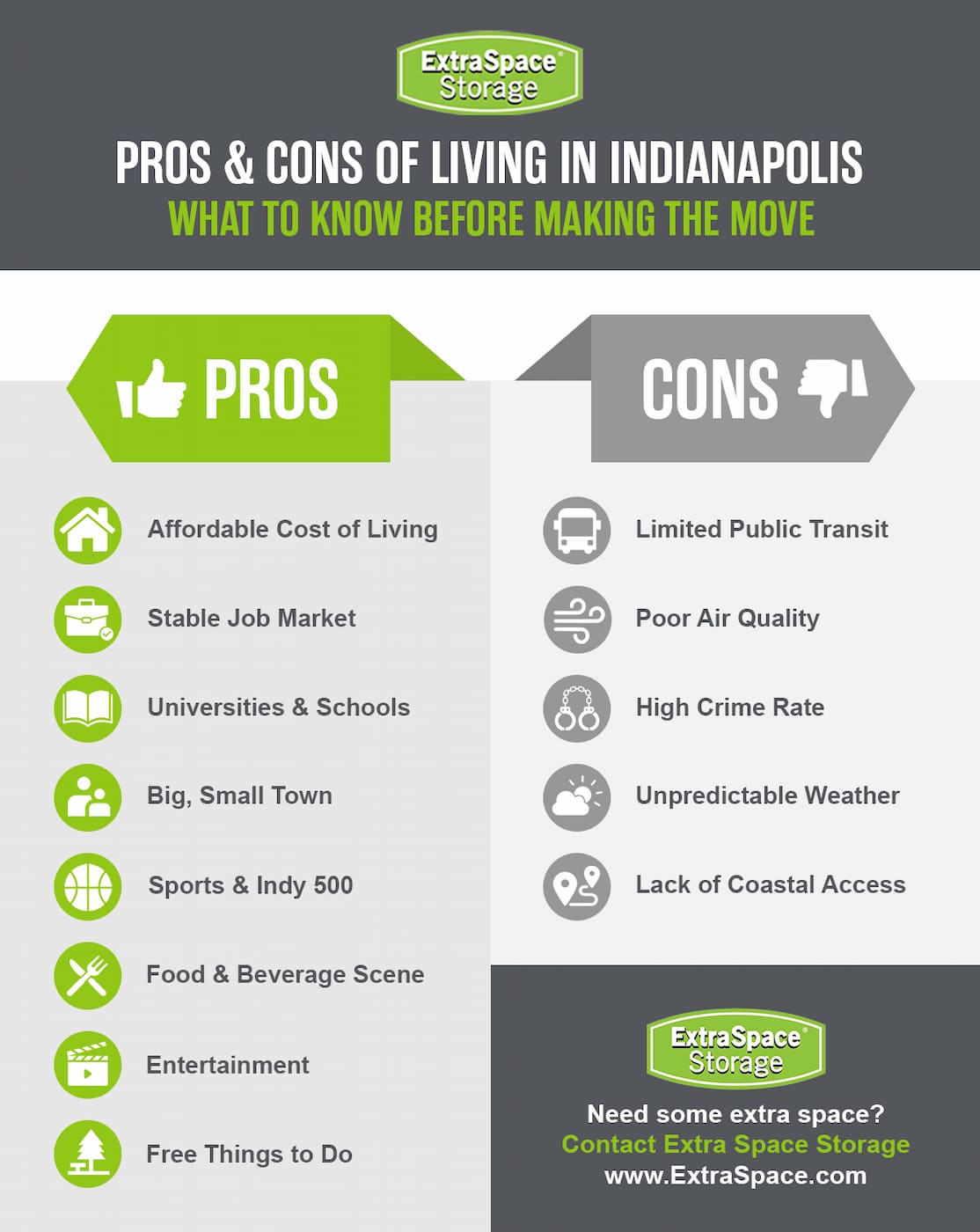
Potential disadvantages of living in Indianapolis include its high crime rate, lack of coastal access, and limited public transportation. Before deciding to move to Indianapolis, consider these cons below.
Con: Limited Public Transportation
Public transportation in Indianapolis is much more limited than in other major cities, which means residents are heavily car-dependent. Walkable areas are sparse, and transit options don’t cover the metro area comprehensively, making daily commuting challenging for those without a vehicle—particularly outside of the downtown area.
That said, the city does offer some public transit options through IndyGo, the city’s bus system, which provides nearly 30 routes throughout Marion County. Residents also have access to convenient regional and national flight travel through Indianapolis International Airport.
Con: Poor Air Quality
Indianapolis experiences poor air quality due to the state’s industrial activities and car dependency, which can make it difficult to enjoy outdoor activities. However, the city is taking steps to address and improve air quality through year-round initiatives like Knozone, which provides resources and education to the public. On high-pollution days, the program issues alerts encouraging sensitive individuals—including the elderly and those with respiratory issues—to limit outdoor time or take necessary precautions.
Con: High Crime Rate
Like most large cities, Indianapolis experiences higher crime rates than smaller communities. That said, the city is still safer than nearby Midwestern cities like St. Louis and Cincinnati, and violent crime has been declining. Residents can have peace of mind knowing the City of Indianapolis is actively working to reduce crime through the Division of Community Violence Reduction, which offers neighborhood resources and violence prevention grants. Plus, Indianapolis has plenty of safe and affordable suburbs for those who prefer to live further from the city center.
Con: Unpredictable Weather
Given its location in Tornado Alley, Indianapolis is prone to severe weather like thunderstorms, high winds, and tornadoes. The city also experiences cold winters and hot, humid summers, with significant temperature fluctuations throughout the year.
That said, residents find ways to adapt to the Indianapolis climate. The city provides early warning systems and tornado safety resources to help residents prepare for severe weather, as well as resources for dealing with extreme heat and cold to help residents stay safe and prepared year-round. Plus, winter activities like ice skating, sledding, and skiing help locals make the most of the colder months, while summer brings community pools and splash pads, outdoor patios and farmers markets, and visits to nearby lakes and reservoirs.
Con: Lack of Coastal Access
Those who love frequent trips to the ocean or other large bodies of water may feel disappointed by Indianapolis’ landlocked location. However, the city does offer scenic river views—and Lake Michigan is just a three-hour drive north. If you want to enjoy a day on the water, consider stopping by these notable waterways within city limits!
- White River for fishing, canoeing, kayaking, or paddleboarding down the city’s main waterway
- White River State Park for green spaces, local wildlife, walks on the River Promenade, and biking the three-mile Canal Walk
- Eagle Creek Reservoir for boating, fishing, and paddleboarding at one of the largest city parks in the country
Should You Move to Indianapolis?
You should move to the Indianapolis area if you value affordable living, strong career opportunities, and a tight-knit community with Midwestern hospitality. Indianapolis is often best for young professionals, families, and sports enthusiasts—thanks to its strong job market, great neighborhoods and suburbs, and variety of all-ages activities. Before deciding, think about your budget, lifestyle, and transportation needs.
Indianapolis may be the right fit for you if…
- You want to live in a large city with an affordable cost of living.
- You’re looking for job opportunities in healthcare, transportation, and advanced manufacturing.
- You’re looking for a city with a variety of restaurants and pet-friendly breweries.
- You enjoy living in a city with a vibrant sports culture.
- You want access to a variety of museums, parks, art centers, and theaters.
You may want to consider moving to another city if…
- You value walkability and robust public transit.
- You want to live in a city with nice year-round weather.
- You prefer to avoid a city with high pollution rates.
- You’re seeking a city with consistently low crime rates.
- You want to prioritize easy ocean access.
Indianapolis Compared to Nearby Cities
Wondering whether to move to Indianapolis or other nearby cities like Chicago, Cincinnati, or Louisville? See how Indianapolis compares to these Midwestern and Southern cities below.
| Factor | Indianapolis, IN | Chicago, IL | Cincinnati, OH | Louisville, KY |
| Average Rent | $1,353 | $3,230 | $1,664 | $1,409 |
| Average Home Price | $364,401 | $588,157 | $446,938 | $362,290 |
| Average Commute Time | 23 minutes | 35 minutes | 23 minutes | 22 minutes |
| Walk Score | 31/100 | 77/100 | 49/100 | 34/100 |
| Unemployment Rate | 3.8% | 5.4% | 4.9% | 3.7% |
| Major Industries | Manufacturing, logistics, healthcare | Technology, manufacturing, finance | Finance, healthcare, manufacturing | Healthcare, manufacturing, food and beverage |
Statistics from Council for Community and Economic Research (C2ER), BestPlaces, Walk Score, & AreaVibes
Frequently Asked Questions About Moving to Indianapolis
Is Indianapolis expensive to live in?
Indianapolis is one of the more affordable major cities in the United States. The overall cost of living is 10.9% below the national average—with housing costs about 23% lower, healthcare 14% lower, utilities 10% lower, and goods and services 7% lower—making it a budget-friendly option for families and young professionals alike.
Is Indianapolis safe?
While the crime rate in Indianapolis is higher than the national average, crime rates vary by neighborhood, and violent crime has been declining. The city is actively working to reduce crime through community programs and violence prevention initiatives. Additionally, there are also plenty of safe and affordable suburbs of Indianapolis—including Plainfield, Zionsville, and Meridian Hills.
Does Indianapolis get snow?
Indianapolis receives about 22 inches of snow annually—with the most snow tending to fall in January. Residents take advantage of Indy’s long, cold winters with activities like ice skating and skiing.
What is the distance from Indianapolis to Chicago?
The distance from Indianapolis to Chicago is roughly 180 miles—about a three-hour drive by car or a quick one-hour flight—a perfect distance for a day trip or weekend getaway.
Is Indianapolis a good place to live?
Indianapolis is a great place to live for those who value affordability, strong career opportunities, and Midwestern hospitality. The city offers a low cost of living, diverse neighborhoods and suburbs, and plenty of entertainment options.
***
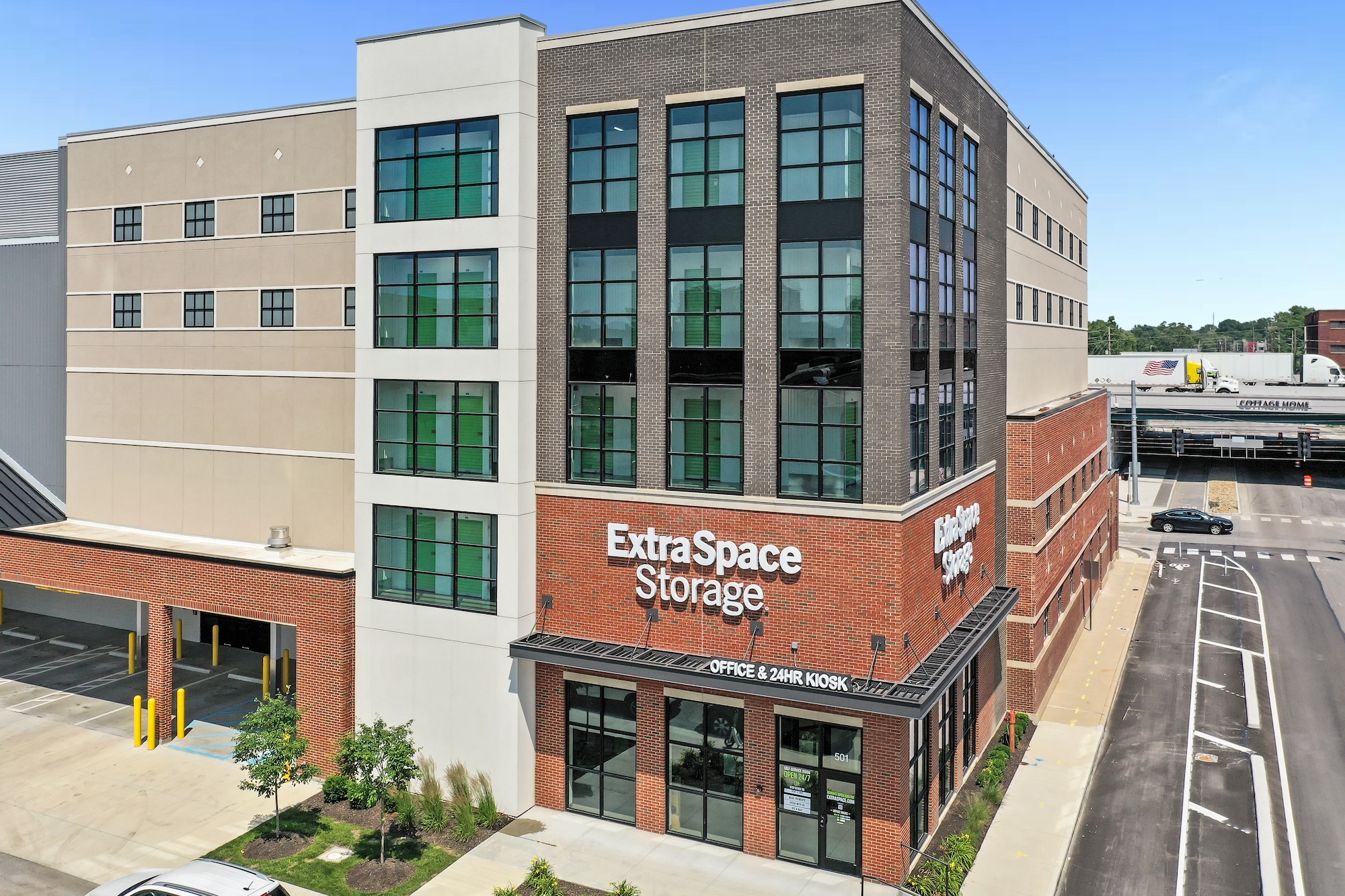
Moving to Indianapolis soon? Extra Space Storage has facilities conveniently located in Indy and throughout the U.S. to make your relocation easier. Find a storage unit near you!