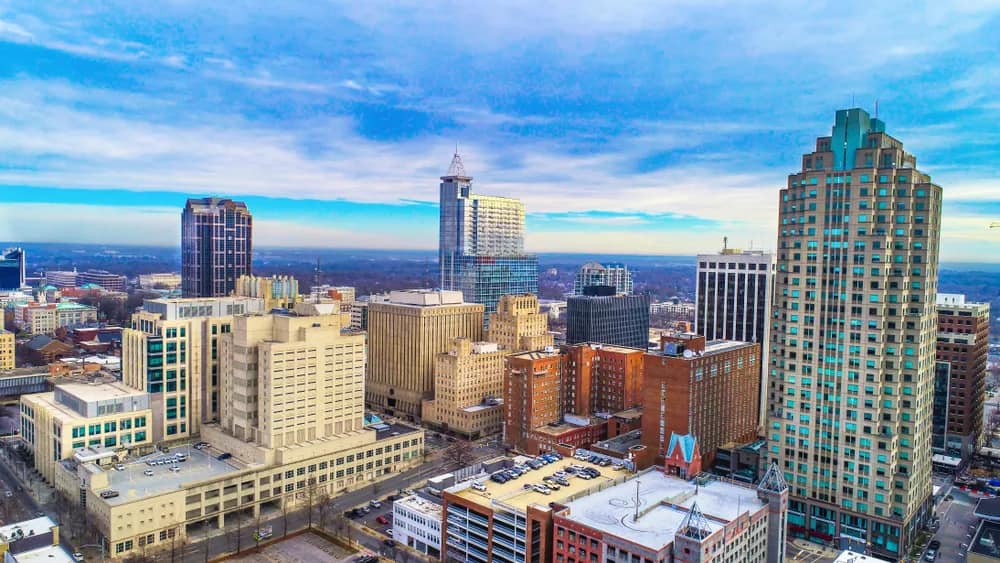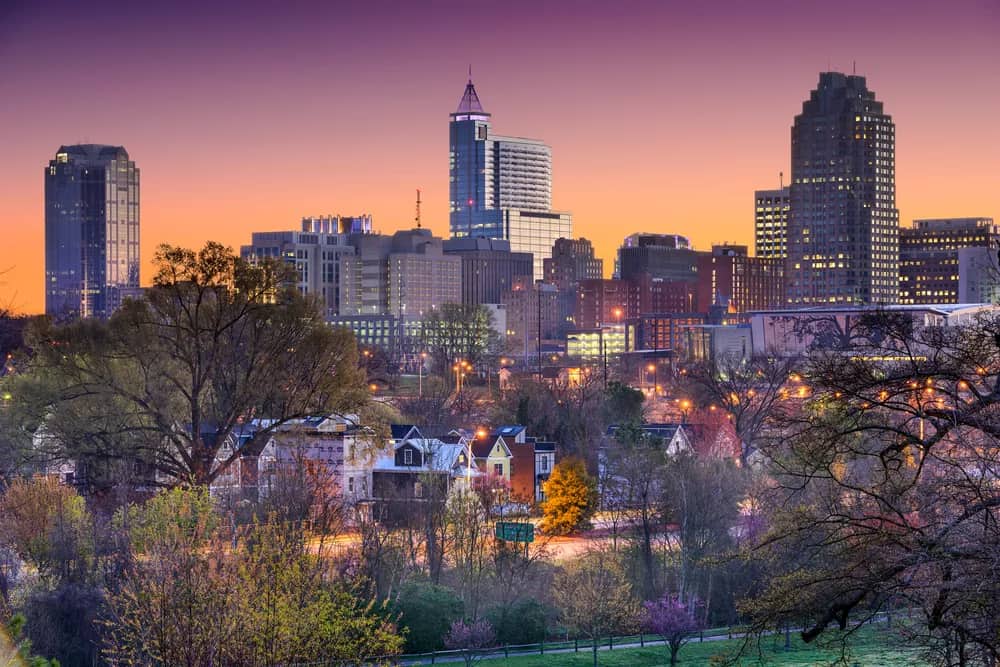
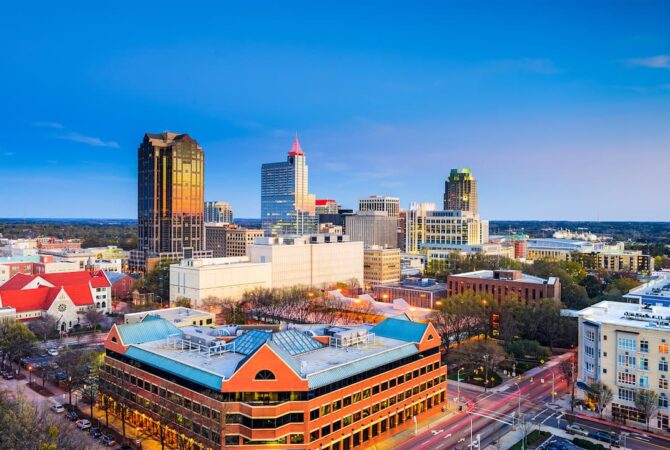
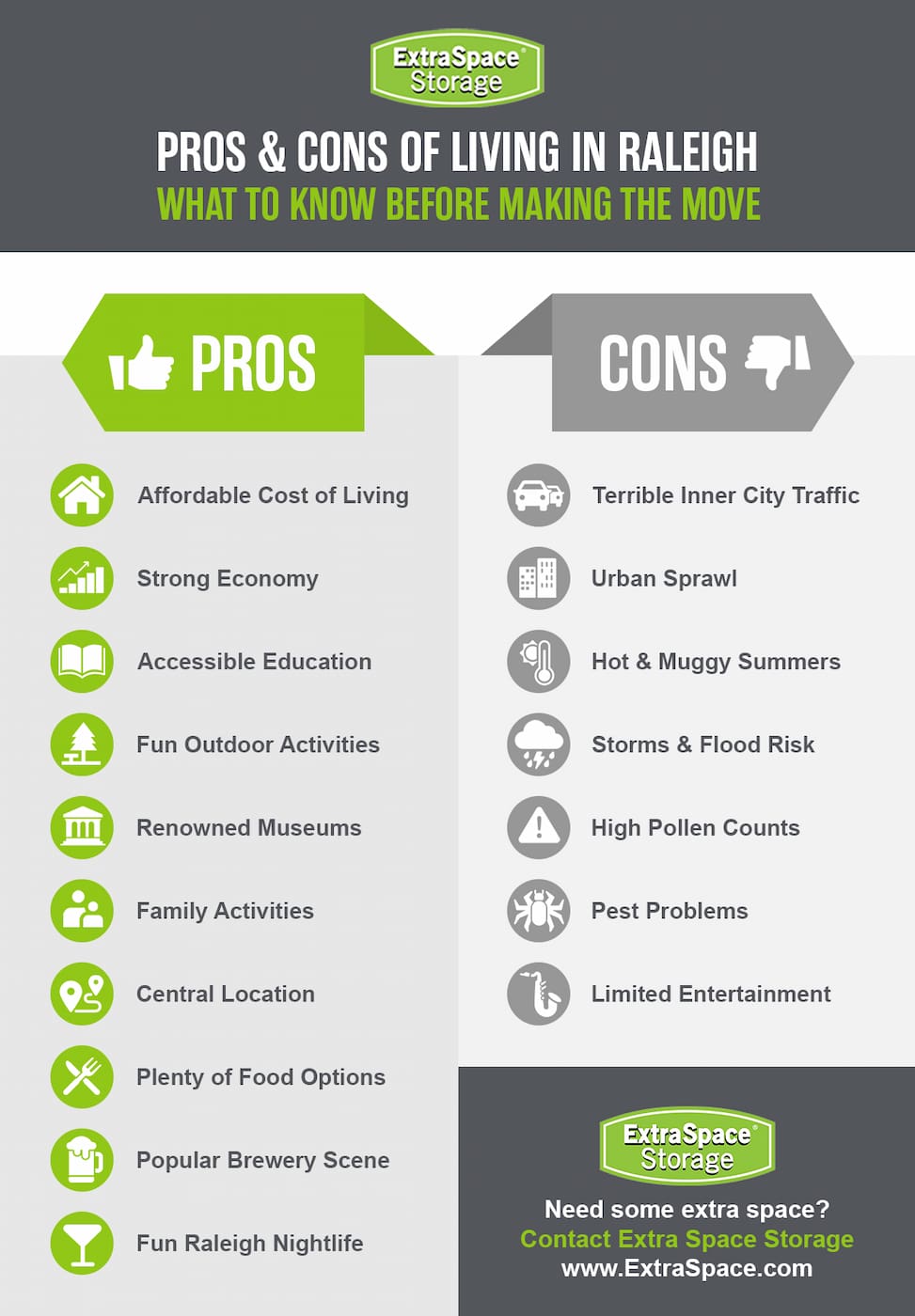
As one of the best mid-sized U.S. cities and one of the best places to live in the Southeast, Raleigh is a great place to call home! Many residents enjoy the city’s strong job market, growing tech scene, and easy access to parks and outdoor recreation. However, living in Raleigh also comes with downsides like busy traffic and high pollen counts. Check out these 17 pros and cons of moving to Raleigh.
Quick Facts About Raleigh
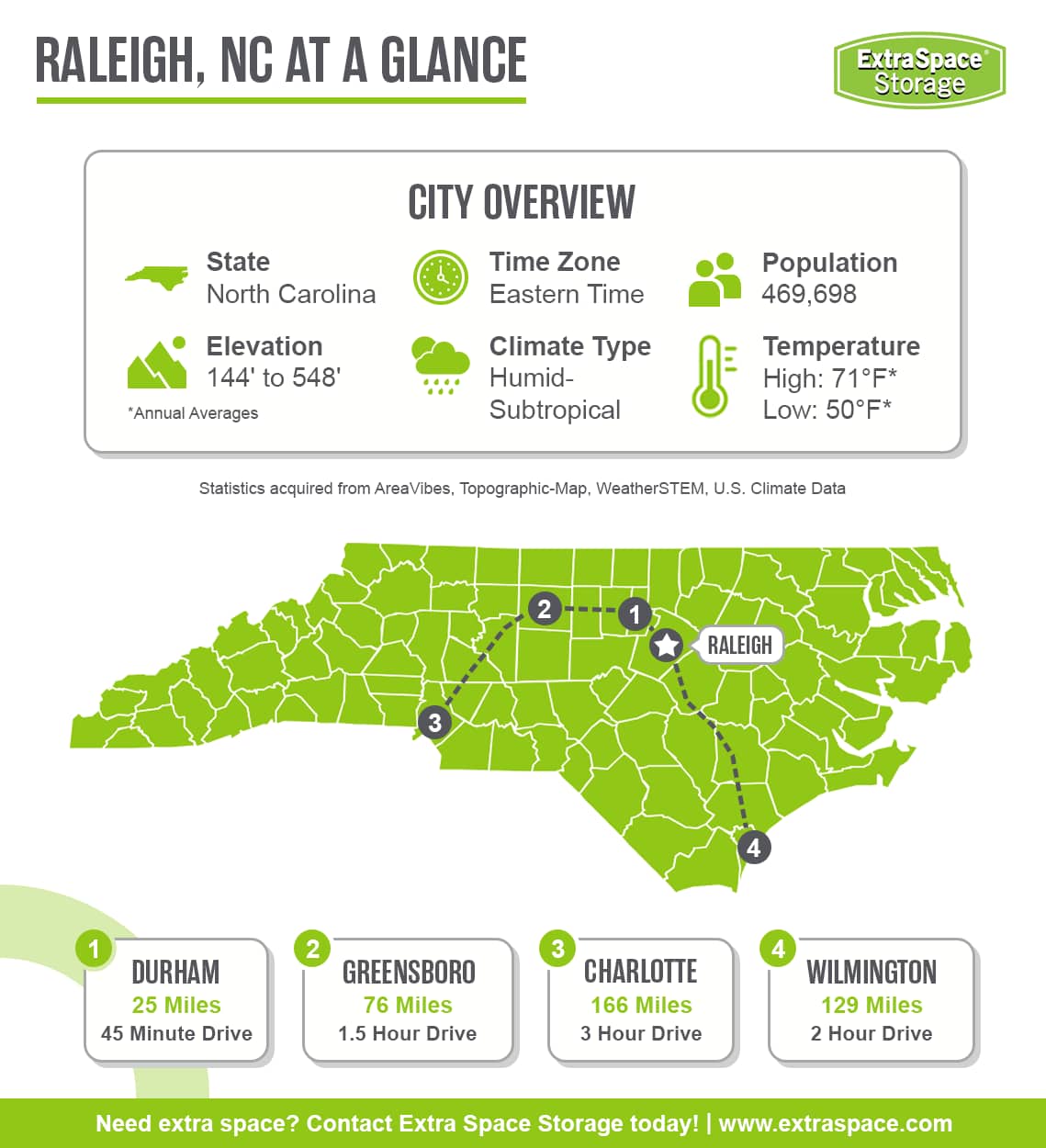
| Population | 469,698 |
| Average Home Price | $453,944 |
| Average Monthly Rent | $1,492 |
| Average Days of Sunshine | 213 per year |
| Unemployment Rate | 4.2% |
Statistics from AreaVibes, Council for Community and Economic Research (C2ER), & Best Places
Pros of Living in Raleigh
Some of the benefits of living in Raleigh include proximity to top research universities, a booming economy, plenty of green space, and a ton of fun things to do for all ages. Check out these pros of moving to Raleigh, NC!
Pro: Affordable Cost of Living
Raleigh offers a budget-friendly cost of living that falls below both state and national averages, with housing representing some of the most significant savings. Renters in Raleigh benefit from average monthly costs slightly under the U.S. average, while those looking to buy a home in Raleigh will appreciate that average home prices run more than $80,000 below the national average—helping cement the city’s reputation as one of the best cities for real estate. Beyond housing, residents can also expect to pay less for utilities and transportation. This means you can enjoy world-class amenities, free attractions, and a thriving cultural scene—all on a manageable budget.
Pro: Raleigh’s Strong Economy
If you want to live in a city with a strong economy, you should consider moving to Raleigh, NC. It ranks among the best U.S. cities for jobs and is frequently listed as one of the best places to live in North Carolina. The City of Oaks boasts an unemployment rate of 4.2%—notably lower than the U.S. average of 4.9% and North Carolina’s rate of 5.4%. Additionally, Raleigh’s job growth over the next few years is projected at around 44%, which far surpasses the national average. The city’s top industries include business services, transportation, healthcare, education, and government. Residents can find jobs at top employers in Raleigh like the State of North Carolina, WakeMed, Wake County Public Schools, Red Hat, and First Citizens Bank. Plus, Research Triangle Park—a well-known collaborative innovation center—offers plenty of employment opportunities in research, technology, life sciences, and more.
Pro: High-Quality Colleges & Universities in Raleigh
As part of the Research Triangle, Raleigh ranks among the best cities in the U.S. for education, with a wide variety of colleges and universities offering programs to help you expand your knowledge, start a new career, or advance your current one. Here are some top options to consider:
- North Carolina State University, a public research institution offering degrees in accounting, engineering, business, & more
- Meredith College, a private women’s college offering programs ranging from economics to interior design
- Saint Augustine’s University, an HBCU with programs like communications, computer information systems, & sport management
- William Peace University, a small private school in Downtown Raleigh with options ranging from criminal justice to business administration
- Shaw University, North Carolina’s first HBCU, offering programs from psychology to cyber operations
- Wake Technical Community College, a budget-friendly school offering workforce training, transfer programs, & non-degree programs
Pro: Fun Outdoor Activities in Raleigh
One of the best things about Raleigh is its abundant green space and outdoor recreation—making it easy to find free things to do in Raleigh. The city’s streets are lined with oaks and other trees, earning it the nickname “The City of Oaks.” With more than 200 parks, nature preserves, dog parks, playgrounds, and swimming pools, there’s truly something for everyone to enjoy outdoors.
- Blue Jay Point County Park to explore 236 acres of parkland
- Raleigh Rose Garden—one of North Carolina’s three accredited rose gardens—to see beautiful blooms
- Juniper Level Botanic Garden for walking paths & specialty plant collections
- Art to Heart Corridor to bike six miles from the North Carolina Museum of Art to Downtown Raleigh
- Anderson Point Park to let the kids burn energy on the playground
- Hemlock Bluffs Nature Preserve to spot birds, wildlife, & Eastern Hemlock trees
- Eagle Ridge Golf Club, Hedingham Golf Club, & the public Lonnie Poole Golf Course for golfing in Raleigh
Pro: Renowned Raleigh Museums
Raleigh is home to some of the top museums in the Southeast, offering a variety of experiences that immerse you in science, history, art, and culture. Whether you’re an art enthusiast, a lifelong learner, or looking for something to do with kids, the museums in Raleigh have something for every interest.
- North Carolina Museum of Natural Sciences for interactive exhibits & to see complete Tyrannosaurus & Triceratops skeletons
- Pope House Museum to explore the life & legacy of Dr. Manassa Thomas Pope, a trailblazing African-American leader in Raleigh’s history
- Marbles Kids Museum for hands-on, play-based learning opportunities
- City of Raleigh Museum to learn about local history & the city’s vision for the future
- North Carolina Museum of Art for incredible art collections, outdoor sculptures, & rotating exhibitions
Pro: Plenty of Family Activities in Raleigh
One of the common reasons people move to Raleigh is because of how family-friendly it is. From spending a day at the park to enjoying live musical performances, there are plenty of things to do with family in Raleigh.
- Pullen Park to rent a pedal boat or ride the carousel
- Lenovo Center to cheer on the Carolina Hurricanes (NHL)
- Martin Marietta Center for the Performing Arts for ballet, opera, & symphony performances
- Frankie’s of Raleigh for mini-golf, go-karts, & laser tag
- Videri Chocolate Factory to take a tour & sample delicious treats
- Red Hat Amphitheater for live music from touring acts in the summer or ice skating in the winter
Pro: Central Location With Easy Weekend Trips
If you’re a frequent traveler, you’ll love living in Raleigh. Its central location makes road trips to major East Coast cities like Charlotte, Richmond, and Washington, D.C. a breeze—without having to live in a tourist town year-round. And its proximity to Raleigh-Durham International Airport gives residents access to everything from domestic flights to trips overseas. Here are some great weekend destinations near Raleigh:
- 2-hour drive: Wrightsville Beach for surfing, beach volleyball, & jet skiing
- 2.5-hour drive: Carolina Beach for fishing from the pier, paddleboarding, & exploring hiking trails
- 2.5-hour drive: Blue Ridge Parkway for scenic drives, biking, & unique picnic spots
- 3-hour drive: Emerald Isle for an uncrowded beach atmosphere, kayaking, & 12 miles of shoreline
Pro: Eateries for Every Palate
Another top reason to live in Raleigh is its diverse restaurant scene. North Carolina’s capital city has everything from delicious breakfast options to Southern dining staples. Here are some of the best restaurants in Raleigh for you check out!
- The Morning Times for breakfast in Raleigh
- Gringo A Go Go for delicious Mexican food
- Players Retreat for classic American cuisine
- Angus Barn for an upscale steakhouse
- Irregardless for farm-to-table dishes & live music
- Mala Pata for authentic Latin American dishes
- Tamasha Modern Indian for upscale Indian fare
- Lucettegrace for sweet French-inspired treats
Pro: Popular Raleigh Brewery Scene
For beer lovers, one of the best parts about life in Raleigh is the vibrant craft brewery scene! You can collect stamps and earn prizes at over 30 Raleigh breweries along the Raleigh Beer Trail—and thanks to downtown’s approved social district, you can even carry a drink with you as you walk between certain spots. Here are some top options to check out.
- Altered State Brewing Company for a dog-friendly environment & weekly rotating menu of beers
- Brewery Bhavana for gathering with friends over drinks & Asian-inspired bites
- Clouds Brewing Raleigh for unique, German-inspired beers & elevated pub fare
- Heyday Brewing Company for live music & events while sampling fun beers
- Mordecai Beverage Co. for locally-brewed beverages & food pop-ups
- Gizmo Brew Works for food trucks, live entertainment, & drinks
Pro: Fun Raleigh Nightlife
The fun in Raleigh doesn’t end when the sun goes down. Whether you want to sip craft cocktails, laugh at comedy nights, or dance with friends, Raleigh nightlife has plenty to offer for everyone.
- Drive Shack for fun driving range games, pub food, & drinks
- Goodnights Comedy Club for nighttime stand-up classes or live comedy shows from local & nationally touring comedians
- Neptunes Parlour for comedy, karaoke, live DJs, cocktails, & more in Downtown Raleigh
- Legends Nightclub Complex for an LGBTQ-friendly environment with drag shows & dancing
- Boxcar Bar + Arcade for a full drink menu, live music on the weekends, & classic arcade games
- Lincoln Theatre for live music performances, featuring everything from country to pop artists
Get Everything You Need For An Easier Move to Raleigh
Cons of Living in Raleigh
The drawbacks of living Raleigh include high pollen counts, heavy traffic, hot summers, and more. Consider these cons of moving to Raleigh before finalizing your decision.
Con: Terrible Inner City Traffic
Raleigh’s rapid growth has brought more cars to the area, and with the highest percentage of homes with at least one vehicle among large U.S. metro areas, traffic is a real challenge. Commuters lose around 31 hours in traffic per year, though the city is actively working to improve things through infrastructure updates and an AI pilot program.
For those who’d rather skip the drive, Raleigh does offer several public transportation options, including the GoRaleigh bus system and GoRaleigh Access, Amtrak service at Raleigh Union Station, and a bikeshare program through the Lime and Spin apps.
Con: Inconvenient Urban Sprawl
Downtown Raleigh serves as the city’s hub for business and entertainment, but the rest of the city is more spread out—with most neighborhoods sitting 15 to 30 minutes away. This, combined with a heavy reliance on cars, contributes to the area’s longer commute times. As one of the fastest-growing cities in the U.S., Raleigh also experiences the ongoing construction that comes with rapid outward development. On the upside, Raleigh’s sprawling layout leaves more room for parks and greenways, while also allowing for more distinct neighborhoods with unique personalities.
Con: Hot & Muggy Summers
Like most Southern cities, Raleigh experiences hot and humid summers, with average highs around 90 degrees. The combination of heat and humidity can raise the risk of heat-related illnesses like dehydration and heat exhaustion. That said, the rest of the year is relatively mild, with average winter lows around 30 degrees. Additionally, there are several ways residents can keep cool during the warm season—from city splash pads and pools to traveling less than 30 minutes outside of town to Fantasy Lake Adventure Park for scuba diving, kayaking, inflatable water features, and more.
Con: Storms & Flood Risk
Beyond its hot summers, Raleigh is also susceptible to extreme weather events—most notably flooding, with Downtown Raleigh carrying a moderate flood risk. On the plus side, Raleigh sits outside of tornado alley, so high wind events are typically less severe than in other parts of the country. Before buying or renting, it’s worth checking FEMA flood maps to assess risk in your specific area. Signing up for local weather alerts and keeping emergency supplies on hand are also smart precautions for any new resident.
Con: High Pollen Counts
Those with seasonal allergies may find spring in Raleigh particularly challenging. Known as “The City of Oaks,” Raleigh has a dense tree canopy that earns it a reputation as one of the hardest places to live with allergies. Each spring, the city’s oak trees release thick pollen that coats patios, streets, and cars in a layer of yellow dust—and for some residents, particularly newcomers, this can trigger symptoms like itchy eyes, congestion, and sinus pressure. Peak tree pollen season typically runs from late March through early April before gradually tapering off. The North Carolina Division of Air Quality provides a daily pollen forecast to help you plan outdoor activities accordingly.
Con: Pest Problems
Raleigh’s warm, humid climate makes it susceptible to pests year-round—and it ranks among the top ten U.S. cities for roach infestations. Common culprits include cockroaches, termites, mosquitoes, ants, rodents, spiders, fleas, and ticks. To help avoid these unwanted visitors in your home, follow basic pest prevention tips like keeping your kitchen clean, taking out trash regularly, and sealing entry points. For more serious problems, Raleigh has several highly-rated pest control companies to choose from.
Con: Limited Pro Sports & Big-Name Entertainment
Compared to similarly sized cities like Atlanta and Nashville, Raleigh’s entertainment options can feel limited. The city is home to only one professional sports team—the Carolina Hurricanes (NHL)—and residents looking for other options have to drive two or more hours to catch the Charlotte Hornets (NBA), Carolina Panthers (NFL), or Washington Nationals (MLB). The live music scene, while growing, also lacks the variety of acts and venues you’d find in larger markets.
That said, Raleigh isn’t without its draws—the Red Hat Amphitheater and Lenovo Center both host major events, and fans of college sports can cheer on the NC State Wolfpack across several NCAA D-I programs, including football, baseball, and wrestling.
Should You Move to Raleigh?
You should move to Raleigh if you love the outdoors, value quality higher education, and have an appetite for diverse cuisines. The city is often an ideal choice for families seeking an affordable place to live, with access to a great park system, strong schools, and a slower pace of life. But before relocating to Raleigh, consider whether it fits your lifestyle when it comes to factors like transportation, access to pro sports, and seasonal allergies.
Raleigh may be the right fit for you if…
- You’re pursuing a career in tech, healthcare, biotech, higher education, or government.
- You want strong job opportunities and great amenities without paying big-city housing prices.
- You’re seeking easy access to parks, greenways, and other outdoor spaces.
- You prefer breweries, local restaurants, and laid-back bars over mega-clubs.
- You want to live in a central hub that makes travel easy.
You may want to consider moving to another city if…
- You thrive in dense, high-rise downtown living.
- You rely heavily on public transit and walkability.
- You want access to big-city entertainment like pro sports, tons of live music acts, and a major club scene.
- You struggle with heat and humidity.
- You have severe seasonal allergies.
Raleigh Compared to Nearby Cities
Wondering whether Raleigh is the right fit, or if another Southern city like Charlotte, Durham, or Atlanta might suit you better? Compare these fast facts to help you decide.
| Factor | Raleigh, NC | Durham, NC | Charlotte, NC | Atlanta, GA |
| Average Monthly Rent Price | $1,492 | $1,704 | $1,573 | $1,458 |
| Average Home Price | $453,944 | $539,013 | $401,923 | $430,619 |
| Average Commute Time | 23 minutes | 23 minutes | 25 minutes | 26 minutes |
| Walk Score | 31/100 | 30/100 | 26/100 | 48/100 |
| Unemployment Rate | 4.2% | 3.4% | 3.5% | 4.4% |
| Major Industries | Technology, education, healthcare | Medicine, education, retail | Finance, energy, manufacturing | Hospitality, fintech, film & TV |
Statistics from Council for Community and Economic Research (C2ER), Best Places, Walk Score, & AreaVibes
Frequently Asked Questions About Moving to Raleigh
What salary do you need to live comfortably in Raleigh, NC?
A livable salary in Raleigh is around $54,000 per year before taxes for a single adult with no children, though this varies depending on factors like home size and lifestyle. For a family with one working adult, one stay-at-home parent, and one child, that figure rises to about $82,000 per year. For two working adults with two children, a combined household income of $121,000 is generally considered comfortable.
Is Raleigh safe?
Raleigh is generally considered a safe, family-friendly city. While Raleigh’s crime rate is higher than the state average, it remains safer than 35% of North Carolina cities, with lower crime rates than Charlotte, Greensboro, Durham, and more. For those seeking additional peace of mind, there are several safe neighborhoods in Raleigh—like Brier Creek, North Hills, and Five Points—that offer low crime rates and a high quality of life.
How cold do winters get in Raleigh, NC?
Raleigh’s winter temperatures are generally considered mild compared to much of the U.S., with average January lows around 30 degrees and roughly four inches of snow per year.
What state is Raleigh in?
Raleigh is located in North Carolina, serving as both the state capital and the seat of Wake County. The city sits about 165 miles northeast of Charlotte, NC, 280 miles south of Washington, D.C., and 405 miles northeast of Atlanta, GA. Raleigh is also part of the Research Triangle, a major metro region known for its universities, tech industry, and research institutions.
Is Raleigh a nice place to live?
Raleigh is generally considered a great place to live, especially for those seeking strong job opportunities, a high quality of life, Southern charm, and a more affordable alternative to larger metro areas. Residents also appreciate the city’s easy access to outdoor activities and proximity to universities like University of North Carolina, Duke University, and North Carolina State University.
***
Moving to Raleigh? Extra Space Storage has facilities conveniently located in the City of Oaks and throughout the U.S., ideal for storing items during your move. Rent Raleigh self storage today!