

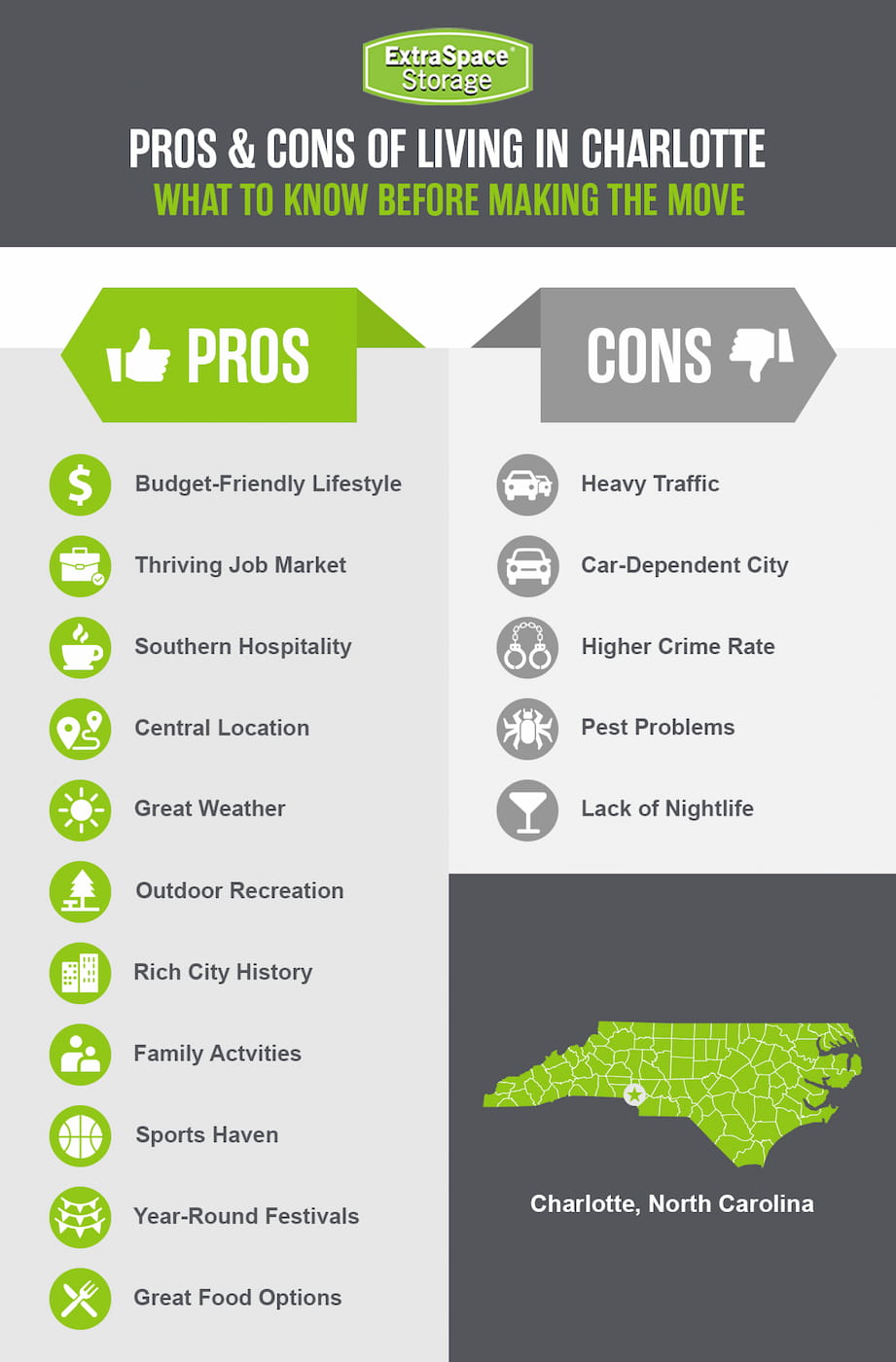
Charlotte is one of the best places to live in the Southeast and on the East Coast, thanks to its affordability, weather, and thriving economy. However, certain drawbacks experienced regularly—like traffic and pest problems—give current residents frustration and may deter potential residents. Check out these pros and cons of living in Charlotte!
Quick Facts About Charlotte
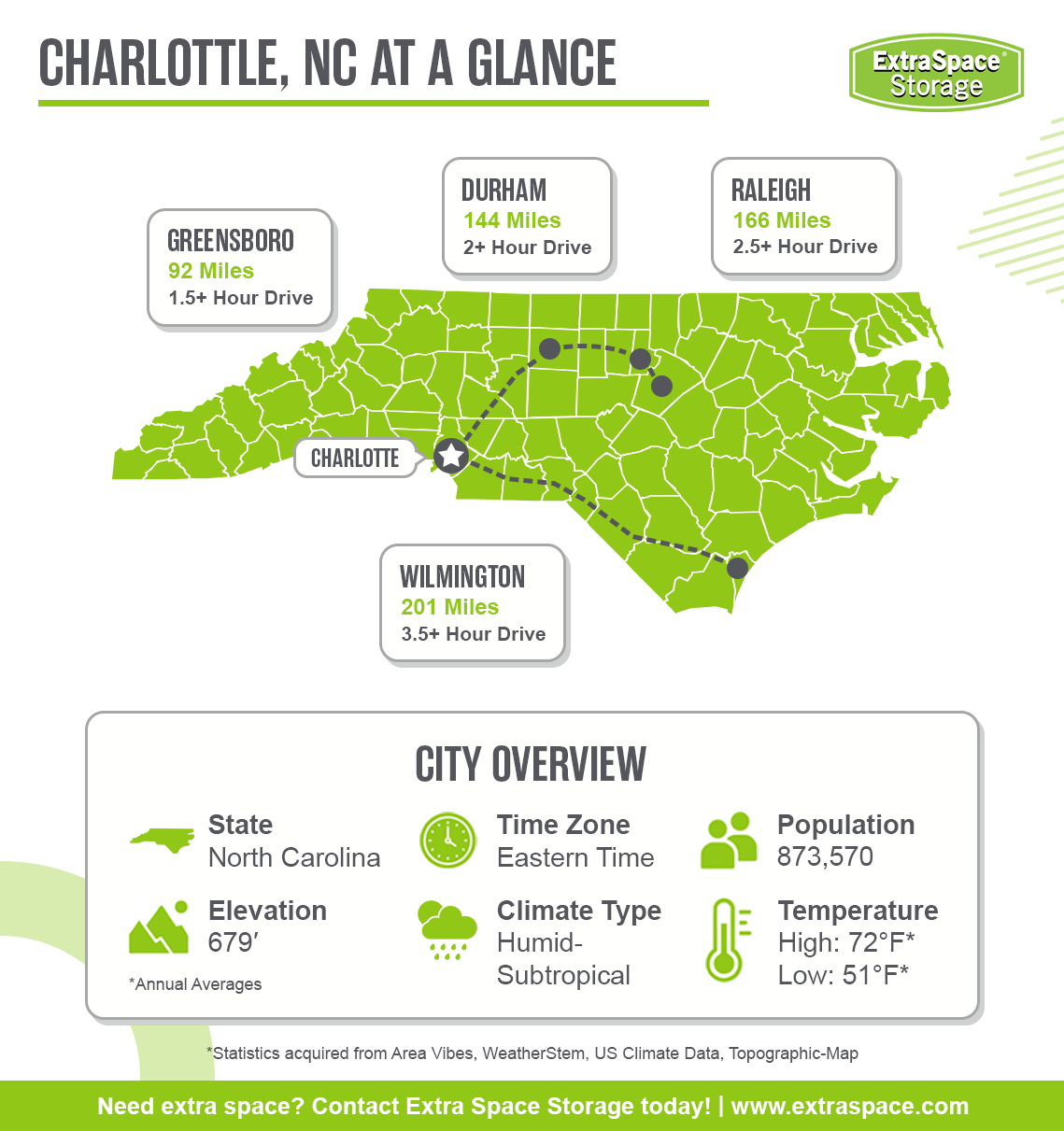
| Population | 873,570 |
| Average Home Price | $401,923 |
| Average Monthly Rent | $1,573 |
| Unemployment Rate | 3.5% |
| Median Salary | $65,359 |
Statistics from AreaVibes, Council for Community and Economic Research (C2ER), & BestPlaces
Pros of Living in Charlotte
There are several benefits of living in Charlotte, including its strong job market, great weather, and family-friendly activities. Here are some of the things that make Charlotte a great place to live!
Pro: Budget-Friendly Lifestyle
North Carolina’s largest city offers a relatively affordable cost of living compared to other fast-growing metropolitan areas in the South. While the city continues to expand, everyday expenses like housing, transportation, and utilities remain manageable. In fact, the cost of living in Charlotte is 1% lower than the national average, and also lower than in many other cities in the region, including Asheville and Charleston.
North Carolina also offers some of the most affordable tuition rates in the nation, with community college costs running 30% below the national average. These factors, combined with a strong Charlotte job market and solid population growth, make it easy to see why the city consistently ranks as one of the best places to live in the South and one of the best cities for real estate. Residents can enjoy the most savings by living in safe, affordable neighborhoods in Charlotte, such as Chantilly, Providence Crossing, and Sardis Woods.
Pro: Charlotte’s Thriving Job Market
Charlotte boasts a strong and diverse job market, while also offering long-term career opportunities for experienced workers. As a major financial and business hub in the Southeast, Charlotte’s economy is driven by key industries like banking and finance, technology, healthcare, energy, and logistics, with a wide variety of companies to work for.
The Charlotte region is home to a staggering 19 companies on the Fortune 500/1000 list, including Bank of America, Truist, and Duke Energy. Start your career at one of the biggest companies in Charlotte, the multinational food service company Compass Group USA. Find work in Charlotte at top-rated companies like chemical manufacturer Albemarle, independent real estate company Allen Tate, or insurance distributor Amwins. Or pursue your dream healthcare job in Charlotte at renowned institutions like Atrium Health, Novant Health, or Carolina Neurosurgery & Spine Associates.
Pro: Trademark Southern Hospitality
Charlotte is known for its welcoming atmosphere and strong sense of community, offering residents the warmth and hospitality Southern cities are famous for—a reputation confirmed by Charlotte’s selection as one of the friendliest cities in America. From close-knit neighborhoods to community events and local gatherings, the city makes it easy for newcomers to feel at home.
Charlotte also ranks among the most diverse cities in the U.S., fostering an approachable culture that welcomes people from all walks of life. The city is notably LGBTQ-friendly, with a wide range of LGBTQ community resources available. This blend of diversity and warmth gives Charlotte a unique character—big-city amenities with a neighborly, small-town feel.
Pro: Central Location & Easy Travel
Charlotte’s central East Coast location makes it easy to escape for a day or a weekend without much planning. A roughly three-hour drive puts you in the Blue Ridge Mountains, where you can hike through Linville Gorge, explore Grandfather Mountain, or visit waterfalls along the Pisgah National Forest. If you prefer a beach day, North and South Carolina beaches like Wrightsville Beach or Myrtle Beach offer sun, surf, and boardwalk fun within a four-hour drive. Major cities are also close by—Raleigh, Durham, Charleston, and Atlanta are all popular getaways. And with Charlotte Douglas International Airport offering nonstop flights across the U.S., residents have quick access to dozens of destinations, making it simple to balance city living with frequent trips.
Pro: Great Year-Round Weather
Charlotte’s climate is generally mild throughout the year, making it easy to get outdoors in any season. Summer in Charlotte is typically warm without the extreme heat found in deeper Southern cities, with an average high of 89°F. Winters are generally short and mild, with an average low of approximately 34°F, resulting in minimal snowfall. Spring and fall are especially pleasant, offering comfortable temperatures, lower humidity, and colorful foliage—making Queen City well-suited for enjoying year-round time outdoors.
Pro: Extensive Outdoor Recreation
Outdoor activities in Charlotte are plentiful, making the city especially appealing for families and those with active lifestyles. You’ll find a number of parks, preserves, greenways, and more woven throughout the city and its surrounding areas.
- U.S. National Whitewater Center for hiking, biking, and rafting
- Evergreen Nature Preserve for quiet hardwood forest walks just minutes from Uptown
- Anne Springs Close Greenway for waterfront play areas, camping, and disc golf
- Freedom Park for sports fields, courts, and green space
- Romare Bearden Park for skyline views, waterfalls, and community events in Uptown
- UNC Charlotte Botanical Gardens for themed gardens and peaceful walking paths
- Crowders Mountain State Park for hiking, rock climbing, and camping just west of the city
Pro: Rich Charlotte History
Founded in 1768 and nicknamed the Queen City in honor of Queen Charlotte of Mecklenburg-Strelitz, Charlotte grew from a gold-mining town into a major Southern banking and transportation hub. This diverse history comes alive at museums and historic sites across the city.
- Charlotte Museum of History for the city’s early settlement history
- Levine Museum of the New South for Charlotte’s role in the American Revolution
- Harvey B. Gantt Center for African American history in Charlotte
- Reed Gold Mine for the first gold discovery site in the U.S.
- Latta Place for 19th-century mill life, farmsteads, and historic buildings
Pro: Plenty of Family Activities
There’s a wide range of family-friendly activities in Charlotte to entertain residents of all ages. From thrilling amusement parks to hands-on museums, there’s something for every age and interest.
- Carowinds for roller coasters, water parks, and seasonal events
- Discovery Place Science for hands-on exhibits and live science demonstrations
- NASCAR Hall of Fame for racing history, simulators, and iconic cars
- Sullenberger Aviation Museum for aviation exhibits and historic aircraft
- Blumenthal Performing Arts Center‘s Belk Theater for family-friendly concerts, Broadway shows, and live performances
- Museum of Illusions Charlotte for immersive illusions and mind-bending displays
- ImaginOn: The Joe & Joan Martin Center for interactive story spaces, performances, and learning activities
Pro: Charlotte Sports
Charlotte is a major sports city with professional teams and high-energy events that draw thousands of passionate fans. Whether you’re into football and basketball, minor league baseball, or Charlotte motorsports like NASCAR, the city offers year-round excitement for sports enthusiasts.
- Carolina Panthers (NFL) & Charlotte FC (MLS) at Bank of America Stadium in Downtown Charlotte
- Charlotte Hornets (NBA) at Spectrum Center
- Charlotte Knights (MiLB) at Truist Field
- Charlotte Checkers (AHL) at Bojangles Coliseum
- Coca-Cola 600 & Bank of America ROVAL 400 at the Charlotte Motor Speedway
Pro: Fun Festivals in Charlotte
If you want something to celebrate, there’s no shortage of Charlotte festivals to attend throughout the year! Appreciate food, music, art, and culture at these eclectic local events.
- Taste of Charlotte Festival for delicious food and live stage performances
- Charlotte SHOUT! for art, music, food, and fashion across Center City
- Heroes Convention for meeting artists and shopping pop-culture merchandise
- Hispanic Heritage Festival of the Carolinas for food, music, and cultural performances
- Novant Health Thanksgiving Eve Parade for festive floats, bands, and fireworks
- Carowinds WinterFest for ice skating, markets, and holiday lights
- Charlotte Pride for parades, concerts, and a drag pageant celebrating inclusivity
Pro: Great Dining Options
If you’re searching for great food in Charlotte, Queen City’s dining scene delivers a mix of Southern tradition and inventive, modern flavors. Here are a few Charlotte restaurants that are favorites among locals and visitors.
- Easy Like Sunday for a relaxed, memorable Charlotte breakfast
- Counter- for an elevated dining experience at North Carolina’s first Michelin-starred restaurant
- Angeline’s for authentic Italian cuisine in a modern American setting
- Fahrenheit for multi-course dining at a Charlotte rooftop restaurant
- Pinky’s Westside Grill for creative pub-style comfort food
- Yama Loso for inventive sushi and Japanese cuisine
Get Everything You Need For An Easier Move to Charlotte
Cons of Living in Charlotte
Disadvantages of living in Charlotte include busy roads and pest problems. When deciding whether Charlotte is the right city for you, remember to factor in the following drawbacks.
Con: Heavy Traffic
Charlotte is known for experiencing heavy traffic congestion, with drivers spending increasingly time on the road. Recent data suggests that the average commuter can lose around 64 hours a year due to traffic delays during peak periods, up from previous years and exceeding the national average of 63 hours. Charlotte also ranks as one of the cities with the hardest commutes in the U.S., largely due to population growth, car dependence, and poor road conditions—more than a third of North Carolina’s major roads are rated as poor or mediocre. However, the city of Charlotte is actively working to tackle congestion with various large-scale projects, including a ten-lane bridge over I-77 and lane expansions to I-85.
Con: Limited Walkability & Public Transit
With a walk score of 26, Charlotte ranks near the bottom in walkability among large U.S. cities, meaning most errands and commutes require a car. Pedestrian infrastructure is limited, largely due to suburban sprawl and wide road design outside the urban core. That said, certain Charlotte neighborhoods with mixed-use development and transit access—such as Cherry, Dilworth, and Fourth Ward—offer strong walkability, making it much easier to get around without a car.
Public transit is also relatively limited compared to other major cities, though Charlotte is actively working to expand its system. The Charlotte Area Transit System (CATS) currently offers buses, light rail lines, and Special Transportation Services (STS), with ambitious plans for expansion that include new rapid transit corridors and improved connectivity. Additionally, a Shared Mobility Program provides access to e-scooters and e-bikes from Bird and Lime for convenient short-distance travel.
Con: Higher Crime Rate
Although Charlotte has seen significant reductions in crime in recent years, the city still experiences crime rates higher than the national average. This past year, violent crime decreased 21%, while property crime fell by 6%. Despite these improvements, certain neighborhoods continue to experience safety concerns, making it important for residents to stay aware, use local resources, and take precautions to protect themselves and their property. Settling down in a safe Charlotte neighborhood away from the city center, such as Chantilly or Providence Crossing, offers lower crime and a quieter atmosphere.
Con: Pest Problems
Like many cities in the Southeast, the warm, humid Charlotte climate can lead to pest issues throughout the year. As one of the buggiest cities in the U.S., residents may encounter seasonal pests like mosquitoes, cockroaches, termites, and wasps during the spring and summer, while fall and winter are more likely to bring rodents, spiders, and indoor infestations.
That said, pests in Charlotte are generally manageable with regular maintenance and professional services. Many neighborhoods and apartment communities offer routine pest control, and local companies are well-equipped to handle common pests. With proper yard upkeep, sealed entry points, and preventative treatments, most residents can keep these issues under control and enjoy comfortable living in Charlotte.
Con: Lack of Nightlife
While Queen City has a growing social scene, its nightlife can feel somewhat limited compared to many other large cities. However, you can still enjoy a traditional nightlife experience at Charlotte nightclubs—sipping drinks and listening to live music at Encore Nightclub, dancing to EDM with light displays at Trio Nightclub, or hanging out on the patio at QC Social Lounge.
The city also boasts an exceptional brewery culture that has become a defining aspect of Charlotte’s nightlife scene. With over 30 breweries to explore, Charlotte brewery tours are a popular way to experience the local craft beer scene, including these favorites.
- Brewers at 4001 Yancey for a dog-friendly, community-focused atmosphere
- Charlotte Beer Garden for a large patio and hundreds of beers on tap
- The Olde Mecklenburg Brewery & Biergarten for one of the best beer garden experiences in the U.S.
- Wooden Robot for a vibrant, farmhouse atmosphere in the South End and NoDa
Should You Move to Charlotte?
You should move to Charlotte if you value a vibrant dining scene, outdoor recreation, and a major city that’s growing but still manageable. You may not want to move to Charlotte if you prefer a vibrant nightlife scene, extremely compact urban living, or getting around without a car. Charlotte is often best for families, young professionals, and outdoor enthusiasts because of its neighborhoods, parks, and year-round activities. Before deciding, think about your career, commute, and lifestyle.
Charlotte may be the right fit for you if…
- You want affordable living and jobs in finance, healthcare, tech, or energy.
- You prefer mild weather and easy access to outdoor recreation.
- You’re raising a family and want family-friendly attractions.
- You enjoy sports, festivals, and a relaxed social scene.
- You value Southern hospitality, diversity, and community.
You may want to consider moving to another city if…
- You want a highly walkable city with strong public transit.
- You need a short, stress-free commute without heavy traffic.
- You prefer an energetic, late-night scene with plenty to do.
- You’re sensitive to humidity or common pests.
- You prefer dense, urban living with minimal sprawl.
Charlotte Compared to Other Nearby Cities
Wondering if Charlotte or a city like Raleigh, Columbia, or Atlanta is a better fit for you? Compare factors such as home prices, walk scores, and commute times below to see how Charlotte stacks up to other popular Southeast cities.
| Factor | Charlotte, NC | Raleigh, NC | Columbia, SC | Atlanta, GA |
| Average Rent | $1,573 | $1,492 | $1,320 | $1,458 |
| Average Home Price | $401,923 | $453,994 | $345,221 | $430,619 |
| Average Commute Time | 25 minutes | 23 minutes | 15 minutes | 26 minutes |
| Walk Score | 26/100 | 31/100 | 35/100 | 48/100 |
| Unemployment Rate | 3.5% | 3.0% | 3.9% | 4.4% |
| Major Industries | Finance, technology, healthcare | Education, life sciences, technology | Healthcare, technology, manufacturing | Aerospace, technology, healthcare |
Statistics from Council for Community and Economic Research (C2ER), BestPlaces, Walk Score, & AreaVibes
Frequently Asked Questions About Moving to Charlotte
Is Charlotte, NC expensive to live in?
No, Charlotte is considered an affordable place to live compared to other major U.S. cities. Housing costs are particularly affordable at 15% below the national average, making this city an attractive option for families and young professionals alike.
Is Charlotte, NC safe?
While Charlotte’s crime rates are above the national and state averages, the city has seen significant improvements in recent years. As with any major city, safety varies by neighborhood, with areas like Ballantyne West, Chantilly, and Providence Crossing offering peaceful, family-friendly environments and low crime rates.
Does Charlotte get hurricanes?
Since Charlotte is located inland from the East Coast, it’s susceptible to hurricanes, although storms usually weaken significantly by the time they arrive. However, residents should still take proper precautions—such as installing hurricane shutters and clearing their drains—since Charlotte can experience high winds, tornadoes, and flash floods from these systems.
What is the distance from Charlotte to Raleigh?
Charlotte is just over 160 miles from Raleigh. The drive typically takes around two and half to three hours when using I-85 N and I-40 E, going past other large cities like Greensboro and Durham.
Is Charlotte a nice place to live?
Yes, Charlotte has been recognized as a top place to live in the Southeast and on the East Coast. The city offers strong job growth, mild weather, and a welcoming blend of urban amenities and suburban living that appeals to residents of all ages.
***
Moving to Charlotte? Extra Space Storage can help make your move to the Queen City go smoothly. Find affordable storage units near you!