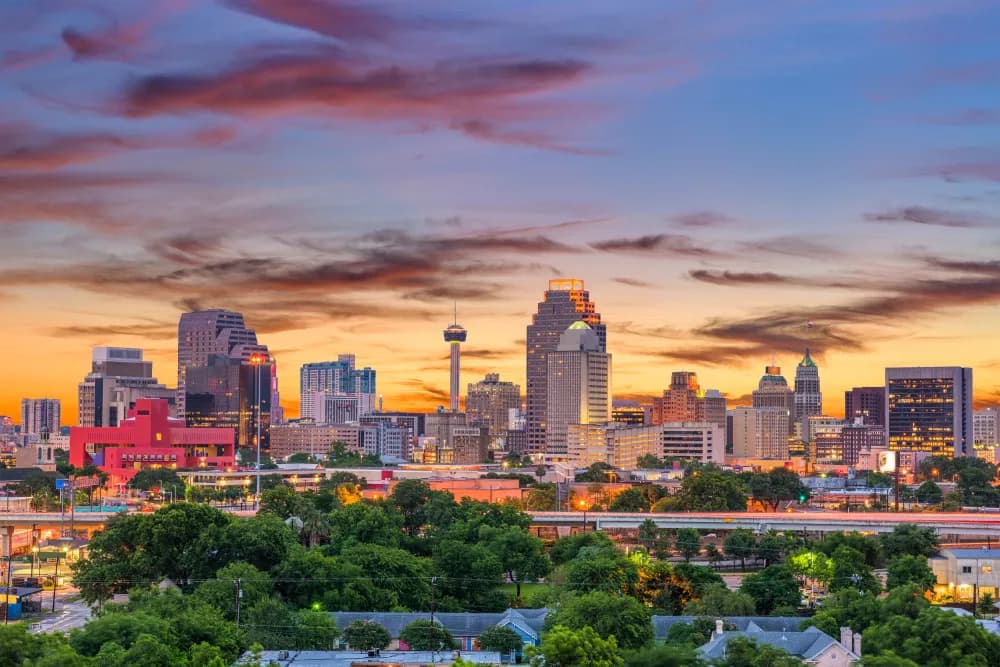
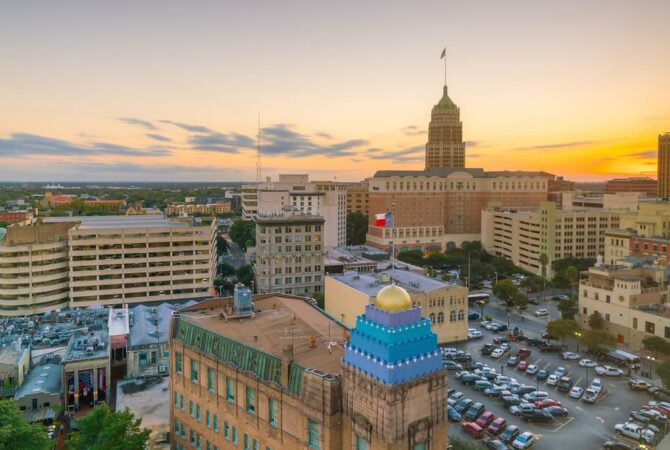
San Antonio is a great place to live and one of the largest cities in the U.S.—many say it’s home to excellent job opportunities, incredible food, and a rich cultural heritage, but also deals with high heat, weaker infrastructure, and air quality concerns. Decide whether you should move to San Antonio with these pros and cons!
Quick Facts About San Antonio
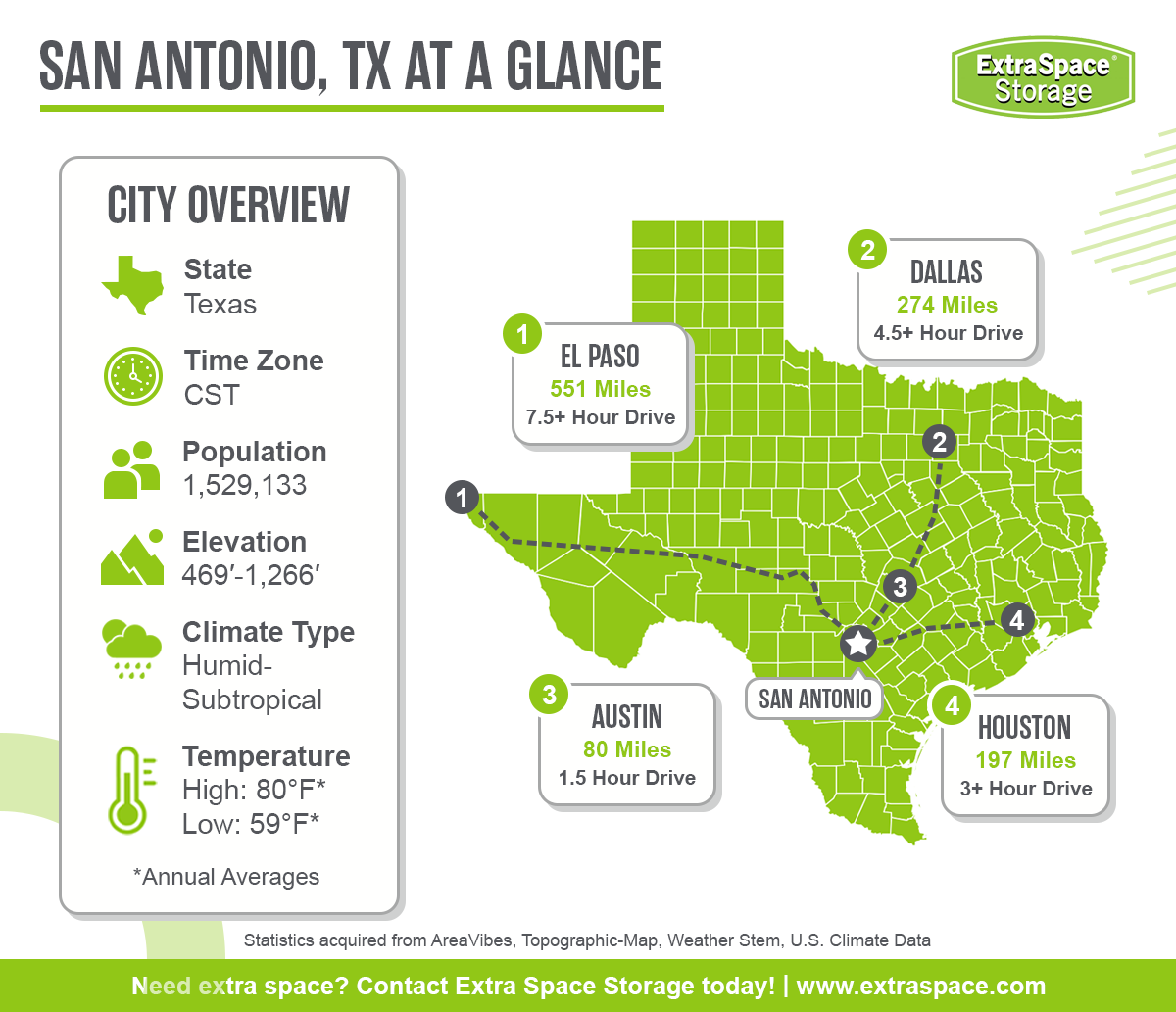
| Population | 1,529,133 |
| Average Home Price | $359,091 |
| Average Monthly Rent | $1,524 |
| Average Days of Sunshine | 220 |
| Unemployment Rate | 3.8% |
Statistics from AreaVibes, Council for Community and Economic Research (C2ER), & BestPlaces
Pros of Living in San Antonio
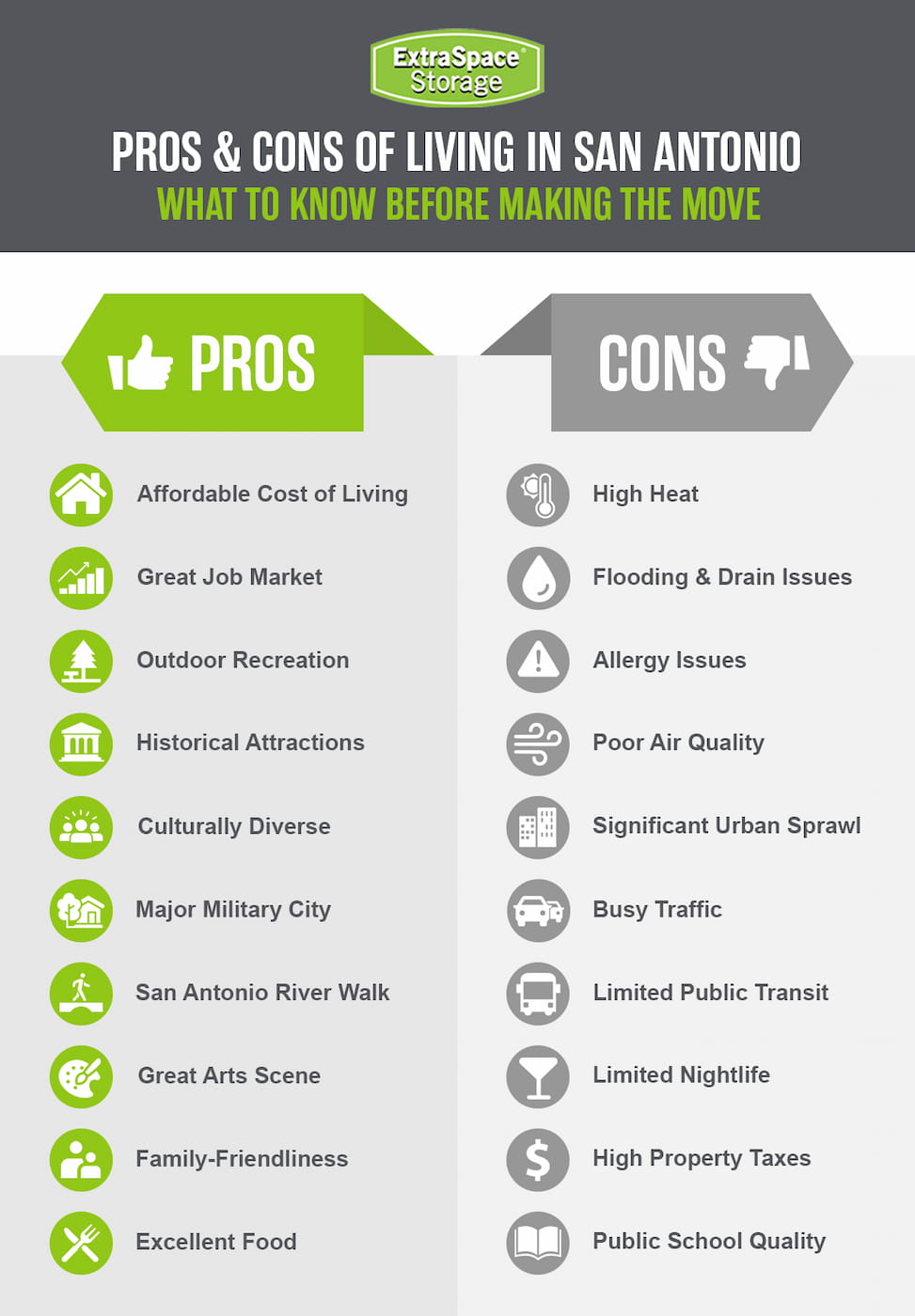
San Antonio is a great place to live thanks to its affordable cost of living, outdoor offerings, family-friendly attractions, and central location. Here are the pros of living in San Antonio!
Pro: Affordable Cost of Living
Despite being one of the nation’s largest cities with plenty of urban amenities, San Antonio remains relatively affordable—especially compared to nearby Texas metros like Dallas, Houston, and Austin. The cost of living in San Antonio is about 9% lower than the national average, and with no state income tax, residents can stretch their dollars even further. Lower housing costs in San Antonio also contribute to the city’s appeal, fueling one of the hottest real estate markets in the U.S. Some of the best neighborhoods in San Antonio to buy a home are Alamo Heights, Stone Oak, and Helotes, while those looking to live within budget can find safe, affordable neighborhoods like Monte Vista, Oak Park-Northwood, and Tobin Hill.
Pro: Great Job Market
San Antonio is a fast-growing metro in one of the best states for employment, Texas, with key industries like aerospace, healthcare, and information technology. With an unemployment rate below the national average and a reputation as one of the best cities for remote work, the Alamo City attracts both in-office and digital professionals looking to build their careers.
- H-E-B for retail work
- Zachry Group for construction and engineering
- Valero Energy for fuel production
- USAA for insurance solutions
- iHeartMedia for mass media broadcasting
- Deer Oaks Behavioral Health for behavioral healthcare
- Frost Bank for financial services
- DPT Laboratories for pharmaceutical manufacturing
Pro: Tons of Outdoor Recreation
There’s easy access to outdoor activities in San Antonio year-round, thanks to its warm climate and diverse natural spaces. From scenic waterfront recreation to sprawling parks and botanical gardens, there’s no shortage of ways to stay active and enjoy Alamo City’s outdoors.
- Take a cavern tour, ride coasters, and go ziplining at Natural Bridge Caverns.
- Explore San Antonio wildlife, playgrounds, and picnic areas along the river at Brackenridge Park.
- Stroll past lush floral displays, shaded walkways, and a koi pond at the Japanese Tea Garden.
- Walk through wooded trails and enjoy scenic overlooks at Government Canyon State Natural Area.
- Hike Red Oak Trail, Shady Creek Trail, and the Cedar Flats Trail from Eisenhower Park.
- Cool off and relax at swimming spots like San Pedro Springs Park.
- Play games of tennis, go swimming, or try fishing at Woodlawn Lake Park.
Pro: Historical Attractions
Originally founded as a Spanish mission, San Antonio is rich in history, offering a wide range of landmarks that reflect the city’s deep cultural roots.
- Explore Texas history at The Alamo, featuring guided tours, exhibits, and stories from the 1836 battle.
- Step back in time at San Antonio Missions National Historical Park, home to Mission Concepcion, Mission Espada, and Mission San Juan.
- Celebrate local culture and the heroes of the Battle of the Alamo during Fiesta San Antonio, a citywide event filled with parades, live music, and traditional food.
- Head over to Downtown San Antonio and wander through preserved 19th-century architecture, local shops, and cultural exhibits at La Villita Historic Village.
- Tour a beautifully restored Victorian home and lush grounds that showcase San Antonio’s past at Villa Finale.
- Visit standout San Antonio museums like the Witte Museum, Briscoe Western Art Museum, and the San Antonio Fire Museum.
Pro: Rich Cultural Diversity
San Antonio’s cultural identity is deeply rooted in its Mexican and Hispanic heritage, blended with strong Southern influence. This diversity comes to life through annual events, food, and communities in the city.
- Attend Fiesta San Antonio, a citywide celebration of music, food, and parades.
- Enjoy traditional treats, live music, and face painting during the nation’s largest Day of the Dead celebrations at San Antonio’s Día de los Muertos Festival.
- Explore the local food scene, also known as one of the birthplaces of Tex-Mex cuisine—a style of cooking which combines rich Mexican flavors with Texas ingredients and innovation, paved by the Chili Queens.
- Visit San Antonio’s abundant cultural institutions, such as the Mexican Cultural Institute, Guadalupe Cultural Arts Center, and the UTSA Institute of Texan Cultures.
- Find your people with San Antonio’s thriving LGBTQ+ community, made up of thousands of residents celebrating with parades, live performances, and entertainment yearly with Pride San Antonio.
Pro: Major Military City
San Antonio is often called “Military City, USA” due to its longstanding ties to the U.S. armed forces, having one of the largest concentrations of military bases in the United States, and having one of the nation’s largest active and retired military populations.
- Explore the region’s major military presence at Joint Base San Antonio, which includes Randolph AFB, Lackland AFB, and Camp Bullis, and supports a large active-duty and veteran population.
- Settle near Fort Sam Houston, widely regarded as one of the best military bases for families.
- Take advantage of Texas’s low taxes and veteran-exclusive benefits that help make San Antonio a top city for veterans and military retirees.
- Access world-class care at Brooke Army Medical Center, the Department of Defense’s largest medical facility and a Level 1 Trauma Center.
- Celebrate military history and heritage at sites like the USAF American Heritage Museum and the Fort Sam Houston Museum.
Pro: San Antonio River Walk
As one of the city’s most iconic spots, the 15-mile San Antonio River Walk offers something for everyone.
- Stroll through the Museum Reach, which features scenic trails, public art, and cultural stops like the Tobin Center for the Performing Arts.
- Shop and dine in the Pearl District, with access to boutiques, restaurants, and the weekend farmers market.
- Unwind on the quieter paths of Mission Reach, ideal for peaceful walks or kayaking along the river.
- Explore outdoor attractions at Hemisfair Park, including kid-friendly play areas at Yanaguana Garden.
- Take in sweeping city views from the Tower of the Americas.
- Cruise and celebrate downtown by floating along on Go Rio San Antonio River Cruises, enjoying San Antonio nightlife, and watching light projections on San Fernando Cathedral.
Pro: Great Arts Scene
San Antonio boasts a vibrant arts scene that spans visual art, theatre, live music, and more. Whether you’re a casual visitor or a dedicated art enthusiast, the city offers standout venues that showcase creativity in every form.
Visual Arts
- San Antonio Museum of Art for ancient artifacts to contemporary pieces
- McNay Art Museum for modern and classical works in a historic estate
- Blue Star Arts Complex for local galleries and working studios
Theatre & Performing Arts
- Arneson River Theatre for open-air performances along the River Walk
- San Pedro Playhouse for Broadway-style productions and community theatre
- The Josephine Theatre for intimate shows in a historic venue
Live Music
- Howl at the Moon for high-energy music shows and drinks
- Stable Hall for concerts hosted in a beautifully restored venue
Festivals
- Luminaria Contemporary Arts Festival for large-scale, citywide arts celebrations
- Fiesta Arts Fair for showcasing local and international artists
Pro: Family-Friendliness
There is a wide variety of family-friendly activities in San Antonio, from hands-on learning experiences to kid-friendly events, making it a great place for families to visit or call home.
- SeaWorld San Antonio for animal shows and marine exhibits
- Six Flags Fiesta Texas for roller coasters and live entertainment
- San Antonio Zoo for seeing hundreds of animal species
- Natural Bridge Wildlife Ranch for a drive-through safari adventure
- The DoSeum for interactive, STEAM-focused exhibits
- Hopscotch for immersive, creative art installations
- LEGOLAND Discovery Center for LEGO-themed rides and play zones
- Morgan’s Wonderland for classic amusement park fun
- San Antonio Stock Show & Rodeo for rodeo events and concerts
Pro: Excellent Food
San Antonio’s culinary scene is diverse, reflecting its rich culture and vibrant local flavors. Some of the best food in San Antonio, from iconic Tex-Mex cuisine to international fare, can be found at these restaurants.
- Mi Tierra Café y Panadería, Domingo Restaurant, and Rosario’s ComidaMex Bar for classic Tex-Mex in San Antonio in lively, festive atmospheres
- Biga on the Banks for contemporary American food and seasonal selections by the riverfront
- Mixtli for a rotating menu of inventive Mexican fine dining at a Michelin Star-winning restaurant
- Southerleigh Fine Food and Brewery for Coastal-inspired Southern cuisine paired with craft beers
- Bohanan’s Prime Steaks and Seafood for upscale steak and San Antonio seafood in an elegant setting
- Green Vegetarian Cuisine for plant-based and globally inspired vegetarian dishes
Get Everything You Need For An Easier Move to San Antonio
Cons of Living in San Antonio
A few disadvantages of living in San Antonio include its high heat, heavy traffic, and limited transit options. While you can still carve out a comfortable living thanks to the city’s low prices and great amenities, these are some cons of San Antonio to consider.
Con: High Heat
Alamo City is considered one of the hottest cities in the U.S., with long stretches of humidity. Summer in San Antonio is particularly warm, with average high temperatures in July reaching around 95°F and lows around 75°F. On average, the city reaches the 90-degree mark more than 110 days out of the year, which can make outdoor activities challenging during peak summer months. On the bright side, the long, warm days create plenty of opportunities for year-round outdoor recreation along the beautiful Hill Country. In contrast, winter is mild and inviting, with little to no snowfall, making San Antonio one of the best cities for winter vacations and activities like ice skating at the Pearl Ice Rink. Even during the hottest months, properly preparing for the climate in San Antonio makes it easy to enjoy everything safely.
Con: Flooding & Storm Drainage Issues
San Antonio sits in “Flash Flood Alley,” one of the most flood-prone regions in North America, where heavy rainfall can trigger flash floods in minutes, and urban runoff can be up to 6 times higher than in natural areas due to extensive impervious surfaces like roads and parking lots. The city receives an average of 30 inches of rainfall per year, but this average shifts dramatically depending on flood events in San Antonio. Recent storms across Texas Hill County have been devastating, particularly in older neighborhoods that struggle with inadequate storm drainage infrastructure, which can worsen localized flooding. For those moving to San Antonio, familiarize yourself with flood risk data, consider purchasing flood insurance, and have an evacuation plan ready for sudden heavy rains. Clearing debris from gutters and storm drains around your property is another simple precaution that can reduce widespread damage.
Con: Allergy Issues
San Antonio is known to deal with seasonal allergies, largely due to its moderate to high pollen levels. The city ranks within the top 40 allergy capitals, thanks to cedar (often called “cedar fever”) and other pollens that peak at different times. Residents should be cautious year-round, as oak pollen peaks in spring, grass pollens in summer, and ragweed in the fall. Winter cedar pollen can be especially rough, causing cold-like symptoms even when temperatures are mild. For allergy sufferers, this can mean year-round management with medications, air purifiers, and regular home cleaning. Staying away from common allergy triggers and meeting with allergy specialists can help make symptoms more manageable.
Con: Poor Air Quality
Living in San Antonio also means dealing with occasional poor air quality from air pollution, which ranks among the worst in the nation. Vehicle emissions from heavy traffic, industrial activity, and weather patterns that trap pollutants can lead to higher ozone levels, particularly during hot summer months. This can be uncomfortable for people with asthma or other respiratory conditions and may limit outdoor activities on high-alert days. While the city has taken steps to promote cleaner transportation and environmental initiatives, air quality concerns remain something residents need to monitor and prepare for, especially during peak heat and traffic seasons.
Con: Significant Urban Sprawl
San Antonio covers almost 500 square miles, making it one of the largest cities in the U.S. by land area. Despite having over a million residents, the average population density is roughly 3,147 people per square mile, lower than in other major metros. The city’s continued outward growth has led to low-density development and car dependence. Sprawl contributes to longer commute times, low walkability, and fewer centralized entertainment or employment hubs, making it harder to enjoy the city without driving. While the city offers affordability and newer housing, the tradeoff is reduced convenience for residents who prefer a compact, walkable urban environment.
Con: Busy Traffic
Largely due to the city’s high population and car-dependent layout, traffic in San Antonio can be a challenge. It’s recently been reported as having some of the worst traffic in the nation, with drivers losing an average of 39 hours stuck in traffic last year. Major corridors like I-35, I-10, Loop 1604, and Highway 281 regularly experience congestion, especially during rush hour and ongoing construction projects aimed at keeping up with expansion. While the city continues to invest in road improvement projects, residents often need to plan travel times carefully or rely on flexible schedules to avoid the worst congestion.
Con: Limited Public Transit
San Antonio’s size and sprawl make getting around without a car difficult. While VIA Metropolitan Transit provides bus service across the city, coverage and frequency drop significantly outside central areas, and there is no rail system to support long-distance commuting. As a result, most residents rely on driving for daily travel. Local mobility with San Antonio public transit may be a struggle, but residents can still fly regionally and internationally from the San Antonio International Airport. And though options are limited compared to nearby Texas cities, long-term initiatives like VIA Vision 2040 and the planned Advanced Rapid Transit (ART) aim to modernize the system. Biking in San Antonio is also convenient, thanks to its numerous trails and the city’s approved Bike Network Plan.
Con: Limited Nightlife Opportunities
While there are pockets of nightlife in San Antonio, such as along the River Walk, Southtown, and parts of the Pearl, the overall scene is quieter than in cities like Austin or Dallas. Late-night options can be limited outside of some of the best neighborhoods for singles, which can feel restrictive for younger residents or night owls. That said, there are still great opportunities for after-hours fun.
- Cowboys Dancehall for country music, two-stepping, and large dance floors
- 1902 Nightclub for DJ sets, Latin nights, and club-style dancing
- Bonham Exchange for multi-level dance floors and drag shows
- Round1 Bowling & Amusement for late-night bowling, karaoke rooms, and arcade games
- Kung Fu Saloon for arcade games, drinks, and a casual atmosphere
- Thirsty Horse Saloon for live country bands and dance nights
Con: High Property Taxes
San Antonio, particularly Bexar County, has property tax rates twice as high as typical U.S. rates, meaning homeowners can pay thousands of dollars annually in property taxes alone. As a whole, Texas ranks among some of the highest property tax rates in the nation. This can be a financial burden for many buyers and can offset some of the benefits of lower home prices, especially for first-time buyers or those on fixed incomes. While Texas limits how much property taxes can be increased through its homestead cap, taxes are still steadily increasing and can pose a hardship to property owners.
Con: Public School Quality Varies Widely by District
While some San Antonio-area schools and districts perform reasonably well, educational quality isn’t uniform across the city. Accountability ratings show a range of outcomes—from higher-achieving districts like Boerne and Alamo Heights to multiple districts earning C and D ratings under the Texas Education Agency’s accountability system. Many districts—like Northside and Judson— that once earned B ratings have declined in recent years, and some individual campuses struggle with performance, leading to significant variability depending on where you live. However, San Antonio offers a wide range of magnet programs and charter schools, giving families opportunities to find strong educational fits even in lower-rated districts.
Should You Move to San Antonio?
Consider moving to San Antonio if you’re drawn to a city with rich culture, strong job opportunities, and a relatively affordable cost of living in a warm climate. Home to a diverse population, including young professionals and a military veteran community, the Alamo City offers a relaxed lifestyle with plenty of amenities. Still, it’s important to weigh factors like transportation, weather, and air quality to decide if San Antonio is right for you.
San Antonio may be the right fit for you if…
- You want a large, affordable city with a lower cost of living.
- You’re looking for strong job opportunities in healthcare, military, aerospace, or tech.
- You enjoy warm weather and sunshine year-round.
- You value culture, history, and diversity, including festivals, museums, and landmarks.
- You like having family-friendly attractions, theme parks, and outdoor recreation nearby.
- You prefer a car-friendly lifestyle and don’t rely heavily on public transportation.
- You’re a military member, veteran, or military family seeking long-term benefits and community.
You may want to consider moving to another city if…
- You’re sensitive to extreme heat or high humidity.
- You rely on robust public transit or rail systems for daily commuting.
- Traffic congestion and longer drive times significantly impact your routine.
- You have severe allergies or respiratory conditions affected by pollen or air quality.
- You prefer a cooler climate or four distinct seasons.
- You’re looking for a dense, walkable urban core.
San Antonio Compared to Other Nearby Cities
Wondering if San Antonio is better than other Texas cities like Dallas, Houston, or Austin? See the key differences in cost of living, commute times, walkability, and jobs to determine which city best aligns with your lifestyle, budget, and career priorities.
| Factor | San Antonio, TX | Dallas, TX | Houston, TX | Austin, TX |
| Average Rent | $1,524 | $1,554 | $1,329 | $1,829 |
| Average Home Price | $359,091 | $476,573 | $397,435 | $501,645 |
| Average Commute Time | 24 minutes | 27 minutes | 27 minutes | 24 minutes |
| Walk Score | 37/100 | 46/100 | 47/100 | 42/100 |
| Unemployment Rate | 3.8% | 3.4% | 4.2% | 3.2% |
| Major Industries | Information technology, healthcare, aerospace | Government, education, healthcare | Medicine, energy, business, biotechnology | Technology, healthcare, education |
Statistics from Council for Community and Economic Research (C2ER), BestPlaces, Walk Score, & AreaVibes
Frequently Asked Questions About Moving to San Antonio
Is San Antonio expensive?
San Antonio is considered affordable compared to other major Texas cities like Austin, Dallas, and Houston, with lower average home prices and rent. Utilities, transportation, and the overall cost of living are also below the national average. Property taxes in Texas can be higher than in some states, but the lack of state income tax helps offset overall expenses. This balance makes San Antonio especially attractive for families and retirees.
Is San Antonio safe?
San Antonio is generally safe, though crime rates vary by neighborhood, as in any large city. Many areas, especially suburban and family-oriented neighborhoods, are considered safe and well-maintained. Some safe neighborhoods in San Antonio, like Monte Vista, Oak Park-Northwood, and Tobin Hill, are top options.
What is the average temperature in San Antonio?
San Antonio has a warm climate, with average annual temperatures around 70°F. Summers are hot, with July highs near 95°F, while winters are mild and rarely see prolonged freezing temperatures. The city averages about 220 sunny days per year, making it ideal for outdoor activities year-round.
How far is San Antonio from Houston?
San Antonio is about 200 miles west of Houston, roughly a 3-hour drive by car. The two cities are connected by Interstate 10 (I-10), making travel relatively straightforward. Depending on traffic and weather, drive times can vary slightly, especially during holidays or peak travel hours.
Is San Antonio a nice place to live?
San Antonio is a nice place to live, offering affordable housing, rich history, and plenty of family attractions, such as theme parks, museums, and zoos. Its slower pace and strong community feel make it appealing for residents. This sense of community is seen with family neighborhoods in San Antonio, such as Alamo Heights, Great Northwest, and Stone Oak.
***
Relocating to San Antonio? Make the process easier with a local storage solution. Extra Space Storage offers affordable storage units in San Antonio to help you stay organized during a move!