

It’s time for spring cleaning, and there’s no better place to start decluttering and scrubbing than the kitchen! Since it’s one of the busiest areas in your home, kicking off your spring clean in the kitchen can make a big difference. Follow these kitchen cleaning tips to freshen up the heart of your home from top to bottom!
Gather Spring Cleaning Supplies
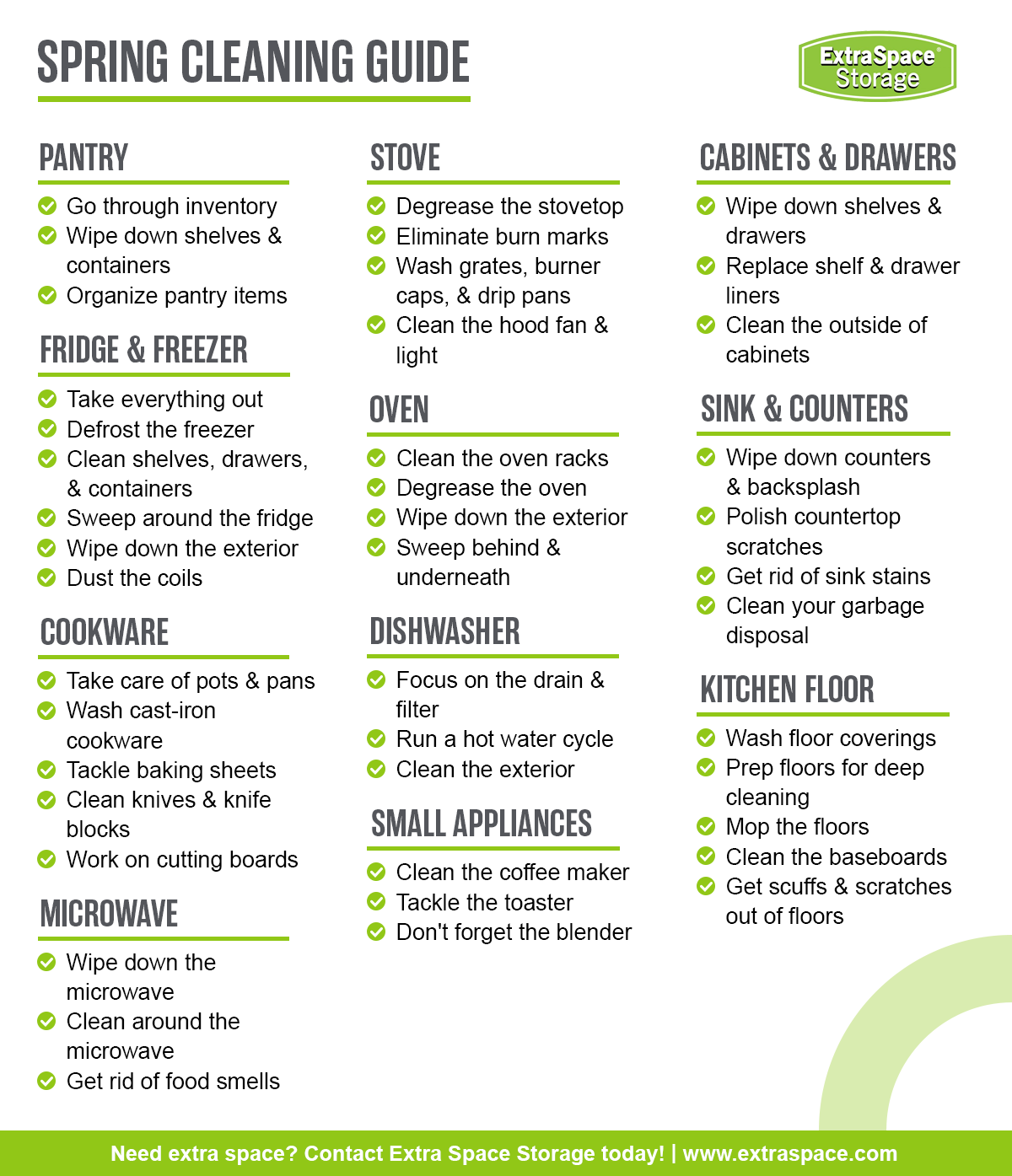
Before you deep clean the kitchen, make sure you have the right supplies on hand. While this can vary based on your needs and cleaning preferences, here’s a list of helpful kitchen cleaning supplies to get you started:
- Vacuum
- Mop
- Broom
- Duster
- Microfiber cloths
- Sponge
- Soft-bristled brush
- Steel scrubbing pad
- Paper towels
- Dish soap
- All-purpose cleaner
- Stainless steel cleaner
- Floor cleaner
- White vinegar
- Baking soda
- Food-grade hydrogen peroxide
- Degreaser
- Laundry detergent
- Bleach
- Gloves
How to Clean Your Pantry
Ready to refresh your pantry? The pantry is a common problem area, so take time to create a kitchen storage space that’s organized and well-stocked—and find exactly what you’re looking for when you need it!
Go Through Inventory
Declutter your kitchen pantry by removing all items from your shelving. Throw away any old, expired food or empty boxes, and make a list to restock your essential everyday and outdated items. Then, group similar items together so you can place them back on your pantry shelves in an organized manner.
Wipe Down Shelves & Containers
Before putting anything back on pantry shelving, wipe down all surfaces, food storage containers, bins, and baskets to eliminate dust and grime. Use a handheld vacuum or dry cloth to remove dust and debris, then clean with a warm water and dish soap solution. To degrease tough spots on laminate or sealed wood shelves, apply a mixture of white vinegar and warm water—or cover with a baking soda and water paste, let it sit for 15 minutes, then wipe away.
Organize Pantry Items
Once you’re finished deep cleaning the kitchen pantry, top everything off by refreshing your pantry organization. Consider adding pull-out pantry shelves, canned food organizers, spice racks, or stackable airtight food containers. Group like-items together in sections and ensure frequently-used items are easily accessible so you can quickly find and reach what you need. And try using a turntable to get rid of dead space and avoid storing food in front of or behind other items that you can’t see.
How to Clean Your Fridge & Freezer
From throwing away old food to cleaning up spills, spring is the perfect time to prioritize refrigerator cleaning. Here’s how to make your fridge and freezer space feel functional again!
Take Everything Out
The first step to deep cleaning a fridge is to remove everything from the shelves. As you go, discard anything that’s expired or has gone bad, as well as any food you know won’t get eaten.
Defrost the Freezer
Consider defrosting your freezer before you restock it, especially if the ice layer is more than 1/4-inch thick. Defrosting helps your freezer run more efficiently and gives you more room to store frozen food.
Clean Shelves, Drawers, & Containers
Once the fridge and freezer are empty, remove the shelves, drawers, and any plastic storage containers. Use warm water and soap to remove any built-up gunk or sticky food spills. Before returning them, use a sponge with dish soap and warm water to clean inside the fridge. After you’re done, place an open container of baking soda in the back of your fridge to absorb any lingering odors.
Sweep Around the Appliance
Tons of dirt, dust, and debris can pile up behind the fridge. Pull the fridge out so you can sweep and mop the grime from under and behind it. If your fridge can’t be pulled out, try using a handheld vacuum and broom to clean around the appliance.
Wipe Down the Exterior
While your refrigerator is pulled out, wipe away any marks on the front and sides with a warm, damp cloth and use a mild disinfectant to sanitize the surface. If your fridge or freezer is stainless steel, use a stainless steel cleaner or polish to buff out fingerprints and smudges. Check the waterline connection on the back, too, to make sure the seal is tight and there’s no leaking that could cause mildew. And don’t forget to dust the top of your fridge and vacuum dust and debris from the backside.
Dust the Coils
To wrap up your fridge deep clean, dust off your appliance’s coils. Ideally, you should clean your fridge coils every six months, so tackling this task during your spring—and fall—refresh is a great idea! Simply unplug your refrigerator, remove the front grille or back panel to access the coils, and use a vacuum with a brush attachment (or a coil brush) to remove dust and debris. Put the panel back in place, plug the fridge back in, and you’re done!
How to Clean Cookware
Because items like pots, pans, and baking sheets can accumulate baked-on stains and grease, it’s a good idea to deep clean your cookware in the spring. Consider the following tips.
Take Care of Pots & Pans
Pots and pans can easily build up dark, burnt-on stains that soap, water, and a sponge can’t fix. To deep clean pots and pans, use baking soda, vinegar, and a steel scrubbing pad to get rid of burn spots on your cookware. Don’t forget to clean the bottom side of pots and pans, too, which also get really dirty.
Wash Cast-Iron Cookware
When spring cleaning the kitchen, avoid using soap to clean your cast-iron cookware, as it can damage the precious layer of non-stick seasoning that builds up on Dutch ovens, griddles, and cast-iron skillets over time. Alternatively, clean cast-iron cookware with warm water and a soft-bristled brush, or use coarse kosher salt and water to gently scrub off any stuck-on food the brush can’t get. Once your pan is clean, dry it with paper towels and place it on the stove over low-medium heat to evaporate any leftover moisture. When the pan is dry, rub a thin film of vegetable or canola oil over the entire surface of the pan to prevent rust.
Tackle Baking Sheets
Don’t forget to put baking sheets on your kitchen deep cleaning checklist! To get rid of stubborn, dark stains on your baking sheets, sprinkle baking soda on the sheets, pour in some hydrogen peroxide, and let it soak for about two hours. Once the stains are softened after a couple of hours, use a cloth or sponge to scrub away the remaining stains.
Clean Knives & Knife Blocks
Dirty and dull knives are more dangerous than extremely sharp knives because they can become rusty and difficult to use. The best way to clean kitchen knives and remove dark stains or rust spots is to use a rust remover before sharpening them at home or having them professionally sharpened. Even if your knives don’t merit a professional sharpening, wash them with dish soap, hot water, and a dish brush, and immediately dry them. While the knives dry, turn over your empty knife block to shake out any dust and food debris inside the slots.
Work on Cutting Boards
To disinfect your wood cutting board, use a mixture of food-grade hydrogen peroxide and white vinegar. Once it’s been disinfected, use salt or baking soda and a lemon wedge to buff out any lingering stains or scents. You can also oil wood cutting boards to help prevent them from drying out, cracking, or warping. For plastic cutting boards, mix water and a capful of bleach and use a sponge to clean them before washing with soap and water.
How to Clean Your Microwave
Your kitchen spring clean isn’t complete without tackling the microwave. Little food splatters quickly become stubborn, stuck-on stains inside the microwave. Follow these microwave cleaning hacks to get it looking (and smelling) as good as new this spring!
Wipe Down the Microwave
One of the best microwave cleaning tips is to place a bowl of water in the microwave and heat it for three minutes—this creates steam that softens stubborn stains. Carefully remove the bowl and the turntable, then wipe down the interior of the microwave with a microfiber cloth. Then, use dish soap and a cloth or sponge to scrub it clean and dry it with paper towels. Don’t forget to wipe the front and sides of the microwave as well! If there are any stubborn stains that dish soap can’t remove, use a pre-made or DIY degreaser to clean them. Lastly, wash the microwave turntable with warm water and dish soap before placing it back inside.
Clean Around the Microwave
If you have a countertop microwave, unplug it and remove it so you can clean around and under it. Wipe away any lingering crumbs with a cloth, then clean both the outside of the microwave and the counter with warm water and dish soap. If your microwave is mounted or hangs above your stove, clean the underside, which can be a hiding spot for grease, grime, and dust.
Get Rid of Food Smells
If your microwave has a lingering smell after cleaning, one of the best tips is to fill a shallow bowl with baking soda and leave it inside the microwave overnight. The baking soda can help absorb any smells.
How to Clean Your Stove
Wondering how to spring clean your kitchen stove? Tackle the built-up grease on your stove and its hood with these kitchen spring cleaning tips!
Degrease the Stovetop
Choosing the right cleaner is one of the most important stovetop cleaning tips, as this will help you break through splatters or food spills. Be sure to disinfect after you finish degreasing, and don’t forget to clean the knobs, clock, display, and buttons, which can also collect grease and other debris over time.
Eliminate Burn Marks
One of the best pieces of kitchen cleaning advice is to use a baking soda and water mixture to get rid of any lingering burn marks on your stove. This works for both gas and electric cooktops. Let the mixture sit on top of the burned area for 30 minutes or more before you wipe it clean.
Wash Grates, Burner Caps, & Drip Pans
For gas stovetop cleaning and ranges, wash stove grates with warm water and dish soap. If they’re extra dirty, use a mixture of vinegar and baking soda and add a few drops of dish soap. Clean the burners by removing them and scrubbing them with a toothbrush and dish soap. If your stove has disposable drip pans, now’s a great time to replace them! To clean drip pans, mix dish soap and baking soda into a paste, apply to the pans, and let it sit for an hour before rinsing.
Clean the Hood Fan & Light
To clean a stovetop hood, remove the hood fan filter and either replace it with a new filter or soak it in warm, soapy water. After it soaks, scrub it clean. You may need to use a stovetop degreaser if the dish soap isn’t strong enough. Wipe down the front, sides, and hood light with a degreaser and finish with a disinfectant. If the vent hood light needs to be replaced, check with the manufacturer for instructions.
How to Clean Your Oven
By getting rid of built-up grease, grime, and food drippings in your oven, your kitchen will no longer smell like burnt food whenever you’re cooking. Here are some helpful oven cleaning tips for your springtime refresh!
Clean the Oven Racks
To begin your oven deep clean, remove the racks and soak them in warm, soapy water. If your sink isn’t large enough to fit the oven racks, try a large storage bin, a mudroom sink, or a bathtub. You can also use laundry detergent, dishwasher pods, or commercial cleaning products to fight grease.
Degrease the Oven
Use a degreaser or a homemade oven cleaner to scrub the inside of the oven—just be sure to wear gloves to protect your hands! Pay special attention to the bottom of the oven, where food drippings and spills may be baked on. Once you’ve thoroughly cleaned the interior, consider using your oven’s self-clean feature to finish the job.
Wipe Down the Exterior
Once the inside is clean, wipe down the outside of your oven to get rid of any smudges and grease, then clean the surfaces with a disinfectant. If your oven has a stainless steel door, use a stainless steel cleaner for stubborn grease stains and polish the surface for a clean finish.
Sweep Behind & Underneath
If you can, another great spring cleaning tip for your kitchen is to pull your oven away from the wall so you can clean behind and around it. Sweep up any crumbs and mop the floor where the oven was. If you can’t move the oven, use a small handheld broom or vacuum to clean around and under the appliance.
How to Clean Your Dishwasher
From cleaning the dish racks to running a hot water cycle, deep cleaning your dishwasher in the spring isn’t as complicated as you might think. If you’re not quite sure how to clean a dishwasher, these spring cleaning tricks have you covered.
Focus on the Drain & Filter
Remove any food build-up around the drain, then clean the dishwasher filter—usually found under the bottom drawer. It’s typically a cylinder and can be removed by turning it clockwise or counterclockwise, depending on the model. Hand wash the filter in warm water with dish soap.
Run a Hot Water Cycle
If necessary, remove the dishwasher racks and accessories to wash with a scrubbing brush and dish soap. You can also put a cup of white vinegar in a dishwasher-safe cup on the upper rack and run through a hot-water cycle to wash away grease, built-up grime, and lingering musty odors. After the hot water cycle, wipe down the interior walls to remove any remaining stains.
Clean the Exterior
Wipe down and disinfect the front of your dishwasher to get rid of any smudges and germs. For stainless steel dishwashers, use a stainless steel cleaner to get rid of stains from water drips and buff the surface with polish.
How to Clean Small Kitchen Appliances
From your coffee maker to your blender, chances are your kitchen has a handful of small appliances. Once you’re done spring cleaning your large kitchen appliances, take some time to deep clean the smaller ones using the tips below.
Clean the Coffee Maker
To clean your coffee maker, mix water and vinegar in the reservoir and run the machine to help clean the reservoir. Change the water filter and wipe down the entire machine with a warm, soapy cloth. If your coffee pot is stained, mix baking soda and water to form a paste, wipe it onto the glass, and let it sit for a few minutes before you wash it away.
Tackle the Toaster
The best way to clean a toaster is to shake it out over the sink to dislodge any lingering crumbs inside. Pull out the bottom tray and rinse it with warm water and soap, wipe down the toaster’s exterior, and thoroughly dry everything before you plug in and use the toaster again.
Don’t Forget the Blender
To deep clean your blender, mix lemon juice or vinegar and baking soda, and blend the mixture on high for 30 seconds to a minute. Scrub the container with a brush or sponge and rinse it thoroughly, then use dish soap and a washcloth to clean the base.
How to Clean Cabinets & Drawers
Ready to deep clean kitchen cabinets, cupboards, and drawers? You probably don’t realize how many crumbs get swept into small spaces throughout the year, so take time to refresh and organize your storage space with these drawer and cabinet cleaning tips.
Wipe Down Shelves & Drawers
The best way to start decluttering kitchen cabinets is to pull all items out and separate them into piles to keep, donate, or throw away. As you’re clearing out space, be mindful of what items in your kitchen you use and need. Once the drawers and cabinets are empty, clean the shelves inside and out with warm water, dish soap, and a sponge or cloth. Finally, spray them with a disinfectant and do a final dusting, if necessary.
Replace Shelf & Drawer Liners
If any of your kitchen liners are peeling away, ripped, or stained, it’s time to replace them! Liners help protect your drawers and shelves and prevent scratches, but aren’t nearly as effective when they’re old and tattered.
Clean the Outside of Cabinets
Remove any grease stains, grime, and food spills from the fronts of your cabinets and drawers. Be extra attentive to cabinets and drawers that are close to the stove, and use a solution of water and vinegar to help cut through grease. Simply mist your mixture onto the cabinets with a spray bottle and let the solution sit before you wipe it off with a cloth. Don’t forget to wipe down and polish cabinet and drawer pulls, hardware, and hinges, which can accumulate dirt, dust, and grease over time.
How to Clean Your Kitchen Sink & Countertops
Without regular cleaning, bacteria and mold can build up in the sink and on kitchen countertops. Avoid counter clutter, eliminate germs, and keep your space smelling great by adding the sink and counters to your kitchen spring cleaning checklist!
Wipe Down Counters & Backsplash
Start with an all-purpose cleaner or a homemade solution to clean your kitchen backsplash before focusing on the countertops. Remove everything from the kitchen counters and sink, then use a damp cloth to wipe away any crumbs and spills, as well as a disinfectant to get rid of bacteria and germs. If your kitchen has granite, marble, or stone countertops, avoid acidic cleaners, which can damage the sealer and even corrode the stone itself. If you’re worried about using a potentially damaging cleaner, stick with hot water and dish soap.
Polish Countertop Scratches
If your kitchen countertop is scratched from knife marks or scuffed from heavy pots or other cooking utensils, you can usually buff out the scratches yourself. Just be sure you find the right fix for your countertop’s material. Steel wool can typically buff granite or marble, while mineral oil can treat limestone. Resin or epoxy can fix scratches and scuffs on man-made quartz countertops, but be sure to check with the manufacturer for the correct solution.
Get Rid of Sink Stains
To remove kitchen sink stains, pour baking soda into stainless steel sinks or onto the drain rim. Add a little water and let it soak for a few hours before you scrub away the baking soda with warm water. This homemade solution can also be used to scrub and polish the faucet and hardware.
Clean Your Garbage Disposal
Cleaning your garbage disposal is key to preventing odors that tend to build up over time. Pour ice, vinegar, and baking soda down the drain, run cold water, and run the disposal until the ice is ground down. This can also help sharpen the garbage disposal blades! Afterward, you can grind citrus rinds in the disposal for a fresh smell.
How to Clean Your Kitchen Floor
Kitchen floors accumulate a lot of dirt, dust, and splattered water from your meal prep around the kitchen. Finish up your spring cleaning steps with these kitchen floor cleaning tips!
Wash Floor Coverings
Grab any rugs or runners in your kitchen and shake them out to remove any dirt, dust, and crumbs. Check tags to see if they are machine washable or need to be hand-washed. Once washed, let them air dry before returning them to the kitchen floor.
Prep Floors for Deep Cleaning
You’ll want a dry floor that’s clear of any debris before you deep clean the kitchen floor. Sweep, vacuum, or use a microfiber mop to pick up dirt, crumbs, dust, and pet hair.
Mop the Floors
Kitchen floor cleaning is all about finding the right solution to use for your floor type. For vinyl and laminate floors, use warm water and vinegar or a cleaner specifically made for this type of flooring. For ceramic tile floors, use warm water and mild soap. For wood floors, a vinegar and warm water mixture or a hardwood floor cleaner can work well. After your kitchen floors are mopped, dry them with a clean, dry towel.
Clean the Baseboards
Scrub your baseboards with a sponge or cloth to get rid of dirt and shoe marks. For more stubborn stains, use a mixture of warm water, vinegar, and dish soap. You could also use a melamine foam sponge to remove scratches or stains if you’re worried about damaging paint or wood finishes on your baseboards.
Get Scuffs & Scratches Out of Floors
Once your floor is clean, repair any scratches or buff out any scuffs. To remove scuff marks from tile and laminate floors, use a mixture of baking soda and water or an acetone solution like nail polish remover. For scuff marks on wood floors, try warm water, baking soda, a pencil eraser, or a tennis ball to buff them out. Wax pencils or colored putty are the easiest way to repair minor scratches on laminate flooring, while blending pencils can repair small scratches on wood floors, too!
***
Need more space at home while spring cleaning? Extra Space Storage has self storage facilities throughout the nation that can help you declutter while you deep clean. Find available storage units near you!