

Thinking of how to be more eco-friendly in 2027? Adopting a sustainable lifestyle can help improve your health, protect the environment, and save money! From going green at home to shopping and eating responsibly, start living more sustainably in the new year with these tips!
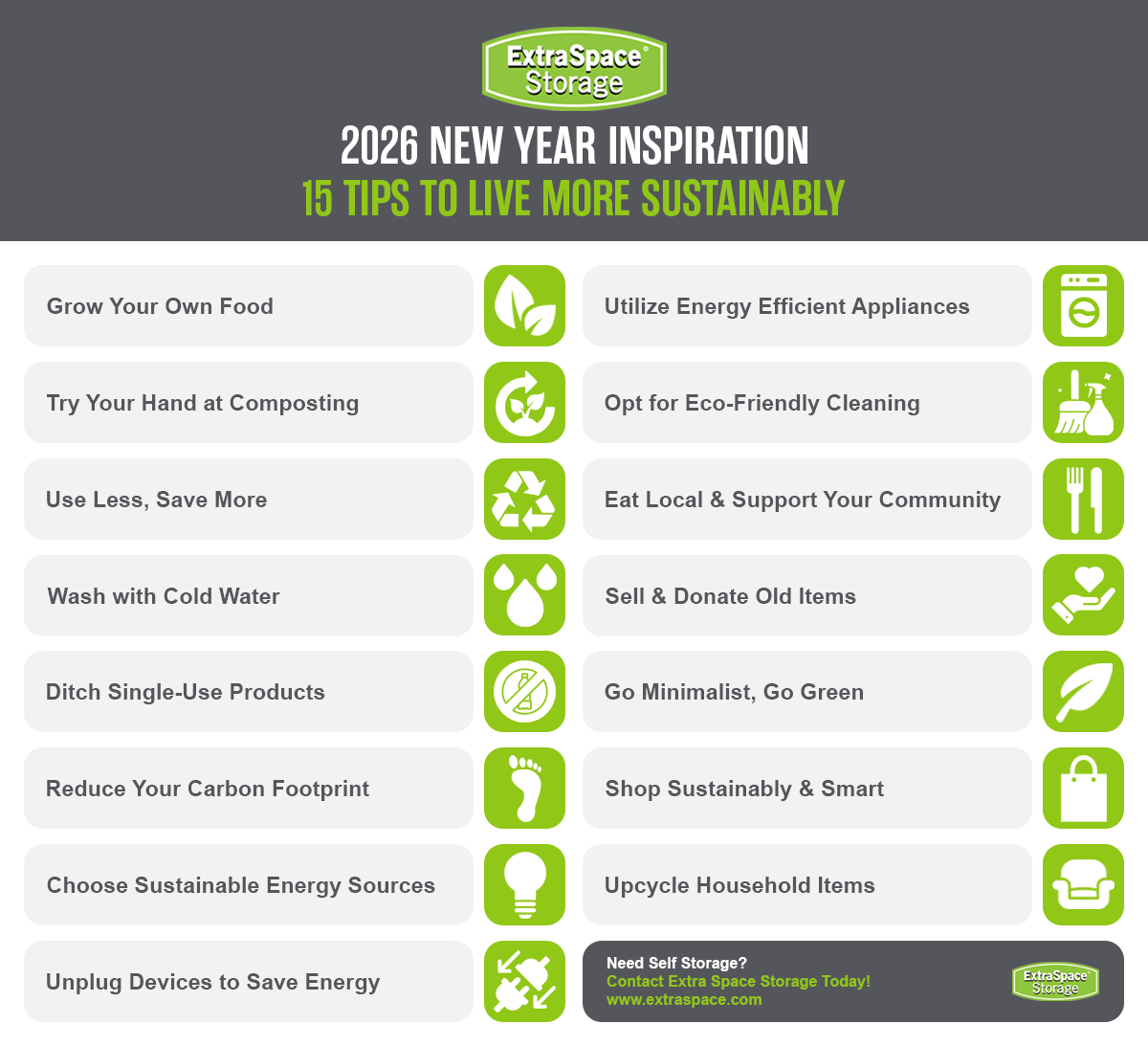
Grow Your Own Food
Eat healthier and help reduce your carbon footprint by growing your own vegetable and herb garden! Creating your own source of food helps cut down on plastic and glass waste (commonly used in grocery food packaging) and reduces carbon emissions from food transportation. Opting for home-grown vegetables over meat helps the environment, as significant food waste comes from livestock and fisheries. You can start with easy foods to grow at home, like lettuce, bell peppers, or tomatoes, and be sure to can vegetables to extend their shelf life. Once you get the hang of gardening, try growing a variety of healthy vegetables or see what kind of fruit trees can be grown near you!
Try Your Hand at Composting
Rather than throwing away leftover food scraps, a smart, sustainable New Year’s idea is to try composting to help create a cycle for growing your own food. Composting adds nutrients back into the soil, nourishing your fruits and veggies. The best part about composting is that you can create compost with just about any organic material! Throw items like potato skins, egg shells, fruit peels, old newspapers, and more into a compost bin to naturally decompose rather than mixing them with non-biodegradable items headed for a junk yard.
Use Less, Save More
One easy way to live more sustainably is to conserve resources so they can be reused. Get an easy start to your eco-friendly lifestyle by collecting rainwater for your plants with a rain barrel. Have a garden? Build an irrigation system using water barrels or DIY a hydroponic system. Conserve water by taking shorter showers or installing a water-efficient shower head. Swap paper towels for cloth towels, which you can wash and reuse instead of throwing away. Simply put, sustainable living means eliminating excess or wasteful habits by getting the most out of what you have!
Wash with Cold Water
Water heaters account for nearly 20% of a home’s average energy consumption, which is a significant expense in most homes. Washing your laundry on cold can save money, extend the shape and vibrancy of your clothes, reduce microfiber pollution in the ocean, and cut up to 1,600 pounds of CO2 emissions a year. In addition to the benefits of cold water for clothes, it also benefits your body. Showering cold isn’t just better for your skin and boosting your immune system and metabolism, but it also reduces energy consumption.
Ditch Single-Use Products
Although convenient, single-use products are detrimental to the environment. Instead, opt for glass or plastic containers that can be washed and reused to store leftovers. Creating a zero-waste bathroom with items like metal razors, toothpaste tablets, or bamboo toothbrushes helps contribute. Buying items in bulk can reduce wasteful packaging. Shop at the grocery store with reusable cloth sacks instead of plastic bags. Reduce plastic waste by opting for a reusable water bottle made from eco-friendly materials. If you must use single-use products, look for items that use paper or sustainable packaging.
Reduce Your Carbon Footprint
Common car emissions are toxic to human health, weaken the atmosphere, and are a significant contributor to global warming. Even having an electric car requires a lot of electricity when charging at home. Reduce vehicle emissions by using sustainable transportation or carpooling. Walking or biking for shorter trips can save money and help you exercise. When driving, practice eco-friendly driving techniques, such as low acceleration, proper tire inflation, and air filter replacements, as they help improve fuel efficiency and reduce emissions.
Choose Sustainable Energy Sources
Renewable energy sources are a great way to save money on utility bills while reducing environmental impact. Consider hiring professionals to install solar panels on your roof or in your yard to harness clean, sustainable power. Heat pumps are another smart, eco-friendly investment, as they draw warmth from the outside air, even in cold weather, to lower heating costs and energy use. You can also explore renewable fuels like biofuel or biomass, made from wood or animal waste, or even install a micro-wind turbine to generate your own electricity—just be sure to check with your local utility company first.
Unplug Devices to Save Energy
While many electronics have an off button, pressing it may not fully shut them down. Most electronics use energy while idle to download updates, run programs, and enable quick start-up. This also goes for electronics left on a charging station. Not only can overcharging your device ruin the device’s battery, but it can also waste energy. Be mindful of your electronic use and try unplugging afterward. If you own a computer, turn off its screen saver and put it in sleep mode when not in use. Another green home solution is opting for extensions that can be turned off manually or smart outlets that regulate the time and amount of energy used by each outlet.
Utilize Smart & Energy-Efficient Appliances
Smart home features, such as smart thermostats and smart coffee makers, make for excellent energy-efficient home improvements because you can moderate energy usage and adjust settings remotely using your phone. Consider upgrading your lights to motion-activated bulbs to help save energy and money. Eco-friendly appliances, such as low-flow toilets and smart refrigerators, require less energy and water than traditional appliances, so investing in them can help you save resources. A good rule of thumb is to look for Energy Star-rated items in addition to the most sustainable appliances possible!
Opt for Eco-Friendly Cleaning Products
Traditional cleaning products contain ingredients like alkylphenol ethoxylates, which are harmful to wildlife, take a while to break down, and can even biodegrade into more hazardous chemicals. Instead, adopt a sustainable kitchen and opt for eco-friendly cleaning products that use green ingredients, offer refills, or plastic-free shipping, which can reduce your environmental impact. Mix your own green cleaner with water, rubbing alcohol, and baking soda for a more natural solution with no harmful chemicals when you do your regular cleaning checklist.
Eat Local & Support Your Community
Did you know that eating local is not only often healthier for you, but also more environmentally friendly? Locally sourced food requires less transportation, resulting in less pollution from vehicle emissions and more support for local farmers. Unlike most commercial farms, food from local sources is often grown with healthier materials and lower production, typically making it better for you without taking as much of a toll on the environment. Look to buy fresh fruits, veggies, cheeses, and meats from farmers’ markets whenever you can, and be sure to identify which nearby restaurants use locally sourced food.
Sell & Donate Old Items
One way to help eliminate environmental waste is to extend the life of your belongings—even the ones you want to get rid of! Instead of tossing out old clothes, electronics, or household items, donate them to a local charity, secondhand shop, or a repurposing center that can find a good use for your items. Many household items contain unnatural materials like plastic that take years to break down in a landfill and can end up in the ocean. Finding a second home for these items is a great way to reduce the production of new products, in turn helping eliminate toxic emissions and materials, and promoting sustainable living practices.
Go Minimalist, Go Green
Overconsumption drives companies to produce more goods, leading to pollution and harmful manufacturing by-products. Embracing minimalism is key to living a greener life, as it encourages mindful consumption and reduces your environmental footprint. By focusing on quality over quantity, you can build a lifestyle that values durability and purpose. Support your minimalist lifestyle by choosing long-lasting, eco-friendly items, including clothes, furniture, decor, and other household staples.
Shop Sustainably & Smart
Changing your shopping habits is a great way to live more sustainably. Instead of buying single-season fast fashion, opt for timeless outfits you’ll wear often. Shop at local thrift stores to extend a product’s life, and research how and where items are made before you buy. Another option is to repair your clothes rather than buying new ones by purchasing supplies or visiting a local tailor shop. When possible, support brands that use sustainable practices and give back to the environment. You can also make eco-friendly choices in other areas, like choosing sustainable dog food for your pet or buying from independent bookstores to support local businesses.
Upcycle Household Items
Instead of throwing out old or broken items—which contribute to landfills and trash islands—try upcycling them instead! Upcycling involves upgrading furniture, bottles, bags, or other items, or using them in another project. Take that old cabinet gathering dust, clean it, paint it, give it some legs, and now you have a functional rustic side table! Upcycle typical kitchen trash like sauce jars to hold bacon grease, or use them as drinking glasses or vases for cut flowers. Even upcycling clothes, like using old shirts for cleaning cloths or making a denim apron from old jeans, offers versatile use. There are endless DIY upcycling opportunities for repurposing furniture, helping to upgrade your home for sustainable living.
***
Need a place to store your belongings while you update your home for sustainable green living? Extra Space Storage has storage facilities across the U.S. to help. Rent local storage units now!