

Aging in place is one of many retirement housing options you can choose for your older years. If you don’t plan to transition to assisted living or downsize to a smaller home, here are 13 aging-in-place modifications you can incorporate to make your home more accessible to your changing needs!
Pros of Living in a Renovated Aging-in-Place Home
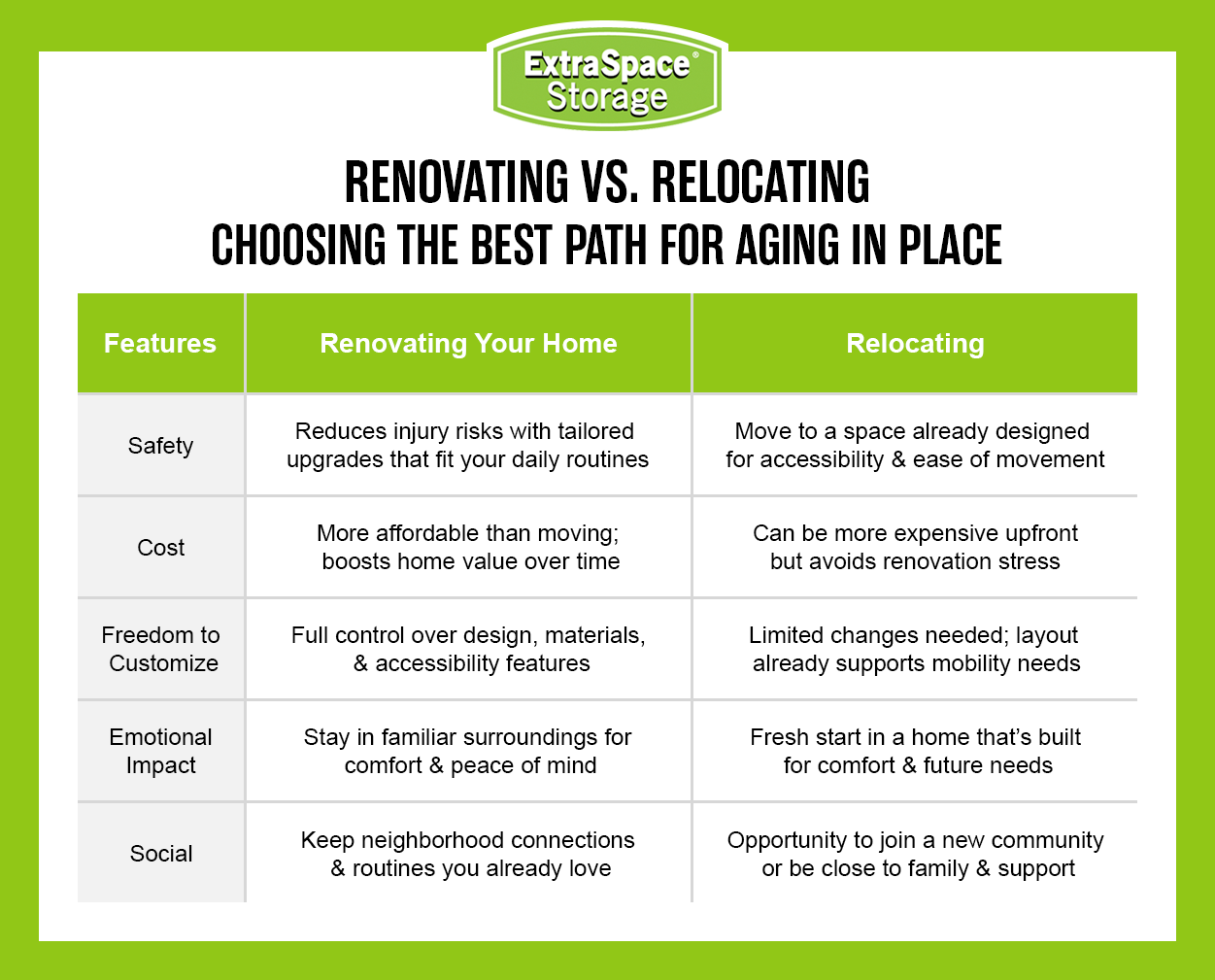
- Safe: Aging-in-place renovations can help lessen the chances of injuries at home, saving elders energy, time, and money.
- Cost-Effective: Renovating your current home for aging-in-place rather than relocating to a specially-designed accessible home or assisted living facility can be less costly long term.
- Customizable: Unlike most assisted living facilities, aging-in-place renovations let you fully personalize your space for your needs and preferred interior design style.
- Impacts Emotions Positively: Aging-in-place renovations allow you to stay in a home and community you love, giving peace of mind and close access to what is familiar.
Aging-in-Place Home Renovation Ideas
It’s ideal to start saving for aging-in-place renovations before retirement and implementing them before you need them, whether you’ll be living in an in-law suite or traditional home. These aging-in-place remodeling ideas—ranging from walk-in showers to home elevators—can help make everyday life easier for elderly homeowners and individuals with limited mobility.
Add Heated Walkways & Porches
Heated driveways, walkways, and porches can add a layer of protection for elderly homeowners during cold seasons. By keeping driveways and walkways clear of snow and ice, limited-mobility homeowners can worry less about slipping or shoveling.
Install a Home Elevator or Stair Lift
Home elevators are ideal aging-in-place renovation for a multi-level home. Able to be installed outdoors or indoors, home elevators allow for easy transportation to different floors. Stair lifts are a less complicated renovation—allowing someone to remain in a seated position while conveniently moving up or down the stairs.
Make Stairways Safer
Installing a handrail on each side of your stairs allows you to grab with two hands if needed. This home modification for elderly folks can provide extra support for homeowners with limited strength. Adding carpeted stair treads is another option for improving stairway safety, helping to reduce the risk of slips and falls.
Install a Walk-In or Curbless Shower
For an aging-in-place bathroom idea, consider installing more accessible showers—like walk-in showers or curbless showers. Trying to lift your feet over into a bathtub shower combination can be a slipping risk, while walk-ins allow individuals with limited mobility to move around easily. Consider also installing non-slip shower tile for better traction—or a shower chair if standing for long periods is not feasible.
Install Grab Bars
Shower grab bars are another easy bathroom remodel idea for elderly individuals aging in place. These handy additions can help prevent falls and other injuries caused by slippery tubs, showers, and floors. Consider also adding grab bars next to the toilet to make it easier to stand up and sit down.
Adjust Kitchen Countertops & Appliances
If you’re a wheelchair or scooter user, adjusting kitchen countertops and appliances like sinks, stovetops, and microwaves to a height of 28 to 30 inches is an ideal aging-in-place kitchen design idea. This renovation can make completing everyday tasks like cooking easier and more accessible.
Install Lever-Style Handles
Lever-style door handles and faucets are a perfect aging-in-place renovation for the entire home. This handle style requires less strength and effort to use and is easier to grip than traditional round knobs—an ideal solution for those with arthritis and other limited-mobility conditions or when your hands are full.
Widen Doorways
Widening doorways is a handy aging-in-place home renovation idea for those requiring wheelchairs and other mobility aids. Expanding doorways to at least 36 to 40 inches wide makes your home wheelchair accessible. Make sure to also include 78x60 inches of space—the minimum space needed to turn a wheelchair—on either side of the doorway to not obstruct mobility.
Add Non-Slip Flooring
Installing non-slip or resistant flooring is one of the best ways to help prevent injuries. Vinyl is one of the best flooring types for wheelchair users and elderly homeowners, as it is level and smooth. Non-slip tile is a welcome bathroom renovation for seniors—a good solution for protecting from injury due to wet spots. If you don’t need a wheelchair, consider replacing hard floors with carpet, which reduces your chance of slipping and offers more cushion if you do fall.
Consider Smart Technology
As you age, you may develop motor and sensory issues that make once-simple tasks more challenging. Smart home devices can help simplify everyday tasks, making it an accessible aging-in-place home renovation idea. Consider installing smart lighting, heaters, thermostats, security cameras and locks, or remote turn off for ovens—all of which can be controlled right from your phone.
Enhance Lighting & Install Aging-Friendly Switches
The ability to perceive light declines as you age, so improving the lighting in your home when aging in place is essential for daily convenience and preventing falls. Consider installing accessible lighting features like energy-efficient LED lights, toe-kick light switches, or motion sensor lights in hallways and stairways. Additionally, you can replace slider and toggle switches with paddle-style switches, which are easier for those with limited motor control to operate—and make sure they’re at an accessible height for wheelchair or scooter users.
Raise Electrical Outlets
Raising electrical outlets is a simple way to create a more accessible home, benefiting wheelchair users, scooter users, and other limited mobility homeowners who may struggle with bending over. It’s recommended to raise outlets to 18 inches above the floor to make them easier to reach while seated or standing.
Add a Wheelchair Ramp
Installing ramps at front and back entrances is essential for ensuring wheelchair users can easily access or leave the house. It eliminates the need to climb stairs—which also benefits non-wheelchair users who have limited mobility. The maximum slope for an accessible ramp is 1:12—with a minimum width of 36 inches—to provide enough space for a wheelchair to pass through.
***
Need storage space as you renovate your home for aging in place? Extra Space Storage has facilities conveniently located across the U.S. to help make your renovation easier. Find self storage near you!