
Looking to store tires in a garage, basement, or researching whether you can store tires in a storage unit? Proper tire storage is important to help preserve the longevity and lifespan of tires on vehicles. Check out our tips for the best ways to store tires! Before choosing a storage option, keep in mind that Extra Space Storage does not allow loose or standalone tires to be stored in a storage unit. Tires may only be stored at Extra Space when they are attached to a vehicle stored in an approved vehicle storage space.
Pick a Storage Location
The ideal storage location for your tires should help preserve their lifespan and performance by preventing degradation of the rubber. Some things to keep in mind include:
- High heat can cause rubber to harden and crack.
- Cold temperatures can make tires brittle.
- High humidity can lead to mold and mildew growth.
- Direct sunlight can lead to cracking, hardening, and loss of flexibility—compromising traction and grip.
- Ozone emitters, like battery chargers, generators, or electric motors, can degrade tires.
For loose tire storage, a cool, dry, dark, and climate-stable area at home—such as a garage or basement—is typically best. If your tires are part of a car, motorcycle, or other approved vehicle you’re storing, contact your local facility to confirm available vehicle storage options and requirements. Keep in mind that Extra Space Storage does not permit loose tires in storage units unless they are attached to a stored vehicle. If you store loose tires at home, make sure to properly prep them for storage.
Protect Tires on Stored Vehicles
If you’re storing a vehicle long term, it’s important to take steps to help protect the tires from flat spots, which can occur when the vehicle’s weight compresses the tires for extended periods of time. For at-home vehicle storage, some owners choose to remove tires so they can inspect the wheels, brakes, and tires more thoroughly. However, if you’re storing a vehicle at Extra Space Storage, tires must remain attached to the stored vehicle.
To help protect tires while they’re attached to a stored vehicle, inflate them to the manufacturer’s recommended pressure, avoid parking on rough or uneven surfaces, and move the vehicle periodically when possible and permitted. You can also consult a tire professional or your vehicle owner’s manual for long-term vehicle storage recommendations.
Clean & Dry Tires Before Storage
Cleaning and drying tires prior to storage can help reduce the risk of deterioration and dry rot, which occurs when the tire’s rubber begins to break down and crack. Be sure to regularly inspect tires for any signs of dry rotting so you can address it early. Additionally, cleaning tires effectively can help preserve the tire’s shape, flexibility, and general structural integrity.
Here are a few steps for how to clean tires properly:
- Mix mild dish soap and lukewarm water in a bucket.
- Avoid using cleaners that have any harsh chemicals.
- Use a tire brush to scrub away any grime.
- Make sure the tires are completely dried before storing—but do not dry them in direct sunlight.
Stack Tires Properly
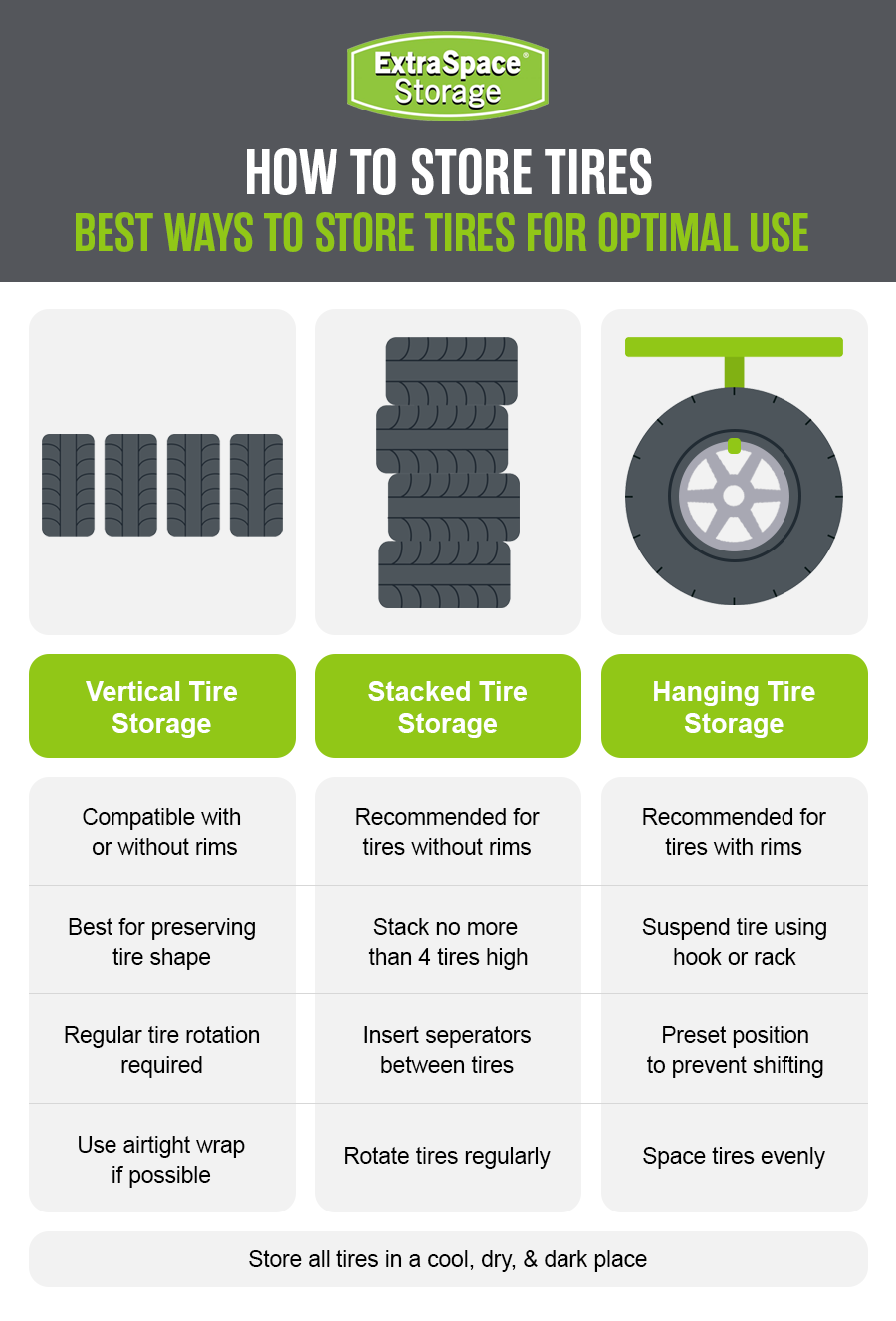
To prevent deformities, avoid stacking or hanging tires for extended periods of time. If you must stack tires due to space limitations, follow these guidelines:
- Limit the Stack Height: Stack no more than four tires high.
- Elevate the Tires: Place tires on a pallet or shelf to keep them off the ground.
- Use Separators: Insert wooden blocks or similar separators between tires to prevent flat spots.
- Rotate Regularly: Rotate the position of each tire monthly to minimize the risk of deformities.
- Maintain Air Pressure: Fill tires to help maintain their shape and prevent sidewall damage.
It’s generally not recommended to stack tires with rims on top of each other—the weight of the upper tires can cause deformation or damage to the lower tires and rims. By following these tire storage best practices, you can help maintain the condition of your tires and extend their lifespan.
Store Tires in Bags
There are several tire storage options you can utilize while storing tires in a garage, basement, or another approved storage area. Specialty tire storage bags are lightweight, easy to store, and help maintain your tire’s shape while protecting it from the elements. Vacuum-sealable plastic bags significantly reduce the amount of oxygen that can reach tires. Black contractor garbage bags and lawn or leaf bags that are taped closed are a short-term, affordable alternative to reduce debris and moisture exposure. And thick tarps and tie-wraps can help provide protection from debris and oxygen in short-term storage.
Store Tires Vertically
Tires should ideally be stored vertically to help prevent flat spots from forming on the sidewalls and make them more space-efficient in smaller areas. When storing tires vertically, ensure they are properly supported to prevent them from falling over. If you have tires without rims, you can lean them against a wall or utilize tire racks. Wall-mounted tire racks are ideal for storing tires with rims, since they often have hooks or slots to hold the tires securely.
Inspect Stored Tires Before Using Them
When taking tires out of storage, inspect them for wear—including cracks, cuts, bulges, or uneven tread. If you’re unsure about their condition or suspect dry rot, consult a tire professional for a thorough evaluation. They can inspect your tires for damage, verify proper inflation, and check for any signs of corrosion. A professional inspection helps identify potential issues early, ensuring your tires are safe and ready for optimal performance. The lifespan of a tire can depend on factors like age and storage conditions. Properly stored tires can last several years, but many experts recommend replacing them six years after their production date, regardless of tread depth. Over time, tire rubber degrades even without use, so maintaining correct air pressure and storing them in airtight bags can help preserve their condition.
***
Find a Storage Center Near You!
Looking for secure vehicle storage? Extra Space Storage has several self storage facilities across the nation where you can safely store your vehicle for short or long periods. Tires are permitted only when they remain attached to a stored vehicle. Loose or standalone tires are not allowed in Extra Space Storage units or vehicle storage spaces.
Popular cities with convenient storage solutions include:
- Cohasset, MA Self Storage Facilities
- Enfield, CT Self Storage Facilities
- Farmingdale, NY Self Storage Facilities
- Folcroft, PA Self Storage Facilities
- Seabrook, TX Self Storage Facilities
- White House, TN Self Storage Facilities
Find a self storage facility near you!