Moving Checklist
Your Complete Car Shipping Checklist

Shipping a car to another state can take a lot of logistics off your plate during a long-distance move. Getting your vehicle ready for auto transport before pickup day can help reduce moving stress and ensure a smooth handoff. Most of the work of your car shipping checklist happens before pickup day. Running through these steps in order tends to be the most efficient approach—the inspection steps are easier once the cleaning steps are done. Read below to learn how to prepare your car for shipping!
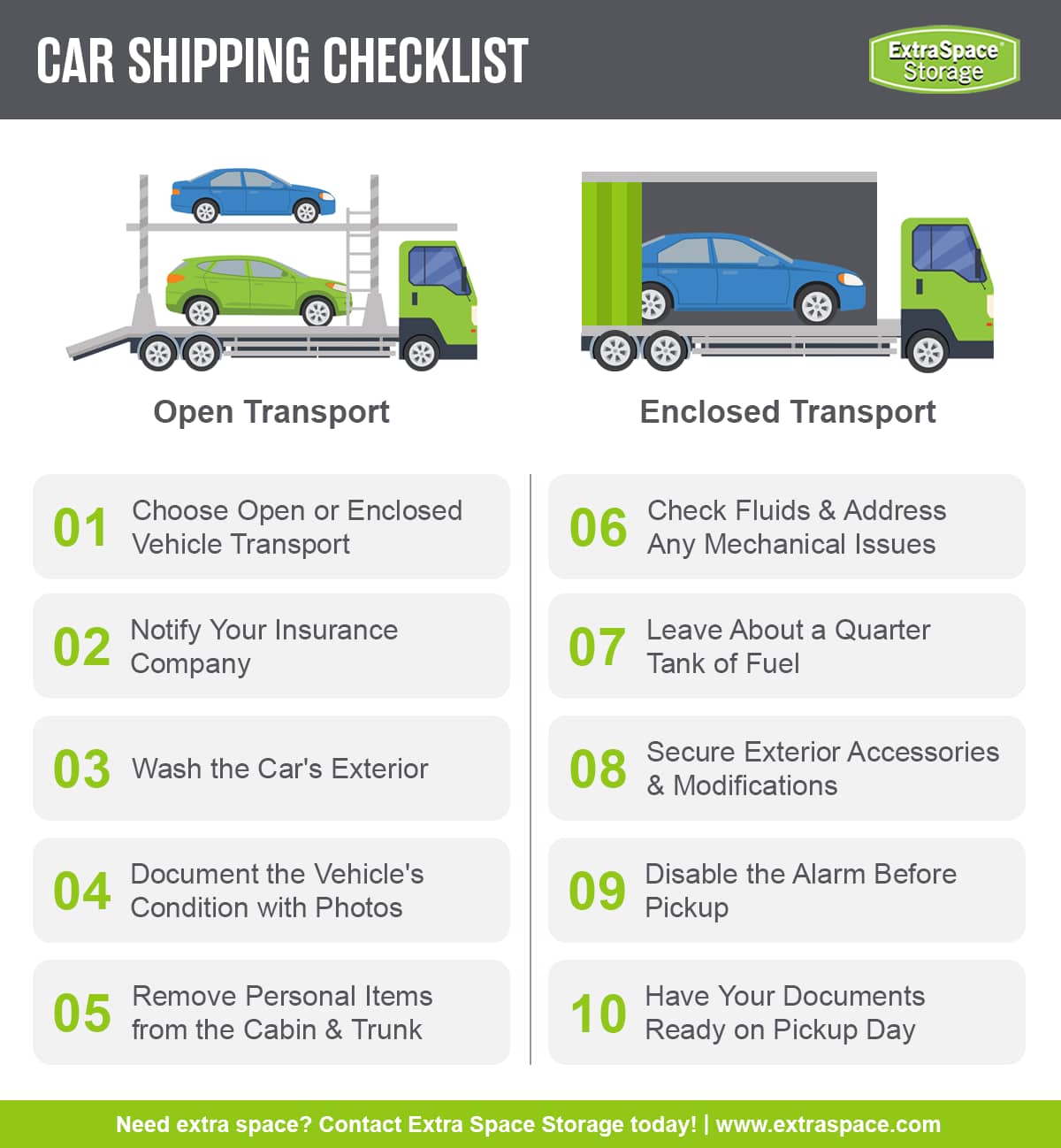
Step One: Choose Open or Enclosed Vehicle Transport
Before you start preparing your car for shipping, you'll want to hire a car shipping company and choose between open or enclosed auto transport. Be sure to get multiple quotes from transporters to help ensure you're getting the best rates. When choosing between an open or enclosed shipping method, keep in mind the make of your vehicle, and your budget—most enclosed transport is more expensive and is best for specialty vehicles or classic cars.
Step Two: Notify Your Insurance Company
Once you've hired an auto transport company, call your insurance company to make sure that your policy will cover your vehicle while in transit. If you need additional coverage, the insurance agent will be able to assist you. You may also be able to purchase add-on insurance through the car shipping company you've selected.
Step Three: Wash the Car's Exterior
Washing the outside of the car before pickup makes it easier to identify and document pre-existing scratches, dents, and paint chips. If you hire an open transport carrier, then the dirt and road grime from travel could conceal damage that would otherwise be noted. Aim to wash your car within 24 to 48 hours of pickup so the condition of the vehicle's exterior is current.
Step Four: Document the Vehicle's Condition with Photos
Before the car carrier arrives, photograph the vehicle from all angles and take close-ups of any existing damage. Include the car interior if there are any pre-existing issues there as well. Time-stamp the photos, and keep them somewhere you can access quickly if a claim needs to be filed. At pickup, the carrier will complete a Bill of Lading (BOL) to document the vehicle's state before it leaves. Walk around the car with the driver, compare your photos to their notes, and make sure any existing damage is recorded on the BOL before you sign any documents. Request a copy of the BOL for your records.
Step Five: Remove Personal Items from the Cabin & Trunk
Auto transport carriers are not licensed to transport household goods—personal items left in the vehicle are not covered by the carrier's cargo insurance. Most carriers also have weight restrictions that a full trunk or backseat can exceed. Remove everything from the cabin, including the trunk and glove compartment.
Items you need to remove include:
Electronics
Parking passes
Toll Transponders
Misc. Loose Items that might shift in transit and cause damage

Find Affordable Self Storage Near You
Extra Space Storage has over 4,000 locations across the U.S. with friendly customer service, advanced security features, and affordable month-to-month rates.
- Save up to 40% off online
Step Six: Check Fluids & Address Any Mechanical Issues
Your car needs to be in a drivable condition to be loaded on a standard carrier—it has to steer, brake, and roll onto the trailer. You'll need to address or report any known vehicle issues since some will affect where your car will be placed on the vehicle transport, and others could cause companies to decline the shipment altogether.
Some mechanical issues that need to be addressed before pickup include:
Vehicle Leaks
Topping off card fluids (oil, brake fluid, and power steering)
Weak Car Battery
Brake Problems
Engine Issues
Step Seven: Leave About a Quarter Tank of Fuel
Most carriers require no more than a quarter tank of fuel at pickup. If your tank is over a quarter when the driver arrives, you may be asked to drain it before the vehicle can be loaded. Carriers ask this, since fuel adds weight, and auto transport trucks are subject to federal and state weight limits. A quarter tank provides enough fuel for the driver to load, reposition, and unload the vehicle—and enough for you to drive to a gas station at delivery.
Step Eight: Secure Exterior Accessories & Modifications
Take the time to remove any accessories that can be taken off, and secure anything that can't. Exterior accessories like roof racks, bike racks, spoilers, antennas, and others can create clearance problems on enclosed carriers or be damaged by wind on open transport. Fold in your side mirrors if the carrier type makes that advisable—confirm with the carrier when you book.
If your vehicle has a lowered suspension, wide-body kit, or other modifications that affect ground clearance or width, disclose this at booking. Some carriers have minimum ground clearance requirements for loading.
Step Nine: Disable the Alarm Before Pickup
Disable your car's alarm before pickup, or leave clear written instructions for the driver on how to disable it if needed. Car alarms triggered during transit can drain the battery and create problems for carriers—particularly on multi-car loads where a persistent alarm affects other vehicles. If the vehicle's alarm is integrated and can't be fully disabled, provide this information when booking.
Step Ten: Have Your Documents Ready on Pickup Day
Wondering what documents you need to ship a car? Have your current vehicle registration, proof of insurance, and a valid photo ID available. You'll also need at least one person there for the carrier to complete the condition inspection and sign the Bill of Lading at both pickup and delivery. Get an authorization letter ready to present to the carrier if you plan to have someone other than yourself at delivery and pick up.
On pickup day, have these documents ready:
Vehicle registration
Proof of insurance
Valid photo ID
Authorization letters if someone other than the registered owners is handling pickup.
Storing Your Belongings While Your Car Is in Transit
When you're coordinating a move, it's common for timing to get a little out of sync—your car may arrive at your destination before your household items do, or vice versa. If you need a place to store furniture, boxes, or other belongings while your move comes together, Extra Space Storage has facilities across the U.S. to help make the transition easier. Find helpful amenities, including:
Climate-controlled storage: Storage units are typically kept at stable temperatures year-round to help protect items
Drive-up access: Pull your vehicle directly up to your storage unit for easy unloading and loading
Extended access hours: Gate hours from 6am to 10pm, with select locations offering 24-hour access
Exceptional security: Security measures like video surveillance and electronic gate access
Moving soon? Find helpful tools and guides for your relocation on the Extra Space Storage moving hub. And if you need storage throughout your move, we have convenient locations across the U.S. Find a storage unit near you!

Author Profile
Quinn Johnson
Quinn Johnson is a moving expert and author for Extra Space Storage. He's moved over 15 times, including internationally, and helped countless others between their own homes. He's happy to lift some boxes for a friend as long as he's paid in pizza. As a writer and content creator for Extra Space Storage since 2019, Quinn shares helpful moving tips and info to alleviate the common stresses of moving.