Moving Guide
Open vs. Enclosed Car Shipping Guide
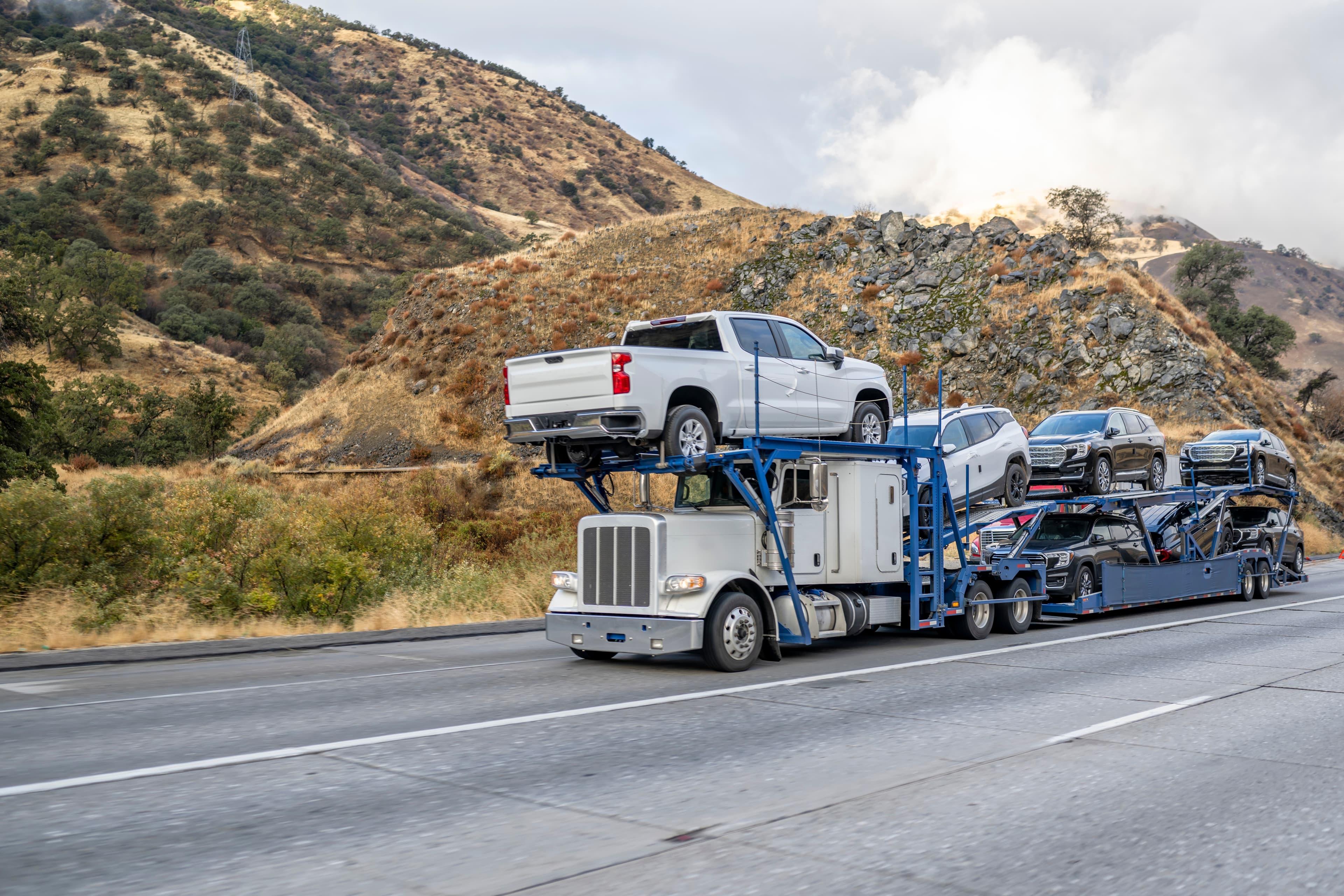
If you're planning a move, you may be considering shipping your car. If you're shipping your car instead of driving, you'll have to choose between enclosed and open auto transport. In this guide, we'll compare the two types of car shipping, including cost, protection level, vehicle fit, scheduling, and insurance, so you can decide which makes the most sense for your situation.
What Is Open Car Transport?
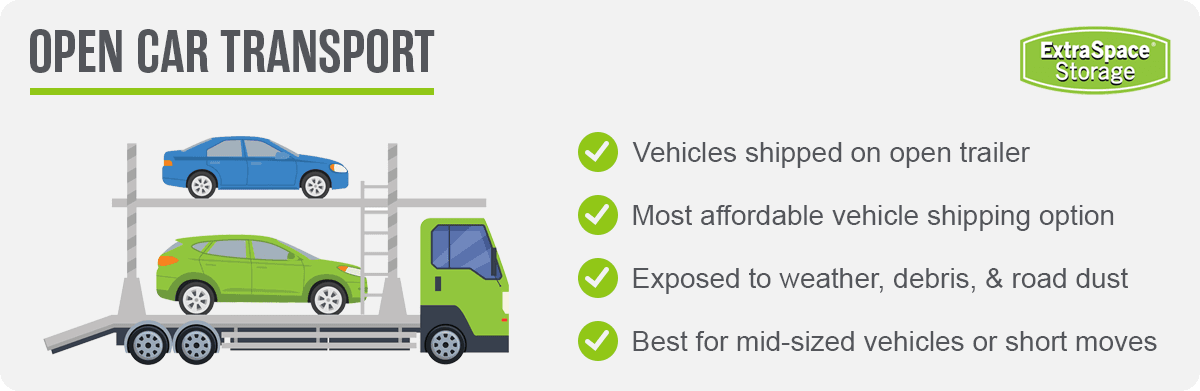
Open transport is the standard for auto shipping. Cars are placed on a two-level, open-air trailer that carries seven to ten vehicles at once. Dealerships use it to move inventory, rental fleets use it to move vehicles between locations, and most people who ship a personal vehicle during a move choose it too.
Because multiple vehicles share the trailer, the open car transport cost is lower. Keep in mind that your car is subject to weather, road dust, and debris, since trailers are in the open. Most vehicles shipped on open carriers arrive without incident, making open transport a safe and cost-effective option for everyday cars.
Consideration | What to Know |
Capacity | 7-10 vehicles per trailer |
Protection level | Exposed to weather, dust, and road debris |
Availability | Most common method—broad carrier network, easier to schedule |
Typical cost | $500-$800+ depending on distance and vehicle size* |
Best for | Standard sedans, SUVs, trucks, and most everyday vehicles |
Scheduling | Faster—higher carrier availability than enclosed |
*Estimates from Road Runner Auto Transport
What Is Enclosed Auto Transport?
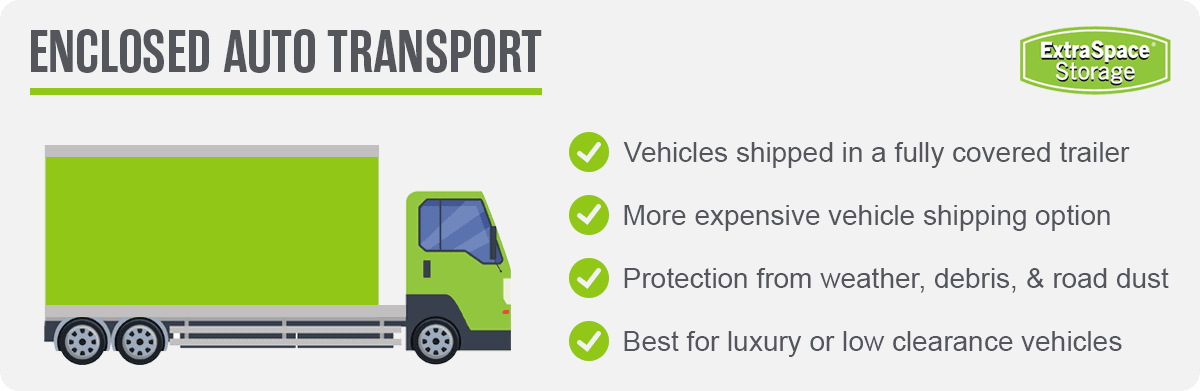
Enclosed car transport moves your vehicle in a fully covered trailer, protecting it from weather, debris, and road elements during transit. These trailers typically carry two to six vehicles at once, which means more attentive handling and a higher cost per vehicle.
Enclosed carriers often come equipped with features suited to higher-value vehicles: hydraulic lift gates for cars with low ground clearance, soft-strap tie-downs that avoid contact with the vehicle's body or undercarriage, and drivers who tend to have more experience handling specialty cars. The specialized equipment and lower capacity are what increase the enclosed car shipping cost. Note that enclosed transport trailers are slightly narrower, so wider vehicles like trucks or large SUVs may not qualify for enclosed shipping.
Consideration | What to Know |
Capacity | 2-6 vehicles per trailer |
Protection level | Full coverage from weather, debris, and road elements |
Availability | Fewer carriers—plan for a longer scheduling lead time |
Typical cost | $1000+ depending on distance and vehicle size* |
Best for | Luxury, classic, exotic, and low-clearance vehicles |
Special features | Hydraulic lifts, soft-strap tie-downs, specialty vehicle handlers |
*Estimates from Road Runner Auto Transport
Soft-Sided vs. Hard-Sided Enclosed Trailers
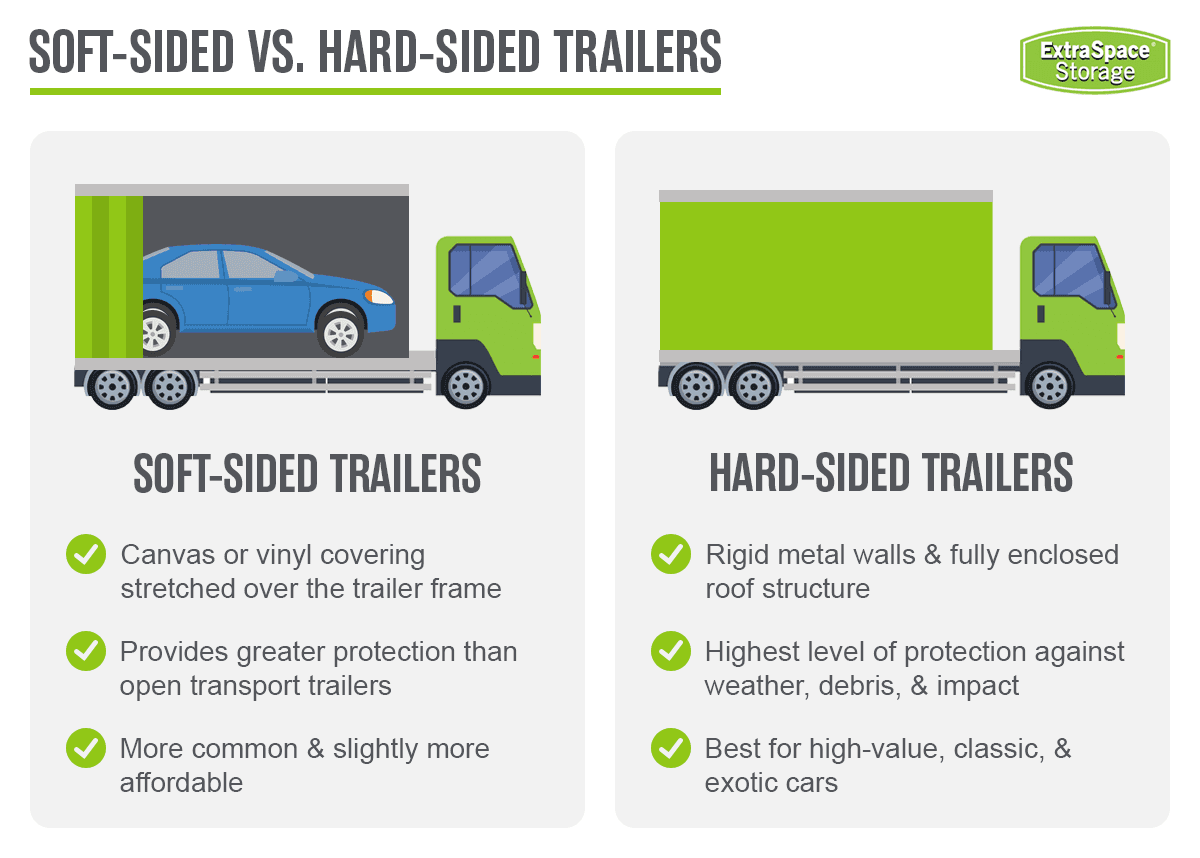
Not all enclosed trailers are built the same, so it's worth knowing the difference before you book. The two main types of enclosed car transport trailers are:
Hard-sided enclosed trailers: Rigid metal walls and roof, highest level of protection against weather, debris, and impact. Best for high-value classics, exotics, or any vehicle where maximum protection is the priority.
Soft-sided enclosed trailers: Canvas or vinyl covering stretched over the trailer frame. More protective than open transport against weather and road dust, though with less impact resistance than hard-sided walls. More common and slightly more affordable.
Find Affordable Self Storage Near You
Extra Space Storage has over 4,000 locations across the U.S. with friendly customer service, advanced security features, and affordable month-to-month rates.
- Save up to 40% off online
How Much Does Open vs. Enclosed Car Shipping Cost?
Car shipping costs will vary based on which option you choose and how far you're moving—so keep this in mind when calculating total moving costs. Open car transport costs are more affordable because the large trailer capacity spreads the per-vehicle cost across more cars. Enclosed transport's smaller loads and more intensive handling translate directly into a higher price, about 30-60% more than open transport for the same route and vehicle size. For most shipments, that results in an additional $400-$700 more than the open car transport cost.
Estimated Cost Ranges by Distance
Route Distance | Open Transport (Est.) | Enclosed Transport (Est.) |
~500 miles (e.g., Boston to D.C.) | $600-$900 | $900-$1,400 |
~1,000 miles (e.g., Chicago to Atlanta) | $800-$1,100 | $1,100-$1,700 |
~1,500 miles (e.g., Dallas to Denver) | $950-$1,300 | $1,400-$2,000 |
~2,000+ miles, coast to coast | $1,100-$1,500 | $1,600-$2,500+ |
Estimates from Road Runner Auto Transport
How to Choose Between Open and Enclosed Car Shipping
For most everyday vehicles on a typical move, open car transport is the practical choice. Enclosed auto transport is worth considering, depending on the vehicle's value, condition, or physical characteristics. Both shipping options serve different needs depending on your situation. Here's a quick breakdown of the different scenarios.
Consider Open Car Transport When...
You're shipping a standard vehicle
You're looking to save money
Your vehicle is less than 10 years old with no special modifications
You need to schedule quickly or during the peak moving season
You're transporting a vehicle 500 miles or less
You're comfortable with minor dust or surface dirt in transit
Consider Enclosed Transport When...
You're shipping a classic, luxury, exotic, or collector vehicle
You're shipping a high-end EV or a modified vehicle
Your vehicle has a ground clearance of four inches or less
Your vehicle has custom paint or bodywork that would be costly to repair
Your shipping route is more than 1,000 miles, involves winter weather, or coastal salt exposure
You can book several weeks in advance
Open & Enclosed Transport Schedule & Delivery Time
Most vehicle shipments use open transport, meaning scheduling windows can be as short as a few days in many cases. That flexibility is one of the real advantages of open transport, beyond just the lower cost.
Enclosed carriers represent a smaller part of the market, which means fewer options. Booking two to three weeks in advance is generally advisable for enclosed shipments—particularly during peak moving season (May through September) or on popular snowbird routes in winter. Last-minute enclosed bookings are possible but tend to come at a premium, or may not be available on some routes at all.
Route Distance | Typical Transit Time (Both Transport Types) |
Under 500 miles | 1–3 days |
500–1,000 miles | 2–5 days |
1,000–1,500 miles | 3–7 days |
1,500–2,500 miles (coast to coast) | 7–14 days |
Transit times are similar for open and enclosed transport on the same route—both use road carriers and cover comparable daily mileage. The key difference is scheduling lead time before pickup, not the drive time itself.
What to Know About Insurance & Liability When Shipping Your Car
Understanding what's covered—and what isn't—is an important step when selecting a car shipping company, regardless of which shipping method you select.
Carrier Liability Requirements
All auto transport carriers operating in the US are required to carry insurance coverage under FMCSA regulations (49 CFR Part 387). The federal minimums for cargo coverage are $5,000 per vehicle and $10,000 per occurrence—figures that can fall well short of the actual value of a luxury or classic vehicle. Public liability minimums for carriers start at $750,000 for non-hazardous freight, but these apply to accidents, not vehicle damage. Before booking, ask your carrier or broker two specific questions: what is their per-vehicle liability limit, and does their coverage reflect replacement value or actual cash value of the vehicle?
The Bill of Lading
The bill of lading is the most important document in the car shipping process. It's a condition report completed at pickup—noting any pre-existing damage —and again at delivery. Reviewing it carefully at both points is the only way to document a damage claim if something goes wrong in transit. Don't sign off at delivery before checking the car thoroughly.
Additional Coverage Options
If your carrier's base liability coverage falls short of your vehicle's value, gap coverage is available through some brokers and third-party insurance providers. This can cover the difference between what the carrier's insurance pays out and the actual cost of repair or replacement. For classic, exotic, or high-value vehicles, it's worth pricing out before you book.
Frequently Asked Questions About Open & Enclosed Car Transport
What is the most common type of car shipping?
Open transport is the most common method for car shipping. Only about 10% of customers use the enclosed transport service. Most everyday vehicles—including those shipped by dealerships and rental fleets—travel on open carriers. Enclosed transport is generally reserved for luxury, classic, or specialty vehicles.
Is open car transport safe?
Open transport has a strong safety record. While vehicles are exposed to weather, dust, and debris, carriers use tie-down straps and loading protocols designed to keep vehicles secure. The majority arrive without incident.
Is enclosed car transport worth it for a standard car?
For most standard vehicles—everyday sedans, SUVs, and trucks less than 10 years old—open transport is the more practical choice. Enclosed transport pays off most when the vehicle is high-value, low-clearance, or difficult to repair.
Do I need enclosed transport for an electric vehicle?
For most EVs, open transport is fine, especially on shorter routes or in mild weather. EVs with advanced exterior sensors, you may consider enclosed transport for long-distance or winter hauls.
Does enclosed car shipping come with better insurance coverage?
Enclosed transport companies often carry higher liability limits and may include additional coverage as standard. Ask your carrier specifically what their per-vehicle liability limit is before booking, and consider gap coverage if the vehicle's value exceeds that limit.
***
Moving soon? Find more tools and guides for your relocation on the Extra Space Storage moving hub. And if you need vehicle storage for your car throughout your transition, we have storage facilities across the U.S. to help. Find a storage unit near you!
Author Profile
Quinn Johnson
Quinn Johnson is a moving expert and author for Extra Space Storage. He's moved over 15 times, including internationally, and helped countless others between their own homes. He's happy to lift some boxes for a friend as long as he's paid in pizza. As a writer and content creator for Extra Space Storage since 2019, Quinn shares helpful moving tips and info to alleviate the common stresses of moving.