Moving Guide
Should You Ship or Drive Your Car When Moving Cross-Country?
When planning a cross-country move, figuring out what to do with your car is one of the bigger decisions to make. If you're keeping your car when moving instead of selling it, you can either drive it yourself or ship it to your new destination. While both options have their own benefits, this guide can help you decide which method is best for your move. Here's what to consider when moving your car long-distance.
How to Choose Between Car Shipping vs. Driving
Here's a side-by-side breakdown of when shipping your car or driving it yourself will make the most sense for your move.
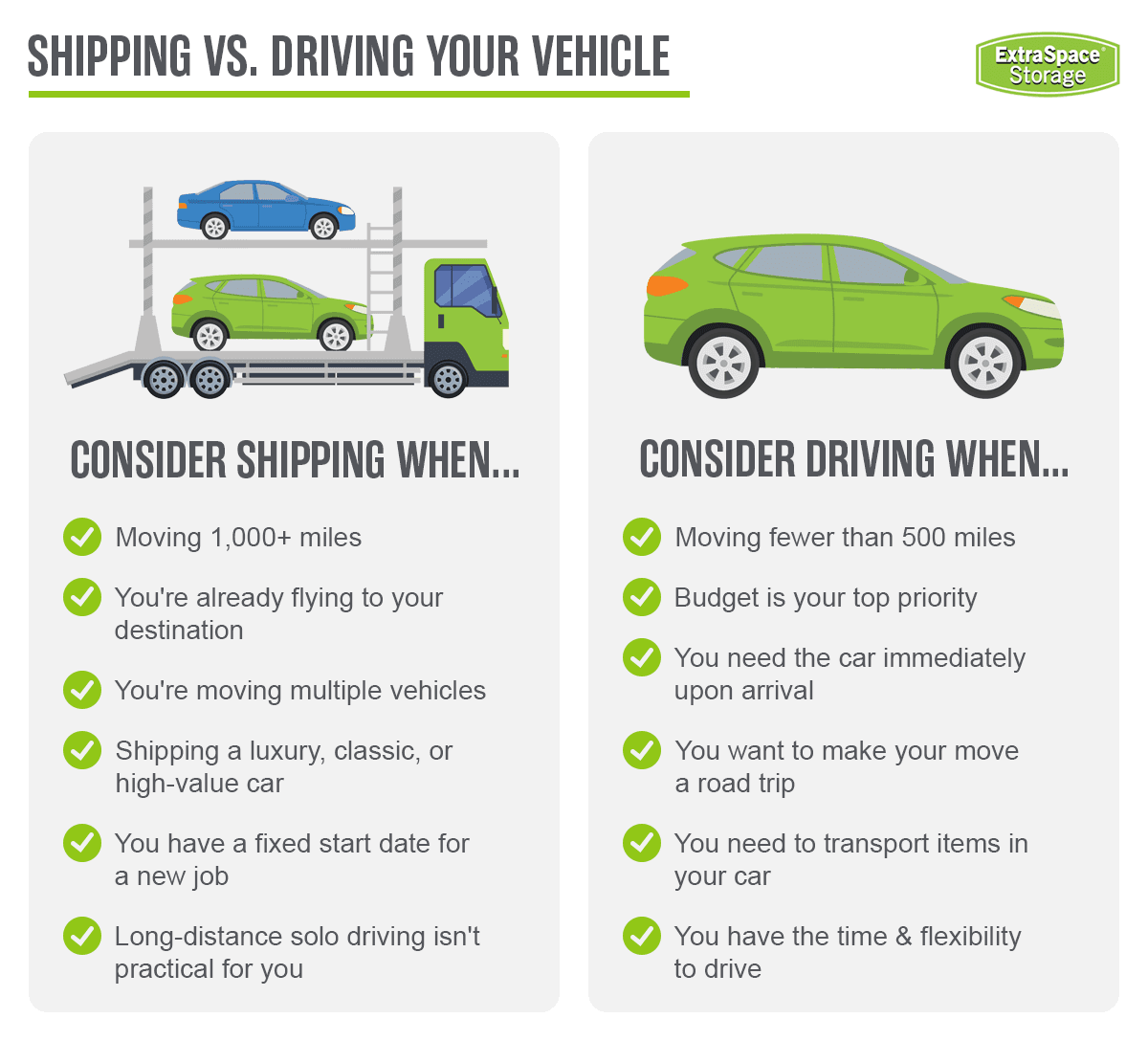
When Shipping Your Car Makes More Sense
You're moving 1,000+ miles: Beyond 700-1,000 miles, the time and wear-and-tear of driving often equal the cost of shipping.
You're flying to your new city: Shipping helps ensure your vehicle arrives shortly after you do.
You're moving more than one vehicle: Shipping both cars—or one while a partner drives the other—can be more practical than organizing two separate long-distance drives.
You're moving a luxury, classic, or high-value car: Shipping an irreplaceable vehicle via enclosed transport eliminates the risk of adding unnecessary wear.
You're starting a new job on a fixed date: When timelines are less flexible, shipping may give you more control over your arrival.
A multi-day solo drive isn't practical: When health, comfort, or family duties make a multiple-day solo drive difficult, shipping can provide added convenience.
When Driving Makes More Sense
You're moving less than 500 miles: For shorter regional moves, the logistics of booking a carrier, waiting for pickup, and coordinating delivery can cost more than driving.
Budget is the priority: Driving is the most cost-effective choice if you have the time and are moving on a budget.
You need your car from day one: If you need the car immediately after you arrive—for work, errands, or simply peace of mind—driving ensures it's there.
You want to make a road trip of it: If you're moving to a new part of the country, driving can be a great way to experience the new area.
You're relying on your car to move items: If you're planning to use the back seat and trunk to transport essentials or items your movers won't handle, driving keeps everything with you.

Find Affordable Self Storage Near You
Extra Space Storage has over 4,000 locations across the U.S. with friendly customer service, advanced security features, and affordable month-to-month rates.
- Save up to 40% off online
Car Shipping vs. Driving Costs
Cost will likely play a large role in your final decision. While car shipping costs are often more expensive, it can be a more convenient option than driving, especially if you plan on flying to your new destination. Here's how the two methods stack up by distance for open carrier transport and typical per-person driving expenses, including fuel, hotels, and meals.
Distance | Ship Open Carrier | Drive (Estimated All-In*) |
~500 miles | $400-$800 | $90-$175 |
~1,000 miles | $700-$1,100 | $225-$400 |
~1,500 miles | $900-$1,300 | $340-$575 |
~2,500 miles (coast-to-coast) | $1,100-$1,800 | $560-$950+ |
* Cost estimates from AAA & Hotels.com
Tips for Shipping Your Car Cross-Country
If you decide to ship your car while moving, the process is more straightforward than most people expect. Here are a few tips for car shipping from booking to delivery:
Compare Quotes: Get at least three estimates from reputable auto transport companies. Prioritize carrier ratings and reviews over simply choosing the lowest price.
Book Early: Secure your slot 2-3 weeks in advance to avoid last-minute surcharges and ensure flexible scheduling.
Prepare Your Vehicle: Wash the car, photograph existing damage, remove personal items, and keep the fuel tank below one-quarter full.
Co-Inspect at Pickup: Conduct a walk-around with the driver and ensure all pre-existing wear is documented on the Bill of Lading.
Track Progress: Maintain contact with the carrier; cross-country shipments typically take 7-10 days.
Inspect at Delivery: Compare the vehicle’s condition to the Bill of Lading and document any new discrepancies before signing.
Tips for Driving Your Car Cross-Country
If you decide to drive your car during your move, a little preparation goes a long way toward making the trip safe and stress-free. Here are a few tips for a successful cross-country drive when moving:
Get a Pre-Trip Tune-Up: Visit a mechanic before you leave to check your oil, tire pressure, brakes, and fluids. Catching small issues at home is far less costly than breaking down on the road.
Plan Your Route in Advance: Map out your driving days, identify rest stops, and book accommodations ahead of time, especially during peak summer moving season when hotels fill up fast.
Break It Into Manageable Legs: Aim to drive no more than 8–10 hours per day to avoid fatigue. Factor in time zone changes and traffic around major cities.
Pack an Emergency Kit: Keep jumper cables, a spare tire, a flashlight, basic tools, and a first-aid kit in your trunk throughout the trip.
Protect Your Belongings: If you're hauling items in your car, secure them so they don't shift during braking. Avoid leaving valuables visible in parked vehicles overnight.
Document Your Car Before You Leave: Just like with shipping, photograph your vehicle at the start of the trip. This can be useful if any damage occurs along the way or if you're also renting a moving truck.
Frequently Asked Questions
Is it cheaper to drive or ship a car cross-country?
For moves under 500 miles, driving is almost always cheaper. For cross-country moves of 1,500+ miles, the full cost of driving—fuel, hotels, meals, and vehicle wear-and-tear—often approaches or exceeds the cost of open carrier shipping, especially once your time is factored in.
Should I drive or ship my car when relocating for work?
If you have a fixed start date and limited time, shipping is usually the more practical choice. Flying puts you in control of your arrival timeline, and your car will follow within 7-10 days. If you have flexibility and want to keep costs down, driving remains a solid option for shorter moves.
How much does it cost to drive cross-country?
The total cost of driving a car cross-country will depend on how many miles you're travelling. Trips that are 500 miles or less typically range from $90-$175, while a trip that's 1,000 miles or more can range anywhere from $225-$1,000+. The costs associated with driving your vehicle across the country include fuel, lodging, meals, and tolls.
***
Moving soon? Find more guides, relocation tools, and moving checklists on the Extra Space Storage Moving Hub. And if you need to store your car while you plan your move or after you arrive, we have vehicle storage options available at our conveniently located facilities across the U.S. Find a storage unit near you!

Author Profile
Quinn Johnson
Quinn Johnson is a moving expert and author for Extra Space Storage. He's moved over 15 times, including internationally, and helped countless others between their own homes. He's happy to lift some boxes for a friend as long as he's paid in pizza. As a writer and content creator for Extra Space Storage since 2019, Quinn shares helpful moving tips and info to alleviate the common stresses of moving.