Moving Guide
A Simple Guide to Car Shipping Costs
Shipping a car as part of a long-distance move can raise a lot of questions—especially about price. Use our guide below to learn about how much it costs to ship a car, factors that affect the price, and how to stay within your moving budget.
The Cost of Shipping a Car
Car shipping costs within the continental U.S. typically range from $300 to $2,500 for open carrier transport, which is the most common method. Overall, the national average is about $1,000 for open transport. Pricing varies based on the distance of your move, vehicle size, timing, and route. As a general rule, shorter trips cost more per mile, while longer trips cost less per mile but more overall—with $1.00 per mile as a typical benchmark for a 1,000-mile shipment. See the table below for typical cost ranges by distance for open carrier transport.
Distance | Avg. Cost Range | Avg. Cost Per Mile |
Under 500 Miles | $300–$700 | $1.25–$2.25/mile |
500–1,200 Miles | $650–$1,200 | $0.85–$1.25/mile |
1,200–2,000 Miles | $900–$1,500 | $0.70–$.85/mile |
Cross-Country (2,000+ miles) | $1,200–$2,500 | $0.40–$0.70/mile |
How Much Does It Cost to Ship a Car Cross Country?
The cost to ship a car across the U.S. from coast to coast ranges from around $1,200 to $2,500 on an open carrier, depending on the specific route, time of year, and vehicle size. Keep in mind that east-to-west routes can run slightly higher than west-to-east on the same corridor. Demand for eastbound shipments is generally lower than westbound, meaning carriers may charge more to offset the risk of an empty return haul. Use the table below to see estimated cost ranges and transit times for common long-haul routes.
Route | Distance | Est. Cost Range | Transit Time |
California → New York | ~2,900 mi | $1,300–$2,400 | 7–15 days |
New Jersey → California | ~2,800 mi | $1,500–$2,300 | 7–15 days |
Ohio → California | ~2,400 mi | $1,200–$2,100 | 7–14 days |
Florida → Washington State | ~3,100 mi | $1,500–$2,700 | 10–15 days |
California → Texas | ~1,400 mi | $1,000–$1,600 | 3–8 days |
Illinois → Pennsylvania | ~700 mi | $750–$1,200 | 2–6 days |
How Does Vehicle Size Affect Car Shipping Costs?
Carriers work within weight and space limitations on their trailers, so larger and heavier vehicles carry a surcharge—full-size trucks can run roughly 35-40% more than a standard car to ship. For an inoperable vehicle, factor in an additional $150 to $300, since these vehicles require special handling.
Vehicle Type | Example | Avg. Shipping Cost |
Sedan / Compact Car | Toyota Camry, Honda Accord | $800–$1,100 |
SUV / Minivan | Honda CR-V, Toyota Sienna | $900–$1,350 |
Full-Size Truck / Large SUV | F-150, Chevy Suburban | $1,100–$1,600 |
What Factors Affect Car Shipping Costs?
A quote from an auto transport company is a starting point, not a final number. However, most of the variables that make the quoted price go up or down are within your control once you understand what's driving them.
Distance
Distance is the single biggest factor in car shipping costs per mile, but the relationship isn't linear. Shorter trips cost more per mile because the carrier's fixed costs—fuel, time, and insurance—are spread over fewer miles. A 300-mile haul might run $1.40 to $2.20 per mile, while a 2,000-mile cross-country move can drop to $0.40 to $0.70 per mile.
Transport Type (Open vs. Enclosed)
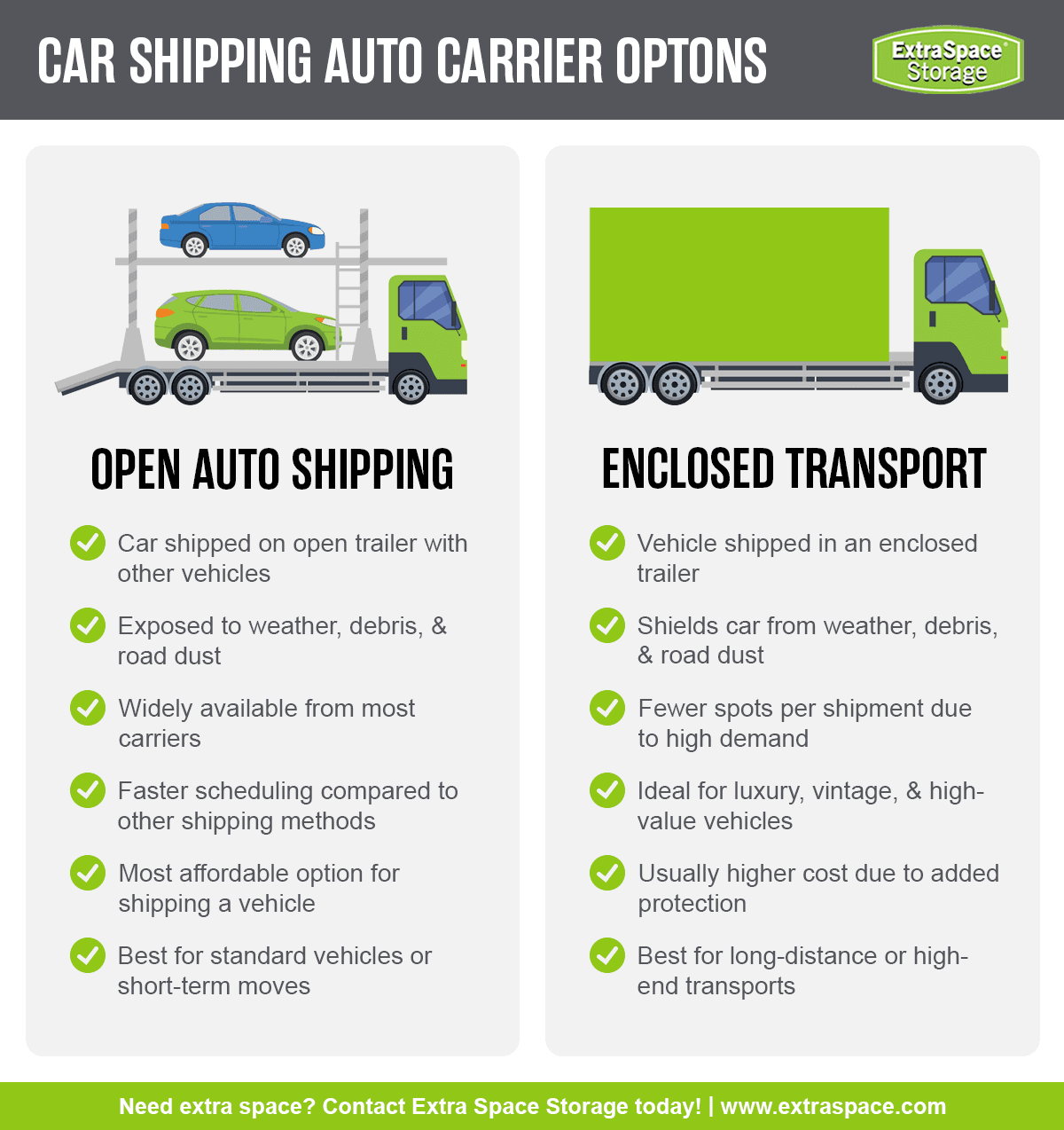
Open carriers are the standard choice for everyday vehicles and the most affordable option for most people. Enclosed carriers ship vehicles in a fully covered trailer, protecting against weather and road debris—though that added protection typically comes at a 30-60% premium over open transport for the same route.
Route Popularity
High-traffic corridors like Florida to the Northeast and California to Texas draw more carriers and more competition, keeping prices lower. Moves to or from rural areas and routes that don't fall on major interstate lanes can cost more because fewer carriers are willing to bid on the job.
Time of Year
Spring and summer are peak season for auto transport, and prices tend to reflect that. Demand spikes when college students move back home, snowbirds migrate north, and the broader moving season kicks into gear. Fall and winter moves can offer some pricing relief, though winter weather in certain regions can introduce delays.
Vehicle Condition
A car that can be driven onto the carrier under its own power qualifies for standard pricing. Non-running vehicles require a winch and special handling—and a narrower pool of carriers equipped for it. Expect to add $150 to $300 to the base cost for an inoperable vehicle.
Delivery Type
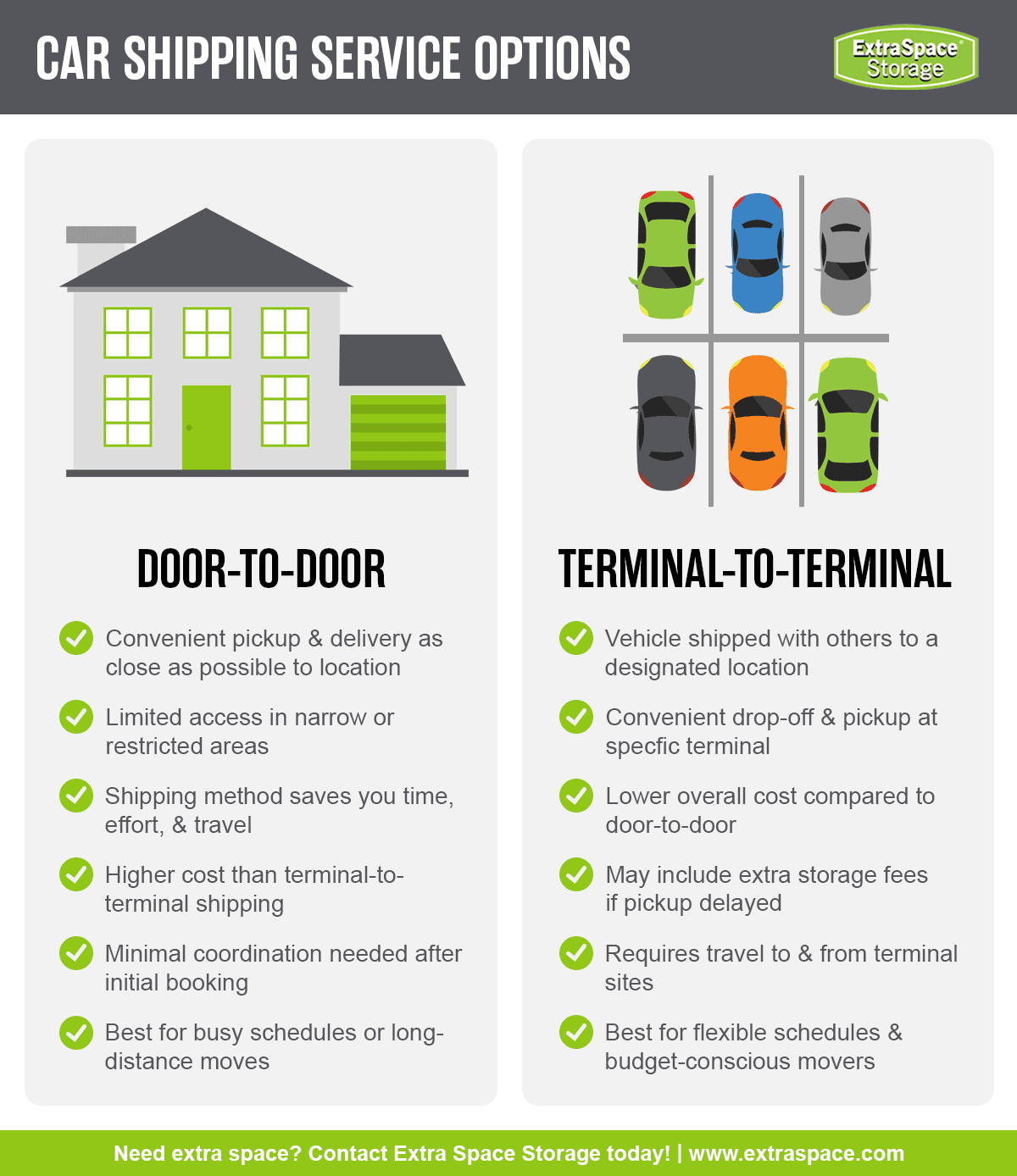
Door-to-door delivery is the most common option—the carrier picks up and delivers as close to your location as their rig can safely navigate. Terminal-to-terminal delivery requires you to drop off and retrieve your car at a designated depot. Terminal shipping can save money, but depot locations may be inconvenient, and your vehicle may sit in an outdoor lot for a period before and after transit.
Timeframe & Lead Time
Booking in advance—ideally two to four weeks out—tends to produce better pricing. That window gives carriers time to bid on your job, which can drive down the cost as competition increases. Last-minute bookings narrow the carrier pool and can add significantly to the final price.
What Is Open vs. Enclosed Car Transport?
Open and enclosed transport serve different needs at different price points. For most people shipping a car as part of a relocation, open transport is the practical choice. For those with classic cars or high-value vehicles, however, the higher enclosed car shipping cost is often worth it for the added protection.
Open Transport | Enclosed Transport | |
Average Cost | $800–$1,100 | $1,200–$1,650+ |
How Your Car Travels | On an open-air trailer with 7–9 other vehicles | In a fully enclosed carrier, protected from weather & road debris |
Best For | Standard cars | Classic, luxury, or custom vehicles |
Carrier Availability | High | Limited |
Weather Exposure | Yes | No |
Which Option Is Right for Your Move?
Consider Open Transport When:
You're shipping a standard car, SUV, or truck
Budget is a primary concern
Your route is a common carrier lane
You need more carrier options & faster booking
You want the fastest available pickup timeline
Consider Enclosed Transport When:
You're shipping a classic, antique, or luxury vehicle
Your vehicle's value makes the premium worthwhile
Your car has custom bodywork, low ground clearance, or a specialty finish
You want maximum protection from weather & road debris
You're shipping in winter months with significant weather risk

Find Affordable Self Storage Near You
Extra Space Storage has over 4,000 locations across the U.S. with friendly customer service, advanced security features, and affordable month-to-month rates.
- Save up to 40% off online
How to Estimate Your Car Shipping Cost
Online car shipping cost calculators can give you a ballpark estimate in seconds, but it's important to understand what those numbers actually represent. Most initial quotes are starting bids based on route and vehicle data—not a binding price. The final cost can run up to 25% higher than the initial quote you receive because drivers bid on your shipment after it's listed. Market conditions at the time of booking determine the actual rate.
Brokers vs. Carriers
Most car shipping quotes come from brokers—companies that connect customers with carriers who transport vehicles. Brokers typically post your shipment to a network where carriers can bid on the job, so the initial quote serves as a starting estimate. Carriers are the companies that actually own and operate the transport trucks. While working directly with a carrier may sometimes reduce pricing uncertainty, using a broker often provides access to a larger network of drivers and more scheduling flexibility.
What Goes Into a Quote
When requesting a quote through an online calculator or a broker, you'll get get a more reliable estimate if you provide the following information:
Your pickup & delivery zip codes
The vehicle's year, make, model, & condition
Your target pickup date
Delivery type (door-to-door or terminal service)
Using Cost Estimates Intelligently
When comparing car shipping prices, it's helpful to request at least three quotes from different brokers or carriers to understand the typical range for your route. Look for companies that offer binding quotes or price-lock guarantees, which can reduce the risk of unexpected price increases later. Be cautious of quotes that fall below the market average, as unusually low estimates can sometimes increase after booking.
How to Save Money on Car Shipping
A few practical tips can help you secure low-cost auto transport—most requiring only minimal advance planning and a degree of flexibility.
Book 2 to 4 weeks in advance: The more time carriers have to compete for your shipment, the lower the final price tends to be.
Choose open transport: This tends to be the more cost-effective option and can cost $400 to $600 less than enclosed transport on the same route.
Consider terminal-to-terminal delivery: Dropping off and picking up your car at a transport depot may reduce costs compared to a door-to-door service.
Be flexible with your pickup window: A 2 to 3-day pickup window gives carriers more scheduling options and can help lower your rate.
Ask about discounts: Many auto transport companies offer price breaks for military members, students, seniors, and multi-vehicle shipments.
Avoid peak season when possible: Spring and summer moves command the highest rates. A fall or early winter shipment can help save money—though factor in potential weather delays on certain routes.
Should You Ship Your Car or Drive It?
Whether you should ship your car or drive it depends on how far you're going, your budget, and the logistics of your move beyond your vehicle. Driving the car yourself adds mileage, time, and wear on your vehicle, so it may make more sense to ship your car for long-distance moves. The table below estimates the cost of car shipping compared to driving it yourself using three common move distances:
Distance | Estimated Driving Cost (including gas, lodging, & food) | Typical Shipping Cost |
500 miles | ~$100–$200 | $400–$700 |
1,000 miles | ~$300–$500 | $800–$1,200 |
2,000 miles | ~$600–$1,000 | $1,200–$2,000 |
Car Shipping Cost FAQs
How do I prepare my car for shipping?
Start preparing your car for shipping by removing personal belongings from the vehicle and taking photos documenting its condition before pickup. Check the tire pressure, battery charge, and fluid levels. If your car has an aftermarket alarm, disable it before transport. The driver will complete a condition inspection and record it on the bill of lading before loading the vehicle.
Can I put items in my car when shipping it?
Many carriers allow up to 100 pounds of personal items, usually stored in the trunk and below the window line. Items placed higher may affect the trailer’s height clearance. Keep in mind that personal belongings aren't usually covered by the carrier’s insurance, so valuables should never be left in the car.
Does car shipping insurance cover damage?
Licensed auto transport carriers are required to carry liability insurance that covers damage during transit. However, coverage limits vary by company. If you're shipping higher-value vehicles, ask about additional transport insurance or check whether your personal auto policy provides extra coverage.
How do I verify if a car shipping company
Check the company’s registration with the Federal Motor Carrier Safety Administration. Licensed auto transport brokers and carriers should have a USDOT number and Motor Carrier (MC) number that you can verify through the agency’s database.
How long does it take to ship a car?
Most cross-country car shipments take about 7 to 15 days in transit. Timing depends on distance, route demand, weather conditions, and how many stops the carrier makes along the way.
Should I tip the car shipping driver?
Tipping isn’t required, but it’s a common way to thank drivers who provide good service. Many customers tip $20 to $50 if the driver communicates well and delivers the vehicle on time and in expected condition.
***
If you’re shipping your car as part of a bigger move, Extra Space Storage has storage facilities across the U.S. to help make your transition easier. Find vehicle storage near you! Looking for more moving tips and resources? Check out our moving hub!

Author Profile
Quinn Johnson
Quinn Johnson is a moving expert and author for Extra Space Storage. He's moved over 15 times, including internationally, and helped countless others between their own homes. He's happy to lift some boxes for a friend as long as he's paid in pizza. As a writer and content creator for Extra Space Storage since 2019, Quinn shares helpful moving tips and info to alleviate the common stresses of moving.