moving guide
Best Way to Pack Jewelry For Moving

When you're packing for a move, jewelry is one of the easiest things to lose, tangle, or damage in transit. In this guide, we'll walk through how to pack necklaces, earrings, rings, and bracelets for moving day, along with tips for protecting your most valuable pieces.
Before You Pack: Inventory and Documentation
Taking a few minutes to document your jewelry collection before a move can save you significant headaches down the road—particularly if anything is lost, stolen, or damaged during the transition.
Take Photos of Everything: Take quick, timestamped photos of your high-value jewelry, uploading them to the cloud to ensure your records are safe and accessible from any device.
Create a Jewelry Inventory: Higher-value items like engagement rings, heirloom necklaces, and designer pieces should be packed and inventoried with descriptions, estimated values, receipts, and professional appraisals to simplify potential future insurance claims.
Check Your Jewelry Insurance Coverage: Coverage for items in transit can vary, so check your policy's limits before moving. For high-value collections, consider adding a scheduled personal property rider or a separate jewelry policy to ensure full protection.
Jewelry Packing Supplies
Plenty of common jewelry packing methods rely on common household materials—nothing requires a trip to a specialty store. Here's what tends to be most useful:
Item | Best For |
Drinking straws | Thin necklaces and delicate chains |
Toilet paper or paper towel rolls | Chunky chains, statement necklaces, bracelets |
Shelf liner/drawer liner | Large necklace collections—wrap and roll method |
Small resealable zip-top bags | Individual pieces, earrings, rings |
Tissue paper or acid-free wrapping paper | Fine jewelry, pieces prone to scratching |
Bubble wrap | Extra cushioning for high-value or fragile pieces |
Small pill case or bead organizer | Stud earrings, rings, small charms |
Cardboard or foam sheet scraps | Earring pairs—push posts through to keep pairs together |
Anti-tarnish strips or pouches | Sterling silver pieces that will be stored for longer periods |
Spare two-hole buttons | Stud earrings—thread post through holes to pair them |
Jewelry roll or travel organizer | Compact all-in-one solution for medium-sized collections |
Jewelry 'book' organizer | Keeping large collections of all types together in one case |
If you have a larger collection or want an all-in-one solution, a jewelry roll or a jewelry book organizer can securely hold everything in a single case. These are particularly useful for frequent movers like military families or young professionals, since the same case can transition from moving bag to everyday storage.
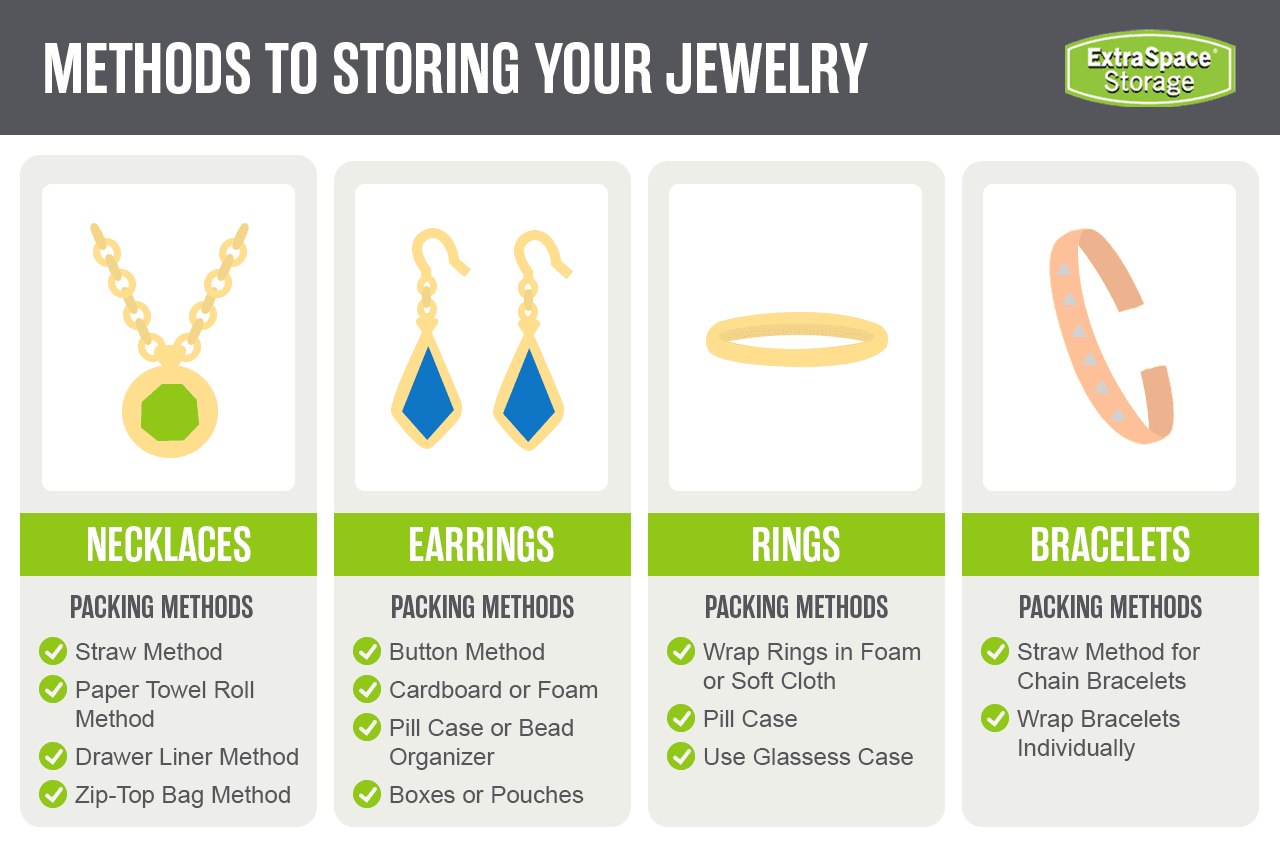
How to Pack Necklaces for Moving
The method you use to pack necklaces for moving will depend on how delicate or fragile the chain or pendant is, the item's value, and personal preferences. Necklaces can be challenging to pack—left loose, they tangle quickly and can be difficult to separate without risking damage, so it's important to evaluate which method will best protect your necklaces while moving.
The Straw Method
Best for delicate chains, the straw method involves threading the chain of each necklace through a paper or plastic drinking straw, then clasping it so it is held in place around the straw. As a result, each necklace stays straight, can't loop around itself, and takes up minimal space when moving. You can trim the straw for shorter necklaces if necessary.
The Toilet Paper Roll & Paper Towel Roll Method
Best for bulky, heavy, or statement necklaces and layered chains, the paper towel roll or toilet paper roll method involves threading a necklace through the tube and clasping it on the outside to prevent it from tangling on itself. Similar to the straw method, you can cut the roll to your desired length depending on your needs.
The Drawer Liner Method
The drawer liner method is a faster way to pack necklaces, especially if your collection is too large for the straw or paper towel method to be convenient. To pack necklaces with the drawer liner method, lay jewelry flat across a sheet of non-slip foam drawer or shelf liner, spaced so they don't overlap. Then roll the liner up lengthwise with the necklaces inside, securing the roll with a rubber band or string. The liner's texture should keep each chain in place, preventing tangles.
The Zip-Top Bag Method
For shorter necklaces or those with large pendants, laying each piece flat in its own small zip-top bag is a straightforward, slightly less secure option. Leave the clasp slightly outside the zip-top seal to prevent it from tangling with the chain inside.
How to Pack Earrings for Moving
The main challenge of packing earrings for moving is keeping pairs together and preventing posts or hooks from snagging on other pieces. Using one or several of the following simple approaches can make this process easier.
Try the Button Method
The button method involves sticking earring posts through the two holes in a spare button, then securing the backing on the other side. The button holds each earring in place and keeps pairs together. Best for stud earrings, you can easily store several buttoned pairs in a small zip-top bag.
Utilize a Cardboard or Foam Sheet
For dangling or hoop earrings, push the post or hook of each earring through a piece of cardboard, foam, or thick paper, then secure the backing. This keeps earrings flat, pairs together, and can prevent hooks from tangling with each other. If your earring back is more flimsy, poke a hole in the cardboard or foam with another object first, then thread the earring back through. When you're done, wrap the cardboard piece in tissue paper for added protection.
Upcycle a Pill Case or Bead Organizer
For smaller collections, a weekly pill case or craft bead organizer can safely hold multiple pairs of earrings in individual compartments. Each cell keeps a pair together and prevents them from moving around. This works well for studs and small hoops, though larger hoop or dangle earrings may need a different solution.
Keep Original Boxes or Pouches
If you've held onto the original packaging from jewelry purchases, this is a good time to use it. Original boxes or jewelry bags are designed to securely hold the piece and provide individual protection for each item.
How to Pack Rings for Moving
The main goal when packing rings is to secure them so they don’t slide around or get scuffed by other jewelry. Luckily, rings are durable and easier to pack during a move, since they can't tangle—but they can easily get lost if not properly accounted for. Keep them safe by utilizing some of the following methods.
Wrap Rings in Foam or Soft Cloth
For maximum safety, you can wrap each ring individually in a small square of tissue paper or bubble wrap, or place it in a velvet jewelry pouch. This prevents rings from scratching each other, which is particularly important for rings with stones that can chip softer metals.
Organize Rings in a Pill Case
A pill organizer works as well for rings as it does for earrings—place one or two rings per compartment to prevent movement and scratching. To further maximize this method, place a cotton ball between each ring in the compartment for added protection against friction. You can also use the built-in Days of the Week labels to categorize your items, like using Monday for everyday bands, Wednesday for costume pieces, and Sunday for high-value heirlooms, allowing for a quick inventory check upon arrival.
Utilize an Unused Glasses Case
A hard-sided glasses case is a useful container for rings and other small jewelry: it's compact, closes securely, and provides impact resistance. Line it with a soft cloth or tissue paper for more cushion, then place the rings inside.
How to Pack Bracelets for Moving
How you pack bracelets or watches depends heavily on whether they are lobster-clasped chain bracelets, stretch beaded bracelets, or bangles. Choose from one of the following methods that best fits your needs.
Use the Straw Method for Chain Bracelets
To prevent tangling, thread the bracelet's chain through a cut-to-size straw or toilet paper roll, then secure the clasp around the straw to hold it in place.
Wrap Bracelets Individually
Wider cuffs, bangles and statement pieces benefit from individual wrapping in tissue paper or a velvet pouch, then placement in a small box or compartmentalized organizer. The goal is to prevent metal surfaces from jangling or rubbing together during transit.
Find Affordable Self Storage Near You
Extra Space Storage has over 4,000 locations across the U.S. with friendly customer service, advanced security features, and affordable month-to-month rates.
- Save up to 40% off online
Special Considerations for Packing Fine and High-Value Jewelry
Most jewelry packing methods work well across the board, but fine jewelry and high-value pieces can benefit from a few additional considerations for their protection and safekeeping.
Caring for Pearls During a Move
Pearls are organic and relatively soft, easily scratched by metal clasps and other hard surfaces. To preserve their luster during a move, wrap each necklace or bracelet individually in a soft cloth or acid-free tissue paper before placing them in a container. This protective layer acts as a necessary barrier, ensuring they never come into direct contact with things that could leave lasting marks.
Caring for Opals & Soft Gemstones During a Move
Opals contain water within their internal structure, which is what gives them their signature iridescence—but it also makes them sensitive to heat, dryness, and rapid temperature changes. Sudden shifts in these conditions can cause opals to "craze"—develop tiny internal fractures—or crack. These pieces, along with turquoise and other porous or softer gemstones, benefit from individual tissue paper or velvet wrapping and dedicated compartments rather than shared containers.
Caring for Sterling Silver Jewelry When Moving
Silver tarnishes when exposed to air over time, which can be a concern if jewelry will be stored for several weeks before being unpacked. Placing silver jewelry in anti-tarnish pouches or adding anti-tarnish strips to their storage container can help prevent surface oxidation during a longer move or storage period.
Caring for High-Value Jewelry
For engagement rings, heirloom jewelry, or other pieces with significant monetary or sentimental value, it's worth carrying them on your person throughout the move rather than storing them in any bag that leaves your immediate sight. A small inner pocket of a purse, a money belt, or a secure inner compartment of a backpack can all work well for this.
Keeping Jewelry Safe on Moving Day
A few practical jewelry packing steps on moving day itself can prevent the most common issues.
Pack jewelry last: This keeps it top of mind and prevents it from getting mixed in with other packed items by accident.
Label your jewelry case clearly: You may consider labeling it as something non-valuable to casual observers, such as 'documents' or 'personal papers' so it draws less attention.
Assign one jewelry keeper: This designates a single person to keep an eye on valuables throughout the move for your peace of mind.
Do a final jewelry walk-through: Check bedside tables, bathroom counters, vanity drawers, and the back of the bathroom cabinet—places pieces most often get left behind.
Frequently Asked Questions
What is the best way to pack jewelry for moving?
The best way to pack jewelry for moving often uses a combination of the straw method for necklaces, the button or pill-case method for earrings, and individual tissue paper wrapping for rings and fine pieces, though it depends on your collection size and jewelry types. A jewelry roll or organizer book can serve as an all-in-one solution if you prefer a single portable case.
Can I pack jewelry in a moving box?
It's generally not recommended to pack jewelry in a typical cardboard moving box, as its size and fragility can make it more likely to be lost or damaged if not kept on your person. Especially if your collection contains high-value or delicate pieces, the standard recommendation is to keep jewelry with you throughout the move for safekeeping rather than packing it in the boxes that will go on the moving truck.
How do I keep earring pairs together when moving?
The easiest method for keeping earring pairs together when moving is to thread each post through a button and secure the backing—it takes seconds per pair and keeps everything together. A pill case or bead organizer also works well for stud collections and small hoops. For larger dangle earrings, push the hooks through a thin piece of cardboard, then wrap them in tissue paper.
***
Moving soon? Find more packing tips for your belongings on the Extra Space Storage moving hub! And if you need storage throughout your transition, we have affordable self storage solutions at facilities across the U.S. Find storage near you!

Author Profile
Quinn Johnson
Quinn Johnson is a moving expert and author for Extra Space Storage. He's moved over 15 times, including internationally, and helped countless others between their own homes. He's happy to lift some boxes for a friend as long as he's paid in pizza. As a writer and content creator for Extra Space Storage since 2019, Quinn shares helpful moving tips and info to alleviate the common stresses of moving.