How To Store
Guide to Storing a Mattress

Read Time: 5 min read
Summary: Storing a mattress properly is essential to prevent damage and maintain its quality. Begin by measuring your mattress and cleaning it thoroughly, following manufacturer guidelines. Use a mattress bag to protect it from dust and pests, and store it flat on wooden pallets to allow airflow. Avoid placing items on top to prevent dents. Different mattress types require specific care: spring mattresses can be stored on their side briefly, while memory foam should always be kept flat. For long-term storage, consider a climate-controlled unit.
Whether you're downsizing, repurposing an unused bedroom, or simply need to store extra furniture, you may need to know how to store a mattress. Proper mattress storage helps you avoid damage or unnecessary wear and tear while also keeping your mattress clean and sanitary. Check out our guide below for tips on how to prepare a mattress for storage and how to safely store it!
Consider Your Mattress Type
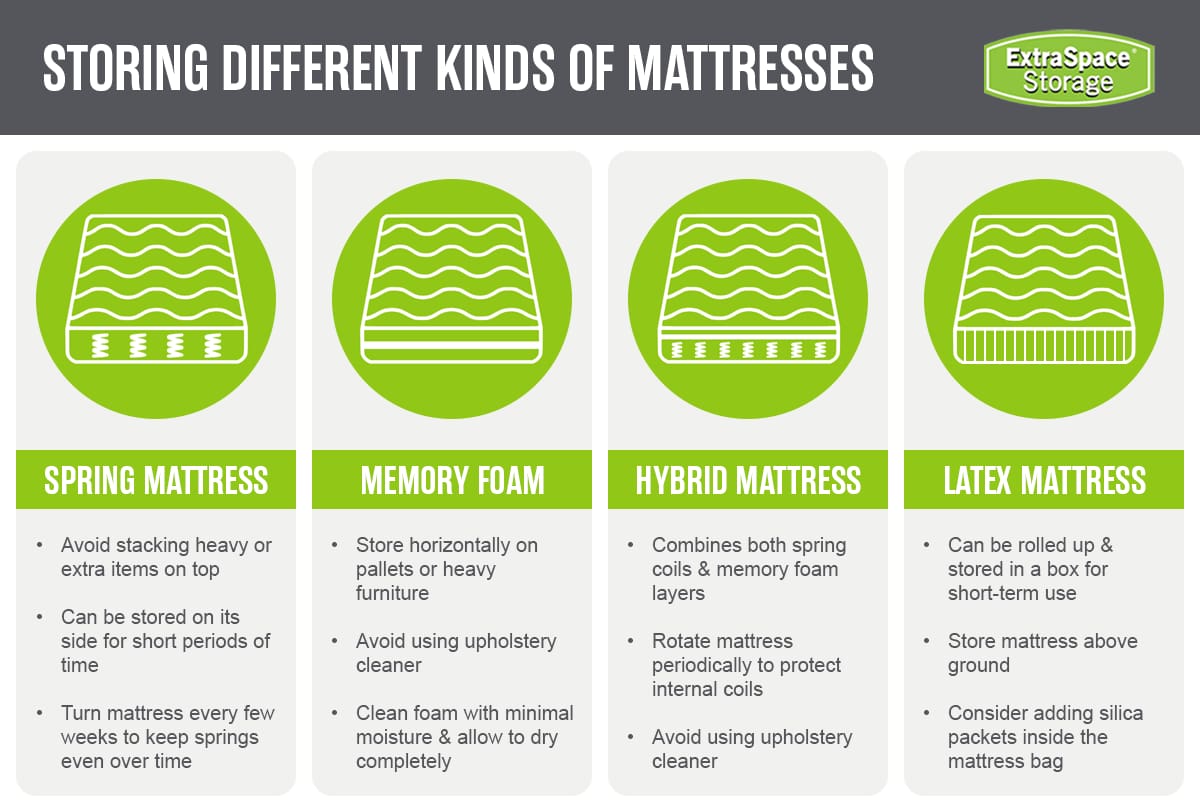
In general, you should store all mattresses in climate-controlled storage to help protect against mold, mildew, cold or heat damage, rust, warping, or foam degradation—but ultimately, the best way to store a mattress will vary depending on the model's specifics. Here are some tips for storing different kinds of mattresses.
Storing a Spring Mattress: It's best to store a spring mattress flat in long-term storage to prevent the coils from bending over time. Storing a spring mattress on its side may be okay for a short period due to its reinforced internal structure, but it should be turned every few weeks to prevent damage.
Storing a Memory Foam Mattress:
Memory foam mattresses should never be stored on their side, as this can cause the flexible mattress to remain permanently bent. Avoid using upholstery cleaner on memory foam mattresses, as moisture can damage it.
Storing a Hybrid Mattress: Hybrid mattresses need to be rotated every few months, as they contain both coils and foam. Store hybrid mattresses flat to protect the structural integrity of the coils and foam. Avoid using upholstery cleaner on a hybrid mattress, as moisture can damage it.
Storing a Latex Mattress: Latex mattresses can be stored rolled up in a box for short-term storage of 30 days or less. If they are kept rolled for longer, you risk making permanent indentations in the latex or being unable to unroll the mattress. Store latex mattresses above the ground, and consider adding silica packets to your mattress bag to eliminate moisture.
Measure Your Mattress for Storage
Begin preparing to store a mattress by determining what size mattress storage unit you need. Take note of the mattress' length, width, and height—as well as whether you're planning to store it flat or on its side—so you can be sure it will fit comfortably in your storage space. It is best practice to store your mattress flat, with at least one square foot of empty space on each side.
Here are the recommended storage unit sizes for different-sized mattresses:
Twin or Twin XL: 5x5 unit on its side, or 5x10 unit if stored flat
Full or Queen: 5x5 unit on its side, or 5x10 unit if stored flat
King or California King: 5x10 unit on its side, or 10x10 unit if stored flat
If you plan to store other furniture or boxes along with your mattress, you will need to size up accordingly. Use our AI Size Estimator to help pick the best storage unit size for your needs!
Clean the Mattress
Mattresses absorb a lot of dust, dirt, and sweat, so it's important to thoroughly clean yours before putting it into storage. Check the manufacturer's cleaning recommendations first, as the mattress type can affect how it should be cleaned—some materials may require moisture to be used sparingly. Generally, follow these steps to properly clean your mattress:
Strip off the bedding
Vacuum the top, bottom, and sides of your mattress using an upholstery attachment—pay close attention to seams and crevices while cleaning
Apply upholstery cleaner for heavy-duty cleaning, and leave ample time for the mattress to dry
Spray a rag with mattress stain remover and spot-clean stains by blotting—avoid rubbing or soaking them
Let the mattress air-dry completely
Sprinkle the mattress with baking soda, let it sit for several hours, then vacuum it again to deodorize
Flip the mattress and repeat these steps
Place the mattress in a well-ventilated area or in direct sunlight to ensure it is completely dry before you wrap it.
Put It in a Mattress Bag
Keep your mattress clean and safe from pests by placing it inside a mattress bag before storing it, and secure the bag in place with duct tape if needed. Mattress bags are designed to shield against dust and debris while allowing some airflow, which helps reduce the risk of bacterial growth that can occur with thick, airtight plastic wraps. If you're storing a mattress long-term, plan to air it out every few months before resealing it. Many mattress storage bags also include built-in handles to make moving a mattress easier.
Store Your Mattress Off the Ground
Storing a mattress directly on the floor will make it difficult for it to "breathe," making it more likely to be exposed to dirt, dust, and pests. Allow airflow from all angles by instead placing the mattress on wooden pallets. Additionally, if any moisture gets into your mattress bag, storing it off the ground will help it dry out more quickly.
Store Your Mattress Flat
Storing a mattress on its side or in a bent position will damage its internal structure over time, so the best way to store a mattress is to keep it flat and level. The condition of your mattress heavily affects the quality of sleep you get, which can impact your health—so don't overlook proper mattress positioning in storage.
Don't Stack Items On Your Mattress
Putting things on top of your mattress in storage can lead to permanent dents, depressions, or damage. If you need more storage space, consider raising the pallets your mattress is stored on or keeping the mattress on its frame so other items can be stored beneath it. The last thing you want when you get it out of storage is a mattress that sinks in the middle.
Choose the Right Mattress Storage Option
The steps for storing a mattress in a storage unit are essentially the same as for storing one at home, with added benefits like increased security, decluttering your space, and long-term protection—particularly if you opt for climate control or dehumidified storage. You can also choose a storage unit with drive-up access to make moving mattresses and other large items easier.
Air Out Your Mattress Afterward
Even with proper storage, your mattress may be slightly musty after an extended period of time. To be on the safe side, let it air out in an open, well-ventilated space for at least a few hours before using it again. It's also a good idea to air out your mattress occasionally while storing it long-term. If it still has any odor after airing it out, try cleaning it or deodorizing it once more before use.
***
Rent Cheap Storage Units Near You!
Looking for somewhere to store a mattress? Extra Space Storage has convenient storage facilities throughout the U.S. that can help you with your mattress storage needs.
Popular cities with cheap storage:
Rent a local storage unit now!