Storage Tips
Tips for Packing & Organizing a Storage Unit

Read Time: 7 min read
Summary: To keep your storage unit organized and easy to navigate, start by planning your layout so frequently needed items sit near the front. Before loading, sweep and mop the floor and check for cracks or leaks. Freestanding shelves and wooden pallets add vertical space and lift belongings off the ground, while clear plastic bins stack well and keep out pests. For sensitive items, consider climate-controlled storage. When packing, disassemble and cover furniture, back up electronics and bag their cords, add silica packets to clothes, drain appliances, wrap fragile items individually, and pack books flat. Remember to label boxes, keep an inventory and map, leave walkways, and stack heavy items on the bottom.
Whether you're using self storage short term or long term, it's important that you keep your storage unit organized and clutter-free. Putting some thought into how you pack and organize your storage unit now will save you the headache of sifting through an unorganized mess whenever you need to find specific items. Check out these helpful storage unit packing and organization tips from Extra Space Storage!
How to Prepare Your Storage Unit
How to Pack Your Storage Unit
How to Organize Your Storage Unit
How to Prepare Your Storage Unit
Before you begin loading your storage unit with items, you'll want to take a few steps to ensure your belongings are kept safe from mildew, pests, and degradation until you return.
Create A Plan
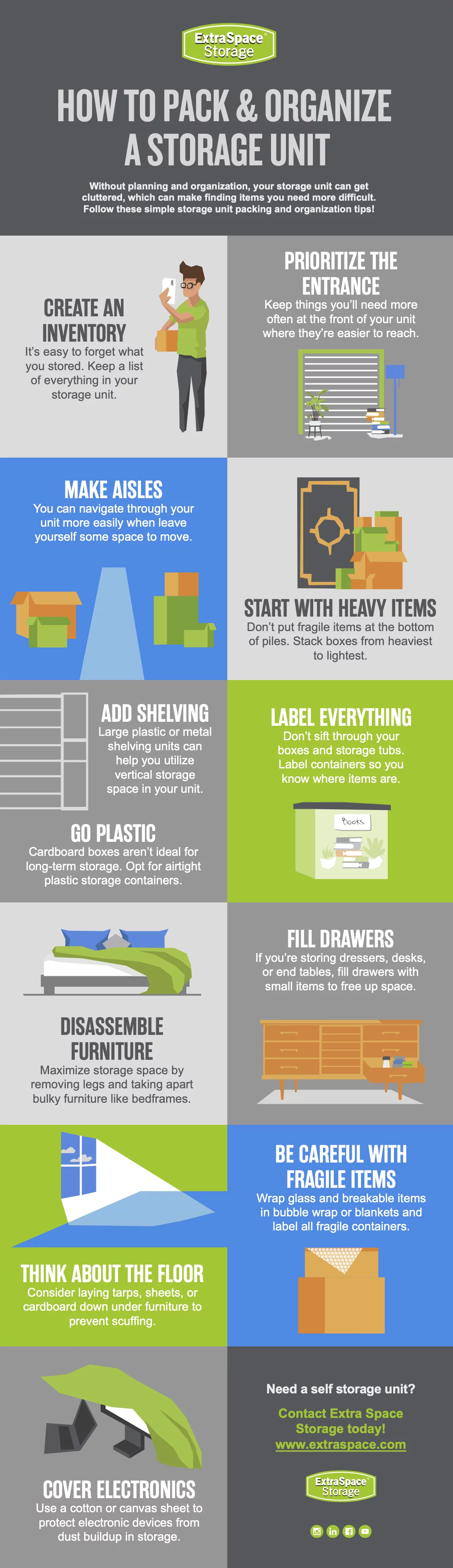
There are countless ways to maximize the space of your storage unit, so it’s smart to take advantage of every square inch! Take a look at our storage unit size guide to get an idea of just how much stuff you can fit into a storage unit size. Also, remember that any items you’ll need to access frequently should be up toward the front of your unit so you don’t have to dig through your storage space to get to them.
Clean the Unit Thoroughly
Though you should only partner with a self storage facility that maintains clean units, it never hurts to go the extra mile to make sure you're storing your belongings in a dry, clean space. Sweep the unit to remove all dust and dirt from the floor, then mop or scrub the floor with an all-purpose cleaner. Check the walls, corners, and ceilings for cracks or leaks. If you find any, alert the storage facility of the issue.
Install Shelving & Floor Coverings
Add extra storage space to your unit by putting up freestanding shelving units or wooden pallets. Shelves allow you to use the full height of your self storage unit to your advantage, and it makes accessing boxes and items easier. With pallets, you can raise cardboard boxes, storage tubs, and furniture off the ground to better protect your belongings from dust, dirt, and potential water damage.
Invest in Plastic Storage Boxes
Cardboard boxes are less expensive and will get the job done, but clear plastic storage bins will make your life less complicated in the long run. It's easier to see inside them and quickly identify their contents. They also last longer and are more stable than cardboard boxes, making them better for stacking. Plus, they can be sealed with locked lids, so it's more difficult for pests and dirt to get in.
Look for Climate-Controlled Storage
Sensitive items may become damaged if not stored in the proper environment. Rent a climate-controlled storage unit to better protect your belongings from extreme conditions. If the storage unit isn't temperature-controlled, lay down a sheet of plastic or a wooden pallet to guard against moisture building below your things.
How to Pack Your Storage Unit
Different types of items need to be packed differently when put into self storage to lessen the likelihood of damage or decay. Overpacking can cause strains or injuries when you're moving your items. Keep these packing tips in mind as you pack for short-term or long-term storage.
How to Store Furniture
Furniture is often bulky and takes up a lot of room, so break it down as much as possible to create extra storage space. Take apart headboards, bed frames, and mattresses. Remove table legs and store the table tops vertically. Cover all furniture with old sheets, quilts, or towels to keep out dirt, dust, and moisture. Before you store furniture in your unit, clean it thoroughly. Use a quality wood cleaner for chairs, desks, bookcases, and tables, and vacuum out cloth and leather chairs and couches.
How to Store Electronics
If not stored properly, electronics like computers, TVs, video game consoles, phones, and tablets can get broken or stop working. Start by making a backup file of the information you have on any computer, laptop, or phone you put into storage. Remove all cords and cables from your electronic devices and enclose them in separate waterproof bags. Cover electronic equipment with sheets to keep out dust and dirt.
How to Store Clothes
If you're running out of closet space or have seasonal clothing only needed in certain months, moving clothes to self storage is a great home organization hack. Fold or roll clothes and loosely place them in sealed plastic containers, trunks, or boxes. Add silica packets or oxygen absorbers to prevent mold growth. Consider storing more expensive clothes like suits or elegant dresses in garment bags hung on a rolling garment cart.
How to Store Appliances
Need to store appliances like refrigerators, ovens, microwaves, washers, or dryers while you move? With a little preparation, a climate-controlled storage unit is a great place to store appliances. Remove and drain the water from all hoses and tanks to prevent freezing or mold growth. Spray all appliances for pests and ensure they're completely dry before storing. Leave refrigerator doors slightly ajar by wedging an object in between the door and the compartment frame to improve circulation and avoid mold. Also, deep clean your grill and remove the propane tank before putting it in a storage unit during the winter months.
How to Store Delicate Items
If you're storing glassware, mirrors, dishes, or antique items, you'll want to take extra care to ensure these fragile items aren't broken in storage. Wrap them individually in bubble wrap or old newspapers and carefully arrange them in a sturdy box, such as a plastic container. Store these boxes on shelves or on top of heavier items to ensure they're not crushed from above.
How to Store Books
When not stored properly, books can become warped, stained, and damaged by mildew, giving them an off-putting musty smell. Air out your books in a dry room before packing them, then wrap them in acid-free archival paper. Avoid spine warping by packing books flat, not with the spine or binding pointing up. And because collections of books can be heavy and cumbersome to move, pack books in several smaller boxes rather than a few larger ones.
How to Organize Your Storage Unit
All too often, belongings are loaded into a self storage unit without much rhyme or reason, making it nearly impossible to find items when you need them. Keep these tips in mind to improve storage unit organization.
Prioritize What's in Front & Back
Determine which items you'll need access to in the near future and put them in the front, where you can easily reach them. Items intended for long-term storage should be placed in the back or along the sides of your storage unit.
Maximize Vertical Space
Whether you’re thinking about storing a lot of boxes or multiple pieces of furniture, don’t forget to use your vertical space! Stacking items limits how much is on the floor, making it easier for you to maneuver through your storage unit. It also means you can store heavy lesser-used items down low and commonly used, lighter items up high.
Use Descriptive Labels
As much as you think you'll remember what box you put everything in, chances are you'll need some reminders when you return to your storage unit. By using labels, you can detail both the category of the box and a list of the items stored in the box. That way, should you need to grab certain things from your storage unit later, you’ll know exactly which box they’re in. Use masking tape or stickers to create descriptive labels, like "kitchen silverware" or "Christmas tree decorations" to quickly locate what you're looking for.
Create an Inventory
Keep a detailed record of not only what you put in your storage unit, but where you placed it. When you need something, you'll easily be able to recall where it's at. Not only does this provide a record of everything that will be in your storage unit, should any of your items get damaged or stolen—but it also helps you get organized so you can keep track of which items are in which boxes. Take photos of everything you store, and keep an organized spreadsheet so you can stay up-to-date as you add and remove your belongings from the unit.
Leave Paths
Create a path down the middle of your self storage unit, so you have access to the whole space. If you have a large unit, create multiple aisles—doing so will make it easier to get to things on the sides of the unit as well.
Keep Similar Items Together
When storing your belongings, it's best to keep like items together to make them easier to find and unpack later. This can help you locate the items you may need for future use. Consider organizing by room or type—for example, office items go in office boxes, while kitchen items go in kitchen boxes.
Make a Map
The more detailed of an outline you create as you organize your storage unit, the simpler it's going to be to find specific items. In addition to creating an inventory, make a map that details exactly where everything is stored.
Utilize Furniture "Dead" Space
Create extra space by filling drawers, dressers, and cabinets with books, DVDs, documents, and other small items. Place items in the space underneath tables and desks. You'd be surprised how many clever storage ideas you can come up with by filling the empty space around furniture!
Put Heavy Items on Bottom
If you do stack boxes in your storage unit, put the heaviest items on the bottom. You don't want to risk them crushing other belongings over time. Use sturdier storage containers, like trunks or plastic storage bins, to store items at the bottom of a stack.
***
Find Affordable 10x10 Units in Your Area!
Extra Space Storage has residential and commercial self storage facilities throughout the country with amenities like climate-controlled storage, drive-up access, indoor access, and more.
Cities with affordable 10x10 self storage units: