
One of the best big cities to call home, Austin offers attractions for all ages, great jobs, and top colleges and universities—however, many Austin residents don’t like its drawbacks of extreme heat and a high cost of living. Here are the pros and cons of living in Austin.
Quick Facts About Austin
| Population | 965,872 |
| Average Home Price | $501,645 |
| Average Monthly Rent | $1,829 |
| Unemployment Rate | 3.2% |
| Median Household Income | $75,752 |
Statistics from AreaVibes & Council for Community and Economic Research (C2ER)
Pros of Living in Austin
There are several benefits of living in Austin, including a strong job market, fun attractions, and mild winter weather. Read more about the reasons to move to Austin below.
Pro: Austin’s Cost of Living Is Stabilizing
Because of its rising popularity and population growth, it makes sense why Austin is the most expensive metro in Texas. In recent years, its cost of living has stabilized significantly—and is now 3% lower than the national average. Residents see lower costs in areas like utilities, transportation, healthcare, and goods and services. Though the cost of renting in Austin remains somewhat high, home prices are down—making buying a home or investing in an Airbnb property much more accessible for residents. And with Texas’ lack of state income tax and Austin’s median household income of $75,752—about $20,000 higher than the state and national averages—Austin residents enjoy extra take-home pay, which provides greater financial stability.
Pro: Austin Offers Top Jobs
Thanks to its strong job market, ATX is a great place to live in the Lone Star State. With a low unemployment rate of 3.2%, Austin is one of the best cities for jobs and a great place to start a business. Residents can find opportunities in key industries in Austin like manufacturing, finance, life sciences, and more. You can also find a tech job in the “Silicon Hills” with major companies in Austin like Apple, IBM, Dell Technologies, and Adobe. Outside of tech, residents can find jobs with companies headquartered in Austin, like:
- Kendra Scott: A jewelry & lifestyle brand
- Whole Foods Market: Grocery store chain
- Vrbo: Vacation rental platform
- YETI: Outdoor recreational production company
- Silicon Labs: Software company
- Indeed: Job search platform
Pro: Variety of Upper Education Options
Topping the list of best college cities, Austin is ideal for those interested in higher education—it’s home to a variety of higher education institutions, offering students a wide range of programs. Below is a list of colleges and universities in the area.
- The University of Texas at Austin, one of the top public universities in the country
- Concordia University Texas, offering seven liberal arts colleges with dozens of areas of study
- St. Edward’s University, one of the best regional universities in the West and for veterans
- Austin Community College, with six Austin campuses and more than 100 programs
- Huston-Tillotson University, with more than 23 degree programs and flexible scheduling in their Adult Degree Program
Pro: Family Fun in Austin
Austin is full of fun activities for all ages, making it a top destination for family-friendly fun. From outdoor adventures to hands-on exhibits, try these fun things to do at some of the best family activities in Austin:
- See alpacas, spider monkeys, and parrots at the Austin Zoo.
- Spark your kids’ creativity with hands-on science exhibits at the Thinkery.
- Dig for fossils in the Dino Pit, check out the Honey Bee Observation Hive, and learn about native wildlife at the Austin Nature & Science Center.
- Enjoy the Austin winter fun with a variety of games and activities at the Austin Children’s Festival.
- See family-friendly productions or sign the kids up for acting classes at the Zach Theater.
Pro: Year-Round Outdoor Attractions
With nearly 300 sunny days every year, there’s plenty of time to enjoy the outdoors in Austin! The city’s year-round warm weather makes it easier for residents to spend the day at one of Austin’s many parks or visiting other outdoor attractions, like:
- Zilker Metropolitan Park for swimming at Barton Springs Pool, playing a game of disc golf, or visiting the Zilker Botanical Garden
- McKinney Falls State Park to go camping, fishing, or hiking
- Lady Bird Lake for rowing programs, canoeing, & kayaking
- Ann Richards Congress Avenue Bridge to watch bats fly out at dusk from April to October
- Barton Creek Greenbelt to enjoy hikes & views of the Twin Falls or Sculpture Falls
- Lake Travis Zipline Adventures for thrilling rides on the state’s longest, fastest zipline
Pro: Arts & Culture Galore
With everything from live theatre to interactive museums, residents will not be disappointed by Austin’s vibrant arts and culture scene. Here are some performing arts venues and museums to check out:
- Blanton Museum of Art: See more than 21,000 works of art on display or attend educational events.
- Bullock Texas State History Museum: Learn about the history of Texas through rotating exhibits or catching a film in the theatre.
- LBJ Presidential Library: Tour Lady Bird Johnson’s Office, spot LBJ’s Presidential Limousine, and see a replica of the Oval Office.
- Paramount Theatre: Attend a comedy show, concert, or family-friendly performance.
- Long Center: Support the Austin Opera or the Austin Symphony Orchestra.
- Ballet Austin: Watch performances like The Magic Flute or buy tickets to the annual production of The Nutcracker.
Pro: Austin’s Renowned Live Music Scene
With around 250 live music venues, it’s easy to see why ATX is called the “Live Music Capital of the World.” Whether you’re into country, blues, indie, or jazz, you can attend live musical performances any evening.
- Catch live music performances and take two-step lessons at the legendary Broken Spoke.
- Attend nightly live music performances in genres like country, rockabilly, and more at The Continental Club.
- Rock out to regular blues performances and tribute bands at the iconic Antone’s Night Club.
- Sing along to popular artists and bands at the Historic Scoot Inn, established in 1871.
- Sip a mimosa while enjoying Gospel Brunch, or sit back for live music performances at Stubb’s BBQ.
- Support local Austin musicians at Open Mic nights or Sing Along Saturdays at Speakeasy Austin.
Pro: Great Festivals & Events
Residents can stay busy with lots of festivals and events in Austin to attend throughout the year!
- Gather for festival food, a lineup of over 100 top musical performers across nine stages, and more at Austin City Limits, which spans two weekends in October.
- Check out the Film & TV Festival, dance to amazing acts at the Music Festival, and get ready to laugh at the Comedy Festival at the SXSW Music Festival.
- Sign up for the 5k or half marathon, or challenge yourself to the full 26.2 miles during the Austin Marathon in February.
- Watch professional chefs cook over an open flame, sip local wines during a tasting session, and try mouthwatering cuisine at the Austin Food & Wine Festival.
- Attend live podcast recordings and world premieres of horror, fantasy, action, and sci-fi movies at Fantastic Fest, the largest genre film festival in the U.S.!
- Listen to live Reggae performances at the Austin Reggae Festival or dance to free music performances of all genres at venues throughout the city during Free Week.
- Show your support of the LGTBQ community by participating in the parade during Austin Pride.
- Fly a kite in Zilker Park at the long-held annual ABC Kite Festival in April.
Pro: Diverse Restaurants
While BBQ and Tex-Mex are Austin staples, the city’s diverse selection of cuisines helped earn it a spot among both the best food truck cities and the best food cities in the U.S.! Here are some of the best Austin restaurants:
- Eldorado Cafe for Tex-Mex favorites
- Franklin Barbecue for classic Texas BBQ
- House of Three Gorges for Sichuan entrees
- Beirut for Lebanese street food
- KG BBQ for Texas BBQ infused with Egyptian & Middle Eastern flavors
- Milky Way Shakes for classic & signature shakes
Pro: Exciting Nightlife
A hot spot for nightlife in Austin, 6th Street is Austin’s top entertainment district—but that’s only the beginning of the fun!
- Laugh the night away with stand-up acts at The Velveeta Room.
- Watch comedy sketches and satirical performances at Esther’s Follies.
- Hang out on the patio with a craft cocktail at the Parlor Room.
- Dance the night away or attend performances by drag queens at Cheer Up Charlies, one of the best gay bars in Austin.
- Enjoy local brews and eats at one of the many Austin breweries, such as Hold Out Brewing, Austin Beerworks, Lazarus Brewing Co, and Austin Beer Garden Brewing Co.
Get Everything You Need For an Easier Move to Austin, TX
Cons of Living in Austin
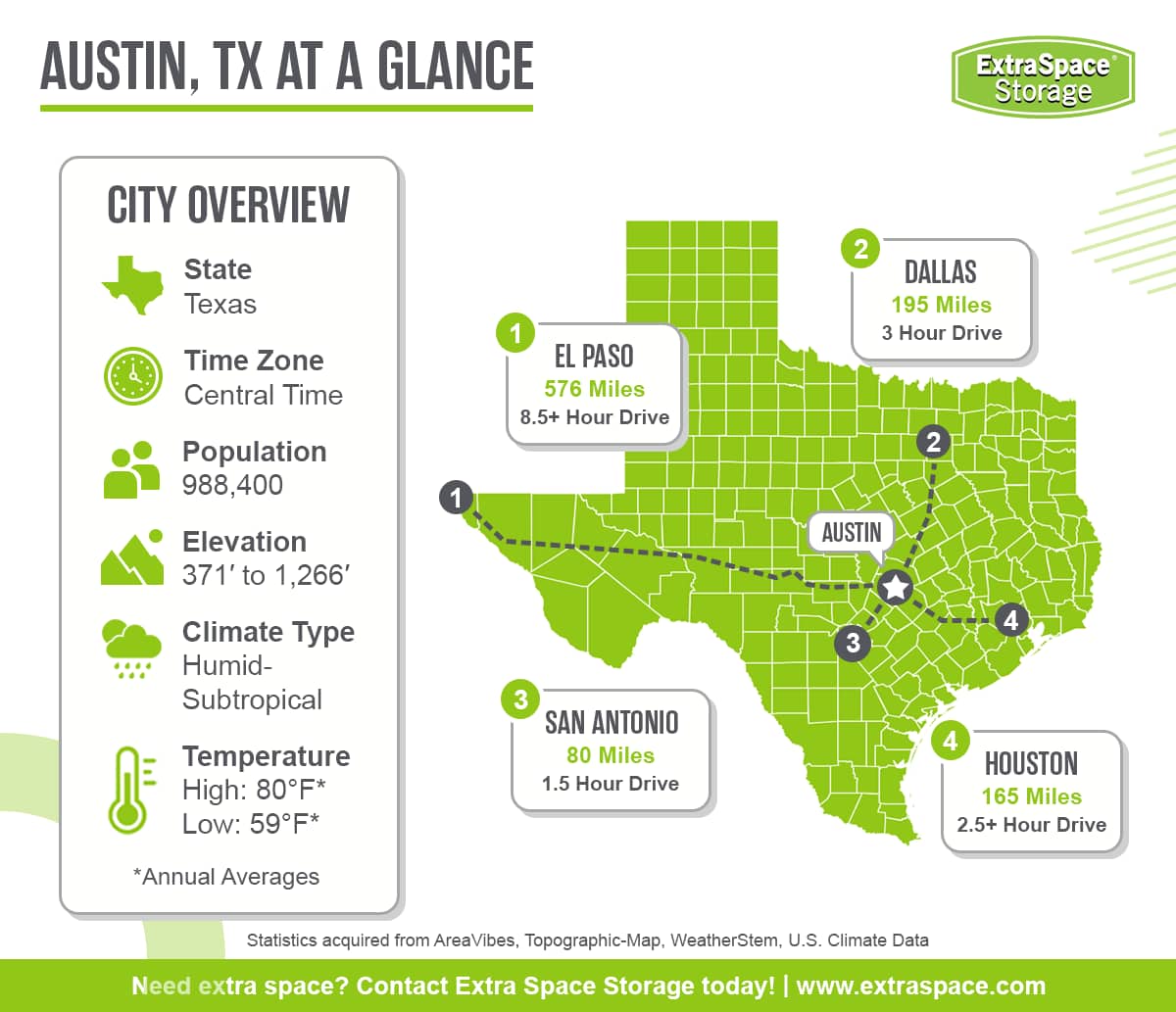
Though there are many great reasons to relocate to Austin, it’s important to consider its drawbacks, such as high property taxes, allergies, and hot summers. Here are the cons of moving to Austin.
Con: Lots of Traffic
Austin is a car-dependent city, so it’s no wonder that the highways are congested, with drivers losing 64 hours per year to driving time. Austin often ranks among the top 25 cities for worst traffic. One of the major contributors to this is the high traffic commuters face on the highways, with I-35 being one of the most congested highways in the state.
However, with 115 miles of new bike lanes, Austin is quickly becoming a bike-friendly city. Additionally, though Austin’s public transportation options are limited, there are some options to choose from—residents can take advantage of numerous bus routes or hop on the rail train with CapMetro.
Con: Complaints of Overcrowding
Austin has seen a significant boom in its population. Texas’ capital has seen a growth rate of 1.7%, making Austin one of the largest cities with a population of 965,872. Though this growth rate has steadied a little, there’s no end in sight to this growth and Austin is expected to reach 4.64 million by 2060. On top of this, Austin has seasonal population spikes during the academic year due to the presence of popular colleges and universities. While an increasingly large population can be beneficial in some ways, some residents may find the city too crowded. To help with this, locals can choose to live in Austin suburbs and neighborhoods a little further from the city center.
Con: Sweltering Texas Heat
Austin has a subtropical climate, so the summer months are hot and muggy. Hot weather season lasts from June to September, with average highs reaching 95 degrees with nearly 70% humidity. To help residents stay safe during periods of extreme heat, the City of Austin offers cooling centers where you can take a break from the outdoors. But Austin residents don’t let the heat put a stop to their fun, either, as there are plenty of ways to enjoy the warm weather:
- Attending annual events like the Star Spangled Fest or Zilker Summer Musical
- Cooling off with water activities at Lake Travis Waterloo Adventures
- Explore hidden passages at the Inner Space Cavern, which maintains a temperature of 72 degrees throughout the year.
Plus, with winter temperatures averaging 50 to 60 degrees and no snow, Austin’s winter weather is mild and comfortable, rarely dropping below 38 degrees. The mild winter months allow for year-round outdoor comfort and Austin winter activities like dining on outdoor patios, attending festivals, and seeing holiday light displays.
Con: Austin’s Cedar Fever
Allergies can be severe due to the unique combination of year-round high pollen levels in Austin. Known as Cedar Fever, December to early March sees a massive release of mountain cedar pollen. Austin’s mild climate, high humidity, and windy conditions help spread the pollen, triggering allergy symptoms like watery eyes and a sore throat. Because the pollen levels change daily, sensitive residents should check the local allergy report regularly during Cedar Fever season before heading outside.
Tips for managing allergies in Austin include:
- Checking pollen levels daily
- Closing windows during high pollen days
- Vacuuming frequently
- Changing air filters regularly
Con: Lack of Professional Sports Teams
Austin lacks professional NFL, NBA, or MLB teams, which may be a significant downside for sports fans. However, residents can still catch action with local sports teams.
- Austin FC (MLS) at Q2 Stadium
- Round Rock Express (MiLB) at Dell Diamond
- Austin Spurs (NBA G League) at H-E-B Center
- Texas Longhorns football (NCAA FBS) at Darrell K Royal–Texas Memorial Stadium
Fans can also travel to Houston for the day to cheer on the Houston Texans (NFL) at Reliant Stadium, the Houston Astros (MLB) at Daikin Park, or the Houston Rockets (NBA) at Toyota Center.
Should You Move to Austin?
You should move to Austin if you want a variety of job opportunities, greater financial stability, and abundant things to do. Consider your personal priorities, including budget, commute, and weather preferences, before deciding whether Austin is right for you!
Austin may be the right fit for you if…
- You want comfortable winter temperatures with no snow.
- You’re looking for a diverse job market with opportunities in tech, finance, or healthcare.
- You’re looking for top secondary education opportunities.
- You’re wanting a city with family-friendly attractions.
- You enjoy an active outdoor lifestyle.
You may want to consider moving to another city if…
- You’re sensitive to high pollen.
- You’re wanting a quick commute home.
- You prefer cooler weather.
- You’re concerned about high housing costs.
- You prefer less congested cities.
Austin Compared to Nearby Cities
Deciding if living in Austin or another Texas city is a better fit for you? Check out our comparison chart to see ATX vs. Dallas, or how Austin compares to Houston and San Antonio.
| Factor | Austin, TX | Dallas, TX | Houston, TX | San Antonio, TX |
| Average Monthly Rent | $1,829 | $1,554 | $1,329 | $1,524 |
| Average Home Price | $501,645 | $476,573 | $397,435 | $359,091 |
| Average Commute Time | 24 minutes | 27 minutes | 27 minutes | 24 minutes |
| Walk Score | 42/100 | 46/100 | 47/100 | 37/100 |
| Unemployment Rate | 3.2% | 3.4% | 4.2% | 3.8% |
| Major Industries | Business, government, trade, education, and hospitality | Business, government, education, health services | Energy, biotechnology, aeronautics, business | Bioscience, financial services, manufacturing |
Statistics from Council for Community and Economic Research (C2ER), BestPlaces, Walk Score, & AreaVibes
Frequently Asked Questions About Moving to Austin
What salary lets you live comfortably in Austin?
A livable salary in Austin for a single adult with no children is just over $49,000 per year before taxes, though this can vary depending on lifestyle. For a family with one working adult, one stay-at-home parent, and one child, a livable salary before taxes is $78,149. Fortunately, Austin’s median household income of $75,752 allows many residents to maintain a comfortable lifestyle.
Is Austin safe?
Austin is a relatively safe city to move to compared to other large cities. Austin is about 9% safer than other Texas cities and 11% safer than other U.S. cities. While no large metro is without crime, Austin offers many safe neighborhoods such as Allandale, Hyde Park, and North University. Newcomers should take the time to research neighborhoods and determine their comfort levels before moving.
What is the average temperature in Austin?
In Austin, the average temperature varies by season. In winter, the average temperature is typically around 50 to 60 degrees, and in summer, the average is in the high 80s and low 90s. July is typically the hottest month, with an average high of 95, while January’s average high is 61, though it can reach lows of 38 at night.
What state is Austin located in?
Austin is the state capital of Texas, located in the central area of the state along the Colorado River. ATX is located roughly 165 miles from Houston and 80 miles from San Antonio, making it easy to reach both major cities within a few hours.
Is Austin a good place to live?
Austin is a great place in Texas to live—especially for young professionals to call home. The city offers a strong job market spanning industries such as the public sector, education, and trade—all while having a wide selection of neighborhoods, a fun social scene, and great options for outdoor recreation.
***
Moving to Texas’ capital city? Extra Space Storage offers storage units throughout the Austin metro to make your move easier. Find self storage in Austin today!