

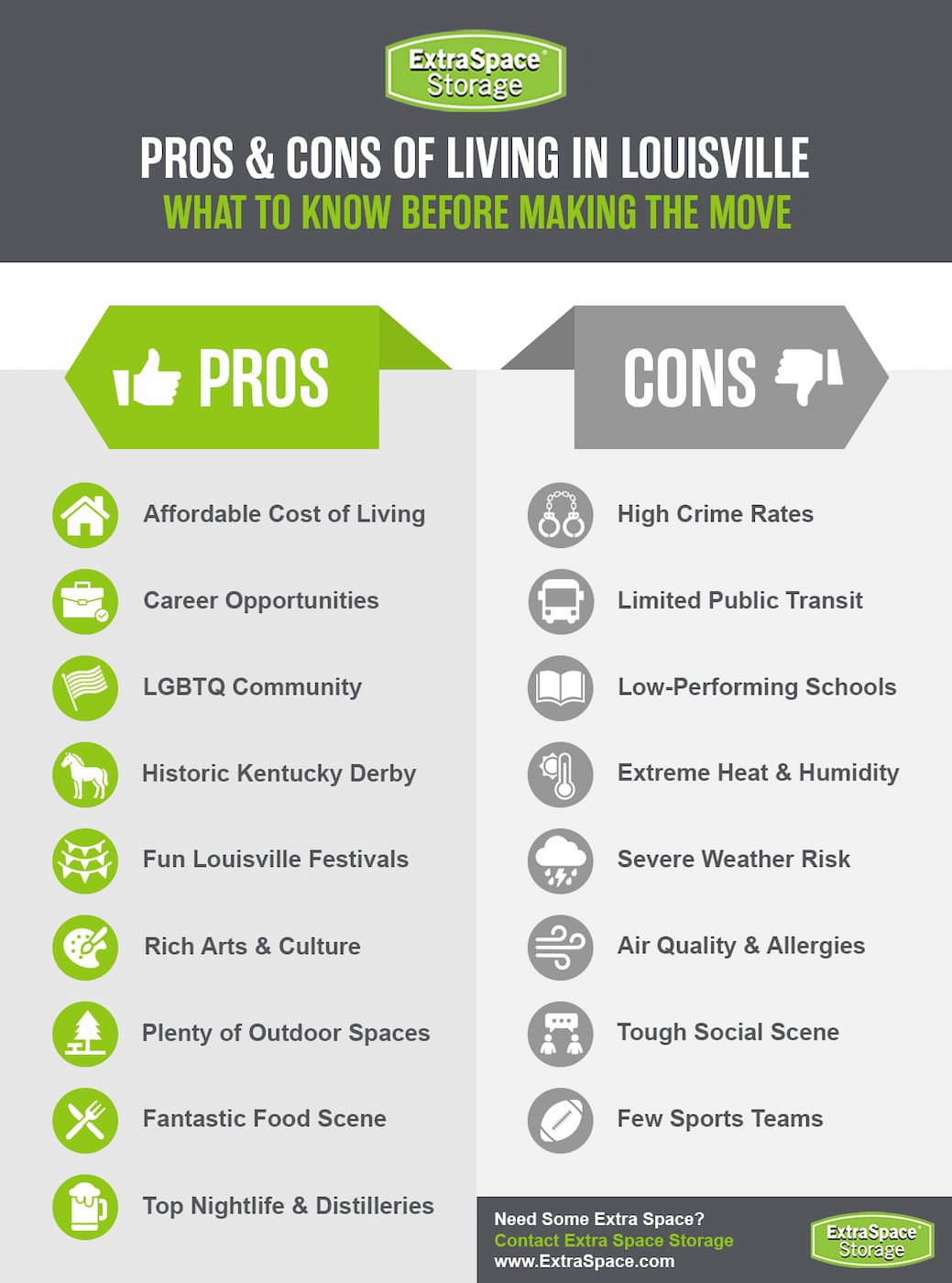
Louisville is one of the best places to live in the South! Residents are drawn to this vibrant community for its unique cultural attractions, wide array of job opportunities, and access to great outdoor recreation—but Derby City also sees extremely hot, humid weather and lacks extensive public transportation options. Before deciding to relocate, learn more about the pros and cons of living in Louisville, KY below!
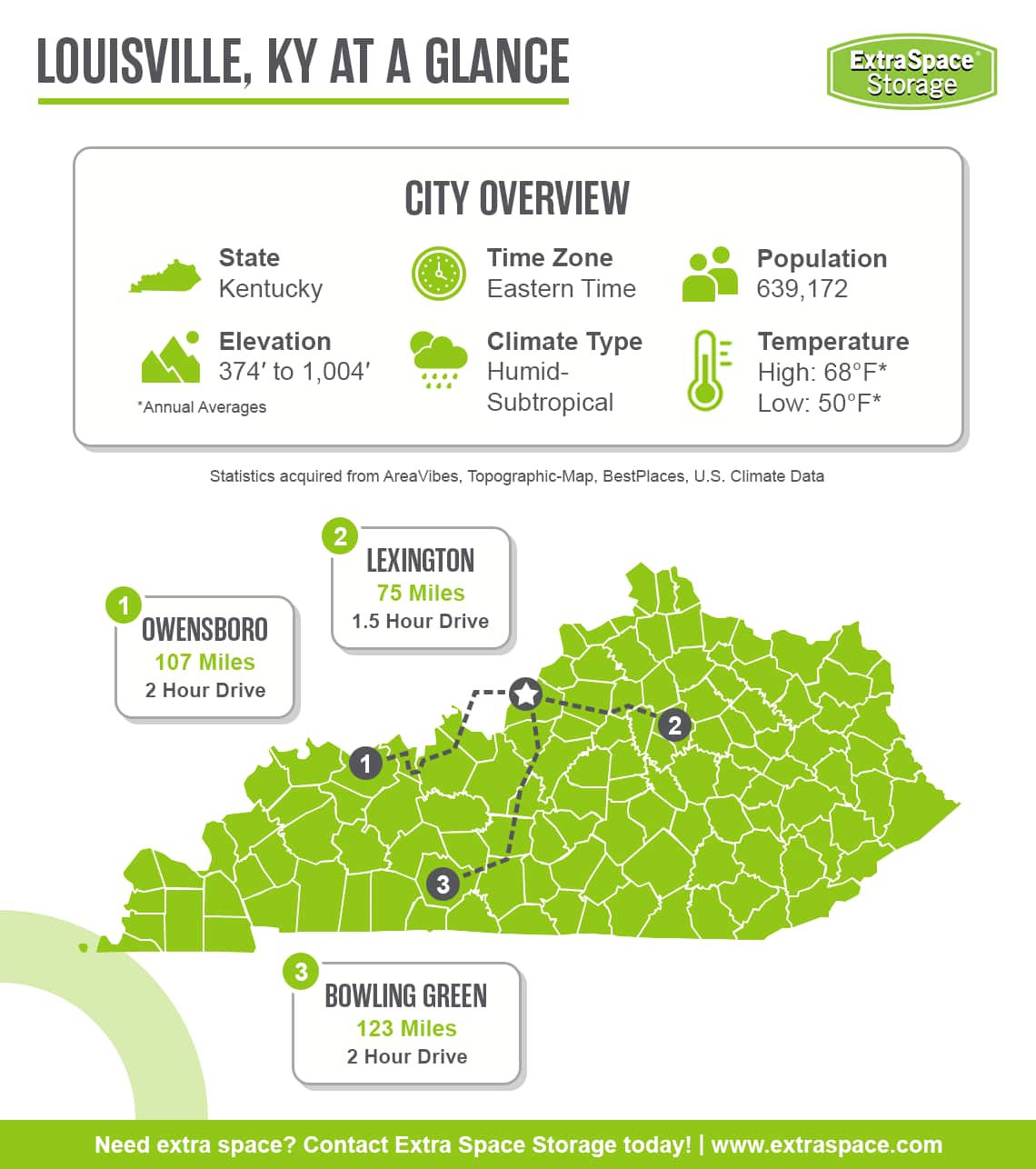
Quick Facts About Louisville
| Population | 618,733 |
| Average Home Price | $362,290 |
| Average Monthly Rent | $1,409 |
| Average Commute Time | 22 minutes |
| Unemployment Rate | 3.7% |
Statistics from AreaVibes, Council for Community and Economic Research (C2ER), & BestPlaces
Pros of Living in Louisville
Benefits of living in Louisville, KY include relatively affordable living, an outstanding food scene, and access to year-round festivals. Learn more about why you should move to Bourbon City below!
Pro: Affordable Cost of Living in Louisville
One of the best reasons to move to Louisville is its affordability. Louisville’s living costs are not only more affordable than the State of Kentucky, but also lower than the national average. Compared to other major cities in the region, like Atlanta, Charleston, Charlotte, and Nashville, the “Gateway to the South” is the most affordable large city to live in! The cost of both buying and renting a home in Louisville is also lower than the national average, making it easy for young professionals and families to find a home for a reasonable price. Residents can even expect their dollar to extend further on necessities like healthcare, transportation, and utilities here!
Pro: Ample Career Opportunities
With diverse job opportunities, the Louisville job market is on track to grow around 38% over the next ten years, which is outpacing the national average by almost 5%! The city also has a good unemployment rate of 3.7%, a full percent lower than the U.S. average. Some key industries in Louisville include healthcare, advanced manufacturing, and business services. Seek employment at Louisville companies like:
- PAI to gain experience in the ATM industry
- FBT Gibbons to work for a trusted local law firm in Louisville
- Brown-Forman to help build spirits brands
- GE Appliances for project management, marketing, or administration positions
- PMR Companies for a career in property management
- Yum! Brands, Humana, or Kindred Hospitals for those seeking work at Fortune 500 companies in Louisville
- First Class Air Support to explore aviation manufacturing
- Waystar for opportunities in the financial sector
- HDR for jobs in engineering or architecture
Pro: Supportive LGBTQ Community
Having received a perfect score on the Human Rights Campaign’s Municipal Equality Index since 2015, this Southern city is a place for everyone to feel welcome. Louisville was the first place in Kentucky to pass a fairness ordinance that protects against employment and housing discrimination for the LGBTQ community. The ordinance also includes provisions for gender identity protection. Today, the city has its own Human Relations Commission to investigate discrimination claims.
There are ample LGBTQ resources in the city, like PFLAG Louisville and the Fairness Campaign. When you want to have some fun, popular gay bars in Louisville include Play Louisville, Chill Bar Highlands, and Big Bar. Additionally, the Kentuckiana Pride Foundation hosts a variety of LGBTQ events throughout the year, including the Kentuckiana Pride Festival, while The Henry Clay theater hosts LGBTQ-focused performances by Pandora Productions.
Pro: The Historic Kentucky Derby
Since 1875, Louisville has been home to the world’s most famous horse race, the Kentucky Derby, held at Churchill Downs Racetrack. Often referred to as the “most exciting two minutes in sports,” this race can bring in an estimated $441 million of value to Derby City—and part of the proceeds are given back to the community by The Kentucky Derby Festival Foundation and The Churchill Downs Foundation.
Before attending your first race, familiarize yourself with the latest Kentucky Derby fashion trends, like bright floral designs and classic derby hats. Keep the party going with plenty of derby-related things to do in Louisville, like the month-long Kentucky Derby Festival. Explore all things bourbon, thoroughbred racing, and bluegrass music at Thurby. Or step back in time to explore years of Kentucky Derby history with interactive exhibits like The Greatest Race at the Kentucky Derby Museum.
Pro: Fun Louisville Festivals
Residents love to celebrate cultures from around the world with year-round, energetic Louisville festivals. Find your favorite way to celebrate at events like these:
- NuLu Bock Fest to cheer on baby goat races, sip locally-made craft beer, & dance to live music
- St. Patrick’s Parade to celebrate Irish culture with spirited events
- Mayor’s Hike, Bike, & Paddle to get active with a four-mile walk, a bike ride through Downtown Louisville, & a paddle across the water
- Kentucky State Fair to attend livestock shows, learn how to milk a cow, enjoy a ham breakfast, or ride amusement park attractions in Thrill Ville
- Bourbon & Beyond festival to let loose with live music, camping, & a variety of bourbon tastings
Pro: Rich Louisville Arts & Culture
Louisville is a great place to live for all things arts and entertainment! From admiring murals to watching live performances, here are some of the best things to do in Louisville to get your creativity flowing:
- Speed Art Museum to marvel at beautiful exhibits, attend events like the Speed Art Museum Ball, or watch an indie film in the Speed Cinema
- Kentucky Center for the Performing Arts to see a variety of live acts & Broadway shows
- KMAC to explore the world of Contemporary art, enroll in workshops, or drop into Artist Talks
- Bourbon Hall or Headliners Music Hall if you’re seeking awesome Louisville music venues
- 21c Museum Hotel Louisville to explore a unique hotel & Contemporary art space open to the public
Pro: Plenty of Outdoor Spaces
While there are lots of indoor attractions, nature enthusiasts will love the many outdoor activities in Louisville, too! Get outside with these outdoor attractions:
- Charlie Vettiner Park for 283 acres of fun, from pickleball and disc golf to basketball
- Cherokee Park to walk or drive along the two-mile scenic loop, practice archery, or play in the sprayground
- Chickasaw Park to reel in fresh fish, grill out with family, or practice your tennis serve
- E.P. Tom Sawyer State Park to cool off from the heat in one of the largest outdoor pools in Louisville, hike the Goose Creek Nature Trail, or hit the BMX track
- Jefferson Memorial Forest to canoe, ride horses, & picnic at the nation’s largest municipal urban forest, just 15 miles from Downtown Louisville
- Louisville Mega Cavern to explore a former limestone quarry, glide across six different zip lines, & maneuver a ropes challenge course
Pro: Fantastic Louisville Food Scene
Although Bourbon City is known for its Hot Brown sandwiches, there are plenty of other options available that make this town the foodie haven you’ve been looking for! A few top restaurants in Louisville include:
- Gralehaus for some of the best brunch in Louisville
- Feast BBQ to enjoy popular Louisville BBQ plates, from pulled pork to wings
- Mayan Cafe for farm-to-table indigenous-inspired cuisine
- Oriental House for authentic Chinese food in Louisville
- Twig And Leaf to treat yourself to homemade American fare
- CASK Southern Kitchen & Bar for Southern dishes & outdoor patio dining in Louisville
Pro: Bourbon Country Nightlife
Historically, farmers in Louisville used the limestone-filtered water from the Ohio River to distill whiskey. This strong connection to bourbon continues today in local Louisville distilleries like Michter’s Fort Nelson Distillery, the Old Forester Distilling Co., and Angel’s Envy—all stops along the epic Kentucky Bourbon Trail. You’ll also find Kentucky’s first African-American-owned distillery, Brough Brothers, as well as the Kentucky Artisan Distillery, the “finest farm-to-bottle operation.”
Not a whiskey drinker? Consider planning a night out at Louisville nightlife spots like:
- Fourth Street Live!, an entertainment district where you can watch pianists battle it out at Howl at the Moon or ride the mechanical bull at PBR Louisville
- Stevie Ray’s Blues Bar to enjoy live rock, country, & blues music while sipping unique cocktails
- Louisville Comedy Club to laugh out loud with nationally touring comedic acts
- Mercury Ballroom, a historic venue hosting live performances from local & popular acts
Get Everything You Need For An Easier Move to Louisville
Cons of Living in Louisville
A few disadvantages of living in Louisville include higher-than-average crime rates, humid summers, and limited public transit options. If you’re considering a move to Louisville, consider these potential downsides.
Con: High Louisville Crime Rates
Louisville crime rates are relatively high, and the city is only safer than 14% of Kentucky cities. However, the city remains safer than 43% of U.S. cities, and is safer than similar-sized nearby cities like Nashville and Memphis. That said, you can still find a variety of safe, affordable neighborhoods in Louisville with particularly high safety ratings and a tight-knit community feel. The city has also introduced programs like Safe Louisville and the LMPD Crime Plan in efforts to lower crime levels and create a safer atmosphere for residents.
Con: Louisville Public Transportation Is Limited
Residents don’t have a ton of choices when it comes to public transportation in Louisville, making it a fairly car-dependent city. The city’s main public transportation service is Transit Authority of River City (TARC)’s Rapid Transit or Paratransit buses. However, TARC’s service cuts and reduction in frequency have impacted a large portion of the city’s routes.
If your destination is nearby, consider strolling through downtown—a walker’s paradise—or renting electric scooters and bikes through Bird or Lime. For longer commutes, buy a Greyhound or Amtrak ticket at the Louisville Station. Or stick with driving your own vehicle and take advantage of commute times in Louisville that are slightly shorter than the national average.
Con: Public Schools in Louisville Aren’t Great
Residents report a lack of quality public schooling options in Louisville, which can make it difficult to find a good place to send your kids for their education. Jefferson County Public Schools reports low test scores for students—24% lower than the national and state averages—which could be due, at least in part, to a large budget deficit. That said, the district’s Research & Systems Improvement Department has plans in place to improve academic achievement across its public schools. And for those looking for higher education, the city has several great Louisville colleges to choose from, including:
- University of Louisville for fields like accounting, bioengineering, & communication
- Bellarmine University, a private Catholic university with programs in data science & economics
- Sullivan University, one of the best private colleges in Louisville
- Spalding University, offering graduate programs in finance, human resource management, & more
- The Southern Baptist Theological Seminary to explore ministry work with a Master of Divinity, Master of Arts, or Doctoral Studies degree
- Galen College of Nursing-Louisville to prepare for a career in healthcare
Con: Extreme Heat & Humidity
Living in the South means the weather tends to be hot and muggy, especially during the summertime. The hottest temperatures in Louisville happen from May to September, with July’s average daily highs reaching 87 degrees. September is the most humid month of the year, with 72% humidity levels. This can make outdoor activities uncomfortable. However, it also means Louisville is a great place to live for those who like warm weather and snow levels below the national average. To help stay cool during the hot season, residents can visit local outdoor pools and spraygrounds like Nelson Hornbeck Park and Algonquin Park.
Con: Severe Weather Risk
Louisville weather brings an average annual precipitation of around 46 inches, which can lead to flooding of the Ohio River and flash flooding throughout the area. Besides rainstorms, Louisville’s severe weather risks can include tornadoes, most common on spring and summer evenings. To prepare for a tornado, you’ll want to sign up for community alerts, know where your nearest public tornado shelter is, and pack a disaster supplies kit to keep on hand in your home.
Con: Poor Air Quality & Seasonal Allergies in Louisville
Louisville may not be in the top ten worst cities for allergies, but the region still ranks in the top 100 allergy capitals in the U.S.—and general air quality is declining—so you can expect to deal with high pollen counts and a challenging allergy season. The pollen levels are rarely low here because of the city’s position next to the Ohio River Valley, which allows pollen-producing plants to thrive. Some of the most common sources of pollen in Derby City include local vegetation like Kentucky Bluegrass, Timothy Grass, and Bermuda Grass.
That said, there are a few preventative measures you can take to help lessen your symptoms during allergy season in Louisville:
- Check in with the Louisville Air Watch so you know when pollution is particularly high.
- Try reducing seasonal allergy symptoms by limiting your time outside during peak allergen times, keeping your home pollen-free, and showering often to wash away pollen from your skin and hair.
- You can also head to nearby immunologists and asthma specialists or seek allergy care at the University of Louisville Health to get medical assistance for your seasonal allergies.
Con: Challenging Social Scene
While many Southern cities are known for their hospitality, locals report that Louisville’s social circles can be more closed off. Newcomers may feel excluded from social groups—many of which consist of lifelong residents who went to high school together or grew up in the same neighborhoods.
However, if there’s one thing to appreciate about Derby City, it’s the variety of unique communities—giving you lots of potential opportunities to establish connections. Spend time in artsy Germantown exploring popular dive bars and trendy restaurants. Head east past downtown with the family for green spaces like Waterfront Park and kid-friendly eateries. Regardless of where you live in Louisville, you can find local neighborhood events that can help you bond with your neighbors, including Food Truck Wednesdays, the Downtown Drive-In, and more!
Con: Few Sports Teams in Louisville
As the home of the Kentucky Derby, Louisville has great festivities during the horse race—but in terms of professional sports teams, Bourbon City comes up short. While major league sports aren’t very accessible in the city, there are still some teams for sports fans to support. Check out college sporting events, like football and baseball games with the University of Louisville Cardinals (NCAA D-I). Or attend games from minor league or niche sports teams in Louisville like the Louisville Bats (MiLB) at Louisville Slugger Field and Louisville City FC (USL) at Lynn Family Stadium!
Should You Move to Louisville?
You should move to Louisville if you’re looking to live in an affordable city with a growing job market, abundant parks, and a vibrant food and bourbon scene. However, it’s important to evaluate your health, transportation needs, and climate preferences before making a final decision, as Louisville residents experience seasonal allergies, limited transit options, and extreme weather. Consider the following to see if life in Louisville makes sense for you.
Louisville may be the right fit for you if…
- You’re living on a budget and need affordable housing.
- You want to find ample career opportunities in industries like healthcare, manufacturing, or business.
- You don’t mind driving your own car as opposed to taking public transit.
- You appreciate easy access to a variety of restaurants, bars, and distilleries.
- You enjoy performing arts and festivals.
You may want to consider moving to another city if…
- You’re prone to extreme allergies.
- You’re seeking a wide variety of high-quality public schooling options for your kids.
- You prefer to commute by train or bus.
- You’re a professional sports fan who wants to cheer for major league teams in your city.
- You have a hard time getting out of your comfort zone to make new friends.
Louisville Compared to Nearby Cities
Wondering if Louisville is better than Lexington, Nashville, or Charlotte? Check out the comparison chart below to figure out which Southern city best meets your needs.
| Factor | Louisville, KY | Nashville, TN | Lexington, KY | Charlotte, NC |
| Average Monthly Rent | $1,409 | $1,741 | $1,292 | $1,573 |
| Average Home Price | $362,290 | $534,248 | $386,744 | $401,923 |
| Average Commute Time | 22 minutes | 25 minutes | 21 minutes | 25 minutes |
| Walk Score | 34/100 | 29/100 | 34/100 | 26/100 |
| Unemployment Rate | 3.7% | 3.4% | 3.6% | 3.5% |
| Major Industries | Manufacturing, healthcare, business | Healthcare, entertainment, hospitality | Manufacturing, healthcare, education | Finance, technology, energy |
Statistics from Council for Community and Economic Research (C2ER), BestPlaces, Walk Score, & AreaVibes
Frequently Asked Questions About Moving to Louisville
What salary do you need to live in Louisville, KY?
A livable wage in Louisville, KY is just over $44,000 for a single adult with no children. Considering the city’s median household income is nearly $55,000, many residents are able to live comfortably here with relative ease—especially since Louisville home prices are nearly $200,000 lower than the national average.
Is Louisville safe?
Though Louisville crime rates are higher than the national average, many neighborhoods are still considered safe. If safety is your top priority, consider moving to particularly safe, affordable neighborhoods like Bonnycastle and Crescent Hill—which are known for their low crime rates, good schools, and tight-knit community vibes.
Does it snow in Louisville, Kentucky?
It snows occasionally in Louisville, though the city sees snow levels below the national average—only around nine inches per year, compared to the U.S. average of 28 inches. Snow is most common between November and March. During winter, the average temperature in Louisville is around 57 degrees, so snow typically doesn’t have much time to accumulate.
How far is Louisville from Nashville?
The distance from Nashville to Louisville is around 175 miles. By car, this drive takes just over two and a half hours. Otherwise, you can find bus routes from Louisville to Nashville that take around three hours of travel time. Louisville residents frequently travel to Nashville for a fun weekend in the big city—often drawn to popular Nashville attractions like the Grand Ole Opry, fun nightlife, and big sports teams.
Is Louisville a good place to live?
Louisville is considered a good place to live, offering affordability, top career and higher education opportunities, diverse cuisine, and a great bourbon scene. Residents also enjoy year-round festivals, easy access to the Kentucky Derby, and lots of green space.
***
Relocating to Louisville, KY? Extra Space Storage has convenient facilities located throughout the city. Rent a storage unit in Louisville today!