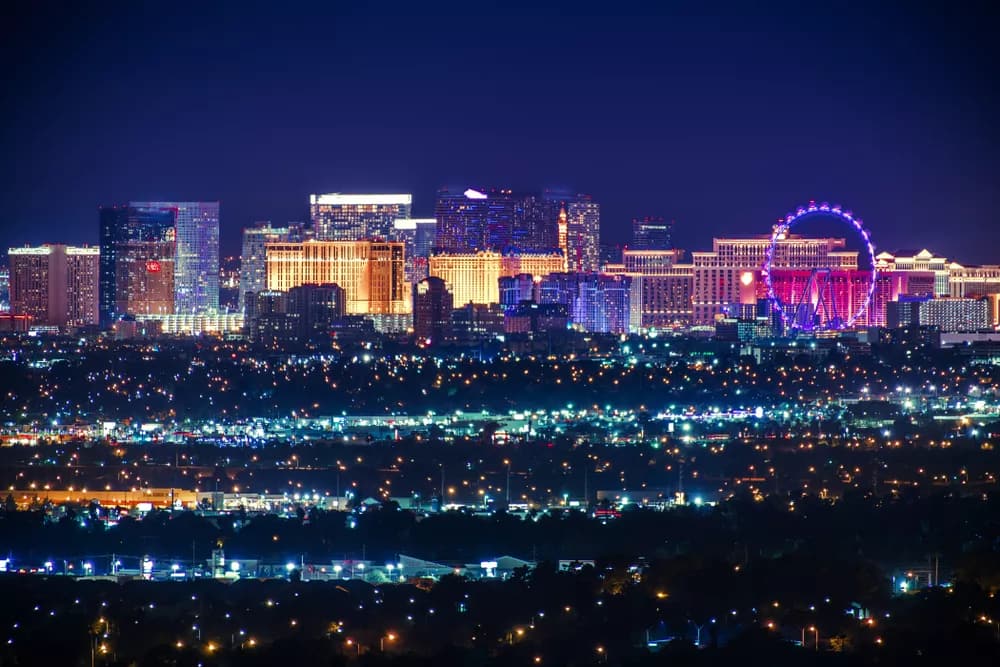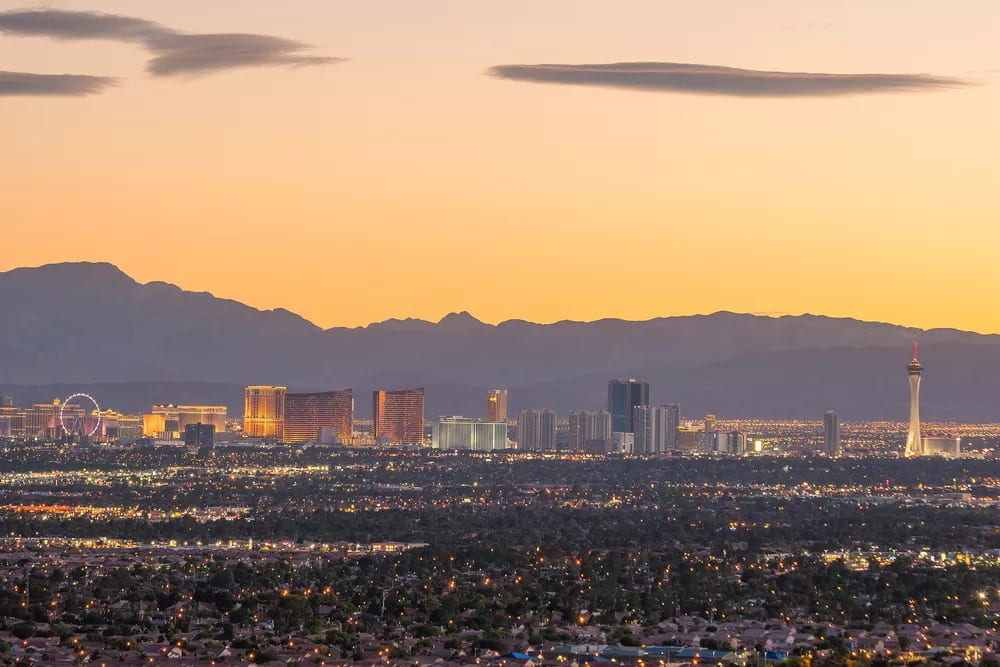
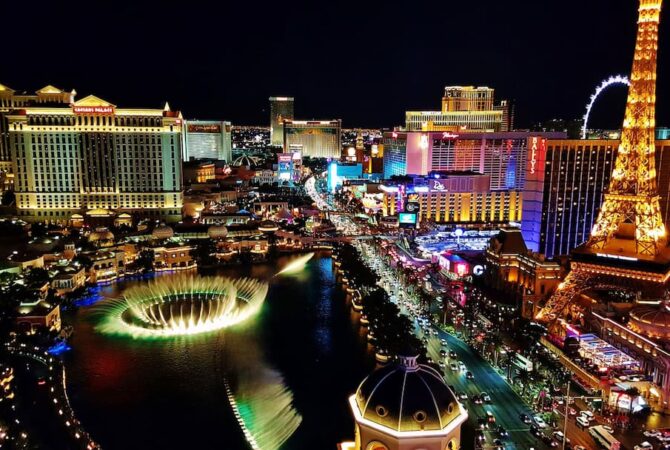
Las Vegas is one of the best cities for year-round weather and a great place to live for its world-class entertainment, attractions, and easy access to outdoor recreation. Locals enjoy Sin City’s vibrant nightlife and unique desert landscape, but some point to heavy traffic and limited job diversity as potential drawbacks. Here are the pros and cons of living in Las Vegas!
Quick Facts About Las Vegas
| Population | 662,341 |
| Average Home Price | $559,932 |
| Average Monthly Rent | $1,567 |
| Average Commute Time | 25 minutes |
| Median Household Income | $88,475 |
Statistics from AreaVibes, Council for Community and Economic Research (C2ER), & Best Places
Pros of Living in Las Vegas
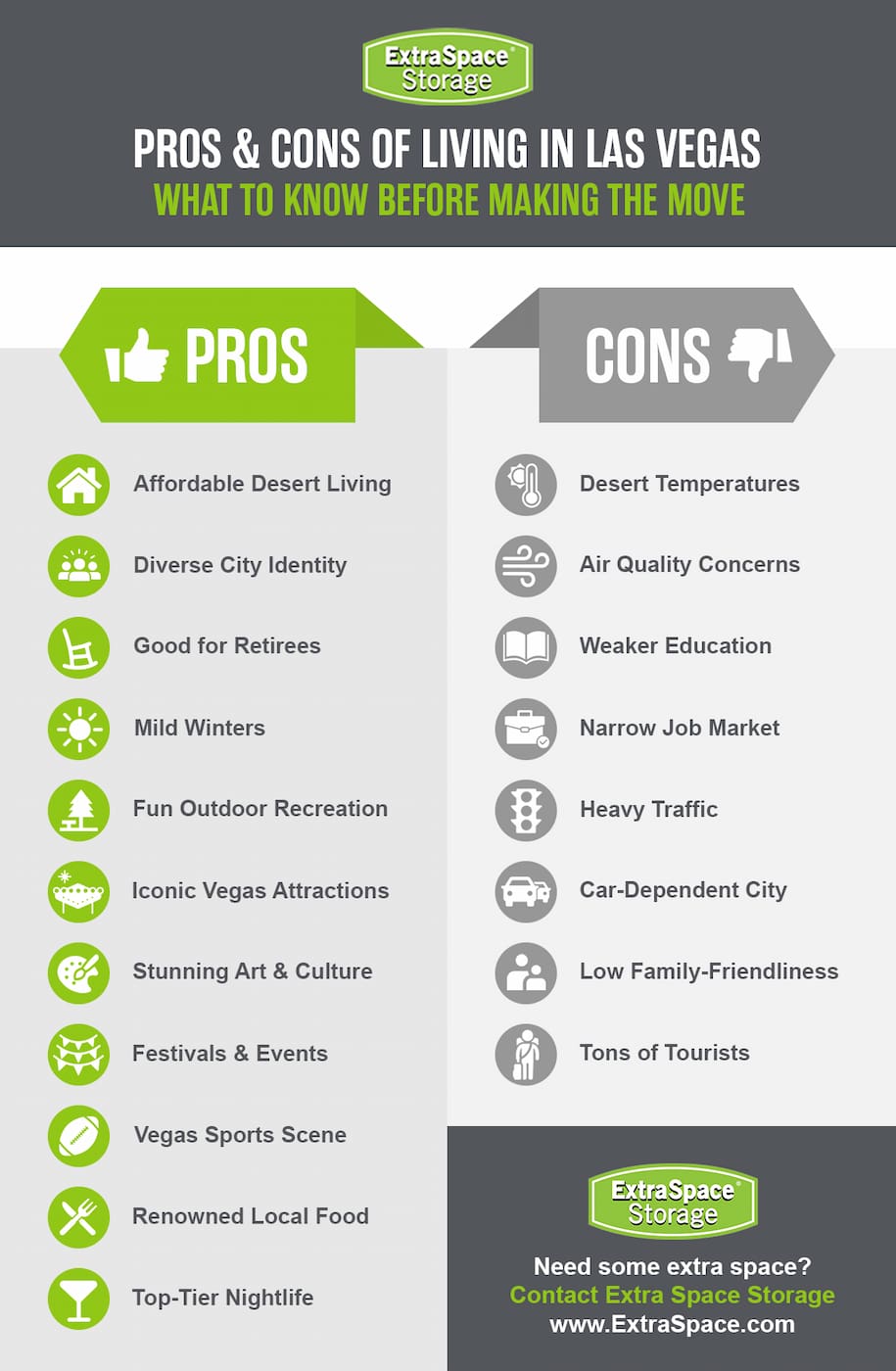
There are several benefits of living in Las Vegas, including its many festivals and events, iconic attractions, and impressive affordability. Here are the pros of living in Las Vegas!
Pro: Affordable Desert Living
When you think of Las Vegas, you might picture luxury amenities and expensive attractions—but contrary to popular belief, the city is actually a relatively affordable place to live! Living in Sin City comes with no state income tax and low property taxes, making it easy to carve out a comfortable lifestyle. In addition, the cost of living in Las Vegas is 2% lower than the national average and significantly lower than other major U.S. cities like Phoenix and Los Angeles. Although Las Vegas home prices are higher than the national average, renting is roughly on par, and residents save on healthcare and various goods and services. Plus, the State of Nevada has plenty of financial assistance programs for residents in need, including free tax return preparation for qualifying taxpayers.
Pro: Diverse City Identity
Las Vegas stands out as a highly diverse U.S. city in both demographics and culture, creating a rich mix of perspectives. This is largely driven by a strong immigrant influence, which shapes the city’s identity well beyond the Strip. The blend of backgrounds fosters a more globally-minded, inclusive atmosphere—reflected in the abundance of minority-owned businesses and cultural attractions and events throughout the city. Residents can explore Asian American-owned businesses in Las Vegas Chinatown, experience immersive heritage exhibits at Fantasy Lab: Colors of Mexico, or celebrate Italian culture at the San Gennaro Feast. The city’s diverse food scene also offers authentic international fare, from family-run spots to high-end global dining, making it a major draw for people who value cultural variety in everyday life.
Pro: Good for Retirees
Las Vegas is an increasingly popular spot for retirees, thanks to its strong financial advantages and active lifestyle. Nevada’s lack of state income tax means no taxes on Social Security, pensions, or retirement withdrawals, helping savings go further. Housing is relatively affordable, with plenty of 55+ communities, and the overall cost of living is roughly on par with the national average. Vegas also offers access to a developing healthcare system with senior services, insurance coverage, and proximity to quality hospitals. Add in year-round sunshine, abundant entertainment, and a growing retiree community that’s projected to hit 19% by 2030, and it’s a solid option for those seeking both affordability and activity in retirement.
Pro: Mild Winters
If you’re not a fan of frigid weather, you’re in luck—Las Vegas is great during the colder months, whether you’re spending the season alone or inviting others for a winter vacation. With an average of 0.3 inches of snowfall per year and winter low temps typically only falling to about 37 degrees at night, you can safely enjoy the outdoors without having to worry about freezing conditions. The city also boasts exceptionally low humidity, so you won’t have to worry about many rainy days or icy roads. When the weather cools down, you can go ice skating on the Las Vegas Strip at the luxurious Oasis Ice Rink, chill out with interactive ice sculptures and specialty cocktails at the minus5 Ice Bar, or see the impressive holiday display at the Bellagio Conservatory & Botanical Gardens from mid-November through early January.
Pro: Fun Outdoor Recreation
Sin City offers more than just its nightlife and entertainment scene—it’s also a great place for outdoor enthusiasts looking to explore the natural beauty of the surrounding desert and beyond. From scenic hikes to unique adventures, there are plenty of ways to enjoy outdoor fun in Las Vegas.
- Red Rock Canyon—a Las Vegas hidden gem—for hiking trails, desert views, & family-friendly events
- Lake Mead National Recreation Area for picnicking, cycling, & waterfront sightseeing
- Black Canyon National Water Trail for guided tours & kayaking near the historic Hoover Dam
- Springs Preserve for botanical gardens & interactive exhibits at the Origen Museum
- Floyd Lamb Park for wildlife viewing, open green space, & relaxing scenery
- Valley of Fire State Park for off-roading, rock formations, & desert exploration
Pro: Iconic Vegas Attractions
Las Vegas lives up to its reputation as the Entertainment Capital of the World, offering iconic attractions and unforgettable experiences along the Strip. Whether you’re looking for views of the Las Vegas skyline or immersive shows and spectacles, there are always exciting things to do on the Strip.
- High Roller Observation Wheel for panoramic skyline views & a unique ride experience
- Fountains of Bellagio for choreographed water shows with music & lights
- Sphere for immersive entertainment with cutting-edge visuals
- Eiffel Tower at Paris Las Vegas for romantic views from 46 stories up
- The STRAT Hotel, Casino & Tower for thrill rides & sweeping views from one of the tallest structures in the U.S.
- Venetian Gondola Rides for a scenic journey through indoor & outdoor canals & detailed architecture
Pro: Stunning Art & Culture
The arts and culture scene in Las Vegas is always thriving, thanks to immersive experiences, unique exhibits, and creative city spaces like the eclectic 18b Arts District. From interactive installations to live performances, there are plenty of ways to explore art and culture in Sin City.
- AREA15 for immersive art installations & interactive experiences
- Meow Wolf Omega Mart for surreal, hands-on art exhibits & mind-bending environments
- The Arts Factory for a collection of creative studios & rotating exhibits
- Atomic Museum for Cold War history & interactive science displays
- The Neon Museum for iconic Las Vegas signage & audiovisual shows
- The Smith Center for Broadway productions, concerts, & live performances
Pro: Exciting Festivals & Events
Las Vegas hosts an exciting lineup of festivals and events throughout the year, drawing visitors and locals alike for music, food, culture, and community celebrations. No matter your interests, there’s always something happening in the city.
- iHeartRadio Music Festival for major headliners & live performances from top artists
- When We Were Young Festival for nostalgic emo & punk music from the 2000s
- Electric Daisy Carnival (EDC) for large-scale EDM performances, rides, & immersive visuals
- Great Vegas Festival of Beer for craft brews & tastings from local & national breweries
- Great American Foodie Fest for diverse food vendors, contests, & carnival fun
- Las Vegas PRIDE for parades, community events, & LGBTQ celebrations
Pro: Vegas Sports Scene
One of the great things about living in Las Vegas is its professional sports teams, offering fans the chance to catch exciting games across a variety of leagues. From hockey to football, there’s no shortage of Las Vegas teams to support.
- Las Vegas Raiders (NFL) at Allegiant Stadium
- Vegas Golden Knights (NHL) at T-Mobile Arena
- Las Vegas Aces (WNBA) at Michelob ULTRA Arena
- Las Vegas Aviators (MiLB) at Las Vegas Ballpark
- Las Vegas Lights FC (USL) at Cashman Field
Pro: Renowned Local Food
If you’re looking for a true foodie destination, look no further than Vegas! With a diverse culinary scene, residents can explore global flavors without ever leaving the city. These are some of the best restaurants in Las Vegas:
- Bardot Brasserie for French-inspired Las Vegas brunch dishes & classic European cuisine
- Hash House A Go Go for Midwestern food & craft cocktails
- Esther’s Kitchen for fresh Italian dishes in the Las Vegas Arts District
- Sparrow + Wolf for inventive, yet traditionally-inspired modern cuisine
- Wing Lei for upscale Chinese dining & Michelin-starred meals
- Other Mama for seafood-focused dishes & craft cocktails
Pro: Top-Tier Nightlife
As the best party city in the U.S., Las Vegas is known for its high-energy clubs and unique after-hours entertainment that defines its world-class nightlife scene. Whether you’re looking to dance, socialize, or catch a show, the city delivers unforgettable fun, even after the sun goes down.
- La Jolla Nightclub for Latin music, dancing, & a lively club atmosphere
- XS Nightclub for top DJs, upscale vibes, & signature cocktails
- Millennium FANDOM BAR for themed events, trivia nights, & cosplay-friendly fun
- Gold Spike for outdoor music, games, & social nightlife events
- KAMU Ultra Karaoke for private karaoke suites & group entertainment
- Las Vegas magic shows for live performances by world-famous illusionists
Get Everything You Need for an Easier Move to Las Vegas
Cons of Living in Las Vegas
Some disadvantages of living in Las Vegas include weaker public education, a restrictive job market, and desert heat. Find out more about the cons of living in Las Vegas below.
Con: Desert Temperatures
Situated within the Mojave Desert, Las Vegas’ hot and dry climate is not for the faint of heart. It’s the second-hottest city in America, with an average high of 104 degrees in July. Las Vegas also receives an average of just over five inches of rainfall per year, making it one of the driest cities in America. Due to these conditions, the city is susceptible to heat waves and droughts, which may require water conservation measures and drive up utility costs. Plus, the city occasionally faces earthquakes, which demand observing proper safety precautions. That said, for those inviting friends or family for visits, Las Vegas is one of the best cities for summer vacations, and its average of 294 sunny days allows residents to enjoy year-round outdoor recreation. There are tons of ways to take advantage of sunny Sin City—tee off at Las Vegas golf courses, visit shops along eclectic Fremont Street, or ride above the city on SlotZilla Zipline.
Con: Air Quality Concerns
Las Vegas ranks among the top U.S. cities for ozone pollution, with residents exposed to higher-than-average levels of smog during the summer months. The city faces notable air quality challenges, largely due to its desert location, wildfire smoke, high traffic, and surrounding industrial activity. It also experiences frequent dust and particulate pollution, contributing to respiratory issues for sensitive populations. While the city benefits from abundant sunshine and low humidity, these factors can also exacerbate airborne pollutants, making outdoor activities potentially problematic on high-ozone days. Those with asthma, allergies, or other respiratory conditions should monitor air quality forecasts before spending extended time outdoors.
Con: Weaker Education Options
Due to Vegas’ adult-oriented culture, the city doesn’t offer as many high-quality educational opportunities for children. Nevada, as a whole, ranks relatively low for K-12 public schooling—the Clark County School District generally performs better than other districts in the state, but residents commonly complain of underfunding and low test scores. Luckily, the state ranks well for higher education, and there are great colleges and universities in or around the city for those looking to develop their skills.
- University of Nevada, Las Vegas for top-ranked hospitality programs, over 350+ degrees, & R1 research opportunities
- College of Southern Nevada (Charleston campus) for 150+ degrees & 70 certifications, with a special focus on healthcare & technical fields
- Las Vegas College for accelerated nursing pathways & hands-on healthcare training
- Northwest Career College—one of the top vocational schools in the U.S.—for fast-track career programs & industry certifications
- Nevada State University for affordable degrees, small class sizes, & strong nursing & education programs in nearby Henderson
Con: Narrow Job Market
Since much of Las Vegas’ economy is driven by key industries in tourism, entertainment, and hospitality, it can be more difficult to find jobs in STEM fields like technology and medicine. Although there are plenty of other career options, Nevada still has a high unemployment rate of 5.5%. Despite this, Vegas is still considered one of the best cities for remote work, great for entrepreneurs, and is slowly diversifying. It also offers creative co-working spaces for collaboration, like Black Fire Innovation and Bottega Exchange. When moving to Las Vegas, be mindful of the job market and research suitable occupations in your industry. Here are some large Las Vegas employers to consider:
- MGM Resorts International for customer service, culinary roles, & event coordination
- Caesars Entertainment for careers in hospitality, gaming, & financial operations
- The PENTA Building Group for construction & large-scale project management roles
- Clark County School District for careers in education & student support
- GitLab for remote-first careers in tech
Con: Heavy Traffic
Roads in Las Vegas, as in many other major cities, are prone to congestion—especially at major crossings and tourist destinations near the Strip and downtown. Traffic in Las Vegas contributes to the city’s high rate of car accidents, and residents lose an average of 43 hours a year due to traffic. It should be noted, though, that despite the traffic, Las Vegas is great for short commutes, and traffic is mostly concentrated around busy areas like the Strip, downtown, and other tourist zones.
Con: Car-Dependent City
Las Vegas has a limited public transit system with a relatively weak transit score, which means that residents are fairly car-dependent—especially outside of tourist-heavy areas. However, there are still a few transit services in Las Vegas to take advantage of.
- RTC Southern Nevada for buses, shuttles, & other transit services
- Las Vegas Monorail for convenient travel along the Strip
- The Deuce bus for affordable routes between the Strip & Downtown Las Vegas
- Downtown Loop for a free shuttle to major attractions
- Local taxis & airport shuttles for transportation to & from Harry Reid International Airport
Con: Limited Family-Friendliness
The many casinos, bars, and hotels on the Las Vegas Strip are known for adult nightlife and recreation, which can make family-oriented activities feel less prominent. Although Nevada has ranked among the worst places to raise a family due in part to its adult-focused reputation, the area is still home to family-friendly neighborhoods. And while they may not be the main draw, there are still plenty of family-friendly things to do in Las Vegas:
- The Adventuredome at Circus Circus for indoor roller coasters & rock climbing
- Las Vegas Mini Grand Prix for go-karts & arcade games
- Discovery Children’s Museum for interactive, family-friendly exhibits
- Cirque du Soleil shows for kid-friendly live entertainment with acrobatics & visuals
- Hershey’s Chocolate World or M&M’s Las Vegas for interactive candy experiences & colorful displays
Con: Tons of Tourists
One of the biggest downsides of living in Las Vegas as a local is the constant influx of tourists. The city averages around 40 million visitors per year, crowding busy areas and making it one of the noisiest cities in the U.S. Areas near the Strip are especially impacted, with filled-up restaurants, packed entertainment venues, and long wait times—so much so that many avoid the Strip altogether in favor of safer, quieter areas. As a result, everyday life often requires a bit of strategic planning, with residents timing errands, dining, and outings around peak tourist seasons and busy weekends.
Should You Move to Las Vegas?
You should move to Las Vegas if you enjoy an active nightlife scene, diverse cultural experiences, and a warm desert climate. It’s especially appealing for singles, with easy access to late-night bars, clubs, and the energy of the Strip. That said, the constant hustle and extreme heat can be drawbacks for some. Before moving, consider your lifestyle preferences, finances, career plans, and transportation options to decide if Sin City fits your needs.
Las Vegas may be the right fit for you if…
- You love nightlife, live entertainment, and iconic attractions.
- You prefer warm weather year-round.
- You’re seeking relatively affordable living and no state income tax.
- You enjoy festivals, great dining options, and cultural experiences.
- You like outdoor activities in desert landscapes.
- You thrive in a fast-paced, social environment.
You may want to consider moving to another city if…
- You need a more diverse job market.
- You can’t handle extreme heat or dry weather.
- You rely on strong public transportation.
- You want top-tier schools or a family-focused setting.
- You’re concerned about air quality.
- You prefer a quiet, slower-paced lifestyle.
Las Vegas Compared to Nearby Cities
Trying to decide between Las Vegas vs. Los Angeles or another major Southwest city? Key factors like cost of living, commute times, walkability, and job markets can help you find the best fit for your lifestyle and budget. Here’s how Las Vegas compares to other major cities nearby.
| Factor | Las Vegas, NV | Reno, NV | Los Angeles, CA | Phoenix, AZ |
| Average Monthly Rent | $1,567 | $1,648 | $2,991 | $1,815 |
| Average Home Price | $559,932 | $685,193 | $1,320,663 | $616,137 |
| Average Commute Time | 25 minutes | 20 minutes | 31 minutes | 25 minutes |
| Walk Score | 42/100 | 40/100 | 69/100 | 41/100 |
| Unemployment Rate | 5.5% | 3.8% | 4.8% | 3.8% |
| Major Industries | Tourism, entertainment, hospitality | Technology, logistics, manufacturing | Entertainment, aerospace, technology | Bioscience, business, aerospace |
Statistics from Council for Community and Economic Research (C2ER), Best Places, Walk Score, & AreaVibes
Frequently Asked Questions About Moving to Las Vegas
Is it expensive to live in Las Vegas?
Las Vegas is moderately affordable compared to many major U.S. cities. While housing costs are above the national average, residents benefit from no state income tax and relatively lower costs for items like healthcare and other goods and services. For young professionals, families, and retirees who budget carefully, Las Vegas can be an attractive option.
Is Las Vegas safe?
Las Vegas has mixed safety ratings. Like many large metropolitan areas, it experiences higher-than-average crime rates near tourist-heavy zones such as the Strip and downtown. However, many residential communities offer safer, quieter environments, with some of the safest neighborhoods in Las Vegas being Summerlin, Lone Mountain, and Tule Springs.
What is the average temperature in Las Vegas?
The average temperature in Las Vegas varies throughout the year, with an average summer high of 104 degrees and winter low of 37 degrees. During the spring and fall, temperatures typically hover between 70 and 85 degrees. The city’s desert climate and 294 sunny days per year make it one of America’s sunniest cities, perfect for outdoor recreation.
What is the distance between Las Vegas and Los Angeles?
Las Vegas is about 270 miles northeast of Los Angeles. The drive typically takes around four hours via I-15, depending on traffic and weather conditions. This makes it a common route to travel for weekend trips to Southern California theme parks, landmarks, and Los Angeles beaches.
Is Las Vegas a good place to live?
Las Vegas is a good place to live for those who enjoy live entertainment, outdoor recreation, and a warm climate. The city offers jobs in tourism and hospitality, a growing population, and a wide range of dining, cultural, and recreational options. While its heat, traffic, and industry concentration may deter some, it can be a great fit for individuals seeking a more eclectic lifestyle.
***
If you’re thinking of moving to Las Vegas, Extra Space Storage has a number of storage facilities located throughout the metro area to make your move easier. Find self storage units in Las Vegas today!