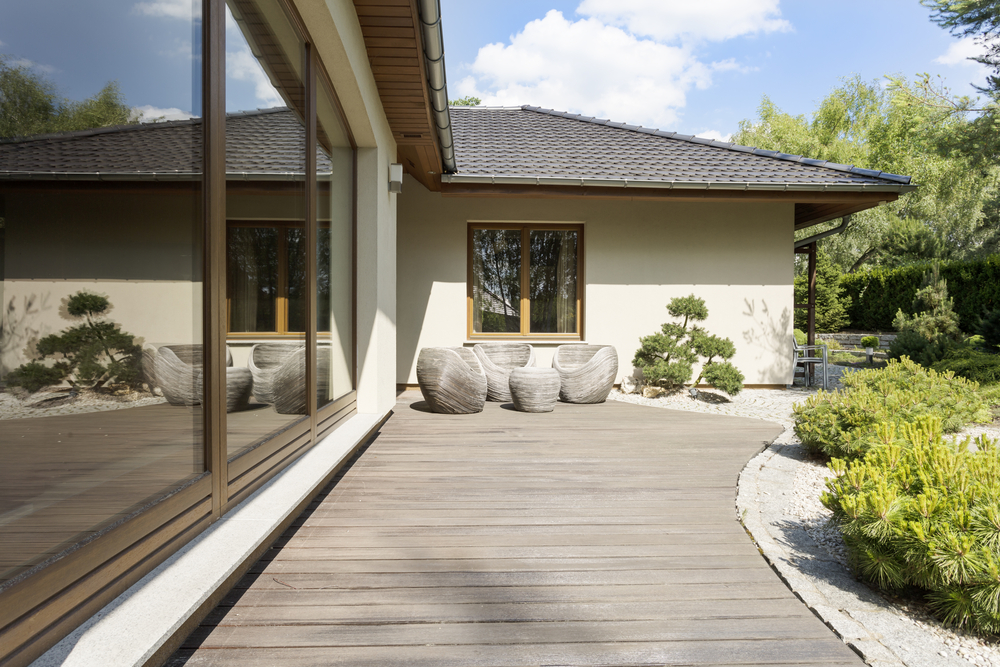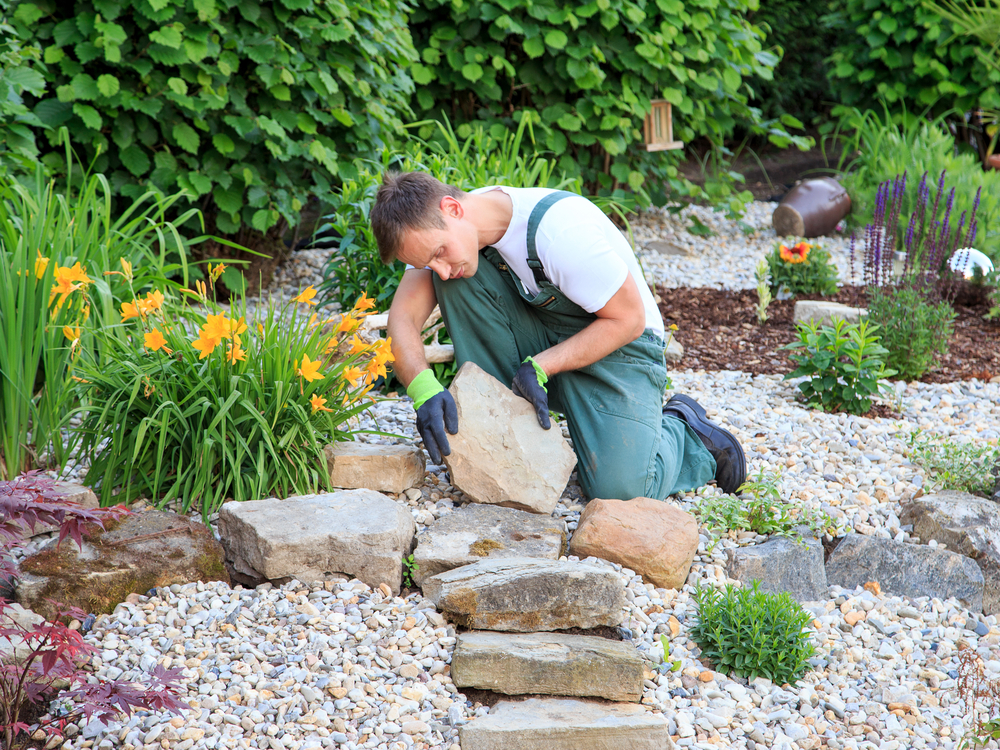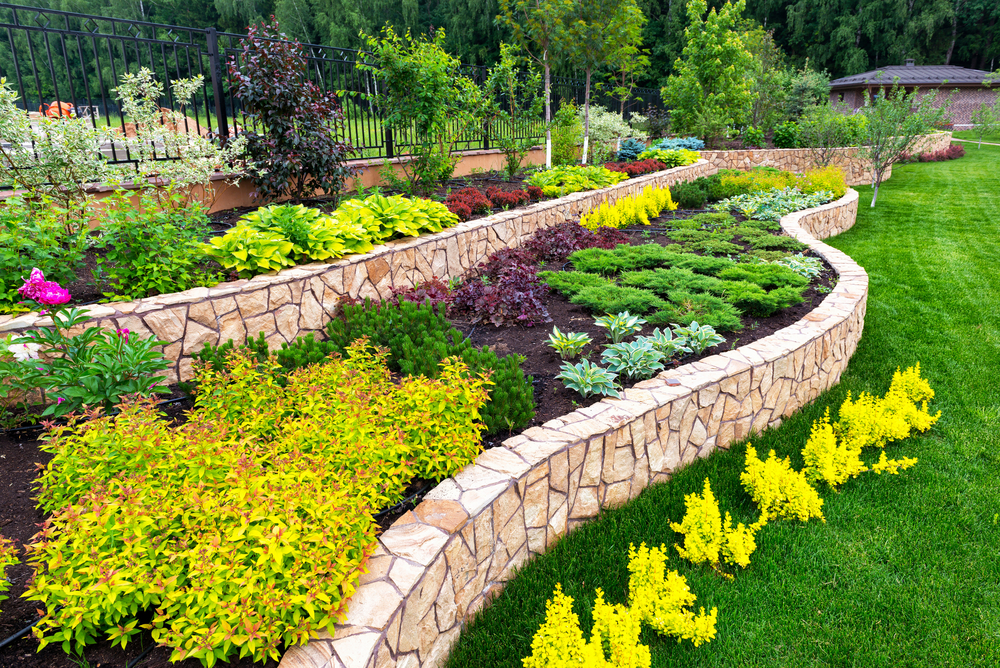

While landscaping your front yard can be a major undertaking, it’s one of the best ways to make a house feel like a home. Whether you’re adding greenery, walkways, or other decorative features, thoughtful landscaping can transform the look of your property. Before starting a landscaping project, consider these questions:
- What’s your budget?
- Are there any Homeowners Association (HOA) guidelines or local regulations you need to follow?
- How much space do you have available for landscaping?
- What existing architectural features could be enhanced with landscaping?
Answering these questions will help you build a plan that fits your goals, lifestyle, and property. In the guide below, explore popular landscaping ideas for front yards and learn how to create a space that’s both beautiful and functional.
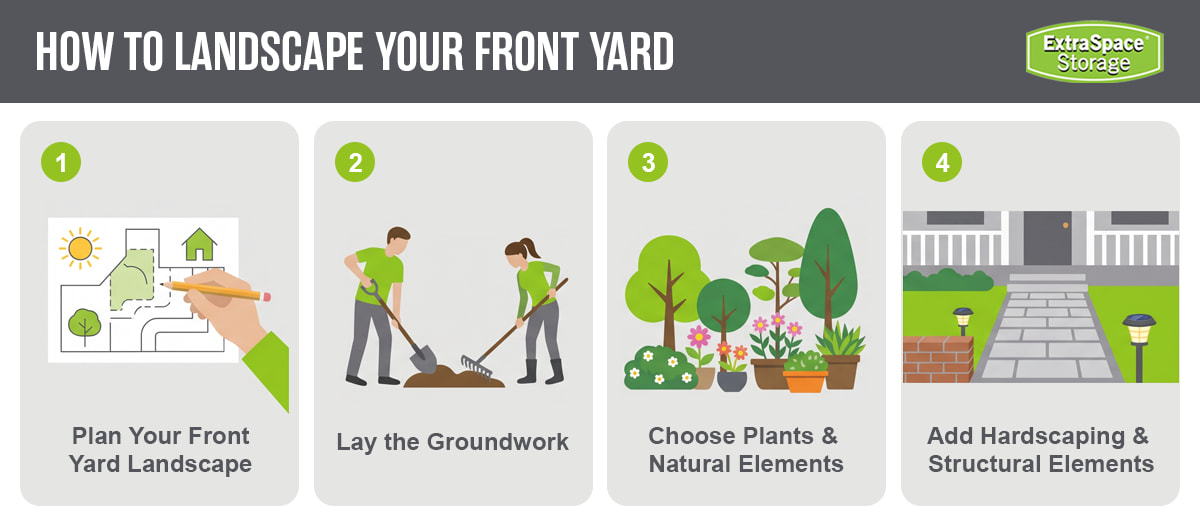
Step 1: Plan Your Front Yard Landscape
Every successful landscaping project starts with a solid plan. Taking time to consider your planting zone and come up with a design that suits your home will help ensure every element works together cohesively and thrives in your climate.
Choose a Landscape Style
Creating a cohesive front yard begins with selecting a landscape style that complements your home’s architecture and reflects your personal taste. Modern homes often pair well with clean lines, structured plantings, and minimalist designs, while cottage-style homes shine with colorful flower beds and layered plantings. Ranch homes typically benefit from lower-growing shrubs, whereas taller trees and larger features can help balance two-story homes. Simple DIY landscaping techniques can turn a desert front yard into a striking xeriscape, while homeowners in prairie regions might fill their yards with native wildflowers to attract local birds and pollinators. Choosing complementary plants and materials will help create a landscape that feels intentional, balanced, and inviting.
Create a Visual Guide
Before breaking ground, sketch out your ideas on paper, annotate photos of your yard, or use landscape design apps. Creating a visual plan for your front yard landscaping layout allows you to experiment with different designs while accounting for existing features like mailboxes, walkways, and entryways. As you design, assess yard conditions like sunlight, shade, drainage, and seasonal changes. Consider how plants will mature over time, and use the “Rule of Three” to create depth—placing shorter plants in front, medium-sized plants in the middle, and taller plants in the back. Planning for future growth helps keep your landscape attractive and functional for years to come.
Consider Work & Maintenance
A beautiful landscape is only as successful as your ability to maintain it. Before choosing plants and features, think about the level of upkeep you’re willing to commit to throughout the year. How much labor will your front yard’s landscape design require? Should you consider hiring a team to irrigate your yard? Is it worth hiring a reliable lawn service to maintain your landscaping? If you don’t want to spend the time or money on ongoing maintenance each year, consider implementing low-maintenance landscaping ideas in your front yard. After all, the right amount of watering, mowing, weeding, pruning or trimming, fertilizing, and aeration will do wonders for keeping your front yard and landscaping features looking magnificent year-round.
Keep Accessibility in Mind
Landscaping your front yard isn’t just about curb appeal—it can also make your home more accessible. As you plan your design, think about how people will move through the space. Keep important features—including your address, mailbox, walkways, and front entrance—easy to locate and reach. Consider whether pathways are wide enough, transitions between surfaces are clear, and lighting provides good visibility after dark. If your design includes changes in elevation, features like ramps, sturdy handrails, or wide, shallow steps can improve accessibility and ease of use. Factoring accessibility into your design from the start helps create a front yard that’s welcoming and easy to navigate for family, guests, and delivery drivers alike.
Work in Stages
Remember, not all the work needs to be done at once. It may be tempting to tackle everything when you’re excited, but taking on too much can make it harder to finish the project successfully. After completing a section, step back and assess how things look and what should come next. Even with the best-laid plans, you may find that something doesn’t look quite right for your yard—and that’s okay. Stay open-minded and be willing to adjust!
Step 2: Lay the Groundwork
With your plan in place, it’s time to prepare the foundation of your landscape. Here are some ways to set your front yard landscaping up for success—and potentially even increase your home’s value!
Consider Ditching the Grass
Not sure if you want to maintain a lawn? While many homes already have an established front yard of grass, it can be beneficial to convert smaller lawns into a no-grass landscape. Ground cover plants like creeping thyme, moss, and clover are great alternatives—they spread horizontally rather than growing tall, so they require far less mowing. Grassless yards can also be an eco-friendly lawn idea, making them an excellent low-maintenance landscaping option overall.
Nourish Your Lawn
If you decide to keep the grass, proper lawn care is key. Taking care of your lawn is not only important for the health of your grass—but for the surrounding plants, too. If weeds are overtaking your space, even expensive landscape work can go unnoticed. Instead, make sure you’re caring for the lawn properly so your landscape elements can truly enhance your home’s features. Proper yard care may include regular reseeding, fertilizing, watering, and more.
Rewild Your Yard
Did you know that you can turn your front yard into a Certified Wildlife Habitat? By keeping permaculture in mind, you can provide habitats for native pollinators and attract other local wildlife. Depending on your region, this could mean planting native wildflowers, creating pollinator gardens, incorporating drought-tolerant species, or designing shaded woodland-style areas that mimic natural habitats.
Create an Eco-Friendly Front Yard
Sustainable landscaping can reduce air, soil, and water pollution, create healthy outdoor spaces for you to enjoy, and nurture wildlife. For an eco-friendly front yard design, you’ll need to be purposeful in your choices. Go for small green updates, like using solar landscaping lights. Opt for more involved eco-friendly yard ideas like replacing grass with native flowers for pollinators or drought-tolerant plants. Or create a more sustainable yard by planting a container garden!
Step 3: Choose Plants & Natural Elements
Once you’ve established the foundation of your landscape, it’s time to bring your vision to life with plants and natural features. To choose the right combination of trees, shrubs, flowers, and grasses while adding color, texture, and personality, consider the following.
Select Natural Features
The plants you choose will serve as the living centerpiece of your front yard. Focus on selecting natural elements that fit your planting zone, maintenance preferences, and overall design style. Common features include bushes, shade and ornamental trees, and grasses. Flowers are another common feature in a front yard—planting a multi-season flowerbed with a mix of perennials and annuals can add a lot of fun to your landscaping design! Plant seeds or bulbs, or transplant flowers that are already growing. Some of the most popular flowers to grow in the U.S. are roses, daffodils, daisies, tulips, and geraniums.
Add Shade & Ornamental Trees
Beyond enhancing curb appeal, trees create focal points and contribute to the overall comfort of your outdoor space. Shade trees such as oaks, maples, aspens, and willows can make your yard feel more established while helping cool your property during warmer months. For decorative appeal, consider ornamental varieties like dogwoods, cherry trees, crape myrtles, or hawthorns, which offer unique structures and vibrant seasonal blooms. Fruit-bearing varieties can add charm and personality, though keep in mind they may require additional maintenance.
Incorporate Bushes & Shrubs
For homeowners seeking low-maintenance landscaping ideas, perennial shrubs are a dependable option that return season after season with minimal effort. Shrubs come in many varieties, including evergreen and deciduous types, making them a versatile addition to almost any landscape. These plants can grow wide and tall, and varieties like azaleas, daphne, distylium, and forsythia can fill in empty areas or help cover less appealing ones.
Opt for Decorative Grasses
Ornamental grasses are an easy way to add movement and texture to your landscape. They work especially well near stairs, foundations, and walkways, where they can soften rigid architectural lines and create a more natural appearance. Ornamental grasses are particularly great for homeowners in prairie regions—these drought-tolerant plants grow deep, complex root systems that are well-adapted to the local climate. Options like feather reed grass, fountain grass, Japanese forest grass, and blue fescue can add structural and visual interest to your yard.
Plant a Victory Garden
Popularized during WWII to supplement household food supplies, Victory Gardens—or edible front yard gardens—combine functionality with visual appeal. Vegetables like tomatoes, peppers, and cabbage can provide vibrant color, while herbs such as rosemary, basil, mint, and thyme add texture and fragrance. In addition to creating a unique landscape, growing your own produce can encourage more time outdoors and help reduce grocery costs throughout the season.
Step 4: Add Hardscaping & Structural Elements
With your plants in place, it’s time to create balance by incorporating hardscaping and structural features. Hardscaping provides the framework that ties your landscape together, adding definition, accessibility, and year-round visual appeal.
Pick Out Architectural Features
There’s a lot to consider in landscape design—having architectural features that support natural elements will make your front yard’s landscaping pop! Hardscaping features include fences, privacy barriers, rocks, terraces, and more. You can also incorporate features that enhance comfort and ambiance. Water features—like fountains, waterfalls, ponds, and streams—create a relaxing atmosphere, while landscape lighting can improve visibility and curb appeal. Consider placing pathway lights along walkways or installing solar-powered fixtures near entryways to create a welcoming first impression.
Build a Fence or Privacy Barriers
If privacy is a priority, fencing can help create a more secluded outdoor environment while adding architectural interest. Not only does a fence help split up your front lawn visually, but it can also keep your four-legged family members within your yard. Depending on your home’s style, options may include classic picket fencing, post-and-beam designs, decorative metal fencing, stone walls, or even living privacy screens made from hedges and shrubs.
Install Paths & Steps
Walkways and steps do more than guide visitors to your front door—they also improve accessibility and create a sense of flow throughout your landscape. Stone, brick, wood, and concrete pathways can complement a variety of landscape styles while helping protect your lawn from foot traffic. If you’re planning for long-term accessibility, wide walkways and gradual steps can make navigation easier for guests of all ages. DIY-friendly options like gravel paths or stamped concrete can deliver a custom look without a large investment.
Use Rocks
Stones and boulders are generally a low-cost way to add an understated natural accent to your front yard design—similar to mulch, but with a more form-focused effect. They can visually break up different areas in flower beds, serve as seating, or be displayed on their own in a rock garden. You can even use them to landscape the edges of your flower beds.
Think Vertical
If you’re working with limited space or looking for budget-friendly landscaping ideas, vertical elements can be a game-changer. One easy gardening idea is to add height with trellises, then hang climbing vines like wisteria for visual interest. Planting along fences or using shelves and tiered stands to display container gardens are other great ways to create balance, add dimension, and maximize every square inch of your yard.
Add Decorative Accents
Once the major landscaping work is complete, take a look at your front yard landscaping and see if you want to add anything else. Could your landscaping use a pop of color or texture somewhere? Try adding a trellis for vining plants or window boxes for flowers. Add simple outdoor furniture to create a welcoming place to sit. Or incorporate a birdbath, garden art, or other outdoor decor to further personalize your space and make the landscaping feel uniquely yours.
Frequently Asked Questions
What’s the difference between hardscaping and softscaping a yard?
Hardscaping refers to the permanent, non-living features of a landscape—such as stone walkways and wooden fences—while softscaping consists of the living components, including grass, flowers, shrubs, and trees. The most successful front yard designs combine both—using hardscaping to establish structure, and softscaping to add color and texture.
What are the best low-maintenance plants for landscaping?
Native plants are often the easiest to maintain because they’re naturally adapted to local climate and soil conditions. Ground covers, ornamental grasses, and hardy perennials also require minimal watering, fertilizing, and pruning once established. Popular low-maintenance options include daylilies, echinacea, and sedum.
Do you need a permit for landscaping a front yard?
Most basic landscaping projects, such as planting flowers or shrubs, don’t require permits. However, larger structural improvements—like retaining walls, fences, or significant grading changes—may require approval from your city or county. Before beginning any major projects, check local regulations to ensure your plans comply with building and zoning requirements in your area.
How do you navigate HOA landscaping rules?
If your neighborhood is governed by an HOA, be sure to review the community’s landscaping guidelines before making any changes. Many HOAs have rules regarding plant selection, fencing, lawn maintenance, and exterior modifications. Submitting a simple landscaping plan and obtaining written approval before starting work can help prevent delays, fines, or costly revisions down the line.
What are common landscaping mistakes to avoid?
One of the most common landscaping mistakes is failing to plan for the future. Trees planted too close to the home, overcrowded flower beds, and plants that aren’t suited to the local climate can lead to costly maintenance and disappointing results. To create a landscape that thrives long-term, consider factors such as mature plant size, sunlight exposure, drainage, soil quality, and ongoing maintenance requirements before planting.
***
Need a place to store gardening tools, landscaping equipment, or other supplies? Extra Space Storage has convenient locations across the U.S. to help. Find affordable self storage near you!