

Part of planning for retirement is choosing which senior housing option is right for you—even if you’re still living independently. There are often overlapping similarities between senior housing types, usually varying by the level of care required. Start by asking yourself a few questions, including:
- What is your retirement housing budget?
- What type of healthcare do you need?
- Do you prefer being surrounded by people or living solo?
- What kind of activities and amenities are you looking for?
Now that you’ve asked and answered these questions, you’re ready to look at the pros and cons of different retirement living options!
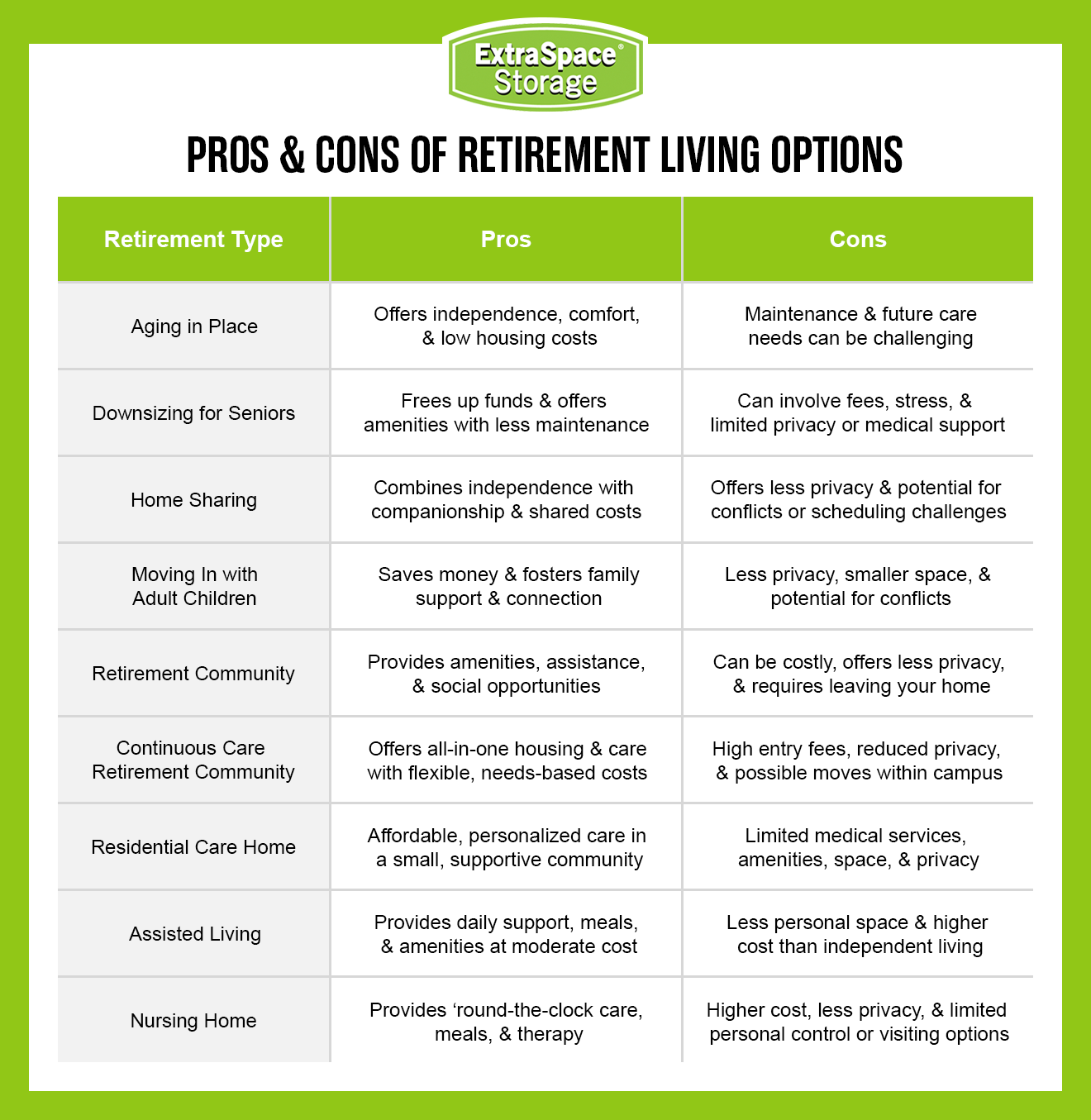
Aging in Place
- Best for: Individuals who prioritize independence & maintaining current routines & social connections
Compared to other types of senior living, 84% of seniors said aging at home was the preferred option. If you feel capable of maintaining or hiring out maintenance for your current home, you love your current location, and you enjoy having enough space for visitors, staying where you are is a great option! Especially if your mortgage is paid off, staying in your current home can eliminate a massive monthly expense. There are also ways to modify your home and tailor it to any changing accessibility and mobility needs. Options like installing a chair lift, remodeling for accessibility in bathrooms, or hiring an in-home care or an aging-in-place specialist can help you comfortably stay in your home for longer.
Pros
Staying in your own home as you age can be both comforting and cost-effective. Here are some of the key benefits of aging in place:
- Low housing costs if your mortgage is paid off
- Control over interior & exterior design choices
- Maintain a sense of independence
- Stay near family, friends, & neighbors
- Have space for guests
- Already comfortable for pets
- Keep & cherish a family home
Cons
While owning a home as a senior offers independence and privacy, it also comes with responsibilities and potential drawbacks. Here are some common challenges to consider:
- Potential difficulty with lawn & house maintenance
- No built-in community
- Potential for unexpected repair costs
- Possibility of needing to move later
- No built-in healthcare assistance
Downsizing for Seniors
- Best for: Seniors looking to simplify their lifestyle, reduce their financial burden, & minimize home maintenance responsibilities
If you’re an active, independent senior who wants a simpler lifestyle, downsizing for retirement could be the best option for you! Moving to a townhome or condo can help lower your monthly expenses, and it can also give you a jump start on clearing clutter, creating less work in the future if you need additional care later on. While you’ll still need to clean and cook on your own, many of these properties offer maintenance services such as lawn care, appliance repair, and snow removal—reducing some of the burden of owning a home.
Though a townhome or condo won’t have as much space as if you were to downsize to a smaller home, you may still have some room for entertaining guests and caring for furry friends. If you live in a colder climate, you could even use your freed-up funds to invest in a vacation home somewhere warmer or move to another city for retirement full time.
Pros
Downsizing is a proactive choice that sets the stage for a simpler, financially flexible new chapter. Here are some of the pros of downsizing to a smaller home or condo:
- Additional money from selling your home
- Potential assistance with lawn care & snow removal
- Unique amenities
- Space for pets
- Community of all ages & lifestyles
Cons
Though downsizing can create financial flexibility, it also comes with compromising in other areas. Some of the cons to downsizing can include:
- Community or HOA fees
- Potential new mortgage
- Possible application process
- Emotional strain of moving
- Less privacy at some condos
- May have to move again at a later age
- No in-house medical care
Home Sharing
Best for: Individuals seeking companionship who also value maintaining their independence
House sharing has emerged as an increasingly popular form of retirement living, offering a practical solution to both financial concerns and the risk of social isolation. By dividing major costs like rent or mortgage payments, utilities, and groceries, seniors on a fixed income can significantly stretch their retirement funds—often enabling them to remain in their homes or preferred communities for longer. Beyond the financial advantages, living with a compatible housemate provides built-in companionship and a mutual support system, though it may mean adjusting current routines for you and your pets. Having someone nearby can offer peace of mind—especially in the event of an emergency—encouraging all parties to live an active, engaged lifestyle in retirement.
Pros
House sharing offers retirees a powerful combination of financial relief and social connection, allowing for a more secure yet still independent lifestyle. Some benefits of house sharing for seniors include:
- Independence combined with companionship
- Reduced financial responsibilities
- Shared housework
- Enhanced safety & mutual support
- Easy for pets
Cons
While a great option for some, house sharing requires sacrificing some privacy and navigating potential conflicts over lifestyle differences and house rules. Other considerations include:
- Having less personal space
- A need for schedule adjustment with roommates
- Potential for conflict or stress
- Financial complexity
- No on-site medical care
Moving In with Adult Children
- Best for: Those who are close with relatives and wish to be actively involved in their daily lives.
Moving in with adult children to create a multigenerational household is a retirement living solution that prioritizes familial connection, financial relief, and a robust, built-in support system. This can be financially beneficial for both parties, as you may be able to pay rent to your children or provide help with chores or childcare. Though there will be an adjustment period, this arrangement allows you to be surrounded by trusted loved ones daily, as well as in case of an emergency. If you don’t want to live directly in the same house as your adult children, an in-law suite is one option that can help you maintain a sense of independence.
Pros
Multigenerational living provides a built-in support system that keeps seniors engaged and cared for without sacrificing the warmth of a family home. Here are some of the biggest benefits to this type of senior living arrangement:
- Mutually financially beneficial
- Opportunity to create family memories
- Reduced isolation
- Enhanced safety & mutual support
Cons
This setup often involves a significant loss of privacy and independence for the senior, as they must conform to the family’s schedule, rules, and living space. Cons of moving in with adult children can include:
- Less privacy
- Reduced living space
- Potential for conflict or stress
- Potential stress for pets
- No built-in professional medical care
Retirement Communities
- Best for: Active older adults who can still live mostly independently
Independent living communities—which can range from senior apartment buildings to retirement villages and 55+ resort-style communities—are all age-restricted housing designed for active older adults. If maintaining a home, townhome, or condo is getting difficult or you’re starting to feel isolated, it could be time to consider new living arrangements. Retirement communities are among the best housing options for seniors who want some assistance with everyday tasks but prefer to live as independently as possible.
These options offer private residence living, along with meal and laundry services, scheduled activities, and a built-in community. Some even go beyond that with luxury amenities like nail salons, barber shops, movie theaters, fitness centers, and community pools. There are also specialized communities for veterans, LGBTQ seniors, pet owners, and more!
Pros
Choosing a senior living community provides a lifestyle designed for comfort and convenience, allowing residents to focus entirely on social activities and personal well-being. Pros of retirement communities include:
- Tailored amenities
- Transportation services
- Available daily assistance
- Lawn care & snow removal
- A community of peers
- Less space to clean & maintain
- Fewer chores
- Meal plans
Cons
The conveniences of retirement communities come with necessary compromises. Here are some of the cons to retirement communities:
- Leaving your home
- Less privacy
- More difficult to host visitors
- Less space
- Expensive fees
- No regular medical care
Continuous Care Retirement Communities (CCRC)
- Best for: Proactive seniors who want to pay for their entire future care needs in a single, stable location
If you’re early in your retirement journey, you may find it challenging to think about planning for health concerns, decreased mobility, and reduced independence. However, a continuous care retirement community does the forward-thinking for you! This elderly housing option combines independent living, an assisted living facility, and a nursing home into one campus. Many residents start in single-family homes or senior apartments and transition into more supervised care as their medical needs evolve. CCRCs are also ideal if you and a partner or spouse require different levels of support but want to stay together. Though the upfront cost is higher than other options, you’ll have access to everything you need as your care requirements change or increase over time.
Pros
This all-in-one approach is designed to eliminate the stress of future moves by offering a lifetime commitment to evolving care needs. Here are some key pros to keep in mind:
- One campus for all your needs
- Tiered levels of specialized care
- Housing variety
- Cost is metered by needs
- Meals provided
- Lifetime housing
- Medicaid may cover some costs
Cons
The substantial upfront costs, combined with reduced personal space and the need to transition between care sections, can be challenging for some retirees. Cons to consider about CCRCs include:
- Large entry fees
- Medical costs increase with higher levels of care
- Decreased privacy
- Less personal space
- Can still require moving within the campus
Residential Care Homes
- Best for: Seniors who need some help with daily personal care and want a smaller community but do not require 24/7 skilled nursing
A residential care home usually has significantly fewer residents than a typical assisted living facility, while still providing support with daily tasks like hygiene, medication, meals, and transportation. Many residential group homes have been converted from regular family homes, meaning they may offer a cozier atmosphere and a more close-knit community than a larger facility. However, they are generally only equipped for basic health monitoring and medication management. They cannot accommodate residents with complex medical needs that require continuous, on-site services from a licensed nurse. Residential group homes are one of the most affordable housing options for seniors transitioning out of independent living, and there are also sometimes residential care homes tailored to specific health challenges such as dementia or reduced mobility.
Pros
Residential care homes provide a highly personalized, home-like environment with a superior staff-to-resident ratio, making them ideal for seniors who prefer intimate settings over large facilities. Pros of residential care homes include:
- Affordability compared to assisted living or nursing homes
- Personalized care
- Tight-knit community
- Specialized homes for different medical needs, like memory care
- Assistance with daily tasks
Cons
While the small scale ensures attentive care, residential care homes also come with limitations regarding amenities, which may not appeal to every senior. This option comes with the following cons:
- Can’t accommodate certain medical needs like ventilators or IV treatments
- Fewer amenities
- Less space for activities
- Fewer opportunities to socialize with new people
- Reduced privacy
Assisted Living
- Best for: Individuals who are relatively independent but require consistent, non-medical support to safely manage their daily lives & enjoy an active, social lifestyle
Assisted living facilities are similar to other retirement communities—with many of the same great amenities and fun community events—while also offering assistance with daily tasks like taking medication, bathing, laundry, and other personal care needs. Assisted living facilities also—while not providing medical care directly—can help with coordinating care for residents’ health needs. This is a great option for seniors needing some extra help but who still want more independence and privacy than is typically afforded in a nursing home.
Pros
This environment promotes an active, socially engaging lifestyle by offering a wide variety of amenities, activities, and opportunities to connect with peers. Here are some of the pros of assisted living:
- Assistance with daily tasks
- More affordable than nursing homes
- Meals are provided
- Laundry assistance
- Support with personal hygiene
- Help with medication
- May have some Medicaid coverage
- Fun amenities
- Private rooms available
Cons
Since assisted living communities are often large, commercial facilities, they typically come with a higher monthly price tag than smaller options. Some cons to choosing assisted living include:
- Being pricier than independent living
- Having less personal space
- Restrictions on pets
- Not enough space to host guests
Nursing Homes
- Best for: Individuals requiring a higher level of medical attention & supervision that cannot be safely managed at home or in a typical assisted living environment
When consistent, ’round-the-clock medical care and supervision are necessary, a nursing home is typically the best option. Unlike assisted living, which offers help with daily tasks and medication but not rigorous medical oversight, a nursing home provides an individualized medical plan and a staff of trained professionals always on hand. While you may have to share a room or bathroom, you gain the added security of knowing all your needs are met, often including on-site rehabilitation services like physical and occupational therapy. This high level of long-term care is why approximately 62% of nursing home residents rely on Medicaid to cover the significant costs. Many facilities also foster an engaging social environment with activities like arts and crafts, community outings, and movie nights. Some even specialize in memory care units for those with Alzheimer’s disease or dementia.
Pros
Nursing homes offer elders the highest level of medical and custodial care available outside of a hospital. When choosing a nursing home, the main upsides can include:
- 24-hour supervision
- Medicaid often accepted
- Enhanced personal care & dignity support
- Meals geared toward medical needs
- On-site therapy & medical care
Cons
Due to their clinical focus and high staffing needs, nursing homes can limit the independence and personal lifestyle that many seniors cherish. Other cons include:
- Possibility of shared room
- More expensive
- Reduced privacy
- Less say in day-to-day activities
- Restricted visiting hours
Looking for more information on retiree planning for yourself or a loved one? Check out these articles:
- Things to Do Before Retirement
- How to Downsize for Retirement
- What to Know About Relocating for Retirement
- How to Choose a Retirement Community
***
Need a place to store belongings while downsizing for retirement? Extra Space Storage has easily accessible storage facilities across the nation that can help get you to your better tomorrow. Find a storage facility near you!