

Living in a storage unit is unsafe, illegal, and prohibited by storage facility policies—yet as housing costs rise, it’s sometimes suggested as a budget-friendly living solution. This guide explains why you can’t live in a storage unit and explores more practical and reliable alternatives.
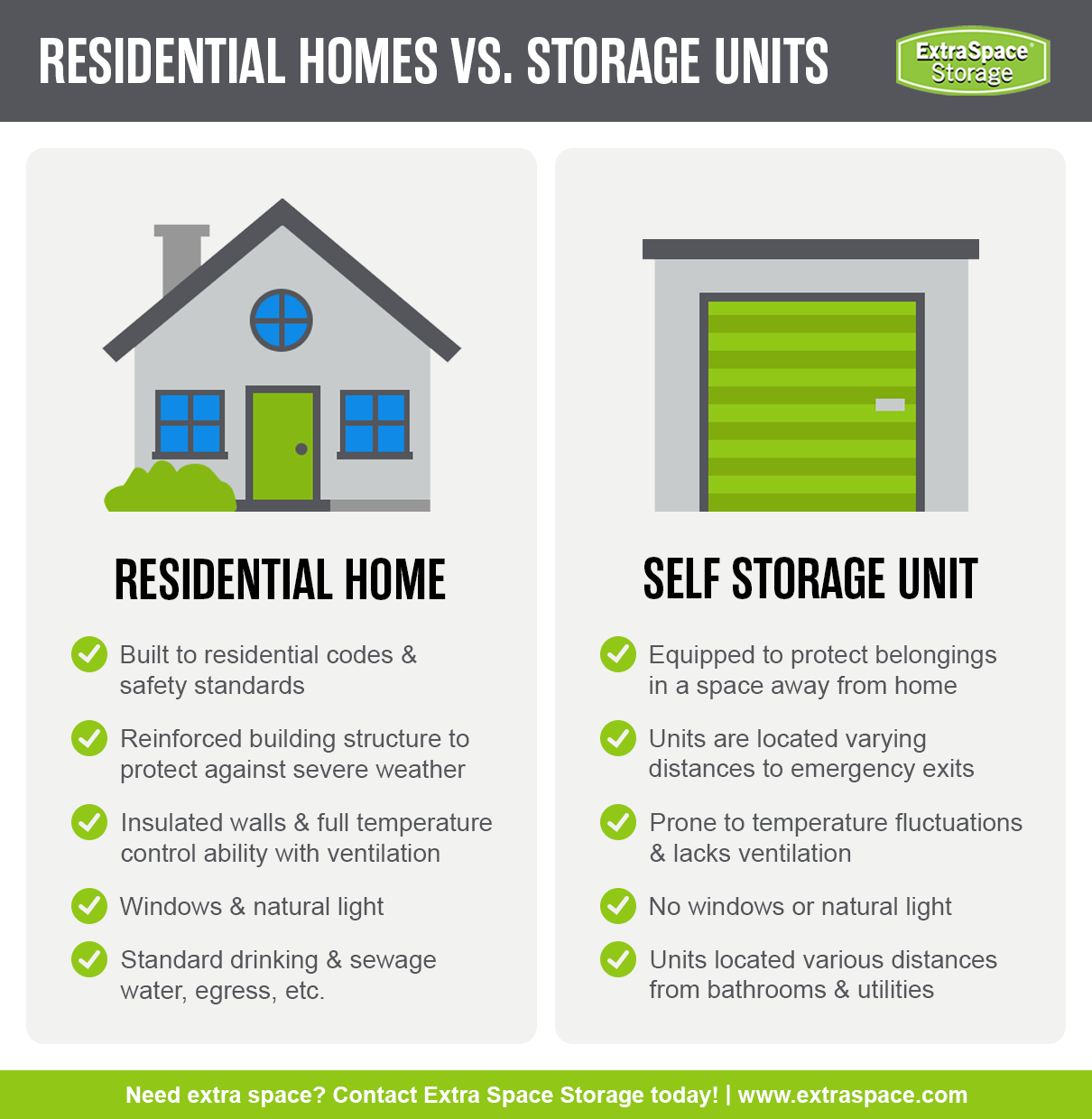
Why Can’t You Live or Sleep in a Storage Unit?
Living in a storage unit isn’t allowed because they’re not designed for safe habitation. Here are eight reasons why sleeping in a storage unit isn’t worth the risk.
It’s Illegal
Not only is staying in a storage unit against a storage facility’s rules and regulations, but it’s also against local and federal law. Facility operators are legally mandated to evict anyone found living on-site, and those caught in violation may face significant civil or criminal penalties for trespassing. With camera surveillance, gated access, individual access codes, and on-site staff, being discovered is a safety-related inevitability rather than a “gotcha” possibility. While the short-term rent savings might be tempting, the long-term legal consequences and the risk of a permanent criminal record far outweigh any financial benefit.
Storage Units Are Not Up to Residential Codes
Because storage facilities and drive-up access units are built with property protection in mind, they are subject to different building codes than homes. While residential codes mandate life-safety systems in every room—like smoke detectors and automatic sprinkler requirements—as well as standards for ventilation and access to essential facilities like bathrooms, storage units aren’t held to the same requirements.
Lack of Sanitation Compared to Designated Housing
When a lack of running water makes daily tasks like drinking, cooking, cleaning, and bathing difficult, it can rapidly affect someone’s health. The risk of dehydration as well as illness and infection is significantly higher—particularly if the inhabited space isn’t large enough to comfortably hold a person and their belongings. Though a storage facility houses a bathroom, it’s not an accessible or sustainable solution for residential needs.
There’s a Risk of Getting Trapped Inside If a Unit Door Is Shut
While not required, most renters keep the unit door open while visiting their storage space for additional room while loading or unloading, ventilation, and light—and because a closed door can become jammed or blocked, making it difficult to open from the inside of the unit. If the door is shut without a lock, it’s typical facility policy for a manager or employee to add a temporary lock onto a unit if there isn’t anyone inside so as to help protect the renter’s belongings in case they misplaced or forgot the lock to the unit. Additionally, because they’re not meant to be lived in, storage units lack features like dedicated fire exits and windows for egress, which are essential for providing alternative exits in case of an emergency.
Storage Units Do Not Offer Livable Ventilation
Without natural airflow, oxygen levels drop, and air becomes stagnant. Using any kind of fuel-burning heater or generator inside creates a lethal buildup of carbon monoxide in a matter of minutes. There are no windows for fresh air. And while many units are equipped with climate-control, this amenity senses a range of temperatures—not the levels of oxygen vs. carbon monoxide—and is not able to be controlled from within the unit.
Risk of Fire & Less Protection From Natural Disasters
Because storage units aren’t designed for living, activities like cooking or using space heaters significantly increase the risk of fire, which can spread quickly in dry environments or among items with dust and in tight quarters. And unlike houses or multi-family homes, storage facilities lack protective features for severe weather—such as reinforced structures, basements, or storm shelters—leaving little protection or ability to evacuate as easily if a natural disaster occurs.
No Individual Temperature Control
Since they’re metal, units that aren’t climate-controlled experience extreme temperatures—sometimes exceeding 100 degrees in the summer or dropping below freezing in the winter—creating a high risk of heatstroke or hypothermia for anyone trying to inhabit these spaces. Even if a unit is climate-controlled, it lacks the same level of control as a residential HVAC system and is not designed to support safe, long-term occupancy.
Lack of Natural Light
The lack of natural light can have many negative effects on both mental and physical health. An absence of sunlight prevents the body from naturally boosting vitamin D, which is essential for bone health and immune function. Being in a dark space for extended periods of time can also lead to higher rates of depression and anxiety. And while keeping a unit door open during sunlight hours can help with natural light, it makes it easier for insects and rodents in search of warmth or coolness and food to infest the unit and its neighbors.
Alternative Living Options & Temporary Housing Resources
If you’re facing a tight budget or the possibility of being unhoused, it can be scary. Here are a few economic, alternative housing options that may give you some peace of mind.
Micro Apartments
A micro apartment is a small living space that’s typically between 100 and 500 square feet—smaller than most studio apartments. This tiny living option is becoming increasingly common in high-cost cities like San Francisco, New York, and Seattle, where rising prices have made housing less affordable. Monthly rent for micro apartments is typically 20% to 30% lower than for traditional studio apartments.
RV Living
Living in an RV can be an excellent bridge to permanent housing because it offers a rare combination of independence and affordability without sacrificing the essentials of a home. Unlike many other temporary housing solutions, a modern RV provides a private, self-contained environment equipped with a kitchen, dedicated bathroom, and climate control, allowing you to maintain your daily routines and personal space.
Roommate-Living
Finding roommates or renting a room can be a very effective way to lower monthly expenses by splitting utilities, rent, and more. This approach can serve as either a temporary solution while you explore other housing options or a stable, long-term arrangement to maintain financial flexibility. Utilize platforms like Facebook, Nextdoor, Roomies.com, and Craigslist house-sharing pages, but keep safety in mind and meet potential roommates in public beforehand.
Government Resources & Housing Programs
If you are facing a housing crisis, you don’t have to navigate this alone. Many organizations are dedicated to helping people regain their footing during difficult times.
- Emergency Shelters: Shelters provide the most immediate relief, offering a safe bed, hot meals, and clean restrooms. Many are staffed by professionals who can provide medical care and help you plan your next steps toward a permanent home.
- National & Local Nonprofits: Organizations like United Way, The Salvation Army, and the National Coalition for the Homeless specialize in temporary housing placements. Additionally, local missions and churches often provide short-term lodging, food, and clothing.
- Government Social Services: Your local county or city social services office may offer emergency motel vouchers, rental assistance, or referrals to shared transitional housing programs designed for quick action during a crisis.
- Veteran Support Services: If you served in the military, the U.S. Department of Veterans Affairs (VA) has dedicated programs to connect you with a caseworker and specialized housing resources.
- The 2-1-1 Helpline: Available 24/7 across the U.S., dialing 2-1-1 from any phone is the fastest way to find confidential help. They can guide you to local shelters, financial support, and counseling in your area.
***
Find Short-Term Storage Units Near You!
Extra Space Storage is here for you during all life’s transitions. Whether you’re moving, downsizing, starting fresh or living in temporary housing—our secure units are perfect for protecting your belongings in long and short-term storage. We prioritize your safety and peace of mind, which is why we strictly enforce a no-living policy.
Common cities for short-term storage solutions:
- Castle Rock, CO Short-Term Self Storage
- Hanover, MD Short-Term Self Storage
- Kapolei, HI Short-Term Self Storage
- Kenner, LA Short-Term Self Storage
- North Richland Hills, TX Short-Term Self Storage
- Studio City, CA Short-Term Self Storage
Find an Extra Space Storage facility near you today.
