Helpful Relocation Resources for Denver, CO Newcomers
Relocating to Denver, CO? Whether you're still comparing neighborhoods or you've already picked up your keys, this guide offers moving cost estimates, storage options, a first 30-day moving checklist, and a directory of Colorado and Denver resources for everything you might need for your move to Denver.

Planning Your Move to Denver

Cost of Movers in Denver, CO
Find out what hiring movers costs in Denver when moving locally or long-distance. Explore hourly moving rates and what to expect for planning your move.

Best Movers in Denver, CO
Check out our recommendations for the best moving companies in Denver, CO.

Free & Cheap Moving Boxes in Denver, CO
Check out this comprehensive guide to getting free or cheap moving boxes and supplies near you in Denver—and see where to recycle or resell them!
Denver Self Storage & Moving Day Logistics
Between apartment lease gaps, home closings, and staging needs, self-storage can be a practical option when moving to Denver. See how to use storage during your move and find a facility near you.
Self Storage in Denver
Extra Space Storage has several storage facilities across Denver, including locations within a mile of Union Station, University Hills, and Westwood. Unit sizes range from 25 to 300+ square feet, with extended access hours from 6 a.m. to 10 p.m. and 24-hour access at select locations.
Choosing the Right Storage Unit in Denver
When selecting a storage unit in Denver, there are a few storage factors that are worth weighing before reserving. Here are the top four factors to consider:
Climate Control: Denver's climate is semi-arid with four distinct seasons, including snowy winters and warm, dry summers. Climate-controlled units typically stay between 55 and 80 degrees year-round, which helps protect furniture, electronics, documents, and clothing from temperature swings.
Unit Size: If you're trying to figure out what size storage unit you need, typically a 5x5 storage unit can fit a small closet and boxes, a 5x10 fits a studio apartment, a 10x10 a 1-bedroom, a 10x20 a 2–3 bedroom home, and a 10x30 a large home or vehicle. → Storage Unit Size Guide
Access & Security: Extended or 24-hour storage access allows you to visit your storage unit throughout the day, when it's convenient to you—electronic entry, on-site management, and video surveillance are some of the safety features helping keep your belongings protected. → 24-Hour Storage Access
Lease Flexibility: Month-to-month storage leases mean you're not locked in, which is useful when move timelines are still in flux. Units can be upgraded or downsized as needs change.
How to Use Storage In Between Homes
If your lease ends before your closing date, or you're staging a home to sell before your move, a short-term storage unit can hold furniture and boxes until your new place is ready. It can also save you from paying for any extra moving expenses or for moving-company storage fees. → Learn More About Storage for Moving
Explore Denver: Neighborhoods, Cost of Living & What to Expect
Denver's neighborhoods and nearby suburbs vary in price, nearby amenities, and school options. These guides can help you compare areas before you sign a lease in Denver or make an offer on a home.
Cost of Living in Denver
Denver's cost of living is about 10% above the national average, with housing being the largest driver at 19.3% higher than the national average. Check out the entire cost of living breakdown in our Denver cost of living guide.
Pros & Cons of Denver
Every city comes with trade-offs, from housing costs to commute times to weather. Review the advantages and drawbacks of living in Denver to help you decide if it's the right city for you.
Things to Know About Denver
Get to know the top things to do in Denver and why people love the city, from great public transit and job opportunities to museums to visit and restaurants to try. Our local guide covers things about Denver that you may not find by searching online.
Best Neighborhoods in Denver
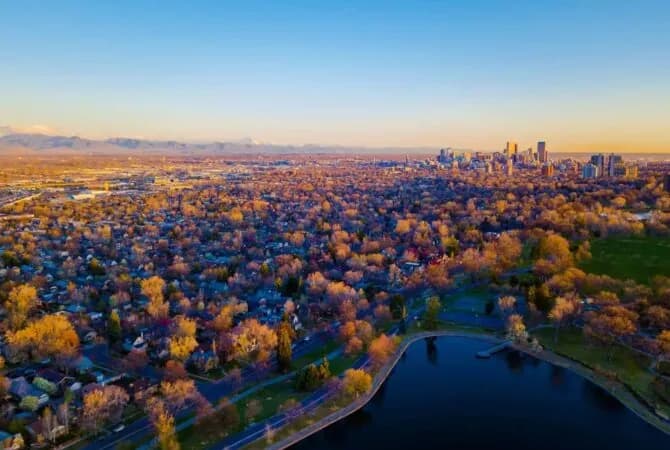
Safe, Affordable Neighborhoods in Denver
While the cost of living in Denver is higher, there are still affordable neighborhoods to call home without sacrificing safety, like Golden Triangle, LoDo, University, and more.

Best Neighborhoods in Denver for Singles & Young Professionals
The city of Denver is great for young adults with an abundance of jobs and activities to explore—neighborhoods like Five Points, Highland, and Washington Park are some of the best for this demographic.

Best Neighborhoods in Denver for Families
From top schools and parks to safe communities and local events—explore family-friendly Denver neighborhoods like Berkeley, Congress Park, Park Hill, and more.
Local Resources for New Denver, CO Residents
This section covers the must-do tasks for new Denver residents—from utilities setup, school enrollment, finding healthcare, signing up for local transit, financial and legal steps, emergency preparedness, and employment resources.
Government & Administrative Setup in Denver
Colorado considers you a resident once you take a job, operate a business, or live for 90 consecutive days in the state. Once you have become a resident in the state's eyes, the following deadlines apply to you. Learn more about setting up your Colorado driver's license, registering your vehicle, getting a voter's registration, and setting up your utilities and a toll pass in the table below.
Driver's License | Transfer your valid out-of-state license within 30 days of becoming a Colorado resident. Bring proof of identity and Colorado residency, and schedule an appointment at a driver's license office. → Colorado DMV |
Vehicle Registration | Vehicles must be registered within 90 days of becoming a resident. Your vehicle must be titled in Colorado first. You'll need a VIN verification through Form DR 2698, proof of Colorado insurance, and an emissions test for most gas or hybrid vehicles. Late registration fees run $25 per month, up to $100. → Colorado Vehicle Registration |
Voter Registration | Register online, at any driver's license office, or in person at a voter service center. Colorado offers same-day registration through 7 p.m. on Election Day and conducts elections by mail. → Go Vote Colorado |
Utilities Setup | Denver's primary electricity and natural gas provider is Xcel Energy, while Denver water and sewer services are primarily taken care of by Denver Water Services. Denver Trash, Recycle & Compost serves single-family homes and buildings with seven or fewer units—Denver internet can be found through Xfinity, Quantum Fiber, CenturyLink, and other providers. |
Toll Pass | Colorado's toll system is ExpressToll, used on E-470, Northwest Parkway, and all CDOT Express Lanes. Opening an account is free and requires $35 in prepaid tolls; a windshield transponder is mailed to you. |
Pet Registration | Denver government requires a license for all dogs and cats 6 months and older within 30 days of being in the city. Licenses are available as one-year, three-year, or lifetime options; residents 65 and older can license one pet free. Pit bulls also require a Breed-Restricted Permit. |
School & Family Resources in Denver
Denver Public Schools serves the city and county of Denver, with 89,210 students through 193 schools. Colorado also funds free preschool for every child in the year before kindergarten. You have the option of enrolling your child in K-12 public school, charter and private schools, child care, and higher education opportunities in Denver.
K–12 Public Schools | Denver Public Schools (DPS) is Colorado's largest school district. Find the closest school to you or sort by interests through the DPS school locator. |
School Enrollment | DPS uses a choice-based enrollment process. Have proof of your address, your child's birth certificate, and immunization records ready, and check DPS' enrollment page for current deadlines. |
Charter & Private | Check out the National Center for Education Statistics' searchable directory for private schools in Denver. DPS includes district-authorized charter and innovation schools alongside traditional schools—Colorado does not offer a statewide private school voucher program. |
Higher Education | Denver colleges and universities include the University of Denver, the University of Colorado Denver, Metropolitan State University of Denver, Community College of Denver, and Regis University. At Colorado's public colleges and universities, in-state tuition requires 12 continuous months of Colorado domicile before the first day of class. |
Child Care | Universal Preschool (UPK) Colorado provides up to 15 hours per week of tuition-free preschool in the year before kindergarten, with more hours for qualifying families. The Colorado Child Care Assistance Program (CCCAP) helps income-eligible families pay for child care through Denver Human Services or online through Colorado PEAK. |
Healthcare in Denver
The Denver metro is served by several large health systems, including a city safety-net hospital and an academic medical center. Check your insurer's directory to confirm which providers are in network before you need care.
Major Health Systems | Major Denver health systems include Denver Health, UCHealth, Children's Hospital Colorado, CommonSpirit Health, and the largest healthcare provider in the city, HealthONE. |
Finding a PCP | Use your health insurer's online provider directory to find in-network primary care doctors accepting new patients, or use the provider search on each health system's website. Major Colorado insurers include Anthem, Cigna, Elevate, Kaiser, and more. |
Urgent Care | You can access Urgent care in Denver through CareNow Urgent Care, American Family Care, Concentra, UCHealth, and AdventHealth locations. Most locations offer walk-ins, but not all are open all day—you are also able to schedule appointments. |
Mental Health | Call or text 988, or chat at 988colorado.com, to reach the 988 Colorado Mental Health Line, which is free, confidential, and available 24/7. |
Pharmacy | Chain stores like Walgreens and CVS, grocery-store pharmacies like King Soopers, and independent pharmacies operate throughout Denver. |
Transportation in Denver
Denver residents often use a mixture of driving, Regional Transportation District (RTD) transit, and occasional toll roads. Plus, residents have access to the Denver International Airport, which is connected to downtown by commuter rail.
Toll Pass Setup | An ExpressToll transponder pays tolls automatically on Colorado toll roads and express lanes at lower rates than License Plate Toll billing. Drivers without an account receive a mailed License Plate Toll bill at a higher rate. → ExpressToll |
Key Toll Roads | The main Denver toll roads include E-470 (eastern beltway, including access to Denver International Airport), Northwest Parkway, and CDOT Express Lanes on I-25, I-70, US 36, and C-470. |
Public Transit | The Regional Transportation District (RTD) runs buses, light rail, and commuter rail. Youth 19 and under ride free, and discounted fares are available for seniors, riders with disabilities, Medicare recipients, and income-qualified riders—pay with the MyRide card or app. |
Airport Access | Denver International Airport (DEN) is the region's primary commercial airport. RTD's A Line commuter rail runs between Union Station and the airport; trips to or from the airport require an airport fare. |
Major Roadways | Driving in Denver most often requires use of I-25, which runs north to south through the city, while I-70 runs east to west. I-225, I-270, C-470, and US 36 connect to surrounding suburbs. |
Financial & Legal Setup in Denver
Colorado has a flat state income tax, and Denver adds a small monthly occupational tax for people who work in the city. Review Denver property tax and insurance rules early, especially if you're buying a home.
State Income Tax | Colorado has a flat state income tax rate of 4.4% while temporary rate reductions can apply with a state revenue surplus under the Taxpayer's Bill of Rights (TABOR). Denver also levies an Occupational Privilege Tax of $5.75 per month on employees who work in the city, withheld by employers. Be sure to update your state withholding with your employer after you move. |
Homestead Exemption | Colorado does not offer a general homestead exemption; However, homeowners 65 and older who have owned and lived in their home for at least 10 years may qualify for the Senior Homestead. A similar exemption is available to qualifying disabled veterans. Contact the Denver Assessor's Office to apply. |
Homeowners Insurance | Hailstorms may occur in the Denver area, meaning you should review your policy's wind and hail deductible. Standard homeowners and renters policies don't cover flood damage; check your address on the FEMA Flood Map and consider separate flood coverage. |
Vehicle Insurance | Colorado's minimum liability requirements are coverage of $25,000 per person and $50,000 per accident for bodily injury, plus $15,000 for property damage (25/50/15). Proof of Colorado insurance is required to register your vehicle. |
Address Updates | Update your address with the IRS (Form 8822), Social Security Administration (Form SS-5 or online), banks, your health insurer, voter registration, and USPS. |
Denver Emergency Preparedness & Safety
Severe weather in the Denver area includes severe winter weather with snow and ice, hail damage, flooding, and droughts. Save Denver's non-emergency number and sign up for local alerts during your first week to keep up with weather-related issues.
Emergency | 911 |
Denver Non-Emergency | 720-913-2000 |
Poison Control | 1-800-222-1222 |
State and National Crisis Line | 988 (call or text 988, or chat at 988colorado.com.) |
Emergency Alerts | Sign up for Denver's Reverse Emergency Notifications to receive calls, texts, or emails about emergencies near your home, work, or school. You can also create a Smart911 profile to share medical and accessibility information with 911 call takers. |
Natural Disaster Info | Denver's weather hazards include hail and severe thunderstorms, winter snowstorms, flash flooding, and periodic wildfire smoke. → Denver Office of Emergency Management: Alerts & Warnings |
FEMA Flood Map | Check your property address to see if you're in one of the FEMA-designated flood zones. |
Employment Resources in Denver
Denver's economy includes energy, healthcare, aerospace, technology, financial services, and higher education. Colorado's workforce resources are free to use and include job listings and in-person help at workforce centers.
Major Industries | Energy and natural resources, healthcare, aerospace, technology, financial services, and higher education are Denver's top employment sectors. |
Top Employers | Companies headquartered in Denver include DaVita, Newmont, VF Corporation, Western Union, and Frontier Airlines. |
Job Search Tools | LinkedIn, Indeed, and Glassdoor all carry Denver-area listings and allow filtering by Chicago or specific ZIP codes for the broadest reach. |
State Job Portal | Connecting Colorado, run by the Colorado Department of Labor and Employment. Colorado Workforce Centers offer free job search help, resume reviews, and training referrals. |
Unemployment Benefits | File and manage Colorado unemployment claims through MyUI+. If your recent wages were earned in another state, you may need to file with that state. → MyUI+ |
Professional Networking | The Denver Metro Chamber of Commerce and industry associations host networking events and business resources for new residents. |
Staffing & Temp Agencies | Several national and regional staffing firms like Riderflex, PrideStaff, and J. Kent Staffing have Denver offices, and Colorado Workforce Centers can help connect job seekers with local employers. |
Denver Community Resources & Amenities
Public Library: Denver Public Library operates the Central Library downtown plus 27 neighborhood branches across the city. Library cards are free for any Colorado resident or student at a Colorado college. Cardholders can borrow ebooks and audiobooks through Libby, and Denver residents also get Kanopy streaming. Out-of-county residents must register in person to use Libby.
Parks & Recreation: Because Denver is a consolidated city and county, Denver Parks & Recreation manages both city parks and recreation centers. Youth ages 5–18 who live in Denver or attend DPS can get a free MY Denver Card for recreation center, outdoor pool, and library access. Adults 60 and older can get free recreation center membership through My Denver Prime.
Neighborhood Associations & Civic Resources: Denver recognizes Registered Neighborhood Organizations (RNOs) that represent residents on zoning, development, and community issues. For city information and service requests, dial 3-1-1 within Denver or 720-913-1311 from outside the city.
Local Media: Local news sources include The Denver Post, Denverite, Colorado Public Radio, and The Colorado Sun.
Quinn Johnson
Quinn Johnson is a moving expert and author for Extra Space Storage. He's moved over 15 times, including internationally, and helped countless others between their own homes. He's happy to lift some boxes for a friend as long as he's paid in pizza. As a writer and content creator for Extra Space Storage since 2019, Quinn shares helpful moving tips and info to alleviate the common stresses of moving.