Helpful Relocation Resources for Miami, FL Newcomers
Getting ready to move to Miami, FL? Whether you're still finalizing your move date or your plans are already in motion, this guide brings together the resources, costs, and local knowledge that actually matter when settling into a new city. From moving cost estimates and top moving companies, to a first 30-day checklist and local resource directory, here's everything you need for relocating to Miami.
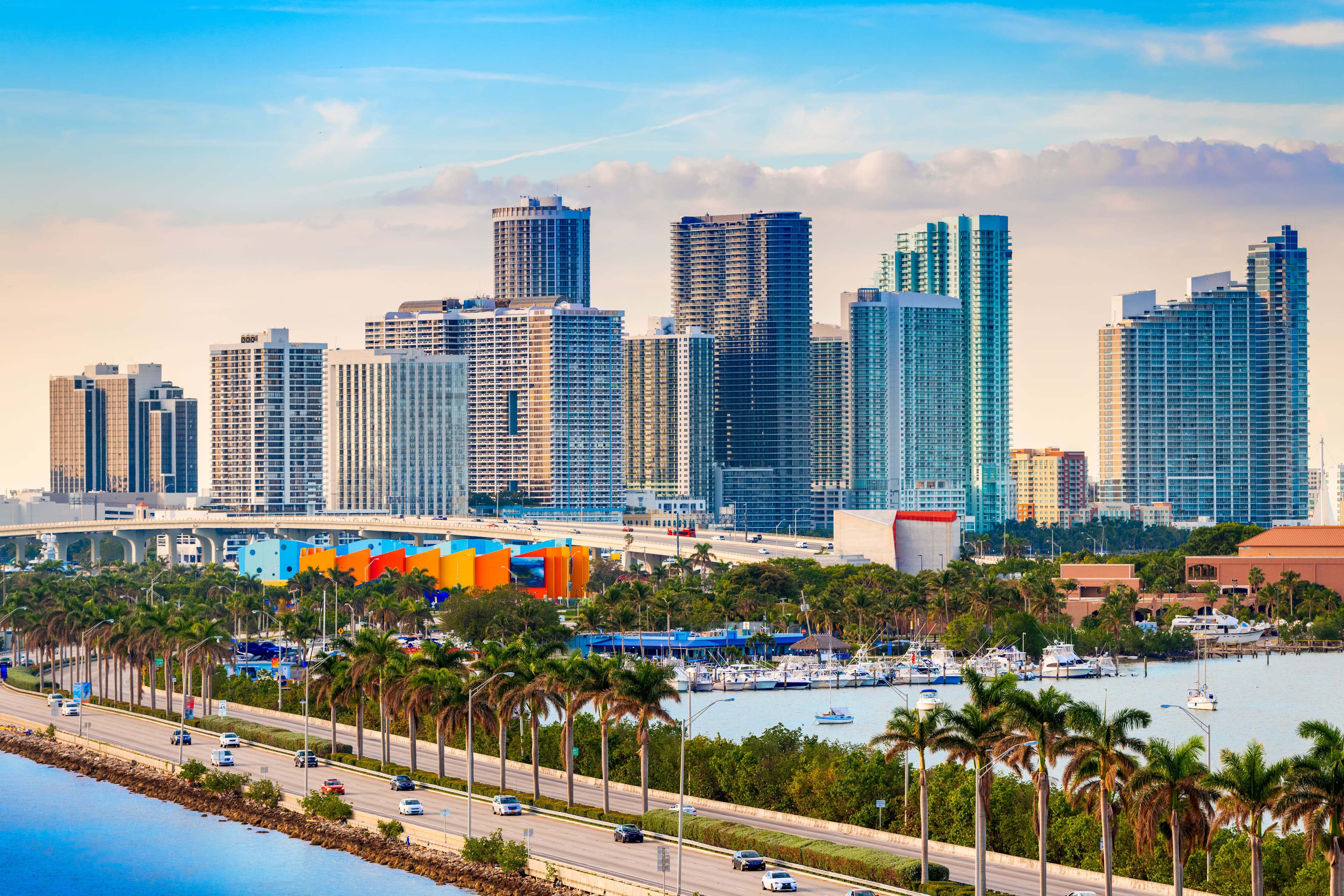
Planning Your Move to Miami
Cost of Movers in Miami, FL
Find out what hiring movers costs in Miami when moving locally or long-distance. Explore hourly moving rates and what to expect for planning your move.
Best Movers in Miami, FL
Check out our recommendations for the best moving companies in Miami, FL.
Where to Get Free & Cheap Moving Boxes in Miami, FL
Learn where to find free and cheap moving boxes near you in Miami—and where to recycle them!
Miami Self Storage & Moving Day Logistics
Between lease gaps, home closings, and staging needs, self storage can be a practical option when moving in Miami. See how to use storage during your move and find a facility near you.
Self Storage in Miami
Extra Space Storage operates over 40 facilities throughout the Miami metro, and are conveniently located near places like the University of Miami in the southern part of the metro to Miami Gardens in the north. Find a unit near your new Miami address.
Choosing the Right Storage Unit in Miami
When selecting a storage unit in Miami, consider these factors:
Climate Control: Climate control is strongly recommended to help protect furniture, electronics, documents, and clothing from Miami's heat and humidity. Temperatures in Miami regularly exceed 90°F from spring through fall, and humidity stays high year-round. → Climate-Controlled Storage Guide
Unit Size: 5x5 (small closet or multiple boxes), 5x10 (studio apartment), 10x10 (1-bedroom home), 10x20 (2–3 bedroom home), 10x30 (large home or vehicle). → Storage Unit Size Guide
Access & Security: Look for extended or 24-hour access and security measures like electronic gate entry, on-site management, and video surveillance. → 24-Hour Access Storage
Lease Flexibility: Month-to-month leases mean you're not locked into a long-term contract, which is useful when moving timelines are unpredictable. Units can also be upgraded or downsized as your needs change.
How to Use Storage Between Homes
If your lease ends before your Miami home is ready for move-in, or if you're staging a property for sale, short-term self storage can bridge the gap. Find out how to plan around closing and move-in timelines in our guide on using storage while you move. → Learn More About Storage for Moving
Explore Miami: Neighborhoods, Cost of Living, & What to Expect
The Miami metro is comprised of multiple neighborhoods with their own vibe, varying price points, commute times, and housing types. Whether you're searching for a coastal community or a quiet inland suburb, the guides below can help you identify where to live in Miami.
Cost of Living in Miami
Miami's cost of living runs about 20% above the national average. Housing is the biggest driver, coming in nearly 59% higher than average—though relatively low healthcare costs help soften the overall impact. Explore the resources below to explore all the factors that shape the cost of living in Miami.
Pros & Cons of Miami
It can help to review the practical trade-offs of living in Miami before or right after you move. Our guide covers the advantages and disadvantages of life in Miami so you know what to expect.
Things to Know About Miami
From navigating Miami's hurricane season and commute patterns to making the most of its beaches and diverse cultural scene, this guide covers information that may not surface in a quick search.
Best Neighborhoods in Miami
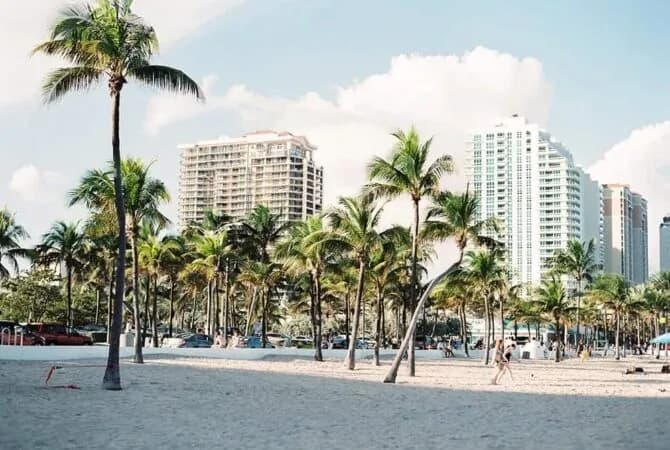
Safe, Affordable Neighborhoods in Miami
Miami offers a variety of safe and affordable neighborhoods perfect for families, young professionals, and retirees. Top areas include Coconut Grove, Coral Way, Hialeah, and more!
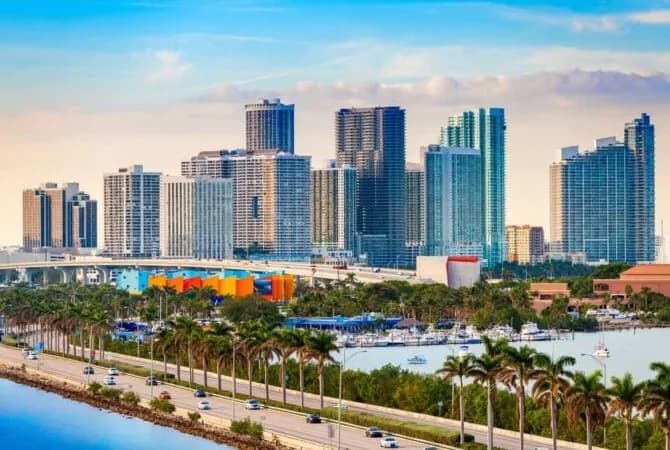
Best Neighborhoods in Miami for Singles & Young Professionals
Miami offers beautiful beaches and unique job opportunities, making it an appealing destination for singles and young professionals. Explore popular neighborhoods like Coconut Grove, Downtown Miami, Little Havana, and more!
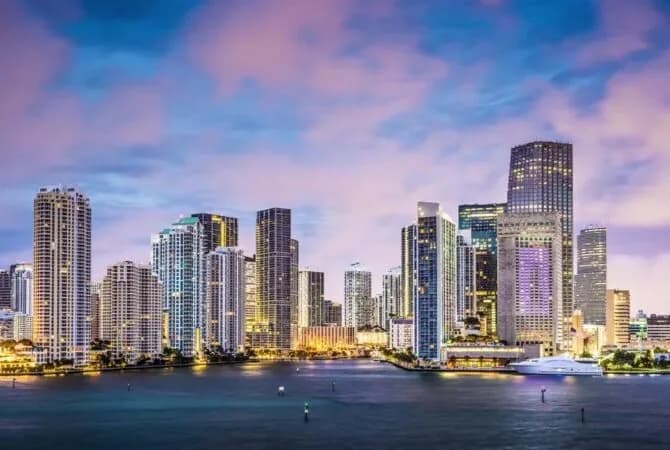
Best Neighborhoods in Miami for Families
Miami is an appealing choice for families seeking a vibrant community with excellent amenities. Areas like Cocounut Grove, Coral Gables, Kendall, and more are some of the most desired neighborhoods for families!
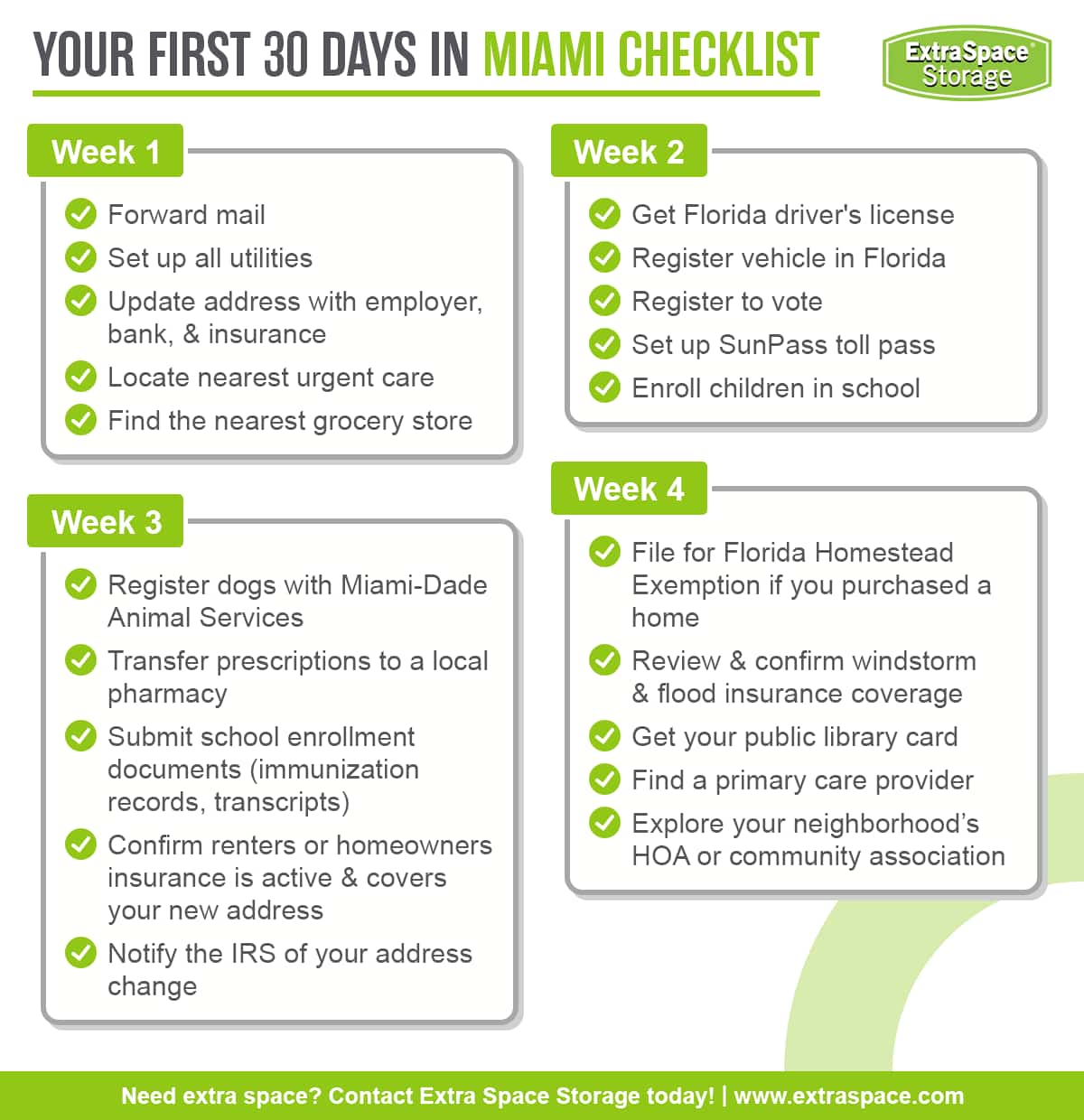
Your First 30 Days in Miami: Quick-Start Checklist
The first month after a move involves a concentrated set of administrative and practical tasks. This checklist organizes what new Miami residents need to handle, roughly in order of time sensitivity. Click the links to get more information in the corresponding local resources sections below.
Local Resources for New Miami, FL Residents
This section covers the practical tasks that come with establishing residency in Miami-Dade County—utilities, driver's license and vehicle registration, school enrollment, healthcare options, transportation setup, and Florida-specific financial and emergency considerations.
Government & Administrative Setup in Miami
New Florida residents need to obtain a driver's license, register their vehicle, set up utilities, and register to vote within the first few weeks of arrival. Miami-Dade County Tax Collector offices handle both driver's licenses and vehicle registration—check their website for office locations and hours before visiting.
Driver's License | Florida requires a new driver's license within 30 days of establishing residency, which is $48 for an initial Class E license. You can apply at any Miami-Dade County Tax Collector office with appropriate documents for proof of identity, proof of Social Security, and two proofs of Florida residential address. |
Vehicle Registration | Vehicles should be registered within ten days of establishing residency. Apply at any Miami-Dade Tax Collector office with proof of Florida insurance, which must be issued by a Florida-licensed insurer. → Miami-Dade County Tax Collector Locations |
Voter Registration | Register to vote online or update an existing registration, and declare your party affiliation before the deadline, which is 29 days before any election. Contact the Miami-Dade Supervisor of Elections with any questions. |
Utilities Setup | The primary electricity provider in Miami is Florida Power & Light (FPL) and the primary natural gas provider is Florida City Gas. Water & sewer services are handled by Miami-Dade Water and Sewer Department (WASD). Options for internet providers include AT&T Fiber, Xfinity, T-Mobile Home Internet, and Verizon 5G Home Internet. Contact utility providers one to two weeks before your move-in date. |
Pet Registration | Miami-Dade County requires all dogs that are four months of age and older to wear a license tag. While cat tags are not required, they are available, and a microchip is recommended. Rabies vaccinations are required for both dogs and cats. For tags and microchip services, contact Miami-Dade Animal Services at their location at 3599 NW 79th Avenue, Doral, FL 33122, or call 311. |
School & Family Resources in Miami
Miami-Dade County Public Schools (MDCPS) is one of the largest school districts in the United States, serving more than 345,000 students across 392+ schools in Miami-Dade County. The city is also home to a number of charter and private school options.
K–12 Public Schools | Find your zoned Miami-Dade County Public School (MDCPS) by typing in your address on their website, or apply to your preferred school via the Choice Program. → School Directory & Finder Tool |
School Enrollment | For school enrollment, you'll need proof of Florida residential address, the student's birth certificate or passport, immunization records known as Florida Form 680, a parent or guardian photo ID, and prior academic records. Schools may request additional documentation depending on grade level or program. |
Charter & Private | Income-eligible families at participating private schools can apply for tuition assistance through the Step Up for Students scholarship program. |
Higher Education | Popular colleges and universities in the Miami area include Florida International University (FIU), Miami Dade College (MDC), and University of Miami (UM). In-state tuition at FIU and MDC requires 12 consecutive months of established Florida residency before the enrollment term. |
Child Care | The Early Learning Coalition of Miami-Dade/Monroe administers state-subsidized child care programs for income-eligible families. |
Healthcare in Miami
Miami-Dade County is home to several major hospital networks and a large network of outpatient facilities and urgent care locations—and healthcare costs in Miami are below the national average!
Major Health Systems | Miami is home to several major health systems, including Baptist Health South Florida, Jackson Health System, HCA Florida, and the University of Miami Health System (UHealth), offering a range of hospitals, trauma centers, and specialty care across the region. |
Finding a PCP | Use your insurance provider's directory to find in-network physicians near you in Miami, or check your preferred health system's website for provider search tools. |
Urgent Care | Baptist Health Urgent Care and Jackson Health Urgent Care each operate walk-in locations across Miami-Dade County. Both accept walk-ins for non-emergency care. Check individual locations for hours. |
Mental Health | Organizations like NAMI Miami-Dade County, AMP Mental Health, and Thriving Mind South Florida provide a number of mental health resources for local residents. Miami is also home to Jackson Behavioral Health Hospital. The national Suicide & Crisis Lifeline is 988. |
Pharmacy | In addition to local pharmacies, there are several national chains with a presence in Miami, including Walgreens, CVS Pharmacy, and Publix Pharmacy. |
Transportation in Miami
Miami is primarily car-dependent, and setting up a SunPass toll transponder before or shortly after arrival will save money on daily commutes. Public transit options—including Metrorail, Metrobus, the free Metromover, and City Trolley—serve core neighborhoods and provide car-free access to Downtown Miami, Brickell, Wynwood, Coconut Grove, and other areas.
Toll Pass Setup | Miami's expressways are fully cashless, requiring SunPass, Florida's statewide toll system. You can choose between the SunPass Mini (a permanent windshield sticker) or the portable, transferable SunPass PRO—both available online or at a Miami-Dade County Tax Collector office, Publix, CVS, and Walgreens. SunPass is interoperable with E-ZPass, making the transition easy for out-of-state movers. Driving without a transponder is possible but results in significantly higher Toll-by-Plate rates. |
Key Toll Roads | SR 836 (Dolphin Expressway), SR 112 (Airport Expressway), SR 874 (Don Shula Expressway), SR 878 (Snapper Creek Expressway), SR 924 (Gratigny Parkway), SR 91 (Florida's Turnpike), Rickenbacker Causeway (Key Biscayne access), and Venetian Causeway (Miami Beach access). |
Public Transit | Miami-Dade Transit (MDT) operates the countywide Metrobus, the 25-mile Metrorail system, and the free Metromover that serves downtown and surrounding areas. The free City of Miami Trolley routes also serve multiple Miami-Dade County neighborhoods. Brightline high-speed rail connects Downtown Miami to Aventura, Fort Lauderdale, Boca Raton, West Palm Beach, and Orlando. |
Airport Access | Miami International Airport (MIA) is the primary commercial airport, offering more flights to Latin America and the Caribbean than any other U.S. airport, plus domestic and transatlantic routes. Rideshare pickup is available via designated zones in each terminal, and public transit access is also available. Fort Lauderdale-Hollywood International Airport (FLL)—about 30 minutes north of Miami—serves additional domestic carriers and often offers lower fares. |
Major Roadways | I-95 (north-south artery through downtown Miami), US-1/South Dixie Highway (south corridor to Homestead and the Florida Keys), SR 836/Dolphin Expressway (east-west artery connecting western suburbs to downtown), Florida's Turnpike and Homestead Extension (north-south corridor through western Miami-Dade County), I-395 (connecting downtown Miami to Miami Beach via the MacArthur Causeway), I-75 (northwest corridor linking Miami to Fort Lauderdale and the broader I-75 network), and the Palmetto Expressway (SR 826, a north-south and east-west loop serving Miami-Dade's western and northern suburbs). |
Financial & Legal Setup in Miami
Florida's tax structure differs from most other states, and several financial and insurance considerations are specific to Miami-Dade County. Here's what new residents should address during their first 30 to 60 days.
State Income Tax | Florida has no state income tax, no estate tax, and no inheritance tax. Residents relocating from states with income taxes should update their W-4 withholding with their employer after establishing Florida residency. |
Homestead Exemption | To qualify for the Homestead Exemption and reduce your property's taxable value, the property must be your primary residence. The exemption includes the Save Our Homes cap, which limits annual increases to the assessed value to 3% or the Consumer Price Index, whichever is lower. Apply online or in-person through the Miami-Dade County Property Appraiser by March 1. |
Homeowners Insurance | Standard homeowners insurance policies in Florida generally do not cover flood damage. Flood insurance is required by federally regulated lenders for properties in high-risk areas. In high-risk coastal areas, some private insurers exclude wind and hurricane damage, requiring separate windstorm coverage through a Florida-licensed insurer or Citizens Property Insurance Corporation. → FEMA Flood Map Service Center |
Vehicle Insurance | Florida's minimum coverage requirements differ from most states. Florida requires a $10,000 minimum Personal Injury Protection (PIP) and a $10,000 minimum Property Damage Liability (PDL). While bodily injury liability insurance is not required, drivers found at fault in a serious accident can still be held personally liable, so most insurance professionals recommend carrying it. |
Address Updates | In addition to filing a USPS Change of Address, you also need to notify the IRS (Form 8822), the Social Security Administration, financial institutions, insurance providers, your employer, and any other service providers. |
Miami Emergency Preparedness & Safety
Miami-Dade County sits in a high-risk hurricane zone—hurricane season runs from June 1 through November 30. Residents should prepare with resources available through Miami-Dade Emergency Management.
Emergency | 911 |
Miami-Dade Sheriff's Office Non-Emergency Number | 305-SHERIFF (305-743-7433) |
Poison Control | 1-800-222-1222 |
National Crisis Line | 988 (call or text) |
Emergency Alerts | Sign up for Miami-Dade Alerts to receive text and email notifications regarding local conditions. |
Natural Disaster Info | Hurricane season is June 1 through November 30. Miami-Dade uses storm surge planning zones (A–E), based on proximity to the coast and elevation. Find your zone and evacuation routes. Flooding is a risk in low-lying areas during heavy rain events. Stay up to date with Miami-Dade Alerts. |
FEMA Flood Map | All homeowners, particularly near the coast and in low-lying neighborhoods in Miami-Dade, should check their property address through FEMA Flood Map Service Center. |
Employment Resources in Miami
Miami-Dade’s economy is filled with diverse opportunities driven by global trade, tourism, finance, healthcare, and a growing tech scene. The county's position as a gateway to Latin America and the Caribbean creates employment opportunities that are less common in other major U.S. markets, plus makes bilingual fluency in Spanish a professional asset across many industries. Here are key Miami employment resources to help you get acclimated.
Major Industries | Professional industries in Miami include tourism and hospitality, international trade and logistics, finance and banking, healthcare and life sciences, aviation and MRO services, and technology and fintech. Learn more through the Miami-Dade Beacon Council. |
Top Employers | Education: Miami-Dade County Public Schools, University of Miami Healthcare: Baptist Health South Florida, Jackson Health System Hospitality and Tourism: American Airlines, Carnival Corporation Energy Management: World Kinect Corporation Government: Miami-Dade County |
Job Search Tools | Filter by Miami or Miami-Dade on platforms like LinkedIn, Indeed, and Glassdoor. Use South Florida Business Journal for local and regional industry news and job listings. |
State Job Portal | CareerSource Florida offers state-managed job listings, workforce development programs, and reemployment resources. |
Unemployment Benefits | If you are newly unemployed after relocating, use the Florida Reemployment Assistance portal (Reconnect). Note eligibility considerations that may apply when relocating before securing work. |
Professional Networking | Greater Miami Chamber of Commerce and SCORE Miami-Dade offer free business mentoring and career transition resources. The Miami-Dade Beacon Council supports business growth and economic development in the region. |
Staffing & Temp Agencies | Robert Half and Randstad both operate locations in Miami-Dade County and serve residents seeking contract or temp-to-hire positions. |
Miami Community Resources & Amenities
Public Library: The Miami-Dade Public Library System (MDPLS) operates 50 branch locations countywide. Library cards are free to residents and include access to digital resources through the Libby app and Kanopy streaming service.
Parks & Recreation: Miami-Dade County Parks, Recreation and Open Spaces manages 275+ parks countywide, while the City of Miami Parks and Recreation Department maintains a separate network of 150+ city parks. Beyond these, nearby highlights include Bill Baggs Cape Florida State Park on Key Biscayne and Everglades National Park—which is about an hour's drive west of the city center.
Neighborhood Associations & Civic Resources: The City of Miami's Commissioner District Offices provide local services and connect residents with municipal resources. Contact information and office locations are available at miami.gov.
Local Media: Miami Herald is the primary English-language newspaper, and El Nuevo Herald serves Spanish-language readers. Local television stations include NBC 6 South Florida, CBS 4 Miami, and Local 10 ABC.
Quinn Johnson
Quinn Johnson is a moving expert and author for Extra Space Storage. He's moved over 15 times, including internationally, and helped countless others between their own homes. He's happy to lift some boxes for a friend as long as he's paid in pizza. As a writer and content creator for Extra Space Storage since 2019, Quinn shares helpful moving tips and info to alleviate the common stresses of moving.